5 Best B2B Direct Dial Providers in 2026
B2B direct dials connect sales teams with decision-makers instantly. Compare top providers and schedule a demo with 11x.

Sales reps lose more than 70% of their calling time to gatekeepers, voicemail systems, and disconnected numbers. That wasted effort translates directly into missed pipeline and slower revenue growth. Research from Cognism shows that verified direct dial phone numbers deliver connect rates 2-3x higher than company switchboards, making quality contact data one of the highest-leverage investments for outbound sales teams.
The market validates this shift. B2B contact data spending continues to accelerate as sales leaders recognize that reaching decision-makers faster compresses sales cycles and improves conversion rates. Gartner research indicates that 60% of B2B sales organizations will transition to data-driven selling by 2026, with direct access to verified contacts serving as foundational infrastructure for AI-powered outreach.
What Are B2B Direct Dials?
B2B direct dials are phone numbers that connect sales reps straight to specific decision-makers at target companies, bypassing company switchboards, receptionists, and automated phone trees entirely. Instead of calling a corporate headquarters and navigating through gatekeepers, your team reaches the prospect's desk phone or mobile directly, starting conversations faster and with less friction.
The value of direct dials depends entirely on data quality. Verified contact data means phone numbers have been validated through multiple sources and confirmed to reach the intended person. Outdated or incorrect numbers waste rep time, damage productivity metrics, and create frustration that erodes team morale. Quality providers refresh records continuously and use verification processes ranging from automated testing to human research.
5 Best B2B Direct Dial Providers
Our analysis covers five leading platforms across data sourcing, verification, CRM integration, autonomous execution, and compliance. Each evaluation considers enterprise readiness, integration depth, and measurable ROI potential. Selection criteria include data accuracy rates, refresh frequency, multichannel coordination capabilities, GDPR and CCPA compliance, governance features, and proven customer outcomes. The providers range from traditional contact databases to fully autonomous digital workers that convert phone numbers into booked meetings without manual effort.
Our methodology prioritizes neutral, criteria-driven analysis: 90% objective feature comparisons, 10% strategic insights from GTM experience. You will discover which platforms excel at data verification, autonomous calling, CRM integration, and compliance. This guide covers sourcing strategies, provider comparisons, implementation best practices, and the shift from manual dialing to AI-powered execution through platforms like 11x.
1. 11x (Alice & Julian) — Best for Autonomous Calling and Multichannel Execution
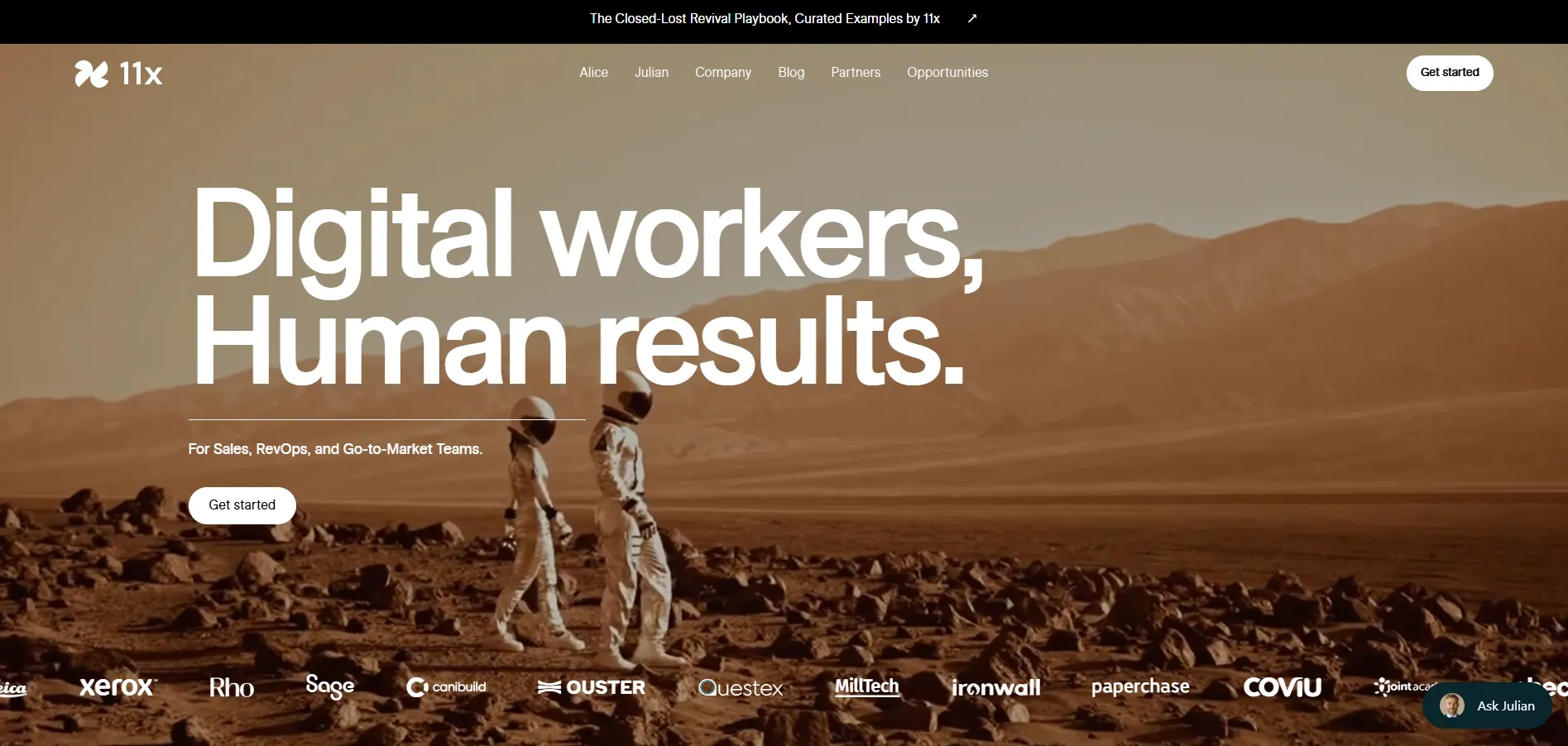
11x deploys autonomous digital workers that operate as true virtual team members, fully owning sales outcomes from prospecting through qualification. Alice handles outbound research and multichannel engagement across email and LinkedIn, while Julian executes AI-powered calling, qualifying prospects through natural conversation, and routing opportunities directly to your sales team.
Core Capabilities:
- True autonomy: Goal-driven agents that execute complete workflows from contact sourcing through meeting booking without manual intervention
- Multichannel orchestration: Seamless coordination across phone, email, and LinkedIn with unified activity logging and intelligent sequencing
- Signal-driven intelligence: Customizable AI researcher tracking intent signals, job changes, and engagement patterns to prioritize high-value prospects
- Deep CRM integration: Bi-directional sync with Salesforce and HubSpot, comprehensive activity logging, and real-time contact enrichment
Standout Features:
- Julian responds to inbound leads within seconds, calling and qualifying prospects while interest peaks
- Connects to 21+ data providers for real-time contact enrichment and verification before every call
- Supports 30+ languages for global sales teams operating across regions
- Compliance-aware workflows with SOC 2 Type II certification and GDPR/CCPA adherence built in
- Self-learning systems that optimize messaging, timing, and approach based on conversation outcomes
Competitive Advantages:
- First platform to deliver truly autonomous digital workers that own complete sales workflows
- Superior multichannel orchestration combining calling with coordinated email and LinkedIn outreach
- Advanced self-learning capabilities that improve connect rates and conversion over time
- Enterprise-ready governance from day one with role-based permissions and audit trails
Ideal Fit: Teams needing to consistently book more meetings without adding headcount. Organizations want autonomous execution, personalized outreach, and conversion improvements across funnel stages. Sales leaders are replacing manual SDR capacity with continuous AI execution that operates around the clock.
ROI Impact: Gupshup saw a 50% increase in SQLs per SDR after adopting Alice, enabling a 1.5x boost in output per rep while freeing time for strategic initiatives like deal progression and rapid campaign testing, all without increasing headcount.
Schedule a product demo with our expert team.
2. ZoomInfo — Best for Enterprise-Scale Contact Databases
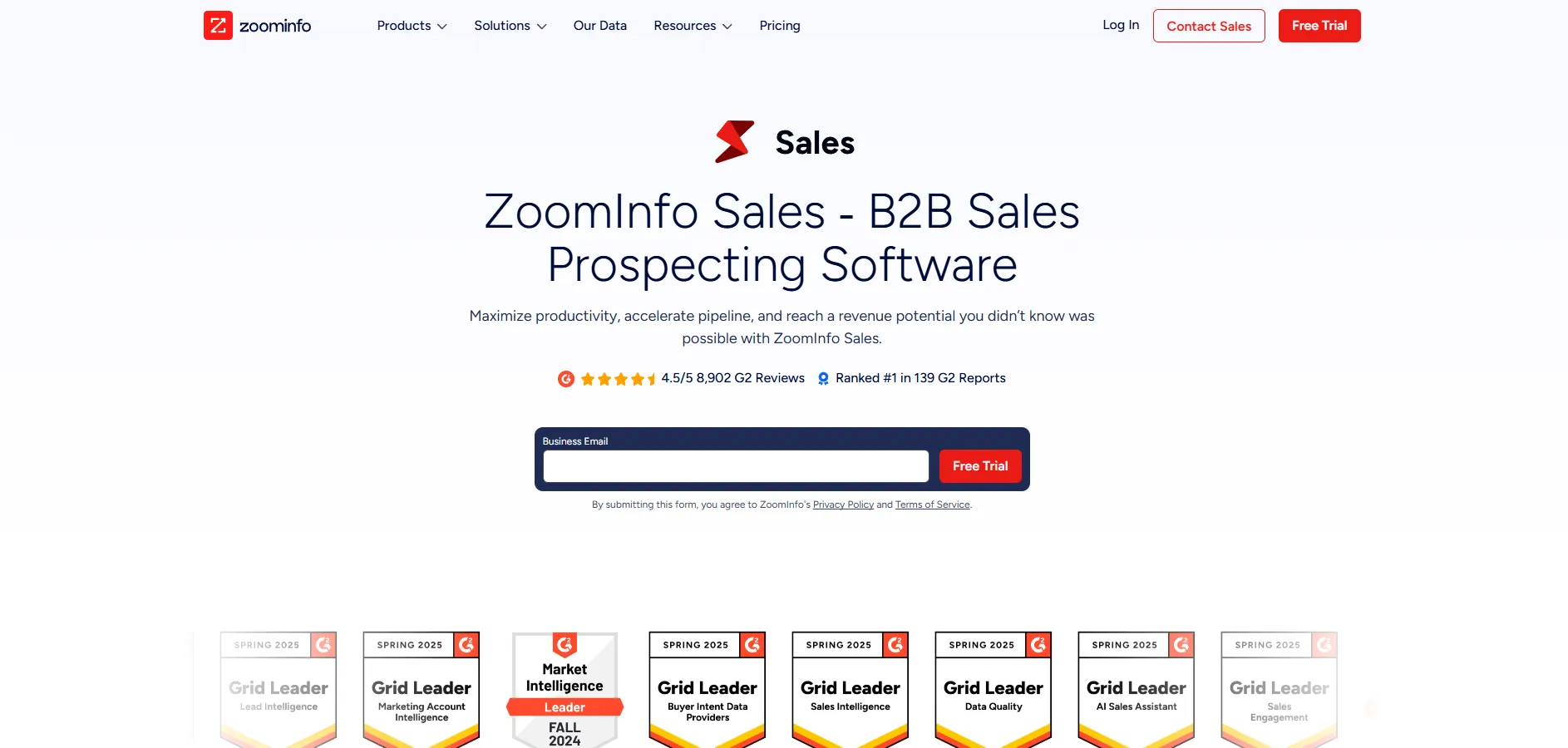
ZoomInfo provides one of the largest B2B contact databases available, with extensive direct dial coverage across industries, company sizes, and geographies. The platform combines firmographic, technographic, and intent data for comprehensive sales intelligence.
Strengths:
- Massive database with millions of verified B2B contacts and direct dial phone numbers
- Triple-verified data with regular refresh cycles to maintain accuracy
- Deep API access enabling custom integrations and data pipelines
- Intent data signals showing accounts actively researching solutions
- Territory planning and account scoring tools for enterprise sales organizations
Limitations:
- Requires manual calling workflows; delivers data but not execution
- Enterprise pricing runs into six figures annually, limiting accessibility for smaller teams
- Data quality varies by region, with stronger coverage in North America than EMEA
- Complex platform requiring dedicated RevOps resources to optimize
Ideal Fit: Large enterprise sales teams with dedicated RevOps resources, substantial budgets, and mature outbound operations needing comprehensive contact data at scale.
3. Cognism — Best for GDPR-Compliant European Prospecting
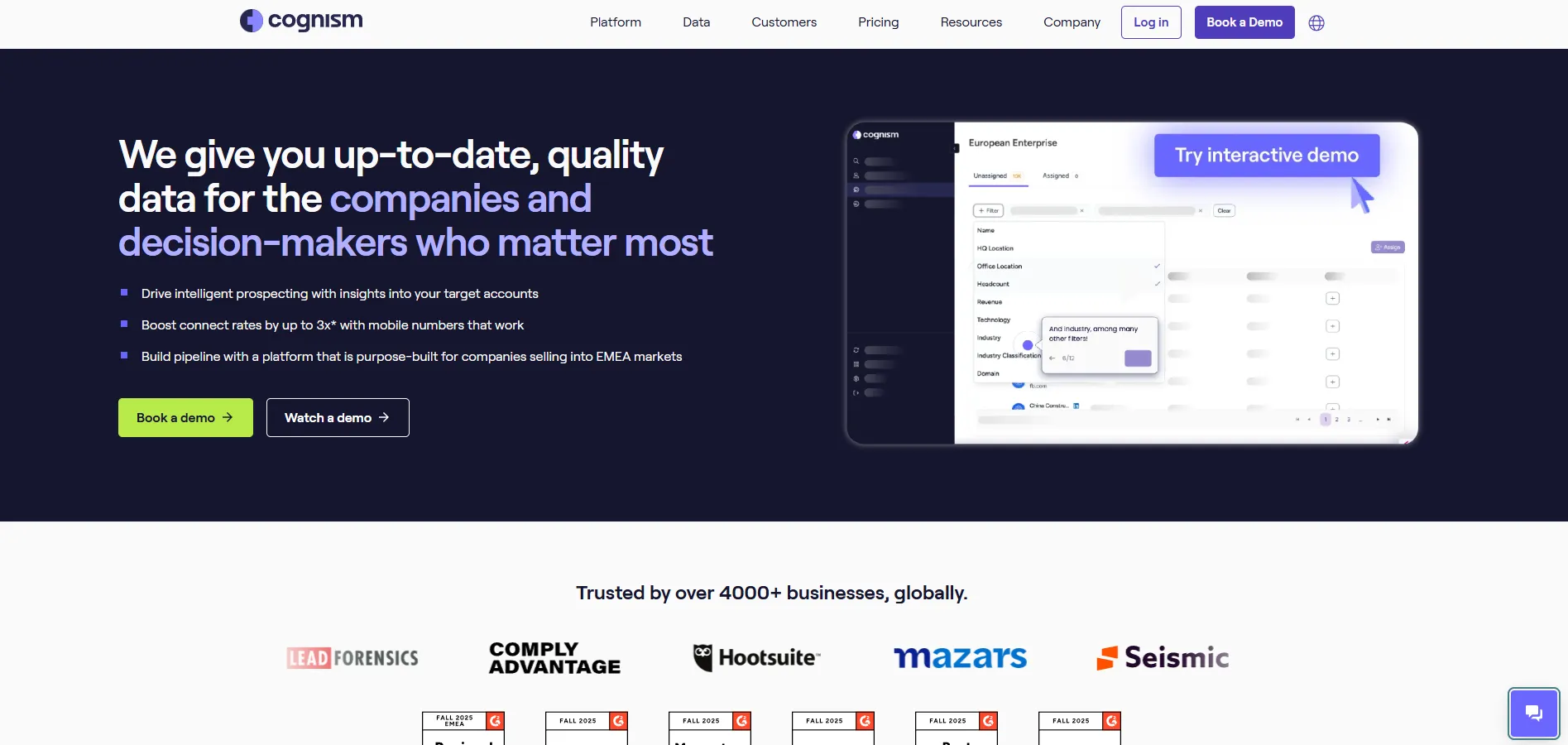
Cognism positions itself as the compliance-first choice for B2B direct dials, with particular strength in European markets and Diamond-verified mobile phone numbers validated through human research.
Strengths:
- Diamond Data verification using human researchers to confirm mobile numbers before delivery
- GDPR compliance is built into every workflow, reducing risk for teams selling into Europe
- Strong EMEA coverage with verified decision-maker contact information
- Integration with Bombora intent data for account prioritization
- Chrome extension for real-time prospecting from LinkedIn Sales Navigator
Limitations:
- Less extensive North American coverage compared to US-focused providers
- Delivers quality data but requires your team to execute manual outreach
- Higher per-contact costs due to human verification processes
- Limited automation capabilities beyond data enrichment
Ideal Fit: B2B sales teams prioritizing European markets or operating under strict compliance requirements who need verified contact information they can trust for manual outreach.
4. Apollo.io — Best for All-in-One SMB Prospecting
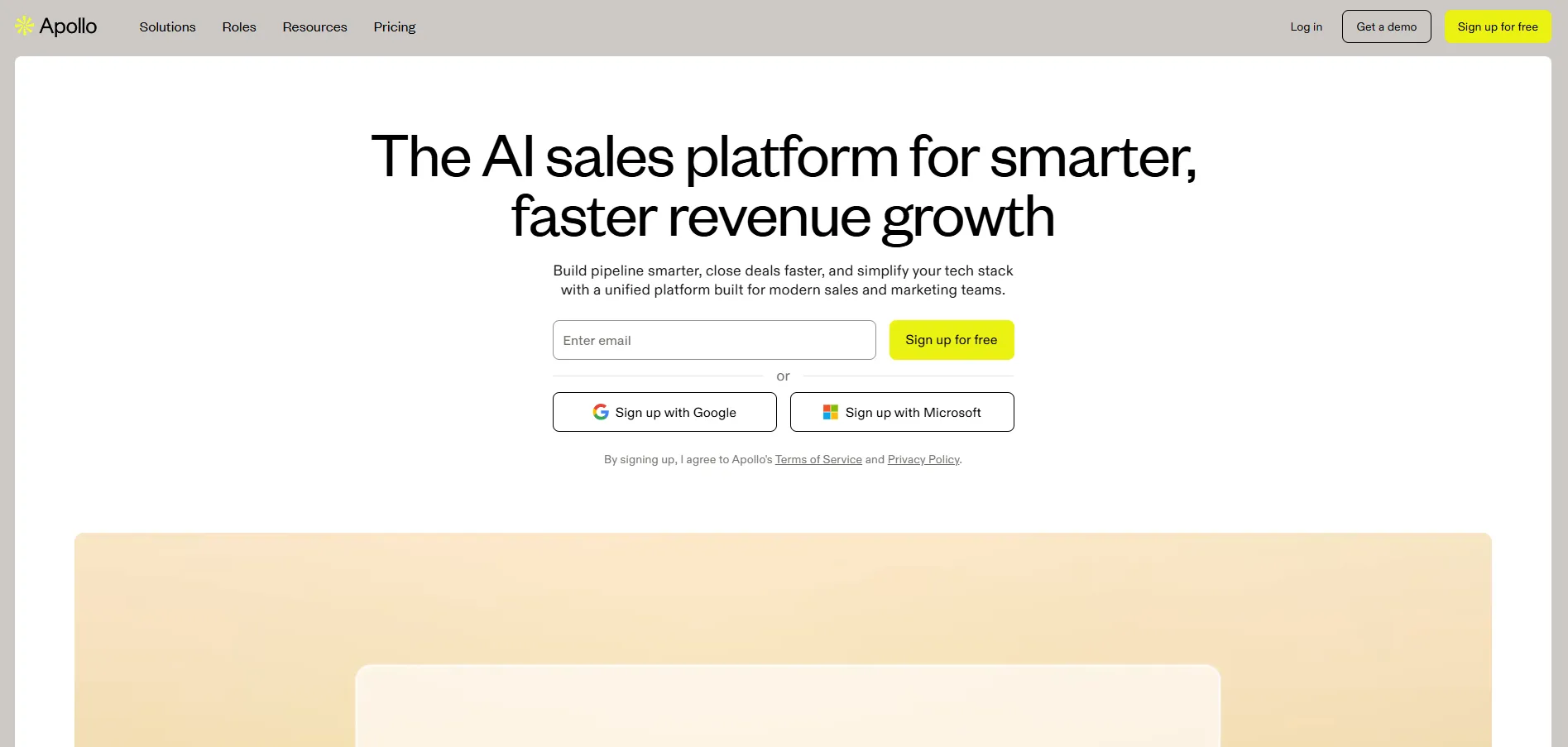
Apollo.io combines a contact database with built-in email sequencing and basic calling features, making it popular among SMB and mid-market teams wanting prospecting and outreach in one platform.
Strengths:
- Combined prospecting database and sales engagement platform
- Accessible pricing with a free tier and affordable paid plans starting at $39/user/month
- Built-in email sequences and automated follow-up cadences
- Chrome extension for LinkedIn prospecting and company website enrichment
- Lead scoring based on engagement history and ideal customer profile match
Limitations:
- Shallower data depth on direct dials compared to premium providers
- A crowdsourced data model means verification quality varies
- Basic automation capabilities require hands-on management
- Less sophisticated AI compared to autonomous execution platforms
Ideal Fit: Growing SMB and mid-market sales teams needing affordable, all-in-one prospecting and outreach without enterprise pricing or complexity.
5. Lusha — Best for Real-Time LinkedIn Enrichment
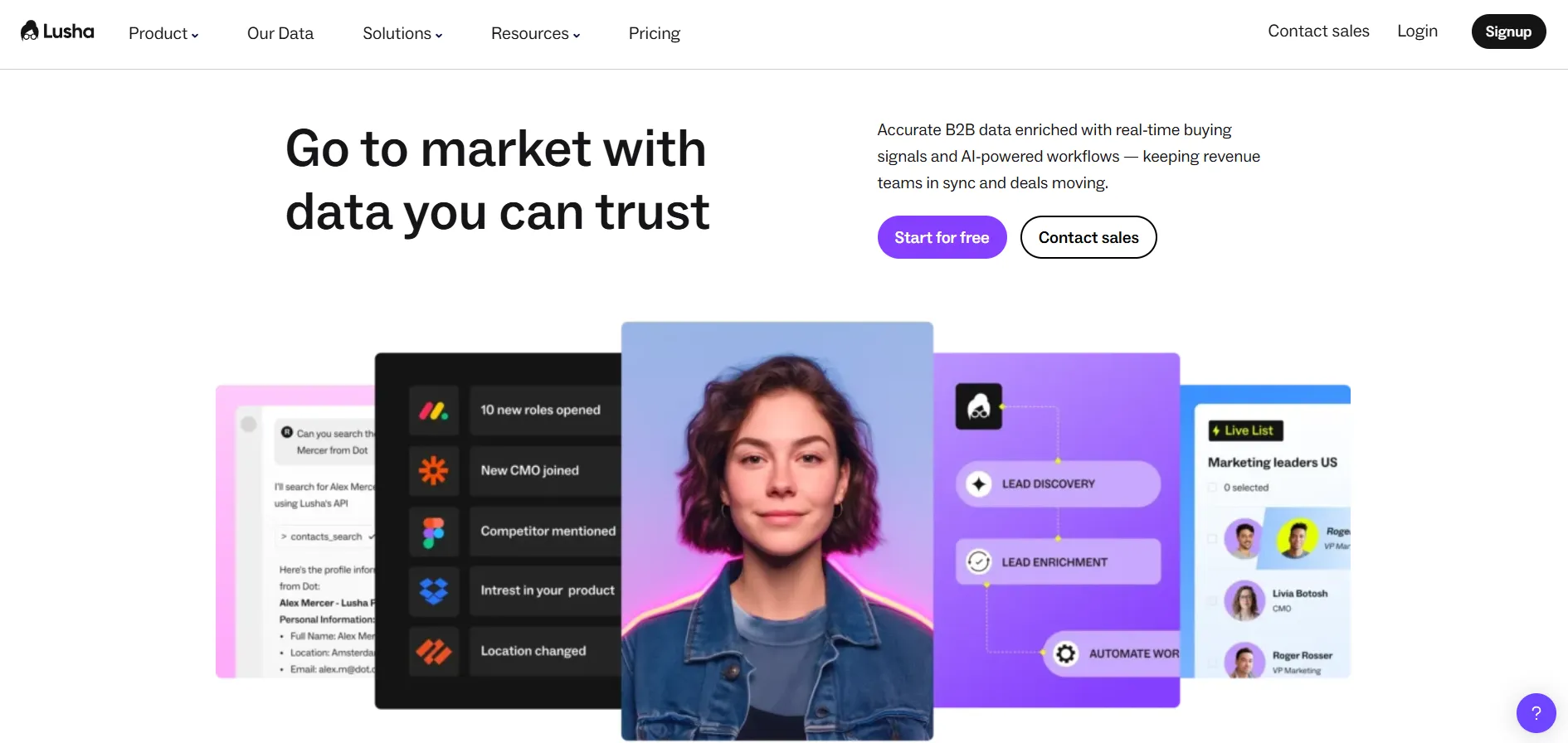
Lusha delivers contact information through a Chrome extension that enriches LinkedIn profiles with direct dials and email addresses in real-time, ideal for reps who prospect actively from social platforms.
Strengths:
- Instant contact is revealed directly from LinkedIn profiles and company websites
- Real-time data verification before displaying phone numbers
- Simple credits-based pricing accessible to individual reps and small teams
- CRM integration with one-click contact saving to Salesforce, HubSpot, and Pipedrive
- Bulk enrichment capabilities for uploaded lead lists
Limitations:
- Per-credit pricing adds up quickly for high-volume teams
- The extension-first approach is less suited for complex workflows or large-scale operations
- Limited automation beyond manual enrichment
- Verification depth varies by contact and region
Ideal Fit: Individual sales reps and small teams running LinkedIn-first outreach who need quick access to direct dial phone numbers without complex setup or enterprise contracts.
Comparison Table
The table below summarizes key differentiators across all five providers. Use it to quickly assess which platform aligns with your team's requirements for AI sophistication, channel coverage, CRM integration depth, and compliance posture. Detailed evaluations appear in the sections above.
How Direct Dials Elevate Sales Beyond Traditional Prospecting
Direct dials represent a fundamental shift from volume-based calling to precision outreach. Traditional prospecting requires reps to navigate switchboards, leave voicemails, and attempt callbacks across multiple days before reaching decision-makers. Direct access eliminates these intermediate steps, converting dial attempts into conversations at dramatically higher rates.
The impact is measurable across every sales productivity metric. Research shows that direct dial phone numbers deliver 2-3x higher connect rates compared to switchboard routing. For a team making 500 calls weekly, that multiplier means 30-50 additional live conversations. Bridge Group data indicates reps using direct dials connect within 1.5 attempts on average, compared to 8+ attempts when navigating gatekeepers. Time savings compound: each gatekeeper interaction costs 2-4 minutes, meaning direct dials recover 100-200 minutes daily for an active SDR.
This evolution enables sales teams to reallocate capacity from mechanical dialing to high-value activities. Reps spend more time on discovery calls, personalized follow-up, and deal progression rather than leaving voicemails and waiting for callbacks. When combined with AI-powered calling through platforms like 11x, direct dials become the foundation for fully autonomous prospecting that operates continuously without human intervention.
How to Choose the Right B2B Direct Dial Provider
Buying direct dial data sounds simple. In reality, the wrong provider can waste budget, damage deliverability, and slow down your outbound team. A strong B2B direct dial provider improves connect rates, supports compliance, and integrates cleanly into your sales workflow. The right choice protects your brand while increasing rep productivity and pipeline velocity.
Here are the key factors to evaluate before committing to a provider:
- Clarify your target audience and use case: Define your ideal customer profile, regions, and outreach motion before evaluating vendors. Relevance matters more than raw database size.
- Validate data accuracy and verification methods: Ask how often direct dials are verified and refreshed. Frequent validation reduces invalid numbers and improves connection rates.
- Review compliance and data sourcing transparency: Ensure the provider complies with GDPR, CCPA, and other applicable regulations. They should clearly explain how contact data is sourced and maintained.
- Evaluate CRM and sales tool integration: Direct dial data should sync with your CRM and engagement platforms. Strong integration prevents manual uploads and protects reporting accuracy.
- Assess coverage across roles and geographies: Confirm the provider supports your target industries, seniority levels, and international markets. Consistent coverage enables scalable outbound execution.
- Test usability and filtering capabilities: The platform should allow precise segmentation by firmographics, technographics, and job titles. Efficient filtering increases rep efficiency.
- Understand pricing structure and guarantees: Compare subscription models, credit systems, and replacement policies. Look for service protections if data quality falls below expectations.
Implementation Best Practices
Successful direct dial implementations follow proven patterns based on customer outcomes across company sizes and sales motions.
Phase 1: Foundation and Quick Wins (Weeks 1-2)
Begin with infrastructure setup and immediate value demonstration. Configure CRM integrations, ensuring bi-directional sync for contact data and activity logging. Import existing contact lists for enrichment and verification, identifying gaps in current data quality.
Key activities:
- Complete CRM integration with field mapping and sync validation
- Enrich existing contacts with verified direct dials
- Establish baseline metrics for connect rates and meetings booked
- Train team on platform workflows and best practices
- Launch initial calling campaigns targeting the highest-value accounts
- Document early wins to build organizational momentum
Phase 2: Optimization and Expansion (Weeks 3-6)
Expand coverage and optimize based on initial results. Analyze connect rate data by segment, job title, and time of day to identify patterns. Refine targeting criteria based on which prospects convert to meetings and opportunities.
Key activities:
- A/B test calling approaches, scripts, and timing strategies
- Expand data coverage to additional segments and territories
- Integrate direct dials into multichannel sequences with email and LinkedIn
- Implement lead scoring to prioritize the highest-potential contacts
- Establish ongoing data hygiene processes, removing disconnected numbers
- Deploy autonomous calling through Julian for inbound lead response
Phase 3: Scale and Automation (Weeks 7-12)
Achieve full operational scale with continuous optimization. Deploy autonomous execution for consistent coverage without capacity constraints. Implement advanced workflows coordinating direct dials with intent signals and engagement triggers.
Key activities:
- Scale autonomous calling across all inbound lead sources
- Coordinate outbound campaigns with marketing programs and events
- Implement trigger-based calling for high-intent website visitors
- Establish executive reporting on pipeline impact and ROI
- Optimize based on conversion data from qualified opportunities to closed revenue
- Expand to additional regions, languages, or business units
Success metrics: Organizations following this phased approach report 30-50% improvements in connect rates within the first 90 days. Teams deploying autonomous calling through 11x see consistent meeting booking without the capacity constraints of manual dialing.
Common Pitfalls and How to Avoid Them
Direct dial implementations fail when teams overlook data quality, compliance, or execution capacity. These common pitfalls derail results regardless of provider quality.
Pitfall 1: Prioritizing Volume Over Data Quality
Teams purchase large contact databases without verifying accuracy, then waste weeks calling disconnected numbers and wrong contacts. Low connect rates demoralize reps and skew performance metrics.
How to avoid: Start with smaller, verified datasets and measure connect rates before scaling. Require accuracy guarantees from providers and implement ongoing data hygiene processes.
Pitfall 2: Ignoring Compliance Requirements
Organizations launch calling campaigns without proper consent tracking, do-not-call list management, or GDPR documentation, creating legal exposure and reputational risk.
How to avoid: Establish compliance workflows before launching campaigns. Maintain documented do-not-call lists, honor opt-outs immediately, and choose providers with built-in compliance features.
Pitfall 3: Treating Direct Dials as Standalone Tactics
Teams use direct dials in isolation rather than coordinating with email, LinkedIn, and content engagement. Single-channel outreach underperforms integrated campaigns.
How to avoid: Build multichannel sequences where calls follow email engagement or LinkedIn connection requests. Use platforms like 11x that orchestrate across channels automatically.
Pitfall 4: Underestimating Execution Capacity
Organizations purchase quality data but lack sufficient SDR capacity to work it effectively. Contact lists age while sitting in queues, and speed-to-lead suffers.
How to avoid: Match data volume to execution capacity. Consider autonomous calling platforms that eliminate capacity constraints and respond to leads instantly, regardless of team availability.
Pitfall 5: Neglecting Performance Measurement
Teams launch campaigns without establishing baseline metrics or tracking connect rates, conversion rates, and pipeline impact. Without data, optimization becomes guesswork.
How to avoid: Define success metrics before launch. Track connect rates by data source, segment, and time period. Measure pipeline generated per rep and cost per qualified meeting.
Making Your Decision
The B2B direct dial market spans traditional contact databases, compliance-focused providers, all-in-one platforms, and autonomous execution systems. Each approach serves different needs based on team size, sales motion, compliance requirements, and desired level of automation.
The best choice depends on your specific situation. Teams with mature SDR operations and sufficient calling capacity may need only data enrichment to improve existing workflows. Growing organizations seeking scale without proportional headcount increases should evaluate autonomous platforms. Companies selling into Europe or regulated industries must prioritize GDPR-compliant providers.
Frame your decision around outcomes rather than features. Calculate the cost per qualified meeting under current operations, then evaluate how each provider impacts that metric through improved connect rates, time savings, or autonomous execution.
For teams ready to move beyond traditional contact databases into autonomous sales execution, 11x transforms direct dials from static data into continuous conversations. Alice and Julian operate as digital workers who own complete workflows from prospecting through qualification, booking meetings around the clock without manual effort. Organizations report significant improvements in pipeline generation while reallocating human capacity to relationship building and deal progression. Schedule a product demo with our expert team.
Frequently Asked Questions
B2B direct dials are phone numbers that connect sales reps directly to specific decision-makers at target companies, bypassing company switchboards and gatekeepers. These numbers reach individuals at their desk phones or mobile devices, enabling conversations without navigating receptionists or automated phone trees. 11x uses direct dial data to power autonomous calling through Julian, converting verified phone numbers into qualified conversations automatically without manual dialing.
Yes, B2B cold calling is legal in most jurisdictions when conducted properly. Businesses can contact other businesses by phone for sales purposes, though specific regulations vary by region. Key requirements include maintaining do-not-call lists, honoring opt-out requests promptly, and following GDPR guidelines in Europe or CCPA rules in California. 11x builds compliance-aware workflows into autonomous calling, ensuring opt-outs are respected and documentation is maintained automatically.
Direct B2B refers to business-to-business transactions or communications that occur without intermediaries. In the context of direct dials, it means reaching business contacts directly rather than through gatekeepers, switchboards, or assistants. Direct B2B sales connect sellers with decision-makers who have purchasing authority, reducing friction and accelerating sales cycles.
Sourcing direct dial phone numbers typically involves B2B data providers like ZoomInfo, Cognism, Apollo, or Lusha. These platforms aggregate and verify contact information from public sources, company websites, social media profiles, and proprietary research. Quality varies significantly between providers, so evaluate verification methods and accuracy guarantees before committing. 11x connects to 21+ data providers for real-time contact enrichment, sourcing verified direct dials and acting on that data through autonomous outreach.
The rule of 7 suggests that prospects need approximately seven touchpoints with your brand before they're ready to engage seriously. In B2B sales, this means combining calls, emails, LinkedIn engagement, and content interactions across multiple touches. Direct dials serve as high-impact touchpoints within broader multichannel sequences. 11x automates this cadence through coordinated outreach across phone, email, and LinkedIn, ensuring prospects receive consistent follow-up without manual tracking or execution.