Your sales funnel is only as strong as your lead scoring system. Every week, sales teams spend hours chasing low-value prospects while real decision-makers ready to buy go unnoticed in the CRM.
B2B lead scoring brings structure to that chaos by ranking potential customers based on demographic fit and behavioral signals to reveal who’s truly ready for outreach. Companies that effectively use analytics and lead‑scoring models can increase conversion rates by up to 30% and achieve 2–3% higher sales growth through improved targeting and prioritization.
This guide explores the most effective B2B lead scoring systems for modern GTM teams—evaluating data sophistication, automation capabilities, CRM compatibility, and measurable pipeline impact to help sales and marketing teams focus on the prospects that actually close.
What is lead scoring and how does it work?
Lead scoring is a data‑driven framework that ranks prospects based on their likelihood to convert into paying customers. This methodology transforms your lead generation efforts by turning every interaction into measurable data points within a scoring model. By blending demographic information (like job title, company size, and industry) with behavioral data (such as content views, whitepaper downloads, or product demo requests), businesses can separate high‑intent buyers from passive leads and identify quality leads for their B2B sales teams.
Modern lead scoring operates through predictive algorithms that continuously adjust scores using CRM and marketing automation data. Rather than relying on static rules, AI models ingest thousands of past touchpoints to identify which combinations of actions and characteristics correlate most strongly with closed deals. This data-driven approach helps optimize marketing efforts by focusing resources on high-value prospects.
In practice, lead scoring synchronizes marketing and sales efforts around a unified qualification system. Marketing automation platforms flag Marketing Qualified Leads (MQLs) once they reach target thresholds, while sales teams convert them into Sales Qualified Leads (SQLs) for direct outreach. This alignment eliminates guesswork, streamlines the sales process through faster follow‑up times, and ensures that every pipeline action is backed by verified intent data. Email engagement and social media interactions become valuable metrics that guide this lead scoring process.
B2B Lead Scoring Platforms Compared
With the fundamentals of lead scoring established, the next priority for GTM organizations is selecting technology that aligns with their data strategy and revenue operations. The platforms profiled below exemplify different approaches—from fully autonomous AI systems to CRM‑native scoring automation—each catering to specific pipeline maturity and scale requirements.
Evaluation Criteria
Our evaluation framework follows a neutral, criteria‑driven methodology: 90% objective feature comparison, 10% applied GTM expertise. Each category was scored according to enterprise readiness, automation capabilities, and proven business impact through key performance metrics.
Enterprise Readiness: Security, scalability, compliance, and suitability for large or regulated organizations managing complex B2B sales operations.
Integration Depth: Breadth and reliability of CRM, marketing automation, analytics, and telephony ecosystem sync that supports comprehensive lead generation workflows.
AI Sophistication: Strength of machine learning models, predictive accuracy, and self‑learning or autonomous operation that processes multiple data points effectively.
Lifecycle Coverage: Support across the entire sales journey—from initial lead capture to closed‑won conversion, incorporating email engagement and social media touchpoints.
Governance: Data privacy, auditability, and controls that align with modern regulatory and IT standards for handling demographic information.
Pipeline Impact: Demonstrated influence on lead conversion velocity, qualification accuracy, and forecast reliability through data-driven marketing efforts.
Comparison Overview: Top B2B Lead Scoring Platforms
Use the chart below to identify the software that best suits your go‑to‑market workflow. Prioritize tools that convert insight into automated engagement and align scoring directly with CRM outcomes.
11x
11x provides autonomous AI sales agents that transform traditional lead scoring into continuous prospect intelligence. Alice, the AI SDR, processes behavioral data, demographic information, and real-time engagement signals to identify and engage qualified leads automatically. Julian, the AI phone agent, handles inbound lead qualification within seconds, using conversational intelligence to score prospects during live interactions.
Most scoring engines stop at points. 11x turns scores into scheduled meetings. The system processes social media engagement, email opens, page views, content downloads, and firmographic data to generate dynamic lead scores that update continuously. Machine learning algorithms improve scoring accuracy through every prospect interaction, eliminating manual rule maintenance.
Key Features
- Autonomous outbound and inbound qualification across multiple channels
- Real‑time behavioral learning that adjusts scoring models automatically
- Predictive enrichment using firmographic and intent data
- Seamless CRM integration for clean activity sync and forecasting accuracy
- Global multilingual engagement
Best Fit: Mid‑market to enterprise revenue organizations replacing SDR and call‑center functions with autonomous AI execution.
Pricing: Custom enterprise plans based on usage, integration depth, and deployment scope.
HubSpot Lead Scoring
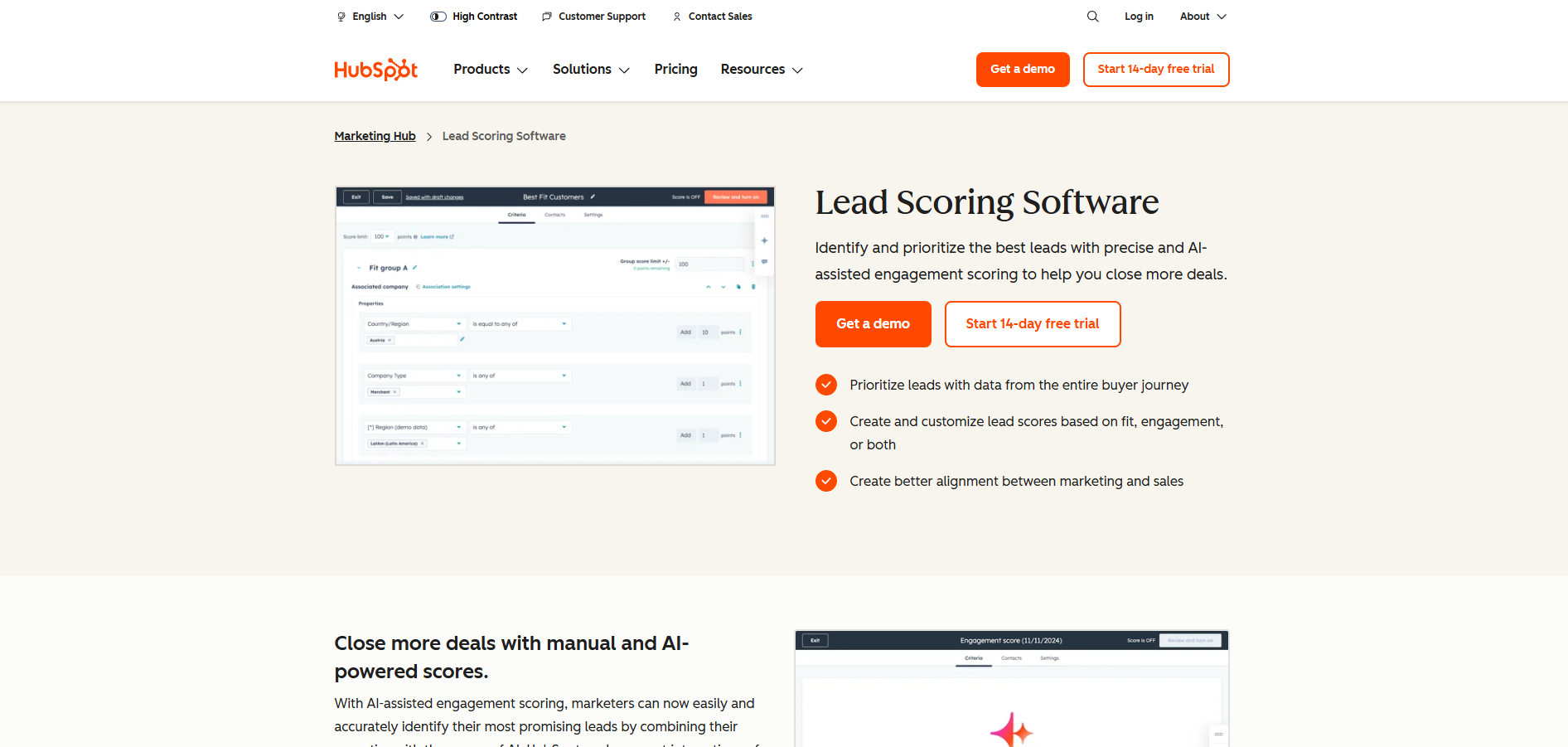
HubSpot integrates behavioral and demographic scoring directly into its Marketing Hub, aligning marketing automation with CRM handoff. It’s designed for inbound teams that need simplicity, fast adoption, and visual workflows.
Key Features
- Integrated behavioral and demographic point system
- Real‑time CRM synchronization and segmentation
- Negative scoring for low‑intent actions
- Automated nurture sequences triggered by thresholds
- Transparent dashboards for MQL / SQL review
Best Fit: Small and mid‑market firms needing lightweight, CRM‑connected lead scoring.
Pricing: Included in Professional / Enterprise Marketing Hub; free tier available with manual setups.
Salesforce Pardot (Account Engagement)
Salesforce Pardot provides enterprise‑ready lead scoring within the Salesforce ecosystem. It supports explicit and implicit scoring rules, deep CRM alignment, and robust compliance tools.
Key Features
- Demographic + behavioral dual‑scoring engine
- Native Salesforce pipeline visibility
- Built‑in ABM segmentation and nurture sequencing
- Advanced analytics on conversion and campaign ROI
- Account‑level insights for complex enterprise hierarchies
Best Fit: Large, Salesforce‑centric enterprises managing long sales cycles with heavy governance requirements.
Pricing: Tiered enterprise licensing; quote provided by Salesforce.
Marketo Engage
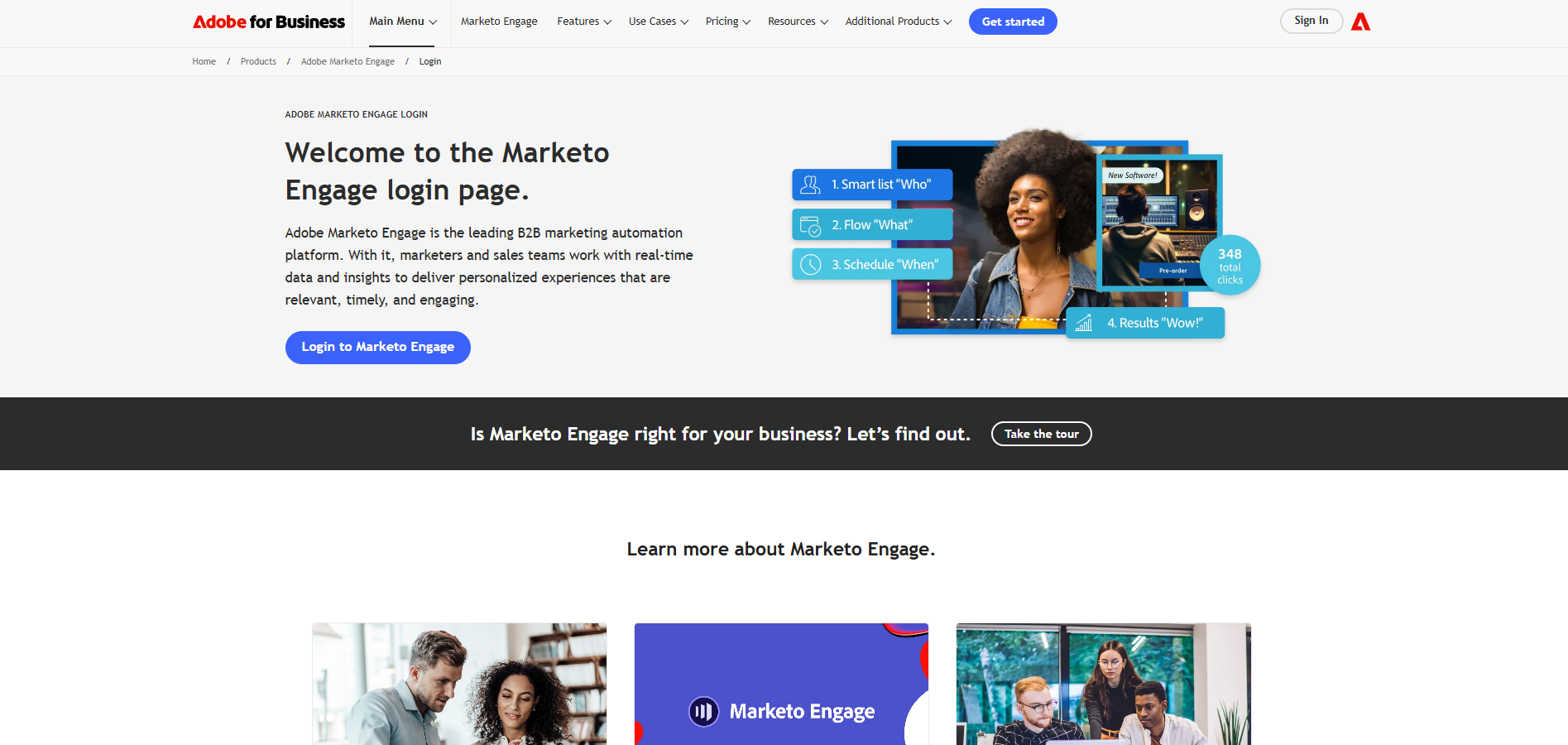
Marketo Engage offers predictive, multi‑touch lead scoring for high‑volume B2B organizations. It pulls from behavioral, firmographic, and third‑party intent signals to map engagement patterns throughout the buyer journey.
Key Features
- Predictive algorithms with cross‑channel attribution
- Behavioral and content‑consumption analytics
- A/B testing for scoring model optimization
- Native integration with Adobe Experience Cloud and major CRMs
- Automated feedback loops between marketing and sales
Best Fit: Global marketing operations with mature tech stacks and multi‑touch attribution needs.
Pricing: Custom enterprise plans based on database capacity / feature scope.
ZoomInfo SalesOS
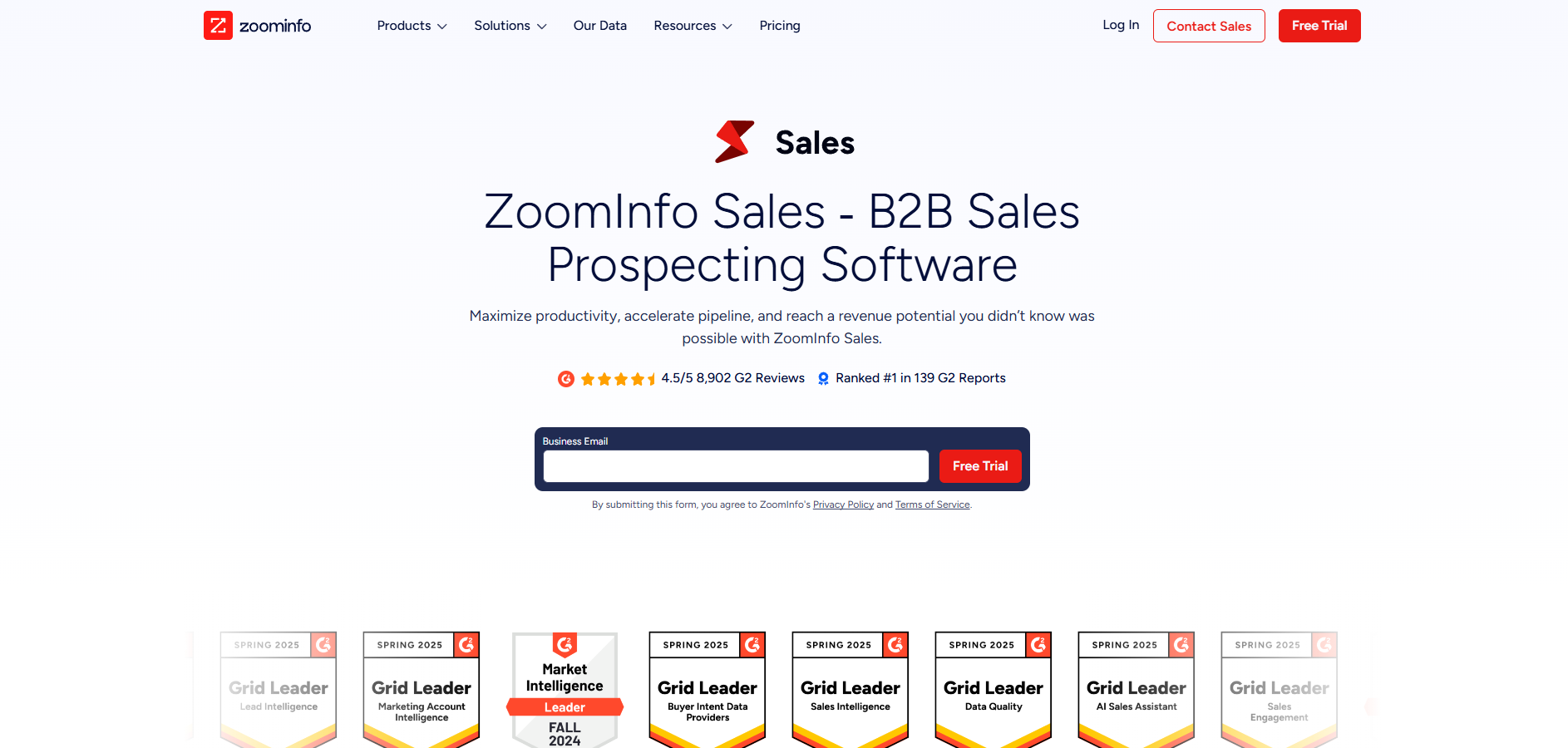
ZoomInfo SalesOS connects verified B2B contact data with strong intent signals to forecast conversion probability and prioritize outreach. Its strength lies in combining enrichment accuracy with behavioral timing.
Key Features
- Real‑time intent and technographic analytics
- Verified firmographic enrichment for target accounts
- Account‑level scoring to support ABM workflows
- CRM and sales‑engagement sync for pipeline visualization
- Intelligent alerts for surging buyer interest
Best Fit: Enterprise sellers and RevOps teams focused on intent‑led targeting and accuracy in account prioritization.
Pricing: Tiered licensing structured by seat count and data‑volume access.
How to choose the right lead scoring tool
Choosing a lead scoring platform starts with aligning the tool’s capabilities to your team’s sales maturity, data infrastructure, and automation goals. Organizations early in their digital transformation often benefit from CRM‑native systems like HubSpot or Salesforce Pardot, which simplify scoring and syncing within familiar workflows.
More advanced GTM teams handling larger datasets should consider predictive or AI‑driven tools such as 11x or Marketo Engage that learn from behavioral patterns in real time. Evaluate each option using measurable factors: integration depth, scoring transparency, scalability, and automation coverage. Ultimately, the best fit is not the tool with the longest feature list, but the one that embeds smoothly into your revenue operations and continuously optimizes lead quality, speed‑to‑engage, and conversion efficiency.
Lead Scoring Best Practices
A successful lead scoring model pairs clear setup with consistent review using a data-driven methodology. Start by defining your ideal customer profile (ICP) and mapping both firmographic and behavioral traits that historically lead to revenue, including demographic information and email engagement patterns. Then, align marketing and sales on what qualifies as a Marketing Qualified Lead (MQL) or Sales Qualified Lead (SQL) so the scoring system reflects real conversion outcomes and supports effective lead generation efforts.
1. How to Structure Your Scoring Model
- Define your ICP: company size, industry, revenue band, and job title using comprehensive demographic information.
- Assign positive points for behaviors that show buying intent—pricing page visits, webinar registrations, whitepaper downloads, or case study interactions.
- Use behavioral thresholds to flag when a prospect is sales‑ready, incorporating email engagement and social media activity as key data points.
- Include negative scores for inactivity, disengagement, or mismatched segments to filter out low-quality leads.
- Recalibrate quarterly using win‑loss data to improve scoring accuracy and ensure your lead scoring process delivers high-value prospects.
2. Core Scoring Criteria to Track
- Demographic fit: industry, region, job title, and company size alignment with your ICP using verified demographic information.
- Behavioral engagement: email opens, site visits, event attendance, content downloads, and social media interactions that indicate genuine interest.
- Intent signals: pricing page views, repeat brand engagement, whitepaper downloads, or competitor research indicating purchase readiness.
- Timing: recency and frequency of actions taken, including follow-up responsiveness as key metrics.
- Disqualifiers: limited budget, student emails, or companies outside target markets that don't represent quality leads for B2B sales.
3. Implementation and Optimization Strategy
Modern scoring systems should connect directly to your CRM and marketing automation tools for seamless data sharing across the sales process. Real‑time updates ensure sales reps react to warm activity immediately, while automated nurture workflows engage lower‑scored leads until they're sales‑ready. This data-driven approach to lead generation ensures continuous optimization—adjusting point values based on conversion history—keeps the model predictive and aligned with actual revenue performance. Track metrics like email engagement rates and social media interactions to refine your methodology and focus marketing efforts on generating high-value prospects
Transform Lead Scoring into Revenue with 11x
Effective B2B lead scoring separates high-intent buyers from tire-kickers using data-driven methodology, but most platforms stop at numerical rankings. The real competitive advantage comes from systems that act on those scores immediately—engaging quality leads before they cool off or move to competitors, turning your lead generation efforts into measurable results.
11x combines intelligent lead scoring with autonomous execution, so Alice and Julian don't just identify your high-value prospects—they engage them instantly across email, LinkedIn, and phone using comprehensive demographic information and behavioral data points. Every behavioral signal becomes a real-time trigger for personalized outreach, while continuous learning refines your scoring criteria based on actual conversion outcomes. Email engagement, social media interactions, and whitepaper downloads all feed into this data-driven sales process that creates a self-optimizing qualification engine.
This methodology transforms traditional follow-up approaches by scoring, engaging, and converting leads without manual intervention. Ready to see lead scoring that drives pipeline instead of just reports? Explore 11x and discover how autonomous AI workers turn scoring insights and marketing efforts into scheduled meetings automatically, delivering quality leads that accelerate your B2B sales performance through proven metrics.
Frequently Asked Questions
B2B lead scoring assigns point values to demographic characteristics (company size, industry, job title) and behavioral actions (email opens, content downloads, pricing page visits). Demographic scoring evaluates fit against your ideal customer profile, while behavioral scoring measures buying intent through engagement patterns.
11x automates this process—Alice calculates scores in real-time by weighing demographic fit and behavioral signals, then continuously optimizes criteria based on conversion outcomes.
Effective models balance demographic fit with behavioral engagement, include negative scoring for unqualified prospects, and align with your sales team's MQL/SQL definitions. Regular optimization using historical conversion data keeps scoring predictive of actual outcomes.
11x eliminates manual model management by continuously learning from prospect interactions and adjusting criteria to maximize qualification accuracy.
Marketing automation tracks prospect behavior automatically and triggers workflows based on score thresholds—nurturing lower-scored leads while routing high-intent prospects to sales. CRM integration enables real-time updates and historical tracking.
11x extends this by combining scoring intelligence with autonomous outreach, converting scored leads into qualified meetings without manual intervention.
AI transforms static scoring into dynamic, self-improving systems that identify subtle conversion patterns human analysts miss. Machine learning processes multiple data streams simultaneously, updating scores in real-time as behavior changes.
Alice from 11x goes beyond traditional scoring by actively engaging prospects based on qualification levels, gathering additional data through conversational intelligence to refine accuracy continuously.
Compare high-scoring leads that didn't convert with lower-scoring prospects who became customers to identify scoring gaps. Test different point values and thresholds to find the most predictive combination of demographic and behavioral factors. Regular quarterly reviews ensure ongoing accuracy.