B2B sales teams still lose revenue to manual pipeline updates, delayed follow-ups, and disconnected systems. Pipeline leakage costs companies millions annually while sales reps and salespeople spend hours on admin work instead of closing deals. The solution requires intelligent execution that acts on every signal automatically, guiding potential customers through each step of the buying journey.
B2B sales pipeline management is the structured process of moving leads through the sales funnel, from initial generation to post-sale expansion. It integrates qualification, discovery, proposal, negotiation, and retention workflows to ensure qualified leads continue progressing in the buying process. Without unified visibility, teams struggle with forecast accuracy, stage leakage, and sales-to-CS misalignment during handoffs. These gaps interrupt effective customer relationship management and limit long-term growth through cross-sell and referrals.
The paradigm shift is here. AI automation is transforming pipeline management from reactive reporting to self-optimizing execution. Systems like 11x deliver autonomous pipeline management through digital workers Alice (AI SDR) and Julian (AI Phone Agent) that continuously qualify, engage, forecast, and update CRM data in real time. Together they shorten the sales cycle, enhance forecasting accuracy, and sustain real connection between potential buyers and sales reps across every channel including email, calls, and social media.
This guide breaks down each stage of a modern B2B sales funnel, explains how to align your sales strategy, and compares leading tools trusted by RevOps teams to accelerate pipeline velocity, generate new customers, and improve results across all sales opportunities.
Evaluation Criteria: Our Pipeline Optimization Methodology
Our methodology prioritizes neutral, criteria-driven analysis: 90% objective feature comparison, 10% strategic insight from GTM experience. Tools are evaluated on enterprise readiness, integration depth, AI sophistication, coverage across the sales pipeline stages, CRM quality, governance, and measurable ROI.
This framework emphasizes reasoning, transparency, and proven methods. We analyze how revenue teams combine automation and lead nurturing tactics across dozens of GTM workflows to identify what drives consistent velocity improvement, higher conversion rates, and predictable sales forecasting within modern customer relationship management frameworks.
The Modern B2B Sales Pipeline: Stages, Challenges, and AI Solutions
The standardized B2B pipeline consists of eight critical stages that determine revenue outcomes:
- Lead Generation / Prospecting: attracting and sourcing high-quality leads through inbound and outbound channels
- Lead Qualification: validating fit based on intent signals, budget, authority, need, and timeline criteria
- Discovery / Needs Analysis: diagnosing pain points and matching solutions through structured conversations
- Proposal / Presentation: presenting tailored offers with precise value alignment and ROI justification
- Negotiation / Evaluation: refining terms, managing objections, and coordinating buying committee decisions
- Closing / Contract Signing: finalizing agreements, securing legal approvals, and confirming revenue recognition
- Implementation / Onboarding: ensuring smooth deployment through coordinated Customer Success handoffs
- Post-Sale Follow-up / Account Management: nurturing renewals, identifying upsells, and reactivating dormant accounts
Traditional pipeline management suffers from predictable friction points: misrouted leads waste qualification cycles, poor scoring accuracy sends reps after dead-end prospects, delayed follow-ups kill momentum, forecast gaps create resource planning chaos, and weak sales-to-CS handoffs damage customer relationships from day one.
AI-led systems solve these problems through unified data orchestration and autonomous execution. Alice handles lead generation and qualification by researching prospects across verified data sources, sending personalized outreach, and booking qualified meetings automatically. Julian manages inbound qualification, follow-up calls, and prospect reactivation around the clock. Together, they eliminate manual bottlenecks and reduce pipeline leakage across every stage.
How Leading Teams Manage and Optimize Each Stage
Lead Generation / Prospecting
Best-in-class teams identify ideal customer profiles using firmographic and intent data, then layer on behavioral signals and engagement patterns. AI automation research targets accounts autonomously, monitoring job changes, funding rounds, technology purchases, and competitive moves that indicate buying readiness.
Alice excels here by tracking market signals in real time, building prospect lists from 400+ million verified contacts, and identifying high-intent leads before competitors. The system continuously refines ICP targeting based on conversion patterns and closed-won characteristics.
Lead Qualification
AI-driven lead scoring evaluates engagement data, demographic fit, and behavioral signals to prioritize prospects automatically. Modern systems integrate with CRM platforms like HubSpot, Salesforce, and Pipedrive to maintain consistent scoring across the funnel.
Julian responds to inbound leads within seconds, qualifying prospects using exact criteria before routing to sales teams. This speed-to-lead advantage dramatically improves conversion rates while reducing manual qualification workload.
Discovery / Needs Analysis
AI tools enrich prospect profiles with company intelligence, recent news, technology stack data, and org chart mapping. This contextual insight enables more productive discovery conversations and accurate needs assessment.
Alice gathers this intelligence automatically before AE involvement, ensuring every handoff includes complete prospect context, verified contact information, and engagement history. Reps enter discovery calls fully prepared instead of starting from scratch.
Proposal / Presentation
Winning teams personalize proposals using customer data, reference relevant case studies, and coordinate AE input through automated triggers. AI agents maintain consistent engagement throughout the evaluation period.
Alice crafts adaptive messaging sequences that maintain momentum between proposal delivery and decision meetings. Automated follow-ups ensure prospects stay engaged while buying committees complete internal reviews.
Negotiation / Evaluation
AI insights help anticipate common objections, ensure prompt responses to procurement questions, and maintain responsiveness during contract negotiations. Data-driven approaches reduce cycle times and improve win rates.
Julian manages follow-ups to prevent deals from stalling, scheduling check-ins with key stakeholders and providing contract status updates to keep momentum high throughout the negotiation phase.
Closing / Contract Signing
Advanced automation connects directly to contract systems for faster closing workflows, automated signature requests, and legal approval routing. Integration eliminates manual handoffs that delay revenue recognition.
Julian prevents deal drop-off through proactive follow-ups on pending signatures, payment processing, and final approval requirements. Automated reminders keep closing tasks on track.
Implementation / Onboarding
Seamless sales-to-CS handoffs require complete deal context transfer, including expected outcomes, implementation timelines, and success criteria. AI systems automate this knowledge transfer while maintaining relationship continuity.
11x ensures smooth transitions by syncing full engagement history, qualification notes, and customer expectations directly into CS platforms. Teams start onboarding with complete context instead of rediscovering customer requirements.
Post-Sale Follow-up / Account Management
Long-term value creation depends on renewal tracking, expansion opportunity identification, and dormant account reactivation. AI agents monitor account health signals and engagement patterns to trigger appropriate outreach.
Julian reactivates old accounts through personalized re-engagement campaigns while Alice identifies expansion opportunities based on usage patterns, org changes, and buying signals from existing customers.
2025 Pipeline Optimization Framework: Data, Automation, and Alignment
Leading RevOps teams evaluate pipeline maturity across three critical dimensions that determine automation ROI:
- Data Integrity: unified CRM systems, AI-powered enrichment, and deduplication processes prevent pipeline leakage. Clean data enables accurate forecasting and informed decision-making across sales stages.
- Automation Depth: digital workers replace manual admin tasks and act instantly on live buying signals. Autonomous execution eliminates human delays while maintaining personalization quality.
- Team Alignment: RevOps, Sales, and Customer Success share real-time visibility into identical pipeline data. Synchronized workflows prevent handoff failures and account management gaps.
Teams achieving pipeline optimization maturity typically report faster deal cycles, improved forecast accuracy, and reduced manual data entry compared to traditional approaches.
Best Tools to Improve B2B Sales Pipeline Management
The following platforms represent complementary solutions that address specific pipeline stages while integrating seamlessly with autonomous execution systems:
1. 11x

11x provides autonomous pipeline management through digital workers that execute every stage from lead generation to post-sale reactivation. Alice and Julian handle prospect research, multi-channel outreach, qualification, follow-ups, and CRM synchronization with initial configuration and ongoing optimization.
Core Features:
- Autonomous prospecting across 400+ million verified B2B contacts sourced from 21+ premium data providers
- Real-time lead qualification and scoring using 75+ intent signals and buying indicators
- Multi-channel outreach automation via email, LinkedIn, and phone with personalized messaging
- CRM integration with Salesforce, HubSpot, and Pipedrive for seamless data synchronization
- Pipeline forecasting with predictive analytics and deal probability scoring
- Post-sale account management and expansion opportunity identification
Unique Strengths: Complete autonomy eliminates manual pipeline management while maintaining personalization quality. The system learns from every interaction to optimize performance continuously. Enterprise-grade security includes SOC 2 Type II certification and GDPR compliance.
Weaknesses: Requires initial configuration for complex GTM processes and commitment to transforming existing sales workflows.
Pricing: Custom pricing based on pipeline volume and integration requirements
Best Fit: Revenue teams ready to transition from tool management to outcome optimization. Ideal for organizations scaling outreach volume while maintaining conversation quality and pipeline predictability.
2. Pipedrive AI CRM
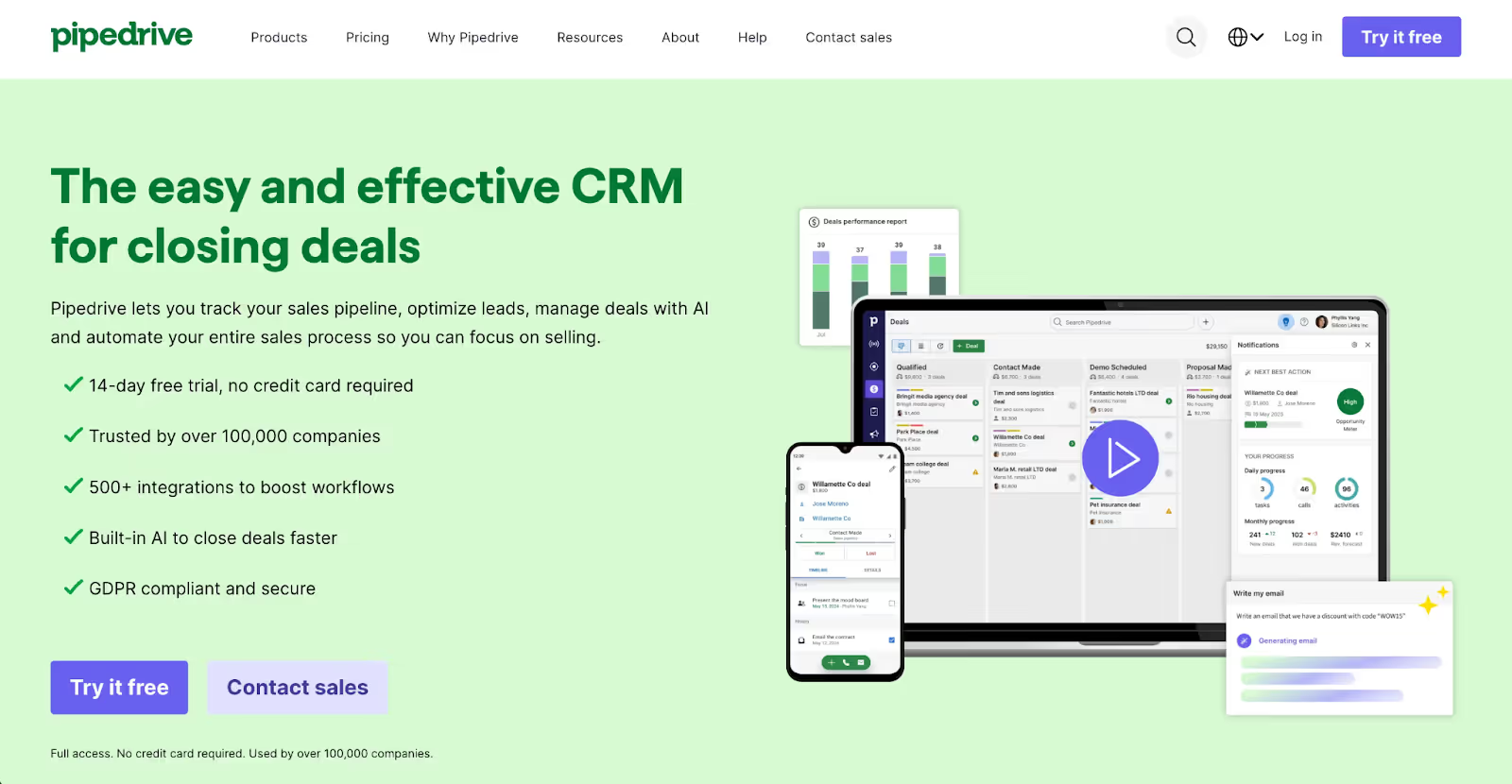
Pipedrive’s AI CRM brings intelligence and automation to visual pipeline management. It streamlines deal tracking and automates every stage from lead capture to closing, helping GTM teams align daily actions with revenue goals. The platform’s built‑in AI Sales Assistant analyzes deal data, highlights risks, and recommends next best steps for faster conversions.
Core Features:
- AI-driven Sales Assistant that surfaces opportunities, suggests next actions, and summarizes performance data
- Visual pipeline board for clear stage management across deals, forecasts, and ongoing activities
- Predictive analytics for conversion likelihood and revenue forecasting accuracy
- Workflow automation for follow-ups, notifications, and lead routing rules
- Native integrations with Salesforce, HubSpot, Slack, Zoom, Trello, and hundreds of business tools via open API
Unique Strengths: Pipedrive offers a balance of simplicity and intelligence; its AI layer enhances usability instead of overcomplicating it. Teams gain consistent visibility across engagements, while automation reduces human error in updates and follow-ups.
Weaknesses: Marketing automation and advanced cross‑channel orchestration are limited compared to full‑stack CRMs. Enterprise analytics and role‑based governance require higher‑tier plans.
Pricing: Plans start at $14/user/month; AI insights, forecasting, and workflow automation included on higher tiers
Best Fit: Ideal for small to mid‑market sales teams that prioritize intuitive pipeline visibility, measurable forecasting, and proactive insights.
3. Salesforce
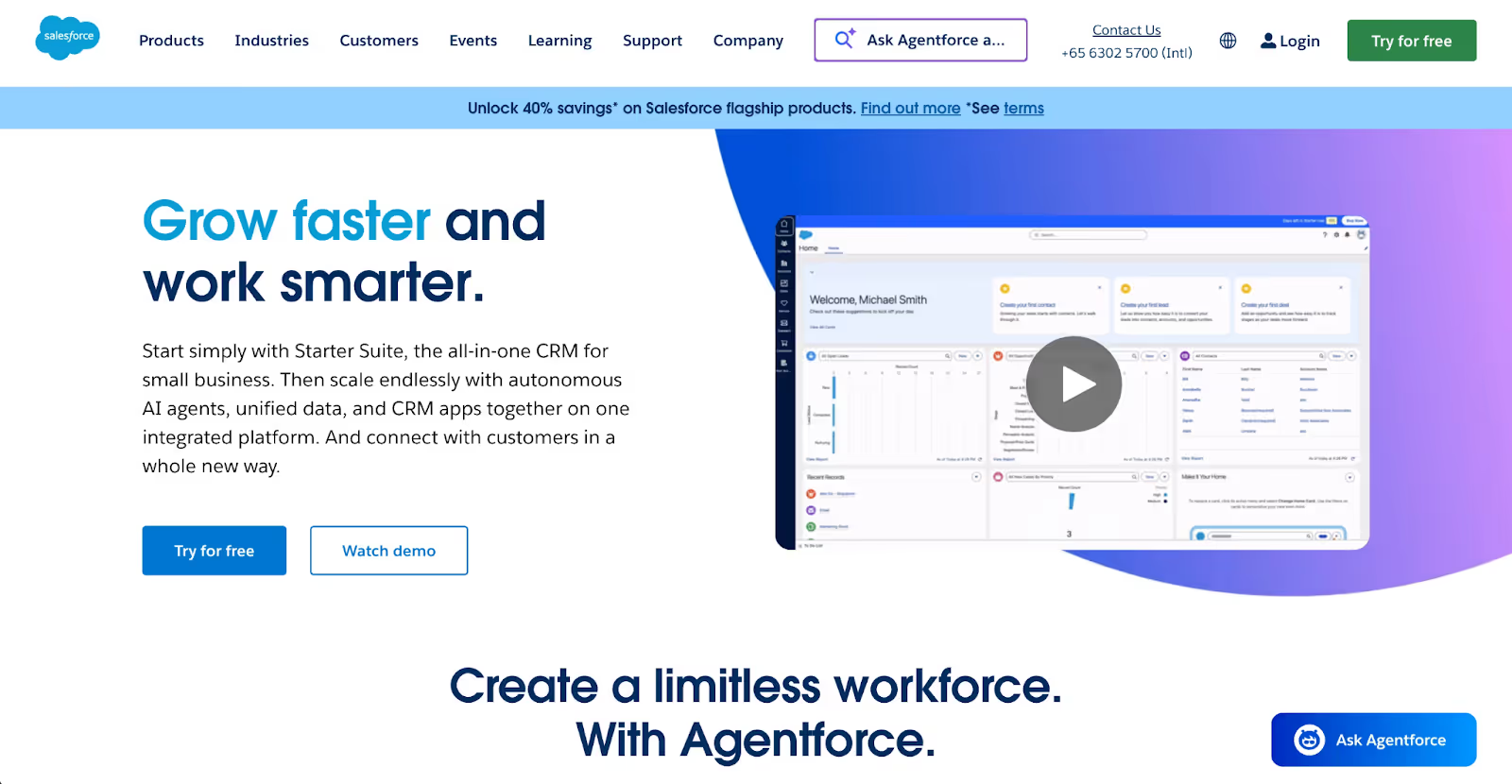
Salesforce remains the enterprise standard for AI-driven CRM performance. Einstein AI automates forecasting, communication tracking, and customer engagement across every stage of the lifecycle with deep customization capabilities.
Core Features:
- Predictive analytics with Opportunity Insights forecasting deal outcomes
- AI assistant for communication, summarizing calls, and drafting personalized outreach
- Einstein Bots for automated customer service and query resolution
- Custom AI model creation through Einstein Prediction Builder (no-code)
- Integration ecosystem connecting 3,000+ apps with global scalability
Unique Strengths: Deep customization options and global scalability. Comprehensive integration ecosystem. Advanced analytics and reporting capabilities.
Weaknesses: Complex setup requiring skilled administrators. Full customization and advanced analytics add significant cost.
Pricing: From $25/user/month with Einstein AI features on higher tiers
Best Fit: Large enterprises with complex workflows and dedicated Salesforce teams.
4. Clearbit

Clearbit provides real-time firmographic and technographic enrichment that transforms basic contact information into detailed account profiles. The platform identifies anonymous website visitors, standardizes CRM data, and triggers campaigns based on account characteristics.
Core Features:
- Real-time API enrichment with 100+ data points per company record
- Website visitor identification and intent signal detection for anonymous traffic
- CRM data standardization and deduplication workflows across platforms
- Technographic mapping for product-market fit analysis and targeting
Unique Strengths: High data quality with regular updates ensures reliable contact information. Strong API performance for real-time enrichment. Comprehensive technographic data for precise targeting.
Weaknesses: Premium pricing may stretch smaller teams. Focuses on enrichment rather than execution or outreach automation.
Pricing: Custom enterprise pricing based on API volume and data requirements
Best Fit: Mid-market and enterprise teams running ABM campaigns where data quality drives outcomes.
5. Gong
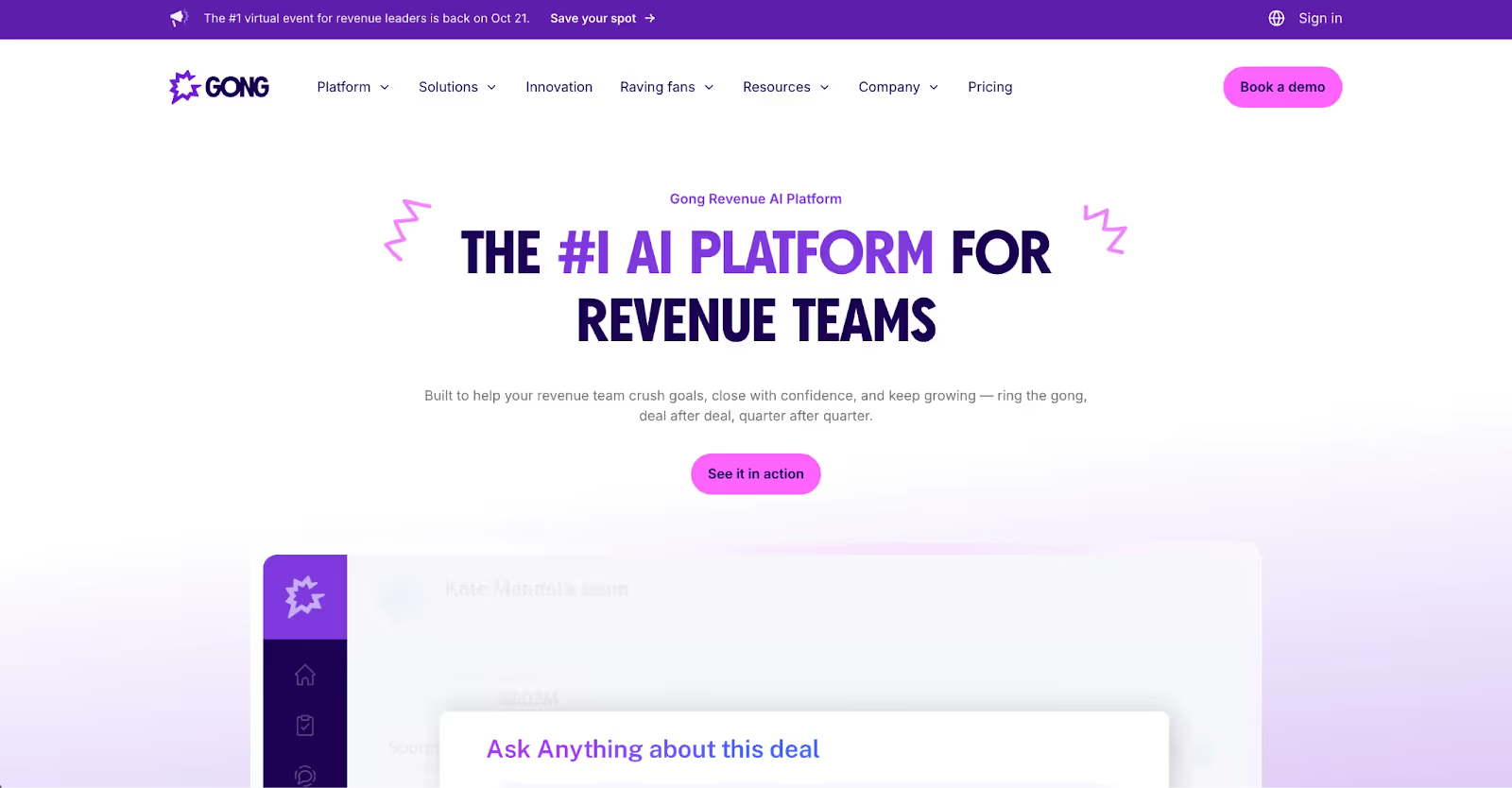
Gong analyzes sales calls, emails, and pipeline behavior to produce predictive insights about deal outcomes. The platform identifies successful conversation patterns and provides coaching recommendations to improve win rates.
Core Features:
- Conversation intelligence across calls, emails, and meetings with AI transcription
- Deal risk analysis and close probability predictions based on engagement patterns
- Competitive intelligence and objection pattern identification from recorded interactions
- Rep performance benchmarking and coaching insights for skill development
Unique Strengths: Advanced conversation analysis provides actionable coaching insights. Strong integration with popular sales tools. Detailed competitive intelligence from customer interactions.
Weaknesses: Focuses on analysis rather than execution. Requires existing sales activities to analyze rather than generating new outbound efforts.
Pricing: Custom pricing for mid-market and enterprise organizations
Best Fit: Sales leaders tracking team productivity and conversion metrics who want detailed analytics. Gong provides insights while 11x executes based on proven conversation patterns and successful messaging frameworks.
6. Calendly
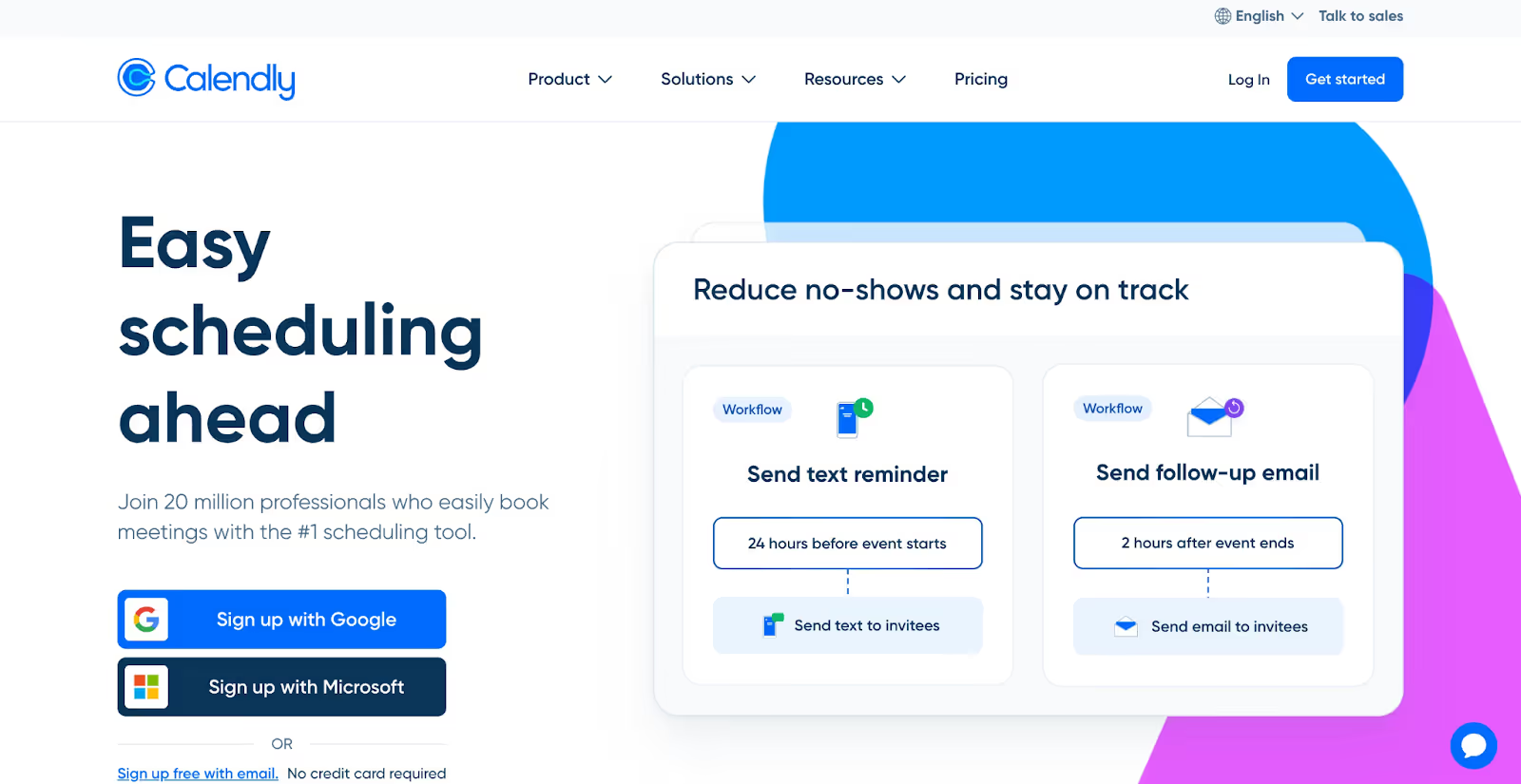
Calendly eliminates scheduling friction by automating meeting coordination, sending reminders, and routing prospects to appropriate team members. The platform integrates with major calendar and CRM systems for seamless workflow management.
Core Features:
- Automated scheduling with calendar integration and team availability pooling
- Custom qualification forms and intelligent routing rules for prospect assignment
- Meeting reminder automation and no-show reduction workflows
- CRM integration for automatic activity logging and pipeline updates
Unique Strengths: Simple setup and broad integration support. Effective no-show reduction through automated reminders. Flexible routing options for team-based scheduling.
Weaknesses: Limited to scheduling functionality without broader sales automation capabilities.
Pricing: Free plan available; paid plans from $10/user/month
Best Fit: All sales teams booking meetings as part of their sales process. Calendly handles scheduling while 11x manages the entire pipeline from prospecting through meeting booking and follow-up execution.
From Tracking to Autonomous Growth
The sales pipeline has evolved beyond tracking to become a continuously learning AI system that drives revenue automatically. Modern pipeline management eliminates manual lag, prevents stage leakage, and maintains perfect sales-to-CS alignment through intelligent orchestration.
Sustainable performance depends on systems that learn from every interaction, adapt messaging in real time, and execute flawlessly across multiple channels. The future belongs to teams that replace reactive pipeline management with proactive revenue generation.
Ready to transform your pipeline from manual tracking to autonomous execution? Book a demo with 11x to see how digital workers convert every opportunity into revenue automatically.
Frequently Asked Questions
B2B sales pipeline management encompasses eight critical stages: lead generation, qualification, discovery, proposal, negotiation, closing, implementation, and post-sale account management. Each stage requires specific workflows to move prospects toward revenue while preventing pipeline leakage.
AI systems like 11x manage this end-to-end cycle autonomously, eliminating manual bottlenecks while maintaining personalization quality across every touchpoint.
AI removes traditional bottlenecks through instant response times, continuous learning, and autonomous execution. Modern AI agents analyze engagement patterns, predict deal outcomes, and automate follow-up sequences without human delay.
In 11x, digital workers act immediately on every buying signal, scoring prospects, personalizing outreach, booking meetings, and updating CRM records. This eliminates the lag time that causes pipeline leakage in manual systems.
Monitor lead velocity (time between stages), stage conversion rates, average contract value, and cost per lead as primary metrics. Advanced teams track AI agent performance including response times, personalization quality, and learning curve acceleration.
In AI-managed systems like 11x, these metrics update continuously with performance optimization recommendations based on real engagement data and conversion patterns.
CRMs store and visualize pipeline data but require human interpretation and action. AI-managed pipelines like 11x execute automatically on that data, researching prospects, sending personalized outreach, booking meetings, and updating records continuously.
The system operates as autonomous sales team members rather than passive tracking tools, closing visibility gaps while accelerating every stage of the sales cycle through intelligent automation.