Top 8 B2B Tech Marketing Tools to Try in 2026
Compare the best B2B tech marketing tools for lead generation, ABM, and automation. Schedule a demo with 11x.

B2B tech marketing separates companies that scale from those that stall. Gartner finds organizations with mature digital marketing capabilities generate 2.5x more pipeline than those relying on traditional outbound alone.
GTM leaders need tools that reach decision-makers, generate qualified leads, and prove ROI without bloating teams. Market data underscores this: 63% of marketers cite traffic and lead generation as their top challenge (HubSpot), 75% of B2B buyers use social media in purchasing decisions (LinkedIn), and companies using marketing automation see measurable gains in pipeline velocity and conversions.
This guide covers the leading platforms across lead generation, ABM, content marketing, and automation to help your marketing strategy reach potential customers faster.
What Is B2B Tech Marketing
Before we dive into the top 8 best tech marketing tools, here’s the context. B2B tech marketing targets business decision-makers who evaluate solutions based on ROI, integrations, and strategic fit. It requires engaging complex buying committees and long sales cycles through digital channels and account-based marketing focused on high-value accounts.
Key Terms:
- Account-based marketing (ABM): A strategy concentrating resources on specific target accounts rather than broad audience segments
- Demand generation: Programs creating awareness and interest among potential customers through content, events, and campaigns
- Marketing qualified lead (MQL): A lead meeting defined criteria indicating readiness for sales engagement
- Content marketing: Strategic creation of white papers, webinars, and case studies that educate B2B buyers
- Marketing automation: Software that executes repetitive tasks like email campaigns and lead nurturing automatically
Understanding these key terms will help you evaluate the tools ahead and apply them more effectively to your marketing strategy.
Core Use Cases Across B2B Tech Marketing
B2B tech marketing delivers value across four areas spanning the customer lifecycle, helping teams make data-driven decisions about where to invest resources for maximum return on investment.
- Demand Generation: Content programs, SEO, and paid campaigns attract and educate buyers, while PR, thought leadership, podcasts, and influencers build credibility and expand reach.
- Lead Generation and Qualification: Optimized forms capture leads, while scoring and intent data prioritize high-fit accounts. Marketing automation nurtures prospects until they are ready for sales engagement.
- Account-Based Marketing: Personalized, multi-channel campaigns target high-value accounts in alignment with sales. Engagement scoring and multi-threading ensure focus on key decision-makers.
- Marketing Operations:Attribution and A/B testing improve performance, while integrated martech and compliance processes ensure accurate data flow and regulatory adherence.
Together, these core areas form the foundation of a scalable, results-driven B2B tech marketing strategy.
How B2B Tech Marketing Differs from Traditional Approaches
Traditional B2B marketing relied on trade shows, cold calls, and print ads. Today, B2B tech marketing is digital-first, with buyers researching independently and spending just 17% of their journey with suppliers, according to Gartner.
The results are clear: companies using marketing automation generate more qualified leads, while data-driven personalization improves conversion rates by 15–20%. McKinsey also finds that personalization at scale can cut customer acquisition costs by up to 50%.
Modern strategies prioritize owned media like blogs, podcasts, and webinars, shifting the focus from lead volume to high-quality, sales-ready opportunities that drive revenue growth.
The Best B2B Tech Marketing Tools
We evaluated the best eight leading platforms across demand generation, content marketing, account-based marketing, and marketing automation.
Each platform is assessed for enterprise readiness, integration depth, and ROI potential, with a focus on multichannel reach, seamless CRM integration, AI-powered personalization, robust compliance features, and proven results that deliver real impact in B2B tech marketing.
Here’s a quick comparison to help you find the best tools for your needs:
1. 11x Alice and Julian: Best for Autonomous GTM Execution
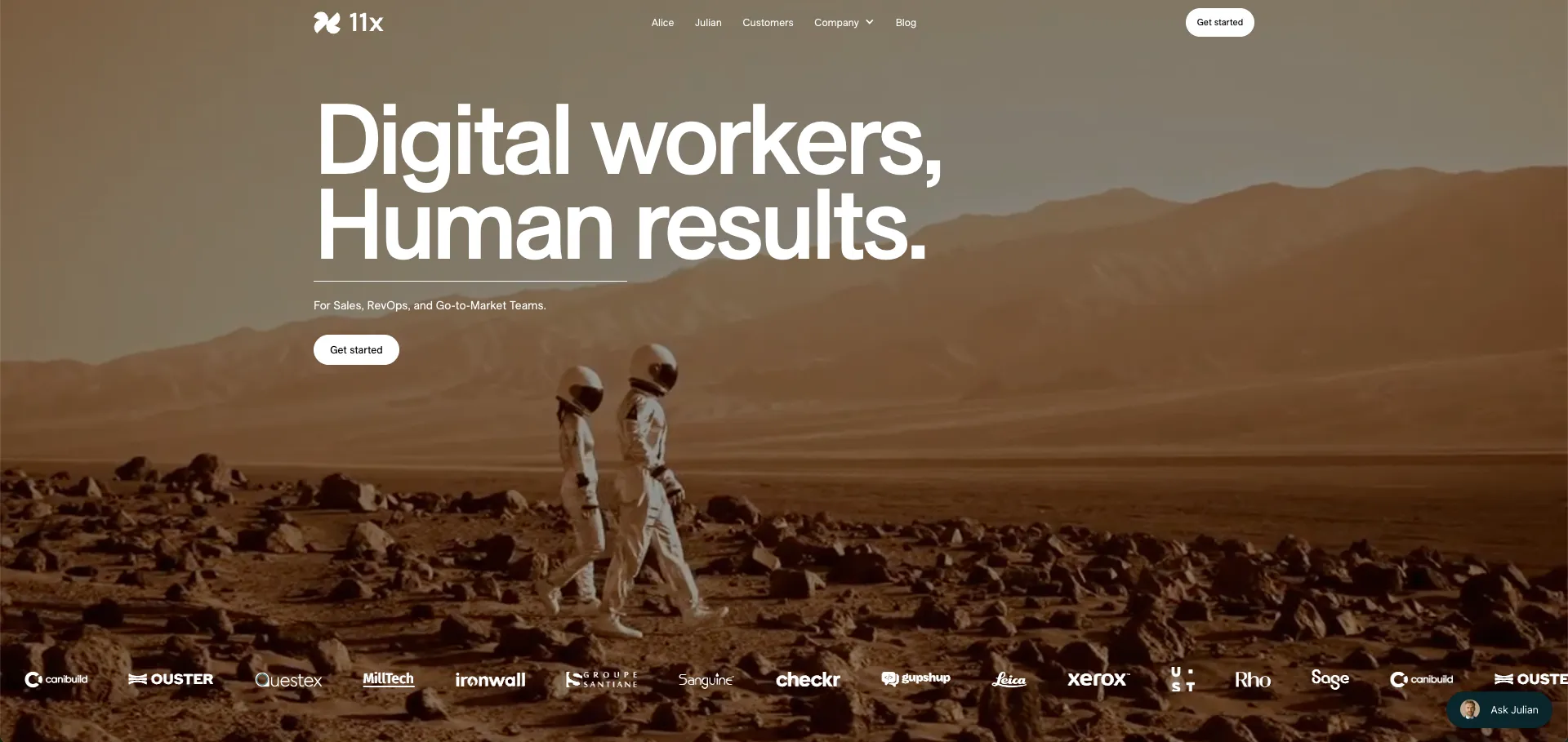
11x deploys autonomous digital workers that function as true virtual team members, revolutionizing how B2B tech companies approach marketing and sales execution. Alice handles outbound prospecting across email and LinkedIn, while Julian qualifies inbound leads through natural phone conversations. Together, they transform marketing-generated interest into a qualified pipeline without manual intervention.
Core Capabilities:
- True autonomy with goal-driven agents executing complete workflows from research to meeting booking
- Multichannel coordination across email, LinkedIn, and phone with seamless handoffs
- Signal-driven intelligence tracking intent indicators, job changes, and engagement patterns in real time
- Deep CRM integration with bi-directional sync to Salesforce and HubSpot for complete visibility
Standout Features:
- Operates 24/7 across 100+ languages for global B2B tech companies expanding into new markets
- Personalization at scale using research and behavioral data for messaging that converts
- Compliance-aware workflows with SOC 2 Type II, GDPR, and CCPA certifications built in
- Self-learning algorithms that refine targeting based on conversion outcomes continuously
Competitive Advantages:
- First platform to deliver truly autonomous digital workers that replace entire SDR functions
- Superior multichannel orchestration coordinating email, social, and phone touchpoints
- Advanced self-learning capabilities that improve performance without manual optimization
- Enterprise-ready governance from day one with white-glove onboarding and dedicated CSM
Ideal Fit: Tech businesses needing to scale lead generation and qualification without adding headcount. Organizations want autonomous execution that maintains personalized outreach and conversion improvements across funnel stages.
ROI Impact: Gupshup saw a 50% increase in SQLs per SDR after adopting Alice, enabling a 1.5x boost in output per rep.
Schedule a product demo with our expert team.
2. HubSpot Marketing Hub: Best for Integrated Inbound Marketing
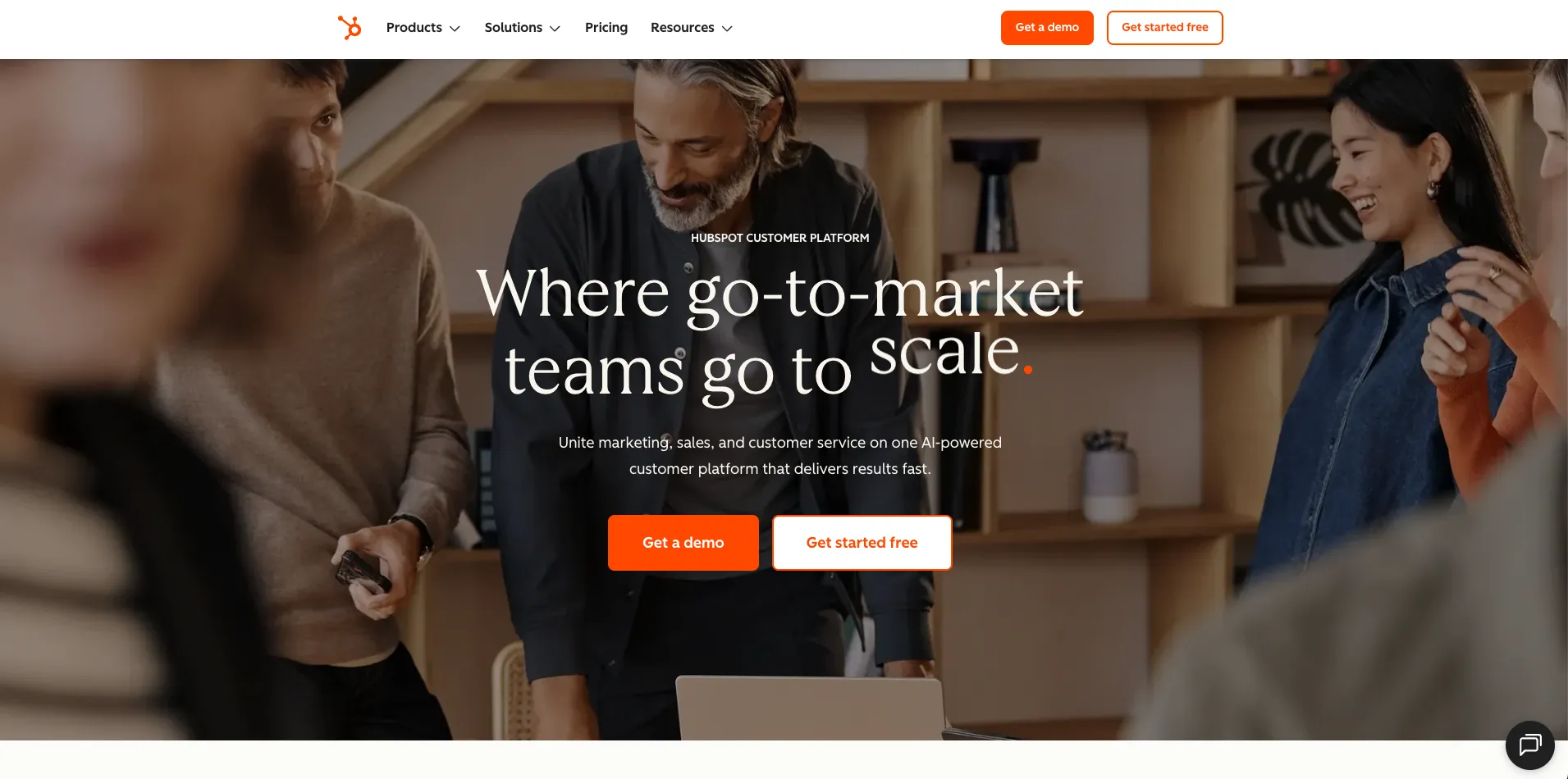
HubSpot combines CRM, marketing automation, and content management in one platform designed for B2B tech marketing teams building inbound programs. The platform handles email marketing, landing pages, blogging, and SEO, all connected to a native CRM that provides complete visibility.
HubSpot's visual workflow builder enables sophisticated email marketing campaigns through drag-and-drop simplicity. The platform includes native blogging, landing page builders, and SEO tools for comprehensive content marketing programs. With over 1,000 integrations, HubSpot connects with virtually every tool in your B2B marketing tech stack.
The free CRM tier provides accessible entry for startups, with paid tiers unlocking advanced automation, ABM features, and detailed analytics. For technical B2B marketing use cases, HubSpot offers API access, custom objects, and programmable automation for complex workflows supporting marketing campaigns at scale.
Ideal Fit: Marketing teams building inbound programs with integrated CRM workflows who prefer hands-on control. Best for companies with dedicated marketing operations resources.
Pricing: Starts at $800/month for Marketing Hub Professional.
3. LinkedIn Marketing Solutions: Best for Reaching B2B Decision-Makers
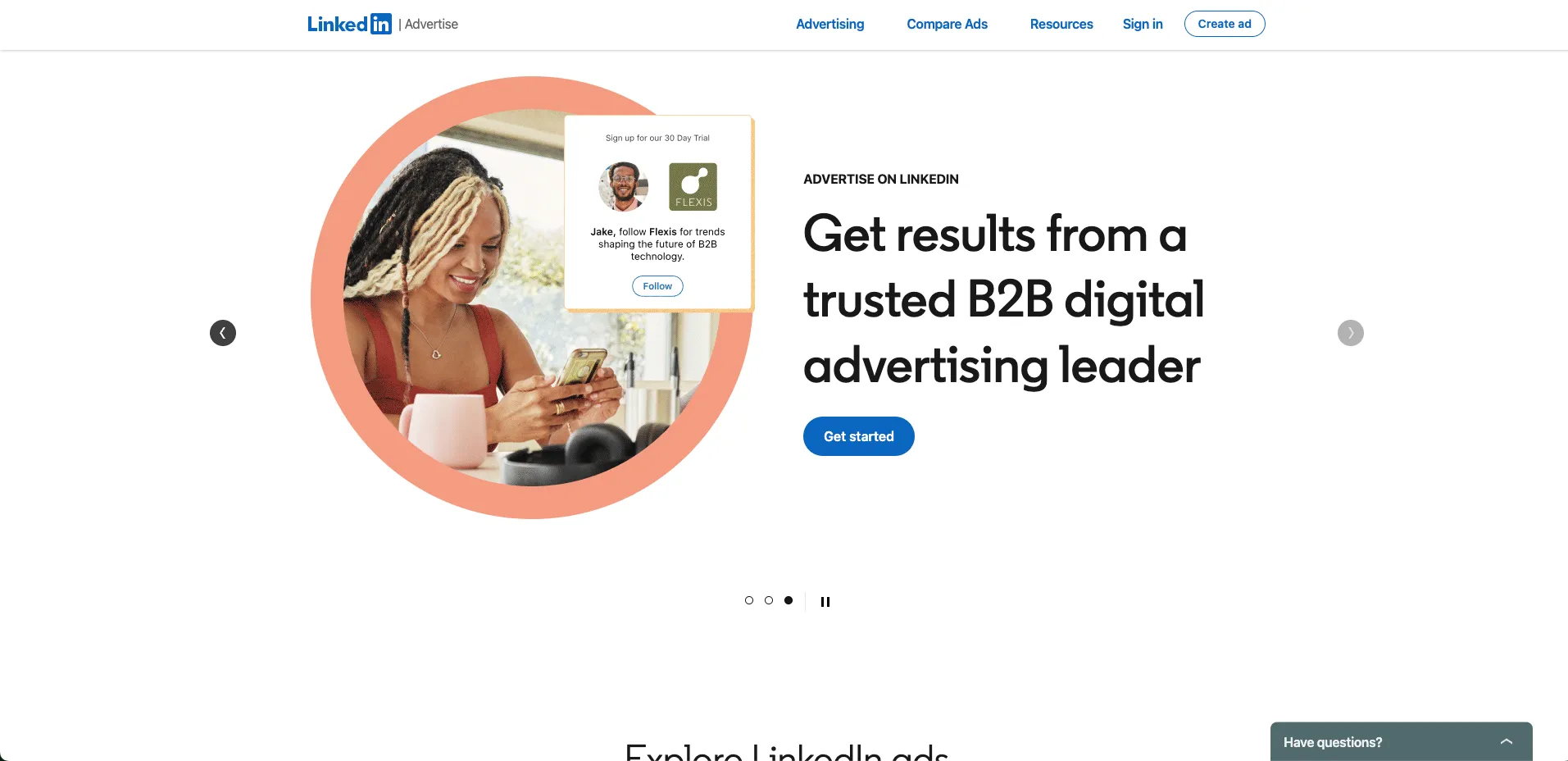
LinkedIn Marketing Solutions provides targeting by job title, company size, industry, and seniority that no other social media platform matches for B2B tech marketing. With over 900 million professionals, LinkedIn offers unparalleled access to decision-makers at technology companies.
The platform's advertising capabilities include Sponsored Content, InMail, video ads, thought leader ads, and Lead Gen Forms that capture qualified leads with pre-filled data. Campaign Manager provides detailed analytics on engagement and conversion rates. Integration with major CRMs enables closed-loop reporting from impression to closed deal.
For account-based marketing programs, LinkedIn's Account Targeting feature allows a precise focus on specific companies and buying committees. This precision makes LinkedIn valuable for B2B tech marketing strategy centered on enterprise accounts with long sales cycles and complex decision-making processes.
Ideal Fit: B2B tech companies running ABM programs targeting senior decision-makers and building brand awareness in competitive markets.
Pricing: Self-service advertising starts at $10/day minimum, typically $5-15 per click.
4. Demandbase: Best for Enterprise Account-Based Marketing
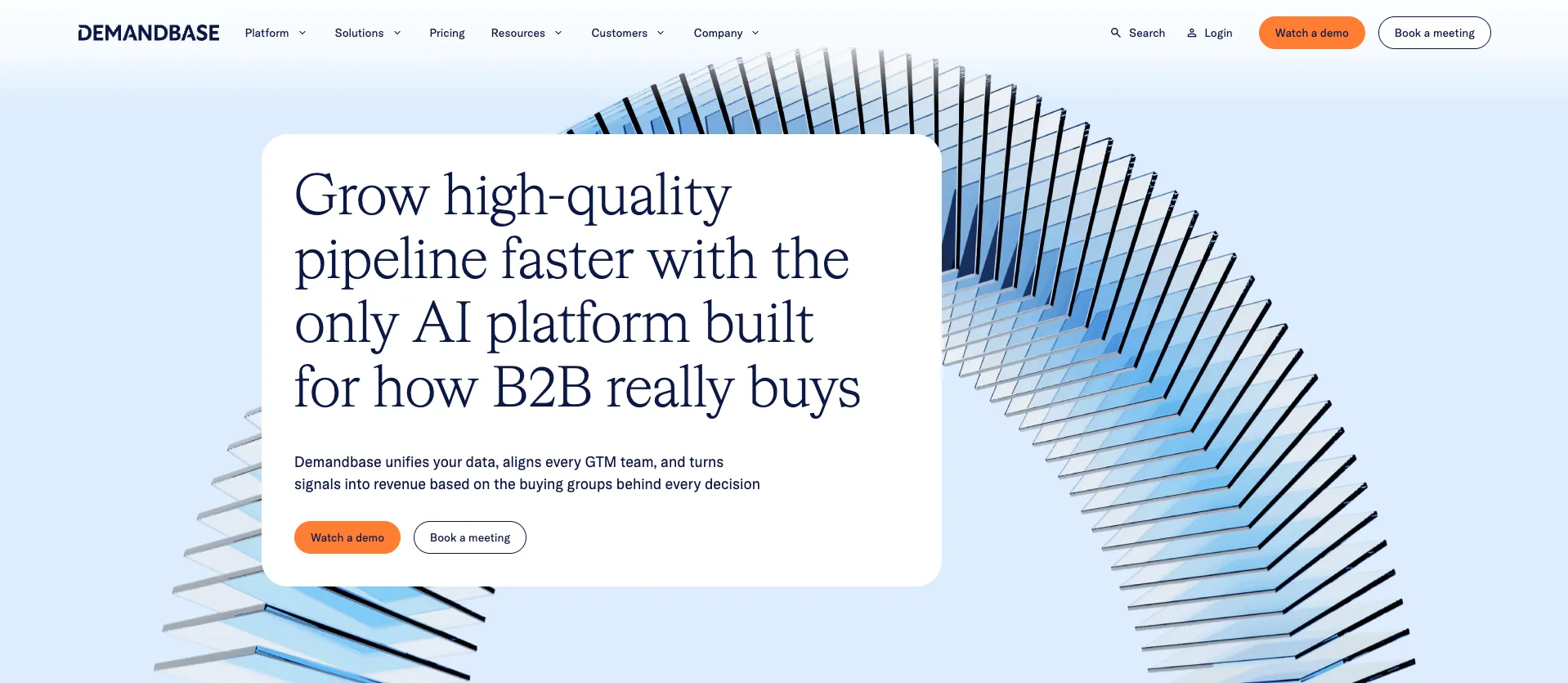
Demandbase combines technographic, firmographic, and intent data into a comprehensive ABM platform. The platform aggregates buying indicators from across the web to identify accounts actively researching solutions in your category.
Demandbase's account identification engine recognizes anonymous website visitors and matches them to company records. Combined with intent signals showing active research behavior, Demandbase helps prioritize accounts most likely to convert. Advertising coordination enables targeted campaigns across display, programmatic, and social channels focused on in-market accounts.
Website personalization capabilities allow dynamic content adaptation based on visitor firmographics. Enterprise prospects see case studies from similar companies, while mid-market visitors see different messaging tailored to their context, improving conversion rates for B2B tech marketing efforts.
Ideal Fit: Enterprise B2B tech companies running sophisticated ABM programs with dedicated resources for strategic account targeting.
Pricing: Custom enterprise pricing typically starts at $50,000+ annually.
5. 6sense: Best for Predictive ABM Intelligence
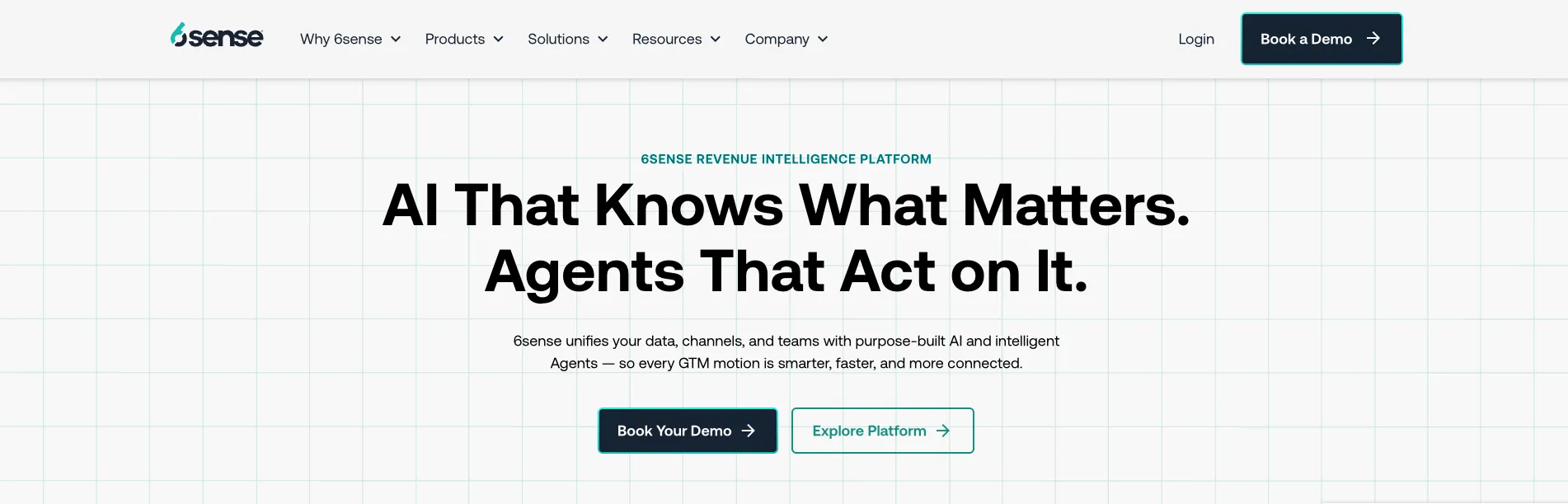
6sense uses AI to identify accounts showing buying intent before they engage with your brand. The platform's predictive models analyze anonymous buying indicators across thousands of B2B websites, revealing which companies are researching solutions like yours.
The platform's account engagement scoring provides unified visibility across marketing and sales touchpoints. Revenue intelligence capabilities extend into pipeline forecasting and attribution, connecting marketing campaigns to revenue outcomes. Dynamic segments enable automatic account grouping based on intent, fit, and stage.
Integration with advertising platforms enables intent-based targeting across digital channels. When accounts show research behavior, 6sense automatically triggers display ads, social campaigns, and email sequences focused on those specific accounts for a coordinated B2B tech marketing strategy.
Ideal Fit: Marketing teams seeking predictive intelligence to prioritize ABM efforts around high-intent accounts before competitors engage.
Pricing: Custom pricing typically starts at $30,000-50,000 annually.
6. Drift: Best for Conversational Marketing
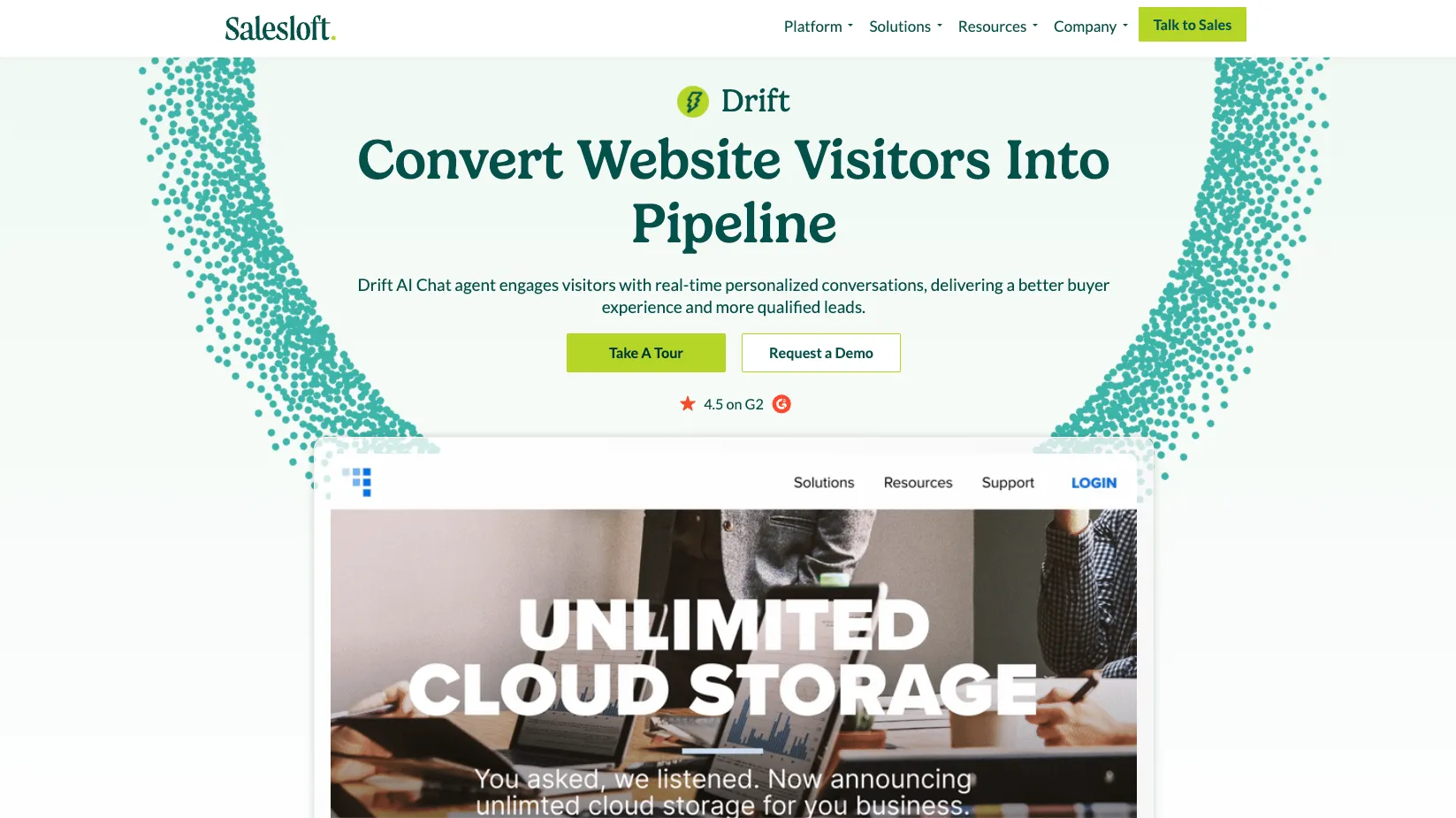
Drift pioneered conversational marketing with AI-powered chatbots that qualify website visitors and route them to sales in real time. The platform enables immediate engagement with potential customers at the moment they show interest.
Drift's chatbot technology asks qualifying questions, identifies visitor needs, books meetings directly in sales calendars, and routes high-priority accounts instantly. Integration with ABM platforms allows personalized website experiences for target accounts. Playbooks enable customized conversations based on visitor attributes like company size, industry, or page visited.
Video messaging capabilities allow sales reps to send personalized video responses through Drift conversations, adding a human touch to digital interactions. This builds trust faster than text-only communication, particularly valuable for complex B2B tech marketing scenarios.
Ideal Fit: Tech businesses with high website traffic seeking to convert visitors into qualified leads through conversational engagement.
Pricing: Starts at $2,500/month for the Premium plan.
7. Marketo Engage: Best for Enterprise Marketing Automation
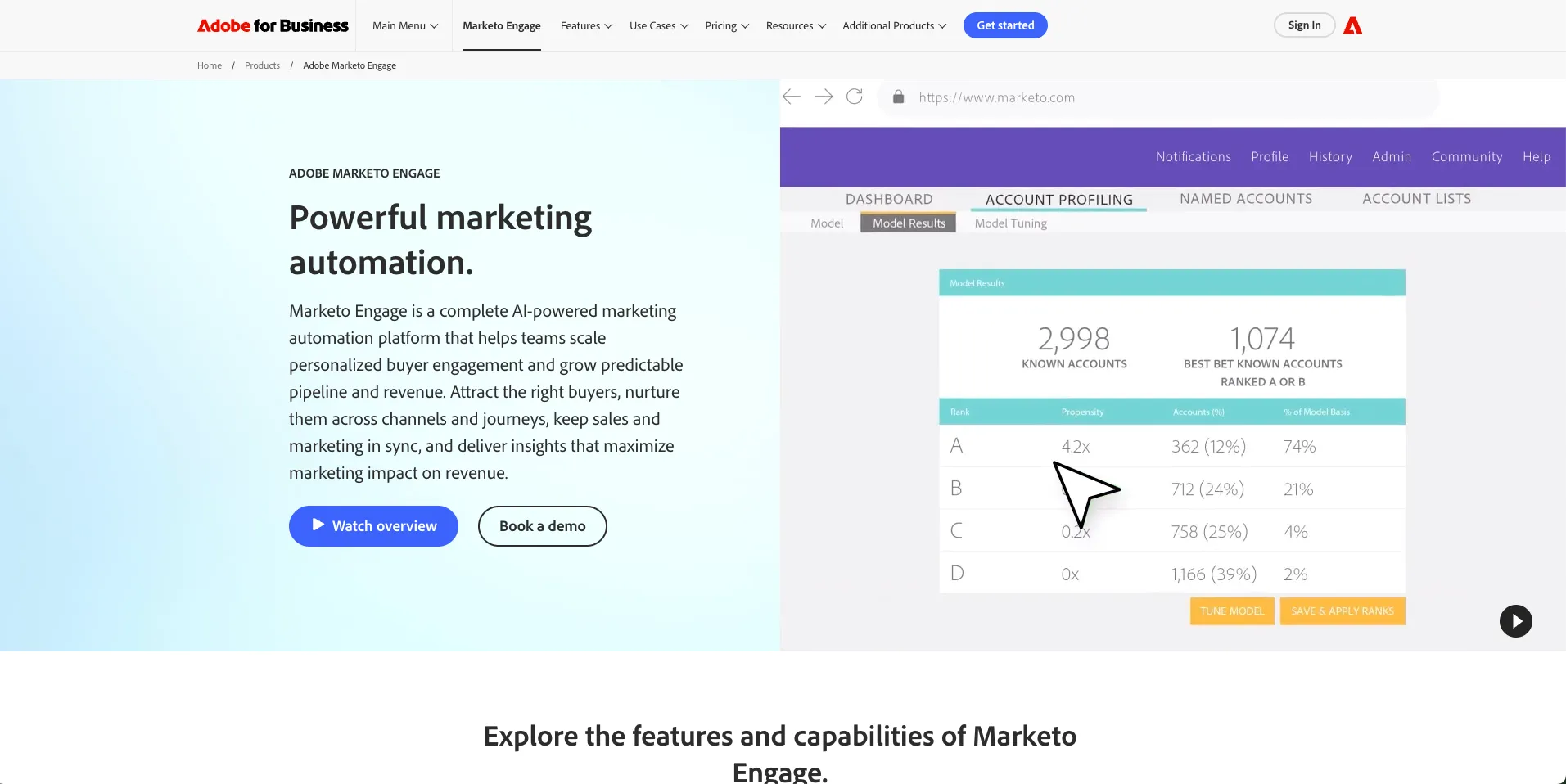
Marketo Engage, part of Adobe Experience Cloud, delivers enterprise-grade marketing automation with sophisticated lead scoring, nurturing, and attribution. The platform supports global enterprises with advanced governance, compliance, and scalability requirements.
Lead scoring models combine behavioral data with demographic attributes to identify sales-ready leads. Multi-touch attribution connects marketing campaigns to revenue outcomes across the entire customer journey. Sophisticated nurture programs feature branching logic and dynamic content that adapts to prospect behavior for effective B2B tech marketing execution.
Native Salesforce integration maintains data synchronization and workflow continuity. Workspace features allow multiple business units to operate independently within a single instance, sharing best practices while maintaining separate campaigns and reporting.
Ideal Fit: Enterprise marketing teams needing sophisticated automation and attribution with dedicated operations resources for global B2B tech companies.
Pricing: Custom pricing typically starts at $895/month for the base package.
8. Clearbit: Best for Data Enrichment and Personalization
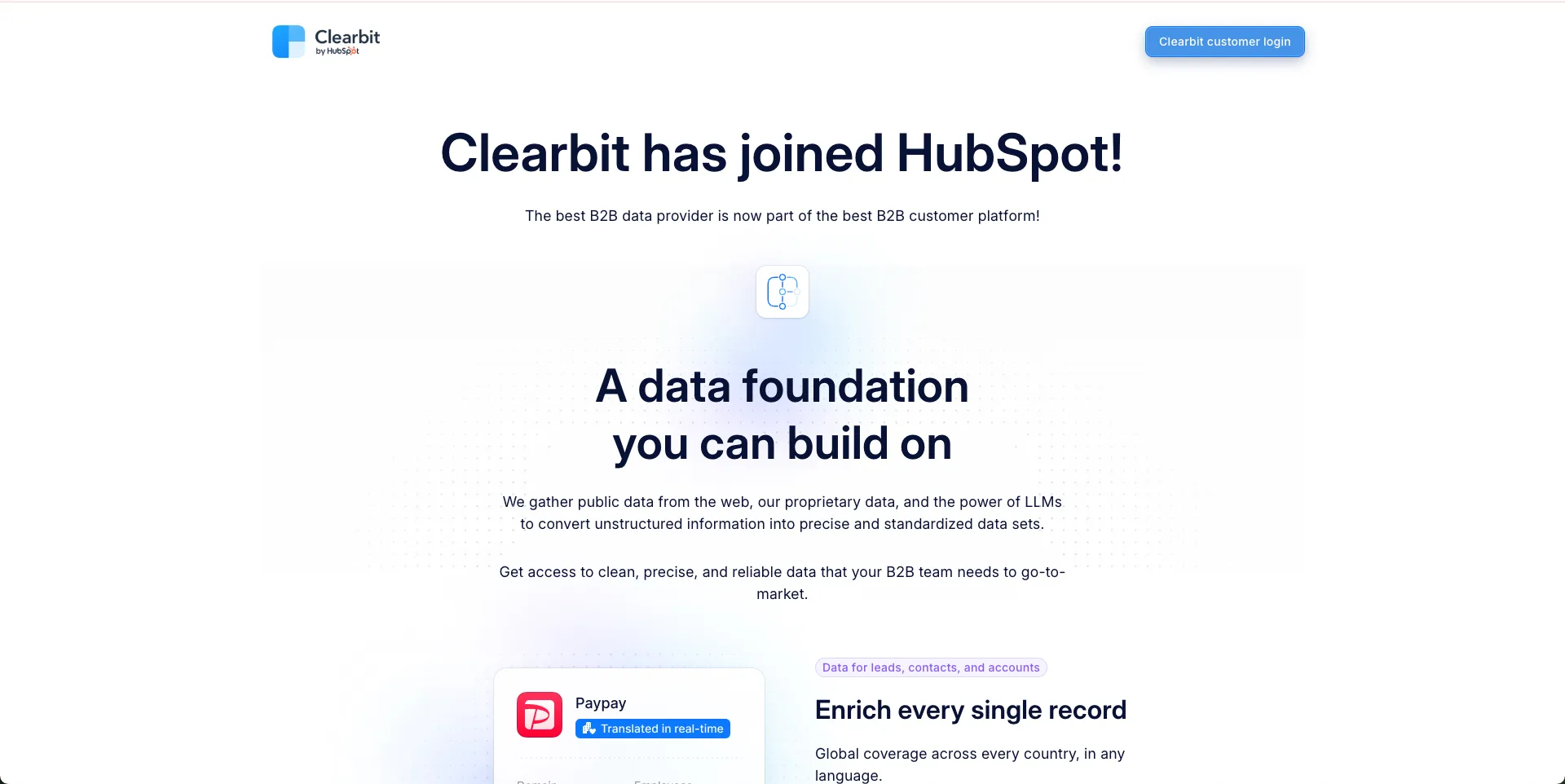
Clearbit enriches lead and account records with firmographic data in real time, enabling marketing teams to personalize campaigns based on complete prospect profiles. The platform provides over 200 firmographic attributes that transform minimal contact information into actionable intelligence.
Real-time API enrichment happens automatically as leads enter your system. When prospects fill out forms, Clearbit instantly appends company size, industry, technology stack, funding stage, and employee count. Website visitor identification matches anonymous traffic to company records, revealing which organizations browse your site before they convert.
Form shortening using progressive enrichment improves conversion rates by reducing form fields. Integration with marketing automation platforms, CRMs, and data warehouses enables seamless enrichment across your B2B marketing tech stack, supporting data-driven personalization.
Ideal Fit: Marketing teams optimizing lead scoring and personalization based on enriched firmographic data for quality leads.
Pricing: Starts at $2,000/month for the enrichment product.
What's the Best B2B Tech Marketing Tool for Startups?
Startups need to prove marketing ROI quickly, often with one person wearing multiple hats. You can’t afford a six-month implementation or a tool that demands a dedicated admin. The platform you choose should generate pipeline in weeks, not quarters.
HubSpot’s free CRM provides a solid starting point. You can send emails, build landing pages, and track performance without spending a dollar. Paid tiers add automation and analytics as you grow, with a manageable learning curve focused on ease of use.
LinkedIn advertising works when you know your ICP, such as “VP of Engineering at Series B SaaS.” Budget $3,000–5,000 per month to see meaningful results; below that, you’re testing, not scaling.
11x is ideal when founder-led sales stalls but hiring SDRs isn’t feasible. You define the target profile, and the system handles research, outreach, and qualification continuously.
The mistake is buying enterprise tools because they are “best in class.” Marketo and Demandbase assume marketing ops resources. Start simple, prove channels work, then scale sophistication.
What's the Best B2B Tech Marketing Tool for Mid-Market Teams?
You likely have a 5–15 person marketing team across demand gen, content, and ops. The challenge isn’t proving marketing works. It’s scaling what works and showing attribution to leaders who scrutinize every budget increase.
HubSpot Professional or Enterprise fits teams familiar with inbound methodology, handling email, landing pages, workflows, and reporting in one platform, without juggling multiple point solutions. Attribution reports are not perfect but sufficient to show marketing’s contribution to pipeline.
For ABM targeting 50–200 named accounts, 6sense or Demandbase are worth the investment. They identify accounts researching solutions before visiting your site, enabling coordinated sales and marketing efforts. Expect 3–4 months to full value and budget for implementation support.
11x helps when SDR teams are maxed out but adding headcount is slow and costly. It handles high-volume outreach, letting reps focus on hand-raisers and strategic accounts. It is a capacity multiplier, not a replacement.
The key trap is assuming more tools automatically mean better results. Your stack should not require a full-time admin. Consolidate wherever possible.
What's the Best B2B Tech Marketing Tool for Enterprise Organizations?
Enterprise marketing involves global teams, multi-product portfolios, complex buying committees, and compliance requirements that startups rarely face. You need platforms that can handle 500,000 contacts across twelve regions with different data residency rules.
Marketo Engage meets this challenge by supporting separate workspaces for business units while maintaining global governance. Its lead scoring, attribution, and nurture capabilities handle sophisticated buyer journeys. Plan for implementation partners and a dedicated marketing ops person, as the platform does not run itself.
Demandbase and 6sense both serve ABM, with different strengths: Demandbase focuses on advertising orchestration, 6sense on predictive analytics. Both require dedicated ABM programs with defined target accounts and aligned sales efforts. They are not effective if your approach is still broad, spray-and-pray demand generation.
11x solves enterprise-scale execution challenges by maintaining consistency across regions without adding SDR teams. It handles compliance, supports 100+ languages, and integrates with CRM and sales engagement systems.
The common mistake is buying tools because competitors have them. Your buying committees and sales cycles are unique. Choose platforms that match your actual GTM motion, not an aspirational one.
Autonomous Digital Workers vs. Task-Based Marketing Automation
This distinction matters when choosing B2B tech marketing platforms. Traditional marketing automation runs predefined workflows that marketers must design and optimize manually. In contrast, autonomous digital workers act as goal-driven agents, analyzing data, deciding on next steps, executing independently, and continuously learning from results to improve performance.
11x demonstrates the autonomous approach. Alice and Julian research accounts, personalize messaging, engage across channels, and qualify leads based on conversion patterns they learn from continuous execution.
How to Choose the Right B2B Tech Marketing Platform
Start with an outcome-first approach by identifying three to five priority use cases tied to measurable targets such as lead volume, conversion rates, or pipeline contribution. Clear goals make it easier to compare platforms objectively and choose the right fit.
Evaluation Criteria for Enterprise Buyers
- Security and Compliance: SOC 2 Type II certification demonstrating operational controls. GDPR and CCPA compliance protecting customer data. SSO/SAML integration with enterprise identity management. Data residency options for regulatory compliance. Audit logs track user activity.
- Integration Depth: Native CRM integration with Salesforce or HubSpot, ensuring bidirectional sync. API availability for custom integrations. Activity logging for compliance. Marketing automation connectivity synchronizing campaigns. Analytics integration for unified reporting.
- Scalability: Contact volume limits matching database size and growth projections. Geographic coverage for international expansion. Language support for global B2B tech companies. Performance at scale, maintaining speed with growing volumes.
- Governance: Role-based access controls limit permissions by responsibility. Approval workflows prevent unauthorized communications. Brand compliance tools ensure messaging consistency. Audit logs enabling compliance investigations. Data retention policies automate expired data deletion.
Meeting these criteria ensures platforms are secure, scalable, and fully equipped to support enterprise-grade B2B tech marketing needs.
Take Your Marketing to the Next Level
B2B tech marketing success depends on selecting tools matching your team's capabilities and growth stage. For teams seeking maximum impact with minimal manual overhead, autonomous digital workers represent the clearest path forward. 11x combines outbound execution through Alice with inbound qualification through Julian, delivering consistent pipeline generation independent of headcount constraints.
Frequently Asked Questions
B2B tech marketing refers to the strategies technology companies use to reach business buyers. It combines digital marketing channels like content marketing, email, and social media with account-based approaches targeting specific companies. The discipline addresses longer sales cycles, complex buying committees, and technical evaluation processes unique to technology purchases.
The 4 C's framework includes Customer (knowing buyer needs), Cost (total value versus price), Convenience (ease of purchase), and Communication (two-way dialogue). For B2B tech companies, this means aligning marketing efforts with how decision-makers research and buy solutions.
The 70-20-10 rule allocates budget across proven tactics (70%), emerging opportunities (20%), and experimental approaches (10%). For B2B tech marketing, this means dedicating 70% to established content marketing and demand generation, 20% to growing ABM initiatives, and 10% to testing new channels like podcasts or influencer marketing.
B2B marketing costs vary by company size. Startups typically allocate 15-25% of revenue to marketing, while established companies spend 5-15%. Individual tools range from free tiers to enterprise contracts exceeding $100,000 annually.
The four primary categories are content marketing (white papers, webinars, blogs), digital marketing (SEO, paid ads, email), account-based marketing (targeted campaigns for specific accounts), and relationship marketing (events, partnerships, direct engagement). Successful B2B tech companies combine all four approaches.