Generic email blasts no longer work. With spam filters tightening and inboxes overflowing, the average professional receives over 120 emails a day. Attention has become currency, and generic outreach costs brands that fail to personalize it.
Email personalization is now one of the most effective ways to drive engagement and revenue. According to HubSpot, top-performing campaigns achieve open rates above 40%, while Mailchimp’s industry data shows personalized content increases click-through rates by up to 29%. Beyond vanity metrics, deeply personalized experiences improve conversion and lifetime value by aligning every message to a buyer’s intent and context.
This guide explores the top email personalization tools shaping that shift. We’ll outline how each platform uses data, automation, and AI to deliver human-level relevance at scale, and show which ones can help you turn engagement into a predictable pipeline.
What is an Email Personalization Tool?
An email personalization tool helps teams send emails that feel relevant to the person receiving them, not generic or mass-produced. Instead of relying on basic placeholders like a first name, these tools use real data, from your CRM, website activity, or product usage, to decide who should receive an email, when it should be sent, and what the message should actually say.
In practice, this means emails can adapt to a recipient’s behavior, role, or stage in the buying journey. The most effective tools go a step further by automating follow-ups, adjusting messaging based on engagement, and learning what works over time, turning email into a more natural, timely way to start conversations and move opportunities forward.
Best Email Personalization Tools in 2026
Email personalization in 2026 is defined by intelligence, not templates. The leading tools now combine CRM, intent, and engagement data to create adaptive, behavior-driven communication at scale. They move beyond static automation to execute real-time personalization that reacts to every prospect signal. The platforms below represent the top performers in this new era, ranging from data-rich marketing systems to autonomous AI agents that run your entire outreach operation end to end.
Our Evaluation Criteria
Our methodology for selecting these tools is grounded in a criteria-driven analysis. We blend objective feature comparisons with strategic insights from our experience deploying GTM technology. Each tool was evaluated on its ability to move beyond simple mail-merge functionality and deliver measurable pipeline impact.
Our selection criteria focused on four core areas:
- Degree of Automation: We assessed the spectrum of automation, from manual template-based workflows to semi-automated sequences and fully autonomous AI agent execution. This measures how much human oversight is required to run campaigns.
- Data Integration and Sophistication: A tool's power is tied to the data it can use. We examined the depth of CRM integration, the ability to process real-time behavioral signals, and the use of external data sources like social media for enrichment.
- Multi-Channel Capability: Modern outreach is not confined to email. We prioritized tools that integrate email with other critical channels like LinkedIn, SMS, and voice calls to create unified and consistent buyer experiences.
- Scalability and Governance: We considered each platform's ability to support growing sales teams, manage deliverability at scale, and provide the governance features necessary for enterprise-level deployment.
Comparison Overview of the 11 Best Email Personalization Tools
Each platform in this list approaches personalization differently, from template-based automation to fully autonomous execution. Some are built for marketers optimizing campaigns, others for GTM teams driving pipeline at scale. The comparison below distills their data capabilities, automation depth, integration reach, and pricing to help you evaluate which solution best fits your motion and maturity stage.
11x.ai
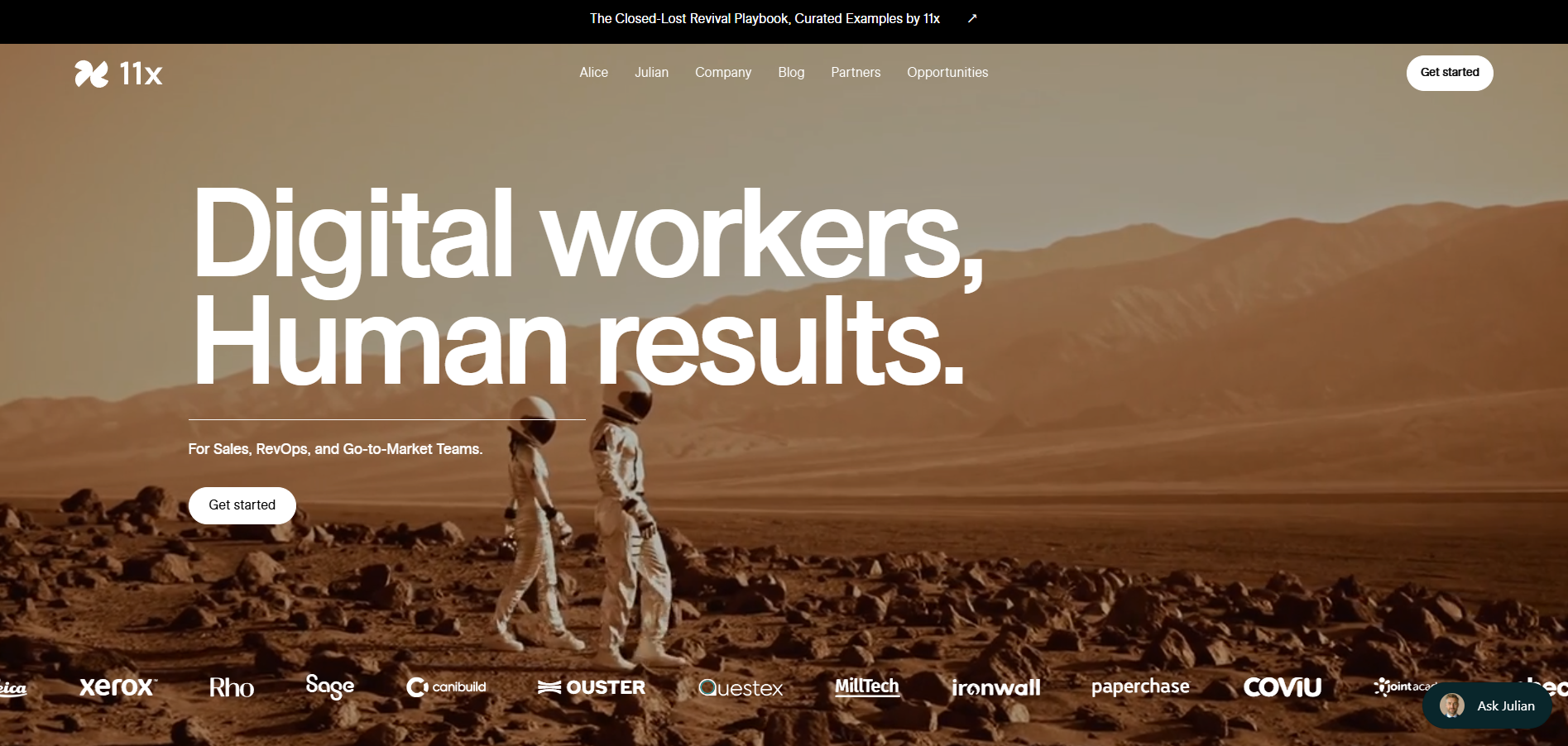
11x.ai delivers the next evolution in sales technology through autonomous AI agents that act as full-time digital workers. Instead of simply accelerating human teams, these agents transform how GTM organizations operate by executing the entire outreach process end to end. The AI SDR, Alice, performs deep market research, identifies ICP-fit prospects, and runs hyper‑personalized multi‑channel outreach across email, LinkedIn, and SMS—working 24/7 to fill your team’s calendar with qualified meetings.
11x.ai Key Features:
- Alice (AI SDR): Conducts outbound prospecting autonomously, from research to outreach to meeting scheduling.
- Julian (AI Phone Agent): Qualifies inbound leads in real time through natural phone conversations.
- Autonomous Operation: Eliminates manual prospecting and lead follow-ups by running campaigns continuously and independently.
- CRM Synchronization: Integrates with Salesforce, HubSpot, and other systems to log activity and maintain data accuracy.
- Deliverability and Infrastructure: Manages mailbox rotation, domain warming, and reputation health for maximum reach and response rates.
Pros and Cons of 11x.ai
11x.ai Best Fit:
11x.ai is ideal for mid‑market and enterprise B2B organizations that want to scale high-quality lead generation without increasing headcount. Unlike assistive engagement platforms like Outreach.io or HubSpot, 11x fully automates the SDR and inbound qualification layer—researching, personalizing, and booking meetings autonomously while your team focuses on closing revenue.
11x.ai Pricing:
Custom pricing based on deployment scope, lead volume, and integration requirements.
HubSpot
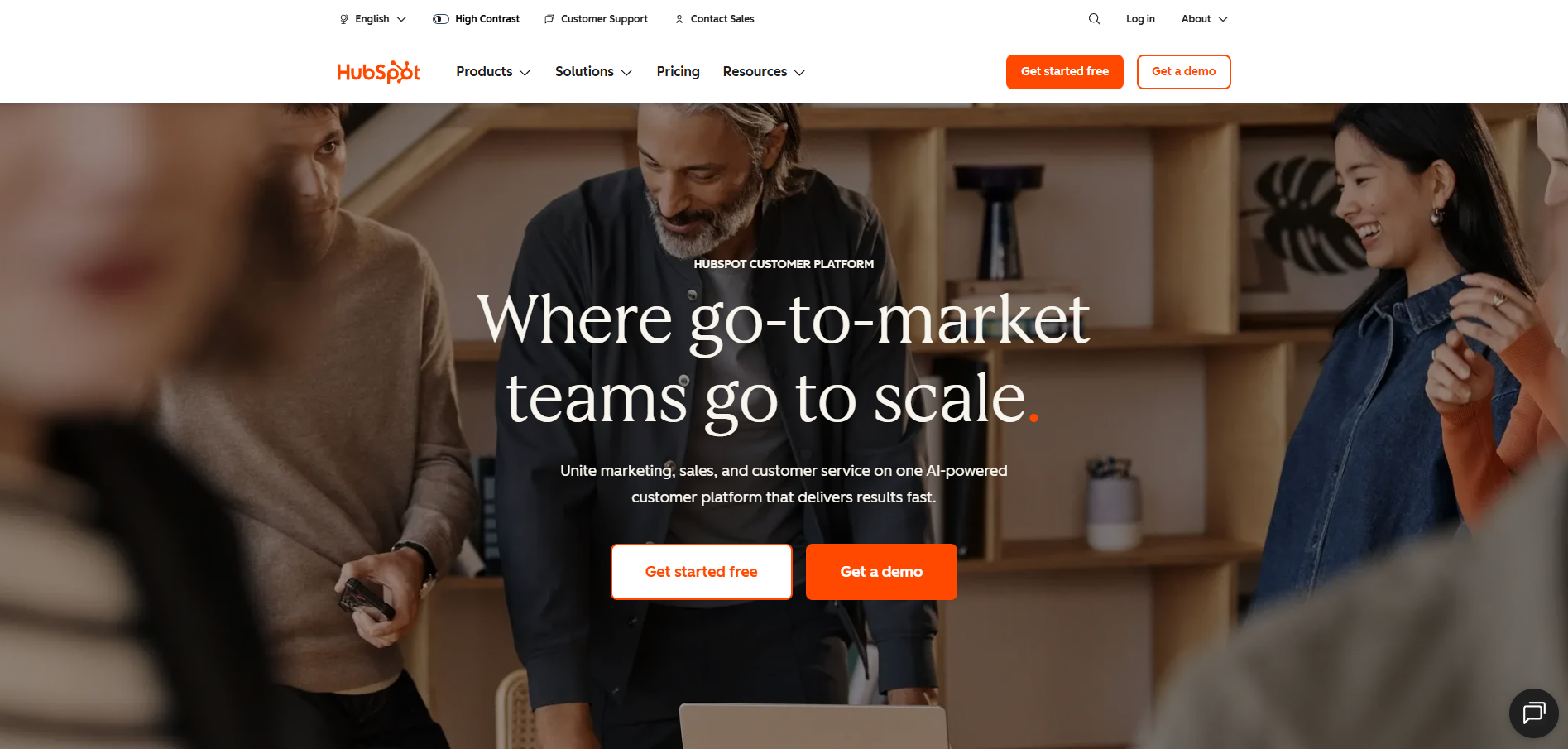
HubSpot’s Marketing Hub is a comprehensive marketing automation and email personalization platform built around its powerful CRM. It enables teams to create highly targeted campaigns using any data point within a contact profile—such as company size, lifecycle stage, or recent website activity. With deep CRM integration and an intuitive workflow builder, HubSpot helps marketing and sales teams coordinate personalized communication throughout the buyer journey.
HubSpot Key Features:
- Dynamic Content: Customizes images, CTAs, and text within a single email based on audience attributes or behavior.
- Behavior‑Based Automation: Builds workflows triggered by user actions, lead status, or lifecycle stage.
- Smart Send Optimization: Uses AI to analyze engagement trends and schedule emails for the highest open rates.
- A/B Testing: Tests subject lines, templates, and messaging variations to refine campaign performance.
- CRM Integration: Centralizes customer insights and interactions across marketing, sales, and service teams.
Pros and Cons of HubSpot
HubSpot Best Fit:
HubSpot is best suited for businesses already using or planning to adopt the HubSpot ecosystem. It excels in inbound marketing, lead nurturing, and content‑driven personalization. For teams seeking to automate outbound prospecting or response management, 11x offers a next‑generation alternative—digital workers that autonomously engage, qualify, and book meetings without manual workflows.
HubSpot Pricing:
Includes limited free tools, with paid Marketing Hub plans starting at $800 per month depending on contact limits and feature access.
ActiveCampaign
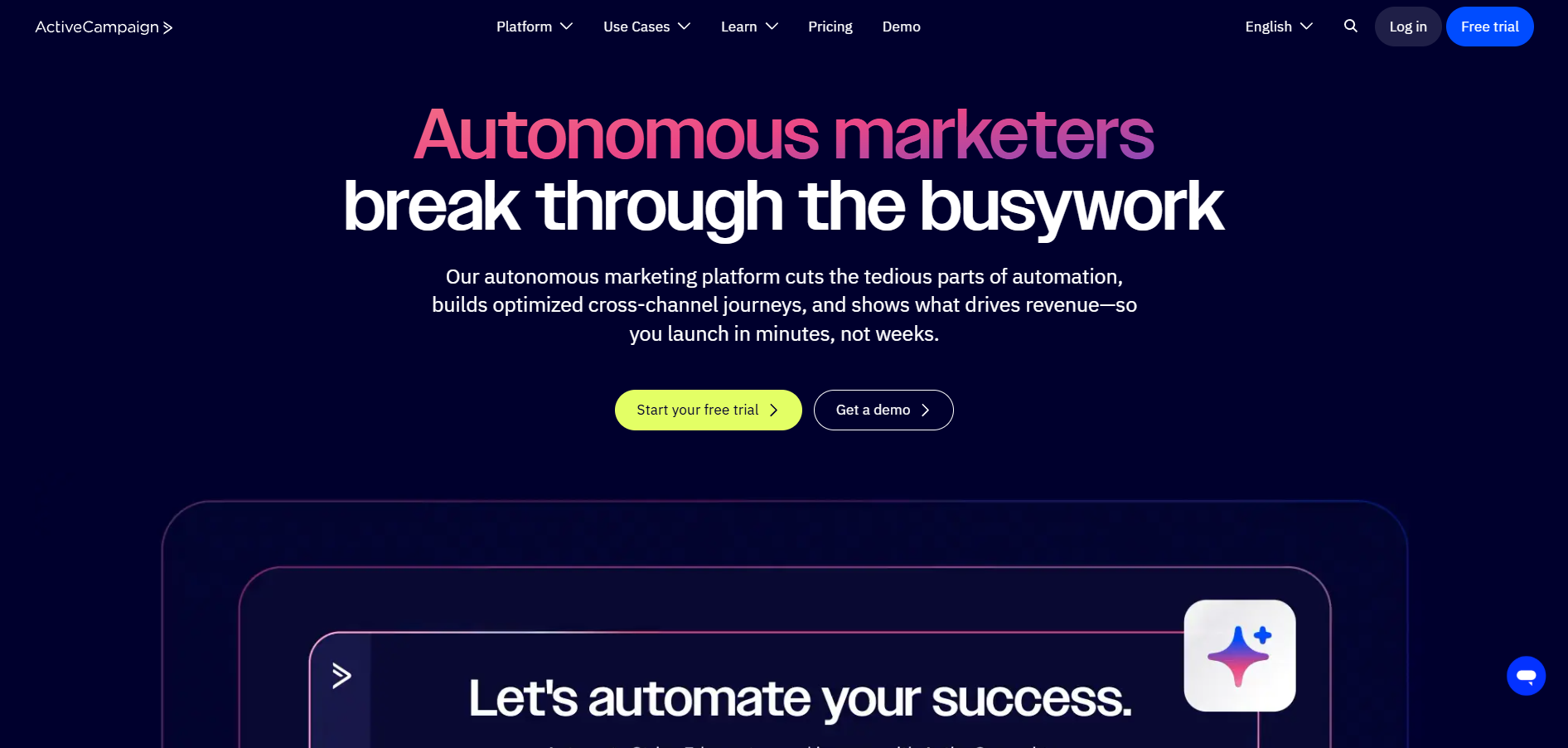
ActiveCampaign is a marketing automation and CRM platform designed to help businesses create highly personalized customer journeys. It bridges email marketing, automation, and contact management into one system, enabling teams to trigger communications based on detailed behavioral, transactional, and engagement data. Its flexibility makes it particularly effective for lifecycle marketing, lead nurturing, and multi‑channel engagement.
ActiveCampaign Key Features:
- Visual Workflow Builder: Allows users to design complex automation sequences tailored to specific conditions and triggers.
- Advanced Segmentation: Targets audiences using detailed data filters spanning past purchases, engagement metrics, and preferences.
- Predictive Sending: Uses machine learning to determine the best time to deliver each email for maximum impact.
- Multi‑Channel Messaging: Supports email, SMS, and on‑site messages for cohesive, cross‑channel communication.
- Dynamic Content and Split Testing: Personalizes message content within campaigns and tests multiple variations for better performance.
Pros and Cons of ActiveCampaign
ActiveCampaign Best Fit:
ActiveCampaign is best for B2B and ecommerce organizations ready to advance beyond basic automation into sophisticated, behavior‑driven workflows. It empowers marketers to orchestrate end‑to‑end engagement journeys. For teams seeking full autonomy without manual management, 11x’s digital workers replace traditional automation entirely by autonomously handling research, personalization, and outreach execution.
ActiveCampaign Pricing:
Plans start at $29 per month for the Marketing Lite tier, with pricing scaling by feature set, contact volume, and channel usage.
Mailchimp
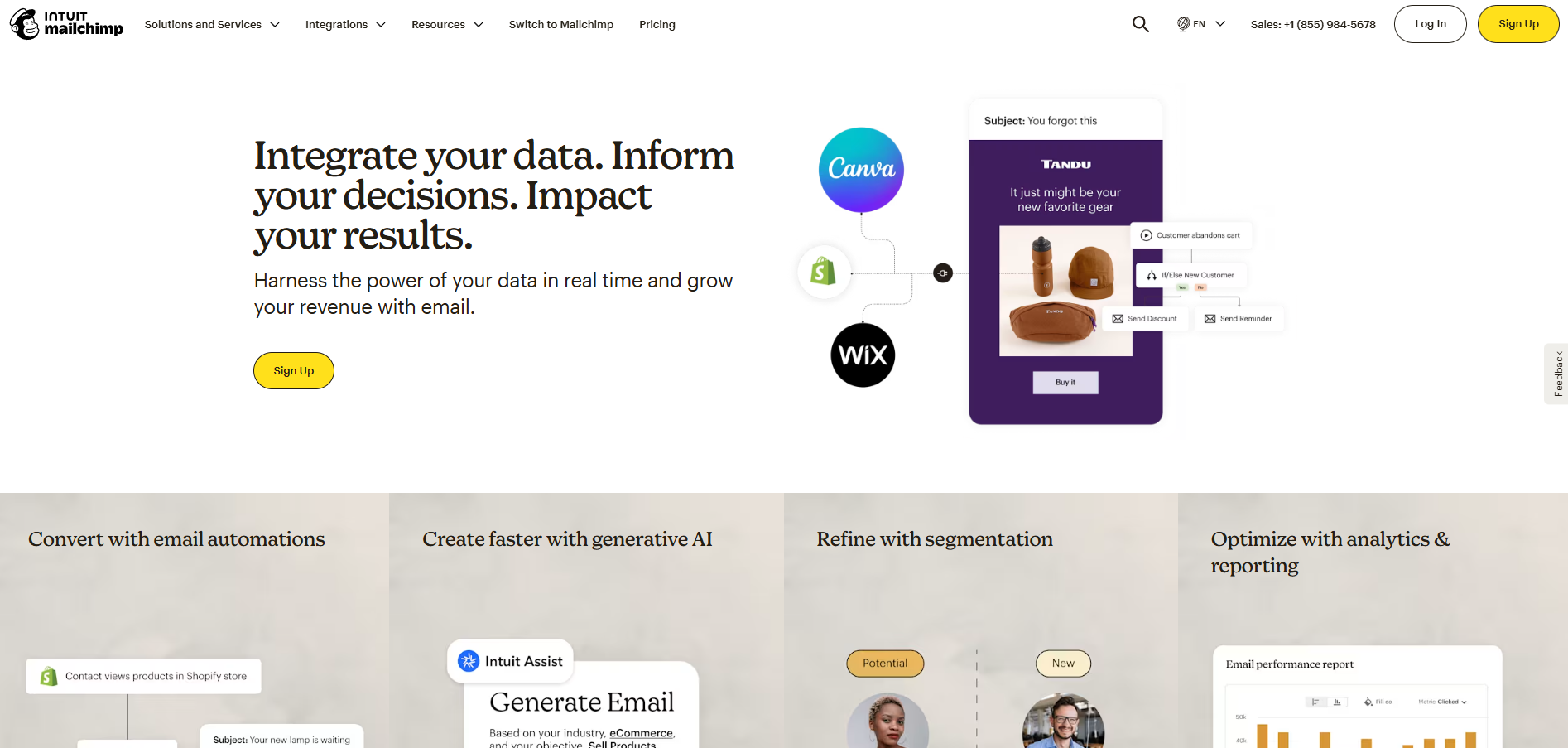
Mailchimp is one of the most widely recognized email marketing platforms, known for its simplicity and accessibility. It allows small businesses, creators, and marketers to design and send professional campaigns without technical expertise. With drag‑and‑drop tools, pre‑built templates, and basic personalization options, Mailchimp remains a go‑to choice for teams starting their email marketing journey or managing straightforward communication programs.
Mailchimp Key Features:
- Pre‑Built Templates: Offers customizable email layouts for newsletters, promotions, and automations.
- Segmentation and Tags: Enables audience grouping based on engagement, demographics, or previous interactions.
- Automation Workflows: Supports basic setup for welcome emails, abandoned carts, and follow‑up campaigns.
- Content Optimizer: Provides AI suggestions to improve subject lines, body copy, and send times.
- Ecommerce Personalization: Pulls product data from connected stores to create dynamic recommendations.
Pros and Cons of Mailchimp
Mailchimp Best Fit:
Mailchimp is ideal for small businesses, solo creators, and ecommerce startups seeking an affordable, easy‑to‑manage email solution. It excels at straightforward campaign creation and brand communication. For GTM organizations that require advanced personalization, multi‑channel automation, or autonomous outreach, 11x provides a more scalable AI‑driven alternative that converts market signals directly into qualified pipeline.
Mailchimp Pricing:
Free plan available for up to 500 contacts. Paid plans begin at $20 per month, scaling with contact size and feature access.
Customer.io
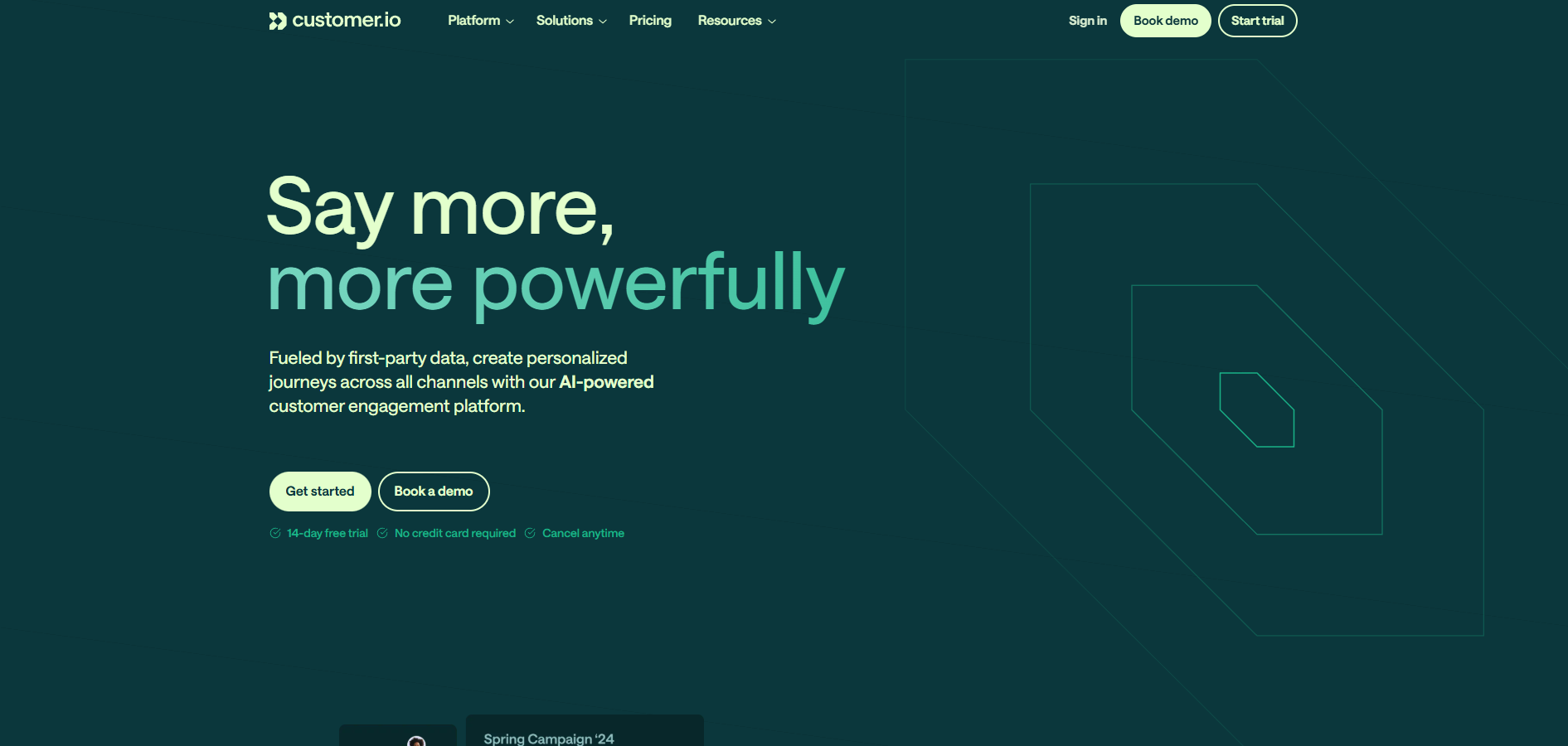
Customer.io is a marketing automation platform built for SaaS and mobile-first businesses that rely on user behavior to power engagement. It enables teams to send personalized messages triggered by real-time product activity, making it especially effective for onboarding, retention, and re‑engagement campaigns. By connecting directly to your product’s data layer, Customer.io gives marketers and developers granular control over communication across multiple channels.
Customer.io Key Features:
- Event-Driven Automation: Sends messages based on user actions or inactivity within your app or platform.
- Multi-Channel Messaging: Delivers personalized communication through email, SMS, push notifications, and in-app messages.
- Visual Workflow Builder: Provides a drag-and-drop interface to map out flexible automation journeys.
- Advanced Segmentation: Targets users using behavioral, demographic, and contextual variables in real time.
- Testing and Optimization: Includes A/B testing tools for fine-tuning messaging and measuring engagement impact.
Pros and Cons of Customer.io
Customer.io Best Fit:
Customer.io is best suited for B2B SaaS and mobile app companies that want to engage users through personalized, behavior-triggered communication. It excels at driving activation, retention, and feature adoption. In contrast, 11x focuses on top-of-funnel execution—researching, engaging, and qualifying prospects autonomously before they become customers.
Customer.io Pricing:
Plans start at $100 per month for up to 5,000 profiles, with custom pricing for higher usage tiers and enterprise features.
Klaviyo
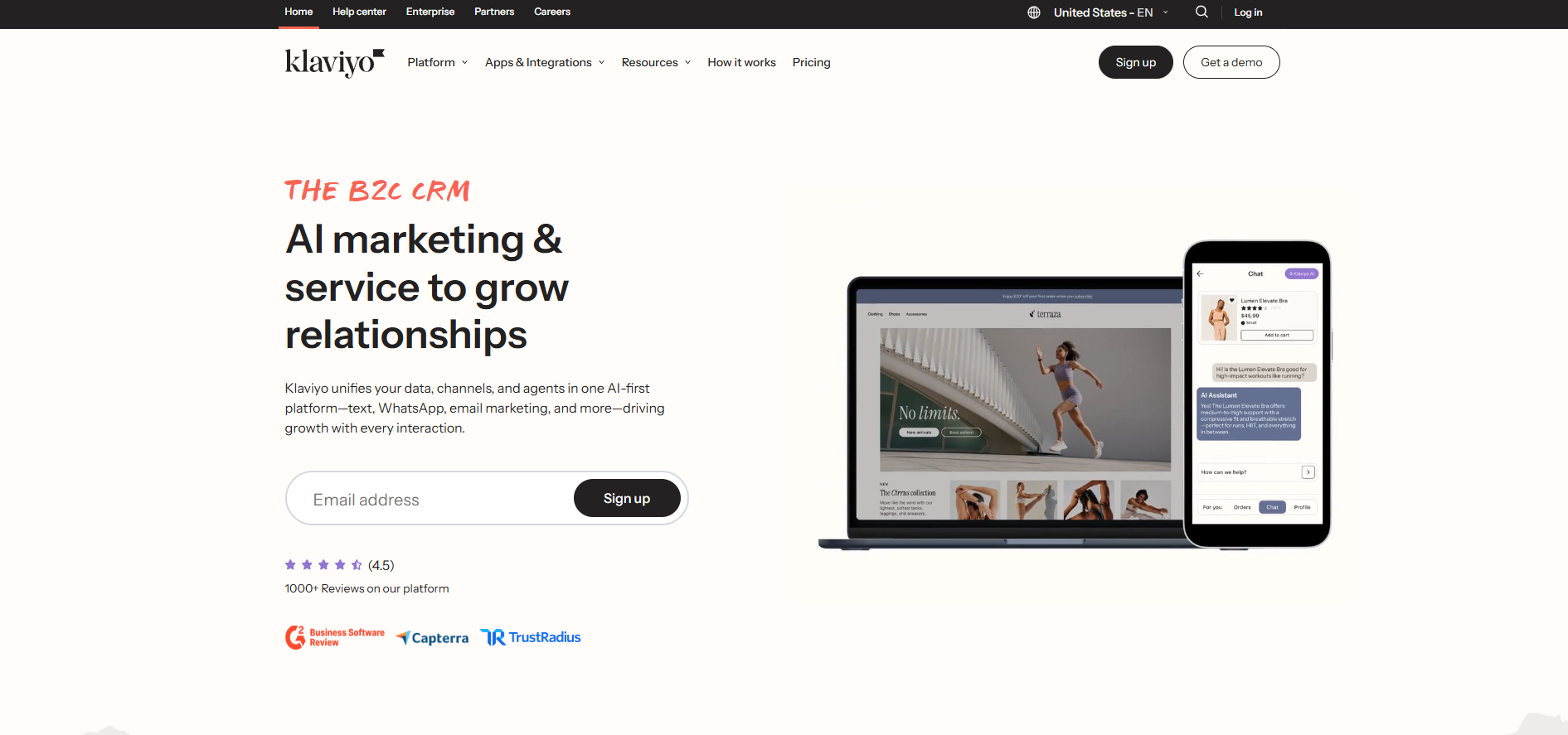
Klaviyo is one of the most advanced email personalization and automation tools specifically built for ecommerce growth. It integrates directly with ecommerce platforms like Shopify, Magento, and BigCommerce, using behavioral and purchase data to drive timely and personalized customer communication. Its data-rich foundation enables marketers to automate retention, re‑engagement, and conversion strategies that increase lifetime value.
Klaviyo Key Features:
- Ecommerce Integrations: Syncs instantly with major storefronts to capture and act on purchase history, browsing behavior, and cart data.
- Automation Flows: Offers pre-built workflows for abandoned carts, post-purchase follow-ups, and customer winbacks.
- Predictive Analytics: Uses AI to forecast churn risk, repurchase likelihood, and estimated lifetime value.
- Personalized Recommendations: Dynamically populates product suggestions based on each customer’s data and behavior.
- Advanced Segmentation: Builds precise audience segments leveraging behavioral, transactional, and demographic signals.
Pros and Cons of Klaviyo
Klaviyo Best Fit:
Klaviyo is best suited for ecommerce brands that rely on personalized engagement to increase sales and customer retention. It excels at lifecycle marketing where email and SMS drive conversions. For GTM teams operating in B2B environments, 11x offers a different advantage—autonomous digital workers that research, personalize, and execute multi-channel outreach without manual input.
Klaviyo Pricing:
Free for up to 250 contacts, with paid plans starting around $45 per month based on contact volume and channel usage.
SendGrid
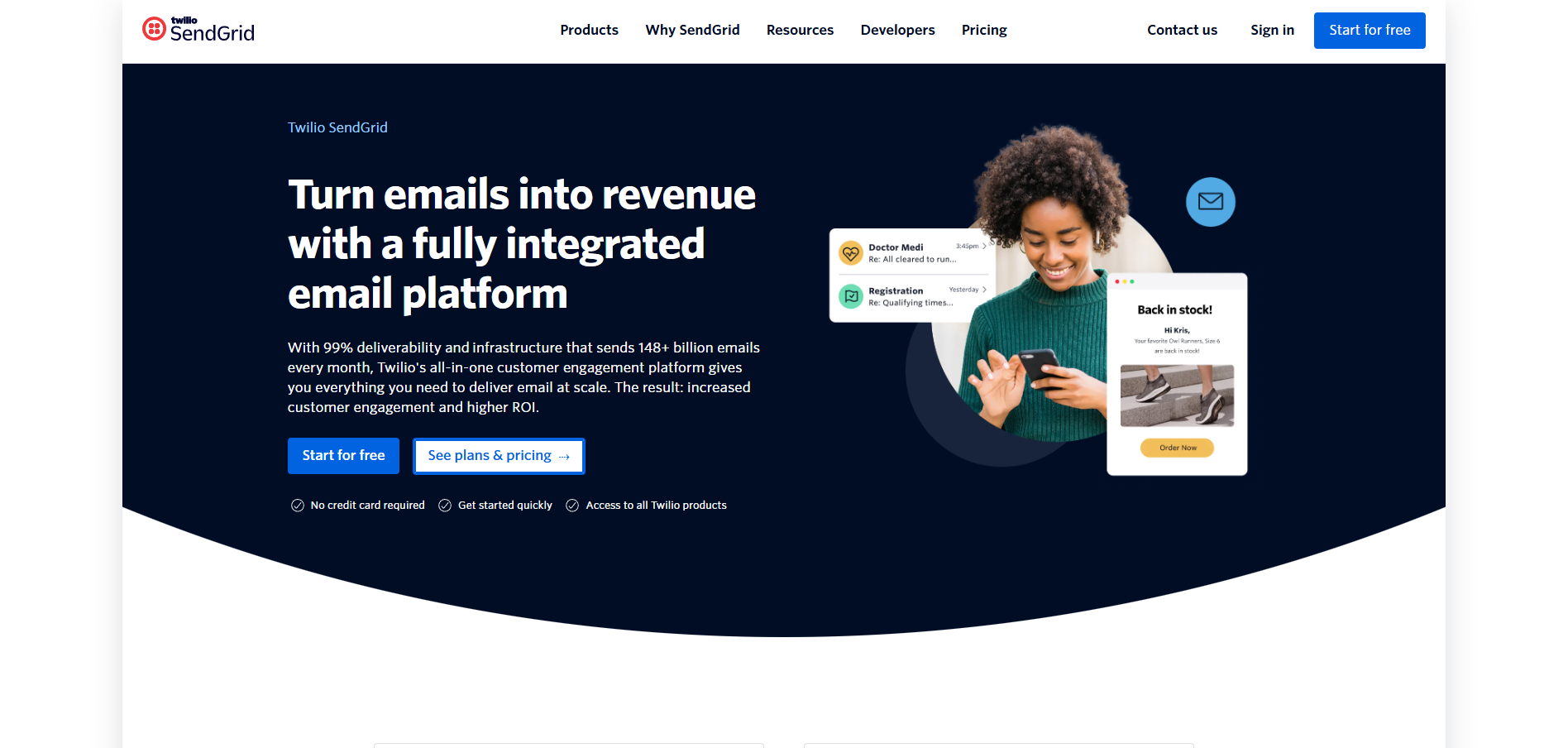
SendGrid, a Twilio company, is an email delivery platform engineered for developers and enterprises that need scalable, reliable infrastructure. Known for its API-first design, SendGrid powers billions of emails each month for major brands, handling both transactional and marketing communications. Its focus on deliverability and technical precision makes it one of the most dependable solutions for businesses that build custom email systems or require rigorous uptime performance.
SendGrid Key Features:
- Powerful Email API: Enables developers to send personalized transactional or marketing emails programmatically at scale.
- Marketing Campaigns Tool: Supports contact segmentation, A/B testing, and automation for campaign deployment.
- Deliverability Expertise: Maintains industry-leading inbox placement through proprietary sending infrastructure and authentication tools.
- Advanced Analytics: Tracks delivery rates, engagement metrics, device usage, and spam reports for continuous optimization.
- Global Scalability: Trusted infrastructure capable of supporting billions of monthly email sends without performance degradation.
Pros and Cons of SendGrid
SendGrid Best Fit:
SendGrid is ideal for organizations with technical teams that want to control their email infrastructure through APIs and custom integrations. It’s best suited for companies sending transactional messages, notifications, or large-scale campaigns with deep personalization logic. For revenue teams that prefer autonomous execution over manual coding, 11x delivers the intelligence layer—researching prospects, personalizing engagement, and converting outreach into pipeline autonomously.
SendGrid Pricing:
Free for up to 100 emails per day, with paid plans starting at $19.95 per month. Enterprise options are available for high-volume senders and advanced infrastructure needs.
Outreach.io
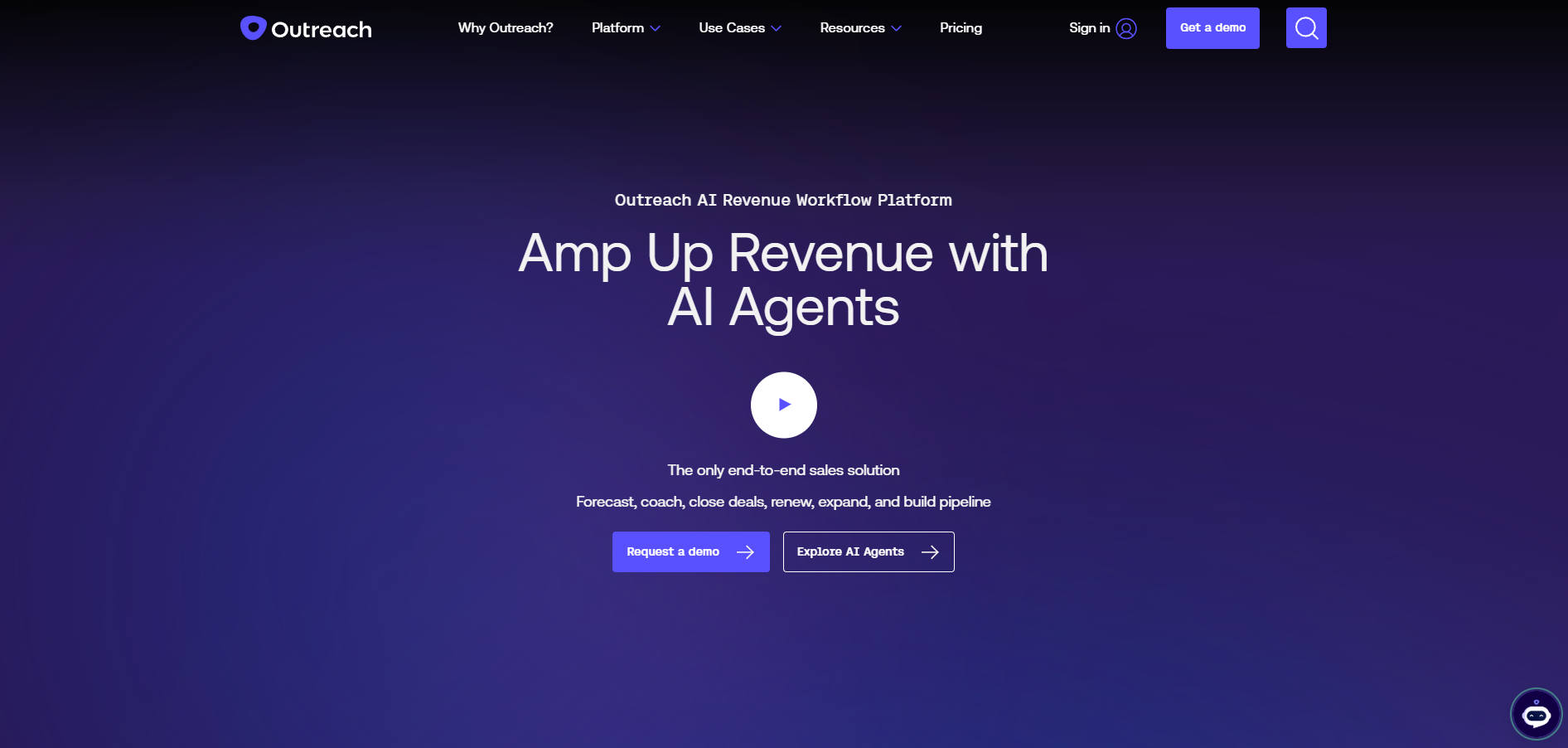
Outreach.io is a sales engagement platform built to help teams scale outbound operations efficiently and with precision. It unifies email, calls, and social touches in a single workspace, allowing sales reps to manage high-volume prospecting without losing personalization. The platform blends automation, analytics, and AI-driven recommendations to standardize sales plays while providing leaders clear visibility into performance across every stage of the funnel.
Outreach.io Key Features:
- Multichannel Sequences: Automates structured campaigns across email, phone, and social channels for consistent, organized prospect engagement.
- AI-Driven Insights: Analyzes tone and sentiment in replies and recommends the best next action to maximize conversion.
- Template Library and A/B Testing: Helps teams refine messaging and optimize outreach strategy through data-led experimentation.
- CRM Integration: Syncs with Salesforce, Dynamics, and other CRMs to create a unified record of prospect activity and engagement.
- Performance Analytics: Provides management-level dashboards for monitoring team output and campaign effectiveness.
Pros and Cons of Outreach.io
Outreach.io Best Fit:
Outreach.io is best suited for mid-market and enterprise sales organizations that need scalable, standardized outbound programs and deep reporting capabilities. It enhances human productivity and structure. For companies ready to automate beyond assistance, 11x replaces manual operation entirely with digital workers that autonomously research, engage, and qualify leads around the clock.
Outreach.io Pricing:
Enterprise-level custom pricing based on team size, required integrations, and feature scope.
Insider
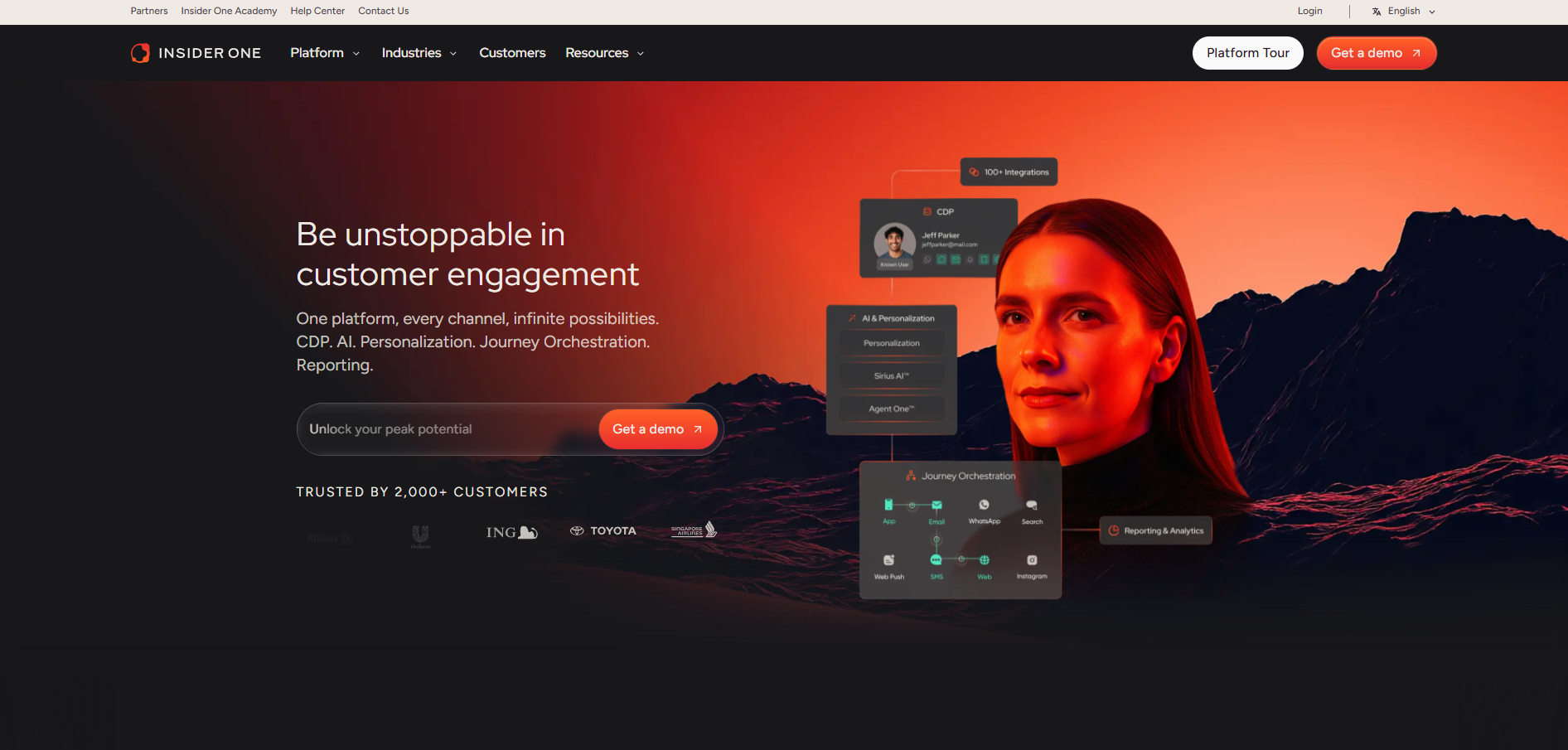
Insider is a cross-channel personalization platform built for enterprise brands that want to unify their customer data and create connected, individualized experiences. By consolidating inputs from web, mobile, email, and SMS, it builds a single view of each customer and activates that data through personalized journeys across the entire lifecycle. Its AI engine supports predictive targeting and delivers the right message at the right time on the right channel.
Insider Key Features:
- Unified Customer Profiles: Connects data from multiple sources to form a comprehensive view of each user’s behavior and preferences.
- AI-Powered Segmentation: Uses behavioral and predictive analytics to identify high-value segments and target them with precision.
- Journey Orchestration: Automates personalized experiences across web, app, email, SMS, and push notifications.
- Real-Time Personalization: Adjusts on-site and in-app content dynamically based on live interaction signals.
- Product Recommendations: Delivers personalized product and content suggestions powered by machine learning models.
Pros and Cons of Insider
Insider Best Fit:
Insider is ideal for enterprise B2C organizations in retail, travel, or media seeking an all-in-one personalization hub that spans every digital touchpoint. It centralizes customer data and enables full-scale omnichannel personalization. For B2B sales teams, 11x provides deeper execution—autonomously researching, engaging, and qualifying leads across channels like LinkedIn and email.
Insider Pricing:
Custom enterprise pricing based on data volume, channels used, and deployment scope.
Litmus
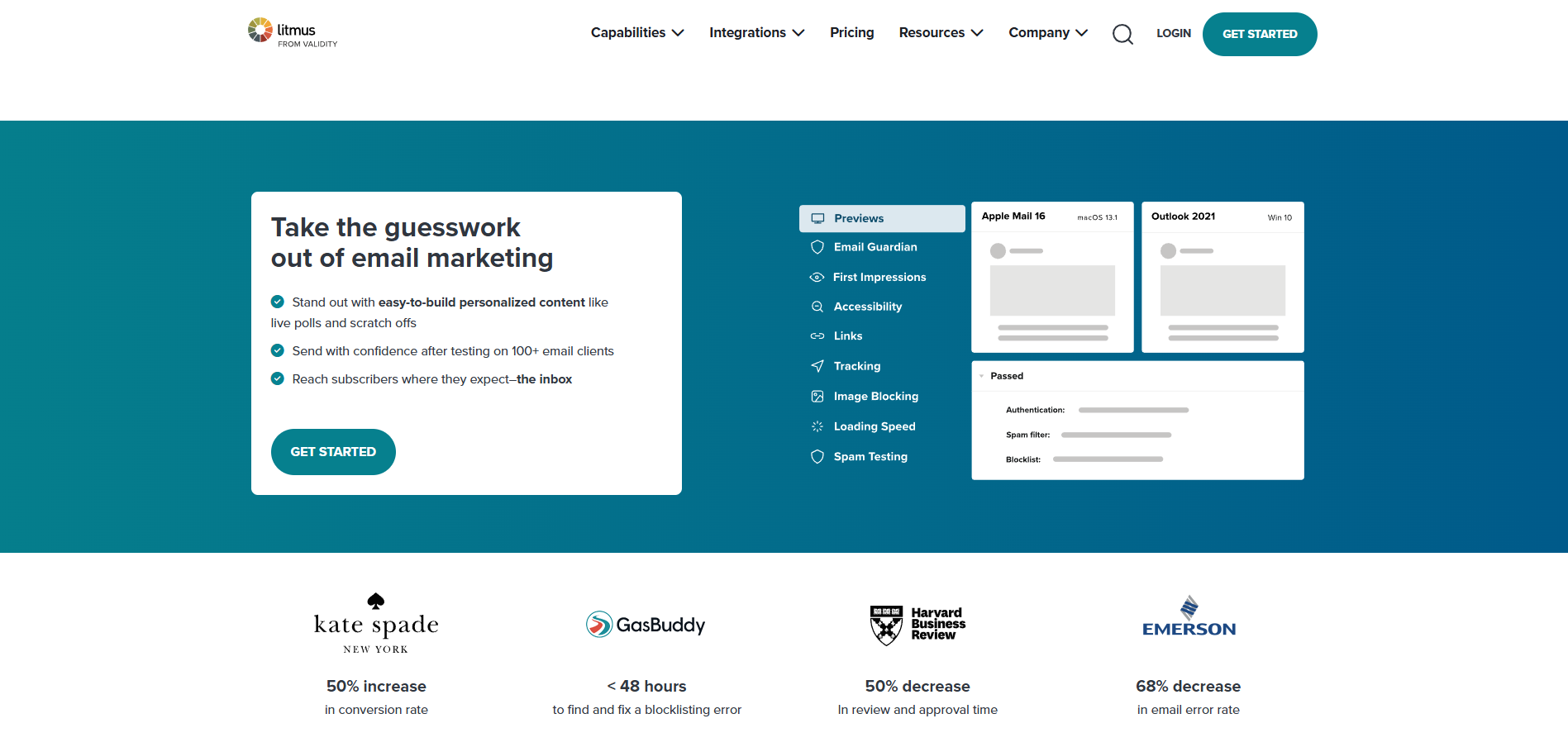
Litmus is an email testing and optimization platform designed to ensure every campaign you send looks perfect and performs reliably. Rather than sending emails, Litmus acts as a preflight system, allowing teams to preview messages across more than 100 email clients and devices before launch. It’s a vital part of enterprise email operations, protecting deliverability, consistency, and brand reputation by catching errors before they reach the inbox.
Litmus Key Features:
- Email Previews: Displays how emails render across clients, browsers, and mobile devices to maintain consistent design and formatting.
- Quality Assurance Checks: Detects broken links, image issues, and spam filter triggers before campaigns go live.
- Analytics Dashboard: Tracks engagement metrics such as read time, device usage, and forward rates to optimize future performance.
- ESP Integrations: Connects with major email service providers to streamline workflows and reduce production errors.
- Collaboration Tools: Enables feedback and approval from multiple stakeholders within a shared workspace.
Pros and Cons of Litmus
Litmus Best Fit:
Litmus is best suited for marketing teams that send high volumes of emails and require fail-safe quality assurance before deployment. It helps refine campaigns for accuracy and brand consistency. In contrast, 11x’s autonomous digital workers perform both creation and optimization within a self-improving workflow, eliminating the need for manual pre-send checks.
Litmus Pricing:
Plans start at $99 per month, with enterprise packages available based on usage and team size.
Lavender
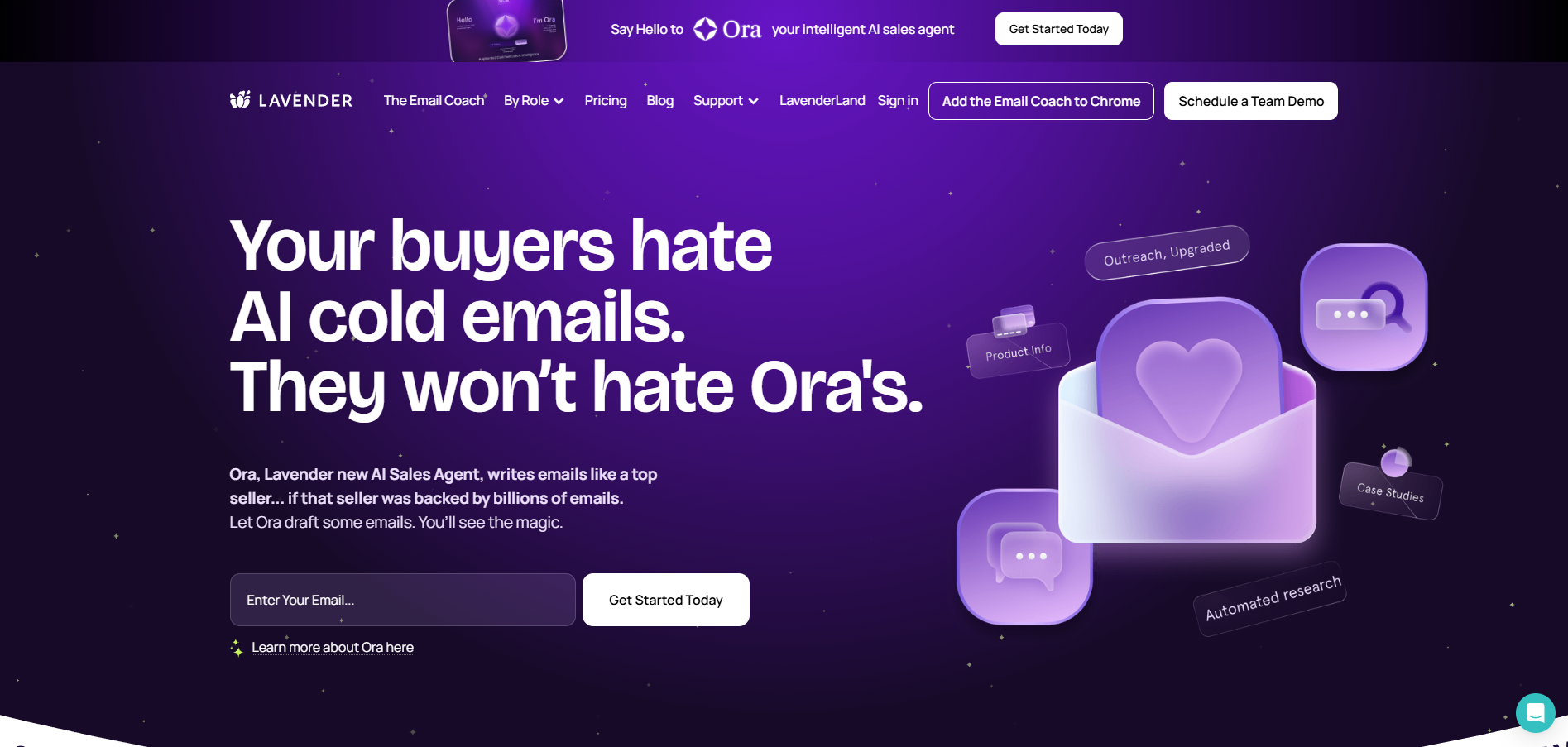
Lavender is an AI-powered writing assistant built to help sales professionals craft stronger, higher-performing emails. It integrates directly with tools like Gmail, Outlook, and Outreach to provide real-time feedback on tone, structure, and personalization, enabling reps to increase reply rates with minimal effort. Acting as an on-demand coach inside your inbox, Lavender refines how teams communicate with prospects and shortens the learning curve for effective email writing.
Lavender Key Features:
- AI Writing Feedback: Scores each email from 1 to 100 and highlights issues with tone, clarity, and length in real time.
- Personalization Insights: Pulls data from LinkedIn and company websites to suggest context-rich angles and openings.
- Coaching Assistant: Trains users to avoid weak phrasing, long sentences, and filler language that reduce engagement.
- A/B Testing: Tests subject lines and email versions to identify which variations drive better response rates.
- Integrations: Works natively with major email and sales engagement platforms, fitting seamlessly into existing workflows.
Pros and Cons of Lavender
Lavender Best Fit:
Lavender suits sales reps and teams that prioritize human-led personalization and want to improve their writing quality at scale. Compared to autonomous agents like Alice from 11x, which handle research and outreach end to end, Lavender functions as a productivity coach for the human in the loop.
Lavender Pricing:
Free plan available, with paid plans starting at $29 per user per month.
Actionable Email Personalization Strategies for 2025
Having the right email personalization tools is only half the equation. You need a strategy to apply them effectively. Here are proven approaches that drive results.
- Behavioral Triggers: Go beyond static lists and trigger emails based on user actions. This could be an abandoned cart reminder for an ecommerce store, a follow-up after someone visits your pricing page, or a re-engagement campaign for inactive users. This real-time automation ensures your message is always relevant.
- Dynamic Content Blocks: Instead of creating dozens of email variations, use one template with dynamic content. Show different case studies based on a prospect's industry, display different promotions based on their location, or change the call-to-action based on their lifecycle stage.
- Hyper-Personalized Cold Outreach: For cold email, personalization is non-negotiable. Use data from a prospect's LinkedIn profile, company news, or recent social media activity to craft a unique opening line or reference a specific pain point. This is a core function of the best AI CRM Tools that automate data enrichment.
- Multi-Channel Retargeting: Do not limit your follow-ups to email. If a prospect does not respond to an email, connect with them on LinkedIn. If they engage with a post, send a targeted follow-up. A coordinated, multi-channel approach significantly increases response rates.
How to choose the right email personalization tool
Choosing the right email personalization tool starts with understanding how much personalization your go-to-market motion actually requires. Not every team needs full autonomy, but most outgrow basic mail-merge quickly. Here are the key factors to evaluate when selecting a platform that fits your needs:
- Define the level of personalization you need: Determine whether simple CRM-based fields are enough or if your strategy depends on deeper context like firmographics, intent data, behavioral signals, or real-time triggers. Outbound and high-intent motions typically require more advanced personalization than lifecycle or newsletter campaigns.
- Understand how automation is executed: Some tools assist humans with workflows and templates, while others run outreach autonomously. If your team spends time researching accounts, writing custom openers, or managing follow-ups, higher automation, or full autonomy, can significantly improve efficiency.
- Evaluate data integration and flexibility: Effective personalization depends on clean, connected data. Look for tools that integrate easily with your CRM, analytics stack, and external data sources, and can use that information dynamically without constant manual maintenance.
- Account for multi-channel engagement: Email works best when coordinated with LinkedIn, SMS, or calls. Tools that unify personalization across channels help maintain relevance and consistency as prospects move between touchpoints.
- Plan for scale and operational overhead: Consider how the platform performs as volume increases. Some solutions scale by adding workflows and oversight, while others scale by reducing human involvement. Deliverability controls, governance features, and reporting depth matter more as your pipeline grows.
Transform Every Email into Opportunity with 11x
Email personalization has evolved from static campaigns to intelligent, data-driven engagement that adapts in real time. The next frontier is full autonomy, where systems not only personalize messages but execute entire outreach workflows on their own.
That’s where 11x comes in. Our digital workers, Alice and Julian, go beyond creating personalized emails. They research prospects, orchestrate multi-channel outreach, and book qualified meetings autonomously, turning intent signals into revenue while your team focuses on closing deals.
Ready to scale your personalization and pipeline without adding headcount? Hire the digital workers at 11x.ai and put your go-to-market engine on autopilot.
Frequently Asked Questions
Effective email personalization starts with good data. Integrate your CRM, website analytics, and product usage data to build a complete customer profile. Use this data to segment your audience and create messages that address their specific needs, pain points, and behaviors. Test different subject lines, copy, and offers to continuously optimize your campaigns. Systems like 11x automate this entire process, using AI to identify the best data points and craft the most effective message for each individual.
The 60/40 rule is a guideline suggesting that your email content should be 60% helpful, valuable, or educational and only 40% promotional. The goal is to build trust and provide value to your audience rather than constantly selling to them. This approach leads to higher engagement and better deliverability. An autonomous agent from 11x can apply this principle dynamically, adjusting the content mix based on a prospect's engagement signals to maximize the chance of a positive response.
The four D’s of personalization form a complete framework for building an effective strategy. It begins with Data, the process of collecting and unifying customer information from every touchpoint to create a single view of the individual. Next is Decisioning, where rules or AI determine what content, message, or offer should be shown to each person. Distribution ensures that experience is delivered through the right channels, such as email, web, or mobile. Finally, Dynamic Optimization keeps the system improving by continuously testing and refining personalization logic based on performance data. An autonomous platform like 11x manages all four D’s end to end, creating a self-learning personalization engine that operates without manual oversight.