Sales Lead Automation: Capture, Qualify & Convert 2026
Automate lead capture, scoring, routing, and nurturing to boost conversions. Discover tools and strategies. Schedule a demo with 11x.

Your sales teams collect hundreds of leads each week from forms, ads, website visits, and social media. Most never receive a timely response.
Manual effort slows follow-ups and leaves high-intent prospects waiting while your reps sort through inboxes and spreadsheets. Speed to lead determines whether prospects convert or go cold, yet most teams still rely on manual processes that create bottlenecks.
Sales lead automation solves this by using software and AI to capture leads, score them based on behavior, route them instantly, and execute follow-up without human intervention. According to HubSpot, 61% of high-performing sales teams now use automation to handle repetitive tasks.
You'll discover exactly how to automate lead capture, qualification, routing, and nurturing across your sales funnel. Whether you run a small sales team or manage enterprise pipeline operations, these strategies help you generate more qualified leads with less manual work.
What Is Sales Lead Automation?
Sales lead automation uses software, workflows, and AI to manage how leads enter, move through, and convert within your sales process. It removes the repetitive tasks tied to lead generation, qualification, routing, and follow-up that typically slow your reps down.
The core functions include lead capture from website forms and chatbots, lead enrichment that appends contact information and intent signals, lead scoring that ranks prospects by fit and engagement, lead routing that assigns qualified leads to the right reps automatically, and automated follow-up through email sequences, LinkedIn outreach, and phone.
How to Automate Lead Generation
Automating lead generation follows your buyer journey and adapts based on prospect behavior and intent signals.
Each stage uses different triggers and rules to move leads forward. The five core stages cover capture, qualification, routing, nurturing, and conversion.
1. Capture the Lead
Lead automation starts when you capture visitor information through web forms on landing pages and your homepage that collect names, email addresses, and company information. Chatbots engage visitors in real-time and gather details through conversation. Social media lead forms on LinkedIn and Facebook sync directly to your CRM. Webinars and demos capture contact details in exchange for access.
The moment someone interacts with any of these touchpoints, automation kicks in. Their information flows directly into your CRM or marketing automation platform without manual data entry.
11x Julian, an AI phone agent, captures inbound leads within seconds and qualifies them through natural two-way conversation. This instant response ensures your high-intent prospects never wait for a human to become available. Julian engages leads 24/7, handling qualification calls while your team focuses on closing deals.
2. Qualify and Score the Lead
Once a lead enters your system, automation evaluates their intent and assigns a score based on firmographic data like company size, industry, location, and revenue. Behavioral signals include pages visited, content downloaded, emails opened, and time on site. Intent indicators cover pricing page visits, demo requests, and competitor research. Engagement patterns track response rates, meeting attendance, and follow-up interactions.
Leads that match your ideal customer profile and show buying intent get flagged for immediate sales outreach. Lower-scoring leads enter nurture sequences until their behavior indicates readiness.
The speed factor matters here. According to Harvard Business Review, responding to leads within five minutes makes you 21 times more likely to qualify them. After five minutes, the odds of qualification drop dramatically.
Automation ensures this speed consistently, even outside business hours. Your team never misses a high-intent signal.
3. Route the Lead to the Right Salesperson
Qualified leads need to reach the right rep, not just whoever happens to be available. Lead automation routes based on predefined rules covering geographic territory (UK leads go to UK sales team members), company size (enterprise prospects route to enterprise account executives), product interest (leads interested in specific solutions go to specialists), round-robin distribution (equal distribution across available reps), and lead score thresholds (hot leads bypass nurture and go straight to closers).
The system updates your CRM, sends notifications, and can even add meetings to calendars automatically. Backup rules escalate leads if the assigned rep does not respond within a set timeframe.
This routing logic works seamlessly with AI-powered CRM systems that automatically enrich lead records and maintain data quality across your entire sales stack.
4. Nurture and Engage the Lead
Leads that are not ready to buy need ongoing engagement to stay warm. Automation handles this through email drip campaigns that deliver relevant content based on lead behavior and funnel stage, multichannel sequences coordinating email, LinkedIn, and phone touchpoints, re-engagement triggers that activate when a cold lead shows renewed interest, and personalized content delivery based on industry, role, and past interactions.
11x Alice, an autonomous AI SDR, handles this entire layer without human involvement. Alice generates demand by monitoring real-time signals like job changes, funding events, and website visits, then launches personalized outreach across email and LinkedIn.
She manages follow-up sequences, adapts messaging based on responses, and books meetings directly on your rep calendars. Alice operates continuously, ensuring your pipeline stays full while your team focuses on closing deals. This approach to AI-powered outreach delivers consistently higher conversion rates than manual prospecting.
5. Convert and Handoff
When leads are ready to buy, automation removes friction from the final steps. Meeting scheduling syncs with rep availability and eliminates back-and-forth. Deal alerts fire when prospects revisit pricing pages or view contracts. CRM updates log all activities and keeps records current. Handoff notifications brief the closing rep on conversation history and context.
After conversion, automation triggers onboarding sequences, customer success handoffs, and renewal reminders to maintain engagement through the entire customer lifecycle. This seamless handoff ensures your team never loses momentum between stages.
Best Sales Lead Automation Tools
Our analysis covers leading platforms across prospecting, engagement, qualification, and pipeline management.
We evaluated each tool based on enterprise readiness, integration depth, and measurable ROI potential. Selection criteria include autonomous execution capability, multichannel coverage, AI sophistication, CRM integration quality, and proven customer outcomes. This comparison helps you identify which platforms deliver assistive automation versus true autonomous execution.
Sales Lead Automation Platform Comparison
Use this side-by-side breakdown to compare capabilities across autonomous execution, AI sophistication, channel coverage, CRM integration, and enterprise governance. This comparison helps you quickly identify which platforms deliver assistive automation versus true autonomous execution that replaces entire job functions.
1. 11x
11x delivers autonomous digital workers that operate as true virtual team members, fully owning sales outcomes from first contact through qualification. Alice, the AI SDR, handles outbound prospecting across email and LinkedIn. Julian, the AI phone agent, qualifies inbound leads within seconds through a natural two-way conversation. Together, they replace manual SDR workflows with continuous, intelligent execution.
Core Capabilities:
- True autonomy: Goal-driven agents executing complete workflows from research through meeting booking without human intervention
- Multichannel coordination: Seamless engagement across email, LinkedIn, and phone with context maintained across every touchpoint
- Signal-driven intelligence: Customizable AI researcher tracking 75+ buying signals, including job changes, funding events, and website visits in real-time
- Deep CRM integration: Bi-directional sync with Salesforce and HubSpot, featuring comprehensive activity logging and automatic data enrichment
Standout Features:
- Speed-to-lead under 60 seconds for inbound qualification through Julian's instant phone engagement
- Adaptive learning that optimizes messaging, timing, and channel selection based on prospect response patterns
- Global scale with Alice operating in 105+ languages and Julian supporting 30+ languages for worldwide coverage
- Enterprise-ready security with SOC 2 Type II, GDPR, CASA Tier 3, and CCPA compliance built in from day one
- Conversation intelligence that analyzes every interaction to surface insights and improve future engagement
Competitive Advantages:
- First platform to deliver truly autonomous digital workers that replace entire job functions rather than just assisting reps
- Superior multichannel coordination that manages email, social, and phone outreach as a unified campaign
- Advanced self-learning capabilities that continuously improve performance without manual optimization
- Enterprise-ready governance from day one with white-glove onboarding, dedicated CSM, and always-on Slack support
Ideal Fit: Teams needing to consistently book more meetings without adding headcount. Organizations want autonomous execution that turns behavioral triggers into immediate action. RevOps leaders are seeking to replace fragmented tools (data providers, sequencers, dialers) with one intelligent system. Companies requiring personalized outreach at scale with measurable conversion improvements across all funnel stages.
ROI Impact: Gupshup saw a 50% increase in SQLs per SDR after adopting Alice, enabling a 1.5× boost in output per rep and freeing up time for strategic initiatives like calling and rapid campaign testing, all without increasing headcount. Across 11x customers, teams report 50% lower cost per lead, 80% higher meeting-to-opportunity rates, and 30% more meetings booked per AE.
Schedule a product demo with our expert team
2. HubSpot
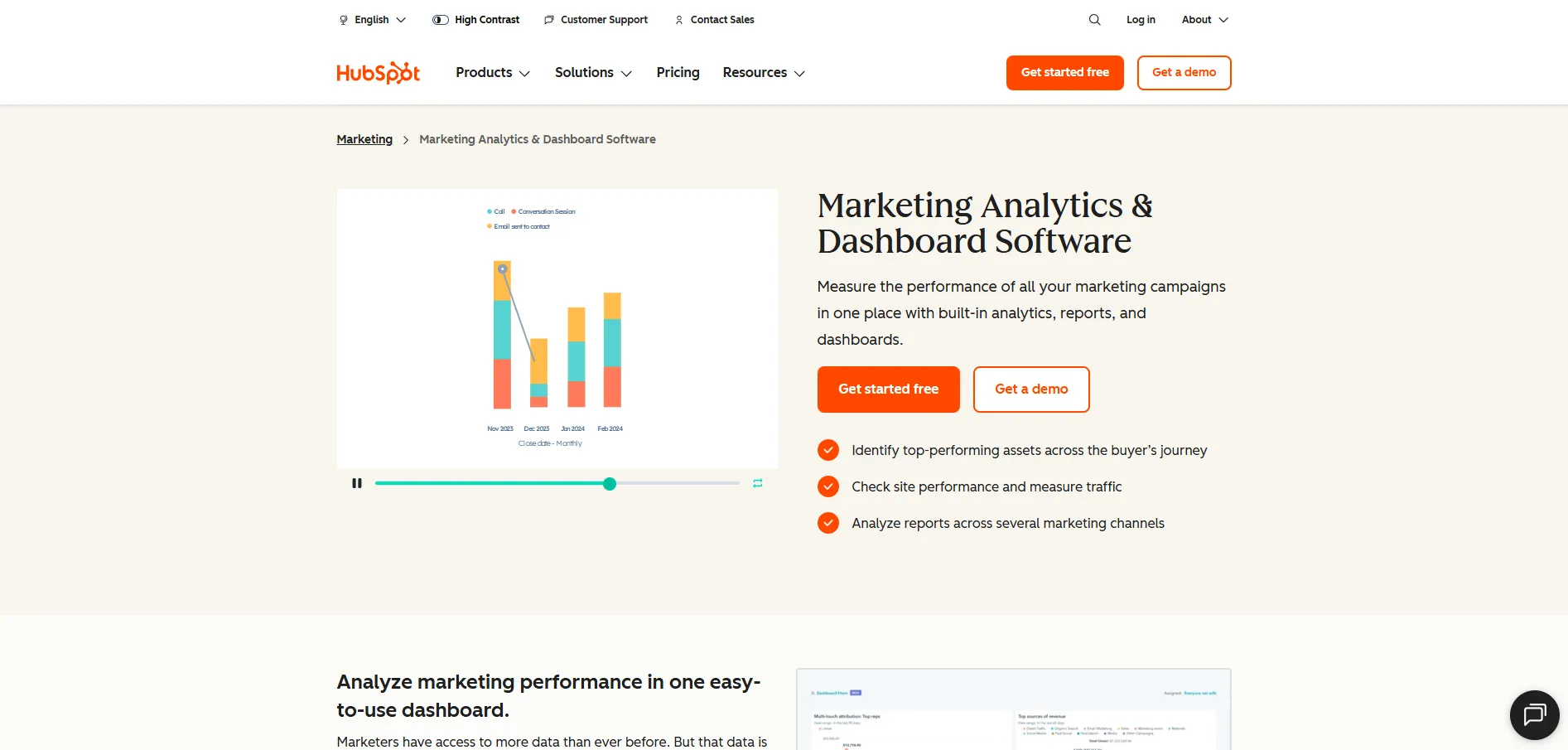
HubSpot combines CRM, marketing automation, and sales engagement in one integrated platform, enabling teams to build trigger-based workflows across the entire customer journey without switching systems.
Strengths:
- Native integration between marketing and sales eliminates data silos and ensures clean handoffs from lead capture through closed deals
- Visual workflow builder with drag-and-drop interface makes creating automated sequences accessible for non-technical users
- Comprehensive analytics dashboards track campaign performance, attribution, and ROI across all channels
- Large app marketplace with 1,000+ integrations extends functionality across the entire GTM stack
- Built-in email marketing, landing pages, and forms reduce the need for separate point solutions
Limitations:
- Pricing scales rapidly with contact volume and feature tiers, becoming expensive for growing teams
- Automation still requires manual workflow setup, testing, and ongoing optimization, unlike fully autonomous systems
- Phone capabilities are limited compared to dedicated sales engagement platforms
- Advanced features like predictive lead scoring are locked behind enterprise tiers
Ideal Fit: Mid-market teams wanting tightly integrated CRM and marketing automation with strong reporting and minimal integration complexity.
3. Salesforce
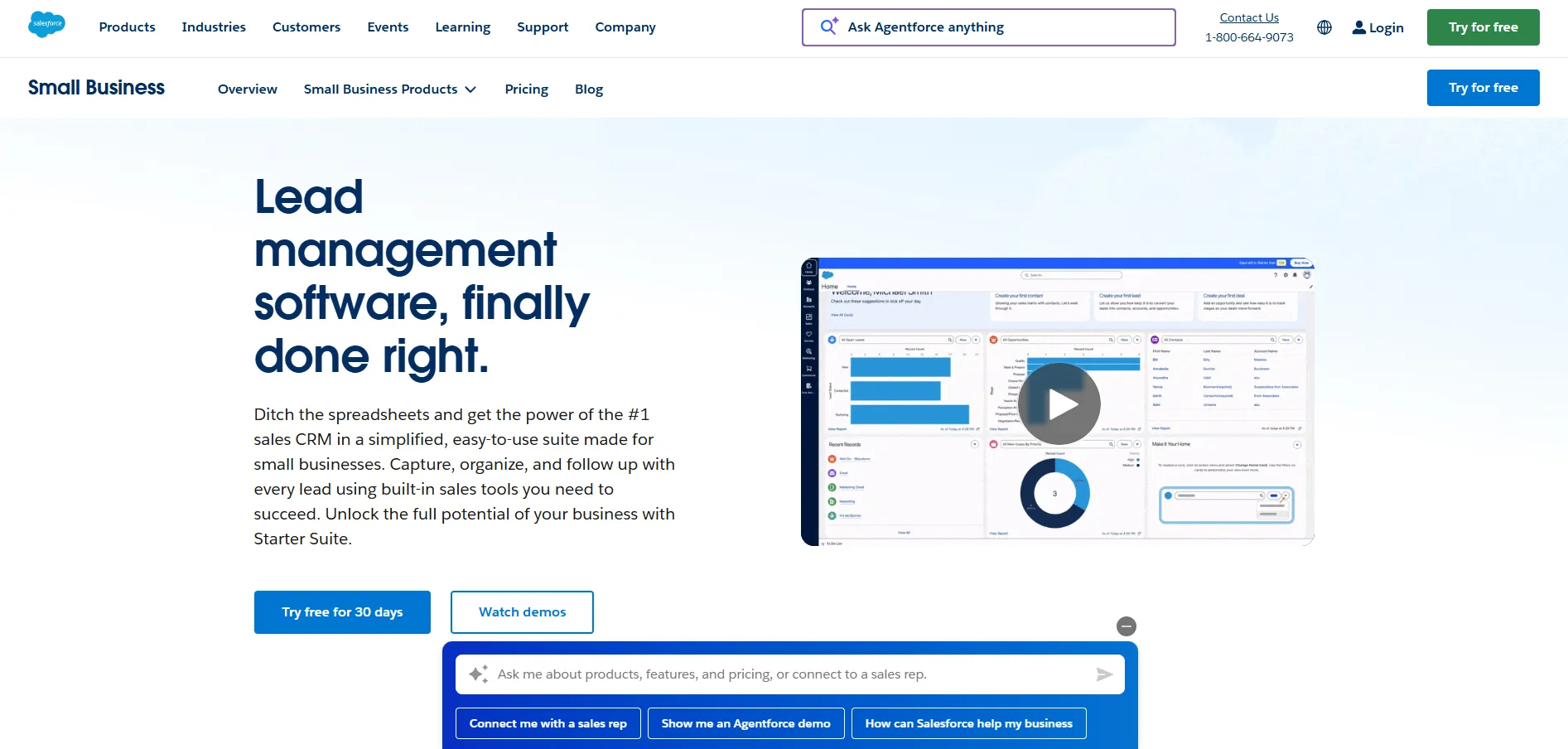
Salesforce provides the industry's most customizable CRM with deep lead management capabilities through Process Builder, Flow, and Einstein AI features designed for complex enterprise requirements.
Strengths:
- Unlimited customization through low-code builders and Apex development supports unique business processes
- Einstein AI delivers predictive lead scoring, opportunity insights, and next-best-action recommendations
- Massive integration ecosystem connects to thousands of apps across sales, marketing, support, and operations
- Enterprise-grade security, compliance, and governance controls meet requirements for regulated industries
- Salesforce AppExchange offers pre-built solutions for nearly every vertical and use case
Limitations:
- Steep learning curve requires dedicated admin resources and ongoing training investment
- High total cost of ownership when factoring in licenses, implementation, customization, and maintenance
- Manual configuration is needed for automation workflows; Einstein recommendations still require human execution
- Complexity can slow deployment and iteration compared to more opinionated platforms
Ideal Fit: Large enterprises needing highly customizable lead management workflows with extensive governance controls and deep integration across complex tech stacks.
4. ActiveCampaign
ActiveCampaign specializes in sophisticated email marketing automation with conditional logic, behavioral triggers, and lead scoring at price points accessible to small and mid-market teams.
Strengths:
- An advanced automation builder with conditional splits, wait steps, and goal tracking enables complex nurture sequences
- Behavioral tracking and tagging automatically segment prospects based on email opens, link clicks, and site visits
- Predictive sending uses machine learning to optimize email delivery timing for each contact
- Integration with 900+ apps, including major CRMs, e-commerce platforms, and sales tools
- Affordable pricing starting under $50/month makes it accessible for growing teams
Limitations:
- Primary focus on email limits multichannel orchestration compared to platforms with native phone and social capabilities
- CRM features are basic compared to dedicated sales platforms; most teams need a separate CRM
- Automation still requires manual workflow building and testing rather than autonomous operation
- Reporting is less robust than enterprise marketing automation platforms
Ideal Fit: Small to mid-market teams prioritizing email automation and lead nurturing at accessible price points who already have or don't need full CRM capabilities.
5. Outreach
Outreach manages multi-touch sequences across email, phone, and LinkedIn with built-in dialing capabilities and analytics designed specifically for high-volume SDR teams.
Strengths:
- Structured cadence framework enforces consistent outreach patterns across the entire SDR organization
- Native dialer with local presence, voicemail drop, and call recording streamlines phone prospecting
- Detailed analytics show which sequences, messages, and touchpoints drive the highest response rates
- A/B testing capabilities enable continuous optimization of templates and timing
- Manager dashboards provide full visibility into rep activity, pipeline contribution, and conversion metrics
Limitations:
- Requires manual sequence building and rep execution; provides structure but not autonomous operation
- Personalization is limited to merge fields and basic rules compared to AI-driven adaptive messaging
- High pricing and complexity are better suited for established SDR teams than small organizations
- Phone features strong, but social and chat capabilities lag behind email and calling
Ideal Fit: SDR teams executing high-volume outbound who need structured cadences with full visibility into rep activity and sequence performance.
6. Apollo.io
Apollo.io combines a B2B contact database with outbound sequencing capabilities, enabling teams to identify prospects and launch campaigns without switching between data providers and engagement platforms.
Strengths:
- Access to 270+ million contacts with email, phone, and firmographic data eliminates the need for a separate data provider
- Integrated sequencing lets teams build lists and immediately launch multi-touch campaigns in one workflow
- Affordable pricing with a meaningful free tier makes it accessible for startups and small sales teams
- Chrome extension enables prospecting and enrichment directly from LinkedIn and company websites
- Basic analytics and A/B testing help optimize outreach performance
Limitations:
- Data accuracy is inconsistent compared to premium providers; requires manual verification for high-stakes outreach
- Sequencing capabilities basic compared to dedicated sales engagement platforms
- Phone features are limited; primarily email-focused, with basic call logging
- Automation is assistive rather than autonomous; it still requires manual campaign management
Ideal Fit: Outbound-focused small to mid-market sales teams who need both contact data and basic email sequencing in one affordable platform.
7. Intercom
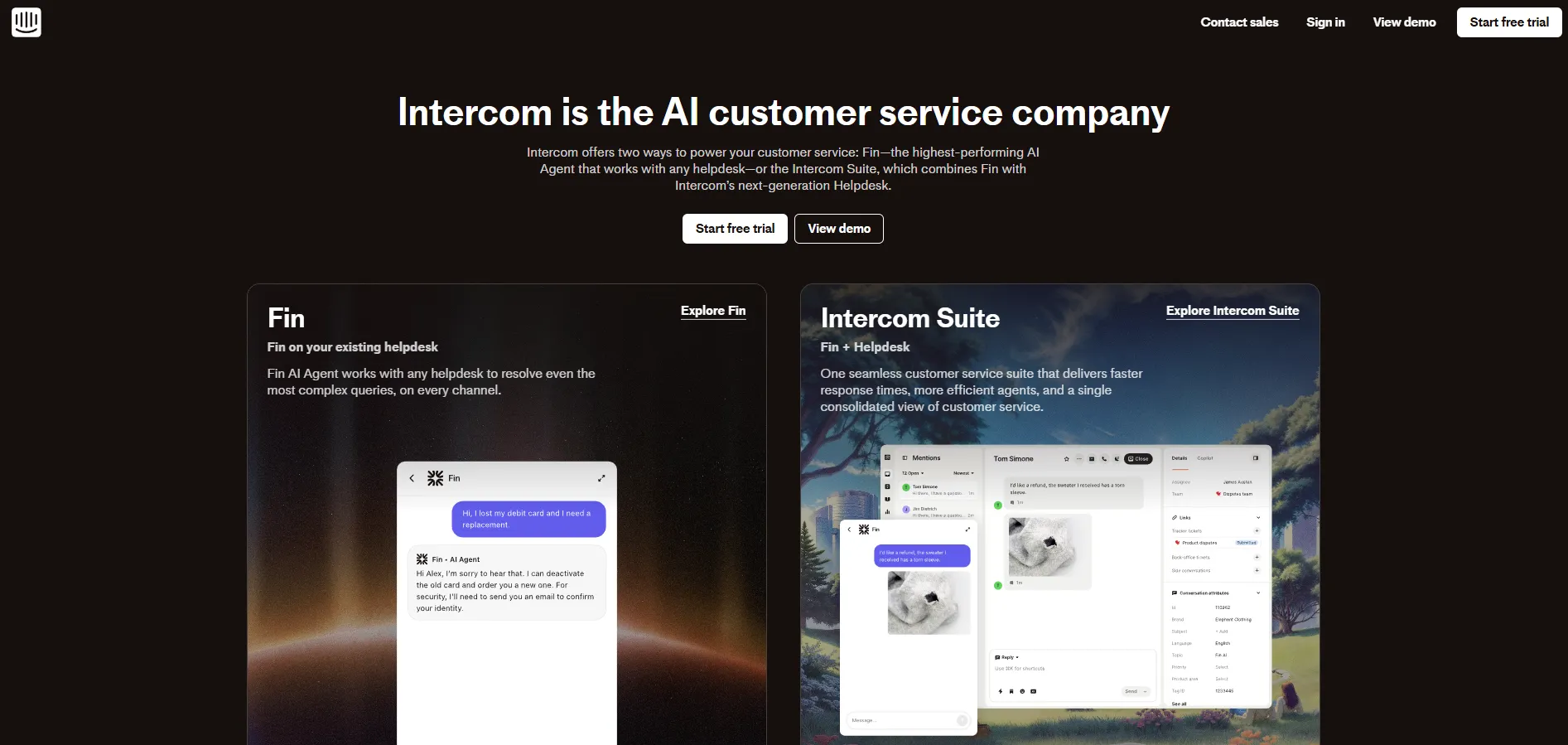
Intercom deploys intelligent chatbots and live chat that engage website visitors in real-time, qualify leads through conversation, and route high-intent prospects to appropriate sales reps.
Strengths:
- Real-time engagement captures visitors showing buying intent before they leave your site
- Conversational interface feels natural and less intrusive than traditional web forms
- Qualification bots can ask screening questions and route based on responses automatically
- Integration with major CRMs ensures captured leads sync immediately for follow-up
- Unified inbox combines chat, email, and support conversations in one interface
Limitations:
- Limited to website visitors; provides no outbound prospecting or multichannel capabilities
- Chatbot building requires setup time and ongoing optimization based on conversation patterns
- Pricing scales with conversation volume and can become expensive for high-traffic sites
- Works best as a complement to a broader lead automation strategy rather than a complete solution
Ideal Fit: B2B companies with strong inbound traffic wanting to convert website visitors faster through conversational engagement and instant qualification.
8. Cognism
Cognism provides verified B2B contact data with emphasis on compliance and data accuracy, particularly strong for European markets where GDPR requirements are strictest.
Strengths:
- Diamond Verified mobile numbers offer high accuracy with human verification, reducing bounce rates
- GDPR, CCPA, and international complianceare built into data collection and delivery processes
- Intent data highlights accounts actively researching solutions, helping prioritize outreach
- Chrome extension enables instant prospecting and enrichment from LinkedIn and websites
- Integration with Salesforce, HubSpot, and major sales platforms for seamless data flow
Limitations:
- Provides data only; requires separate tools for outreach execution and campaign management
- Higher pricing compared to database-only competitors reflects compliance and verification investment
- Coverage is stronger in Europe than in other regions; less competitive for purely US-focused teams
- Manual workflows remain necessary for turning contact data into actual conversations
Ideal Fit: European and global sales teams needing compliant, accurate contact data who prioritize legal risk management and data quality over cost.
9. Zapier
Zapier connects over 5,000 apps to automate data flow between sales tools through simple trigger-action workflows that require no custom development.
Strengths:
- Massive integration library covers virtually every sales, marketing, and productivity tool on the market
- No-code interface makes building automations accessible to non-technical users
- Pre-built templates for common workflows enable quick deployment of standard integrations
- Multi-step Zaps can chain multiple actions together for complex data routing
- Affordable pricing with a free tier suitable for basic integration needs
Limitations:
- Functions as an integration layer only; provides no native lead capture, scoring, or engagement capabilities
- Workflow complexity is limited compared to dedicated automation platforms with advanced logic
- Can become expensive when running high-volume automations across many apps
- Troubleshooting integration issues requires an understanding of each connected app's data structure
Ideal Fit: Teams needing to connect disparate tools in their existing stack rather than replacing them with a unified platform; best as a glue layer, not a primary automation engine.
10. Unbounce
Unbounce creates and optimizes landing pages specifically designed for lead capture, with built-in A/B testing and analytics to maximize conversion rates from paid campaigns.
Strengths:
- Drag-and-drop builder enables non-developers to create professional landing pages quickly
- Smart Traffic uses AI to automatically show visitors the page variant most likely to convert them
- A/B testing capabilities allow continuous optimization of headlines, CTAs, and form fields
- Popups and sticky bars provide additional conversion opportunities beyond main page
- Templates optimized for lead generation reduce time to launch new campaigns
Limitations:
- Focused solely on landing pages; provides no capabilities for post-capture lead management or nurturing
- Requires separate tools for email automation, CRM, and outreach execution
- Pricing based on traffic volume and conversions can become expensive for high-volume campaigns
- Works best as a component of a broader marketing stack rather than a standalone solution
Ideal Fit: Marketing teams running paid campaigns who need dedicated, high-converting landing pages that integrate with their CRM and marketing automation platform.
How to Choose the Right Sales Lead Automation Tools
Sales lead automation tools directly impact how efficiently your team captures, qualifies, and progresses leads. Without structured automation, reps spend time on manual data entry, inconsistent follow-ups, and low-value tasks instead of closing deals. The right platform automates repetitive workflows while maintaining data accuracy and personalization at scale.
Here are the key criteria to evaluate before selecting a sales lead automation tool:
- Scope of automation capabilities: Determine whether the platform automates only outreach sequences or the full lead lifecycle. Strong tools handle capture, enrichment, scoring, routing, follow-ups, and CRM updates without manual intervention.
- Lead qualification intelligence: Look for built-in scoring models or AI-driven prioritization. The system should evaluate behavior signals, firmographics, and engagement data to surface sales-ready leads automatically.
- CRM and tech stack integration: Seamless integration with Salesforce, HubSpot, and marketing automation platforms is essential. The tool must sync contact records, log activities, and update deal stages without duplication.
- Personalization at scale: Automation should not feel generic. Evaluate whether the platform supports dynamic fields, behavioral triggers, and conditional messaging based on industry, role, or previous interactions.
- Multichannel support: Modern sales engagement spans email, phone, LinkedIn, SMS, and web chat. Choose a platform that coordinates outreach across multiple channels while maintaining message consistency.
- Compliance and deliverability safeguards: Ensure the tool includes domain warm-up, bounce handling, unsubscribe management, and opt-out tracking. Strong compliance reduces spam risk and protects sender reputation.
- Workflow customization and logic depth: Advanced teams need branching logic and conditional triggers. The tool should allow you to build automation paths based on replies, inactivity, form submissions, or pipeline stage changes.
- Analytics and performance reporting: Look for dashboards that track open rates, reply rates, meeting bookings, lead velocity, and conversion metrics. Clear reporting allows revenue leaders to refine workflows continuously.
- Scalability and operational control: As your outbound volume grows, the platform must support higher sending limits, additional users, territory segmentation, and governance controls without system instability.
Before finalizing your choice, run a pilot campaign using a controlled lead segment. Measure response rates, CRM accuracy, and time saved per rep. Real-world performance will reveal whether the tool improves efficiency or introduces operational complexity.
Choosing the right sales lead automation tool strengthens pipeline consistency and frees your team to focus on strategic conversations. When automation handles the repetitive workload, sales teams can concentrate on revenue generation instead of administrative tasks.
Turn Every Lead Into Pipeline
Sales lead automation removes the manual bottlenecks that kill conversion rates.
Your prospects expect instant responses, personalized messaging, and seamless handoffs. Manual processes cannot deliver this consistently. Automation ensures every lead receives immediate attention, proper qualification, and timely follow-up, whether your team is available or not.
The tools you choose determine whether automation simply assists your team or fully replaces repetitive SDR work. Point solutions handle individual tasks but require ongoing management and integration. Autonomous AI agents like those from 11x execute complete workflows independently, from first contact through meeting booking.
Alice generates demand through continuous outbound prospecting across email and LinkedIn. Julian captures that demand by qualifying inbound leads within 60 seconds. Together, they deliver the consistent pipeline generation your team needs to hit quota without adding headcount.
Ready to see sales lead automation that actually runs itself? Schedule a product demo with our expert team.
Frequently Asked Questions
Lead automation uses software and AI to manage how sales leads enter, move through, and convert within your sales process. It handles lead capture, scoring, routing, nurturing, and follow-up without manual effort. The goal is faster response times, consistent outreach, and higher conversion rates.
Automate sales leads by implementing lead capture mechanisms (forms, chatbots), connecting them to your CRM, setting up scoring rules based on fit and behavior, configuring routing logic to assign leads to reps, and creating automated follow-up sequences. Platforms like 11x handle this end-to-end with autonomous AI agents.
Research shows that contacting leads within five minutes of their inquiry makes you 21 times more likely to qualify them compared to waiting 30 minutes. After five minutes, the odds of qualification drop dramatically. This speed-to-lead advantage separates high-performing sales teams from competitors who rely on manual follow-up processes.
11x Julian guarantees instant engagement by responding to inbound leads in under 60 seconds with AI-powered phone calls. Julian qualifies prospects through natural conversation, answers initial questions, and books meetings for qualified leads automatically.
Lead scoring assigns numerical values to leads based on demographic fit and behavioral engagement. High scores indicate prospects likely to convert. Scoring helps sales teams prioritize efforts on the best opportunities rather than treating all leads equally.
At 11x, Alice combines lead scoring with autonomous execution. Alice scores prospects based on 75+ buying signals including firmographic fit, behavioral engagement, and real-time intent indicators, then automatically launches personalized outreach to high-scoring leads without waiting for human review.
Yes. Many lead automation tools offer accessible pricing for small teams. Start with essential capabilities like form capture, email sequences, and basic scoring. As you grow, add more sophisticated routing and multichannel automation. 11x provides enterprise-grade automation at scales accessible to growing teams.