B2B Marketing Tech Stack: Top Tools for 2026
Build a high-performing B2B marketing tech stack with the right CRM, automation, and AI execution tools. Get started with 11x.

B2B marketing teams are drowning in tools. Nearly 75% of B2B marketers say their lead data is inaccurate, outdated, or non-compliant, causing fragmented workflows and wasted budget. According to Cognism's research on martech stacks, the average B2B company uses over 120 different SaaS tools, yet marketing operations teams still spend hours manually reconciling data instead of optimizing campaigns.
A high-performing B2B marketing tech stack should streamline demand generation, unify customer data, and connect marketing activities directly to revenue. But most stacks excel at lead capture and fall short at qualification and handoff to sales teams. Contacting leads within five minutes makes you 100 times more likely to connect than waiting an hour, yet typical marketing automation workflows introduce delays that kill conversion rates.
This guide compares the core tools across CRM, marketing automation, ABM, analytics, and AI-powered execution. You'll learn where 11x fits as the autonomous layer that turns marketing-qualified leads into booked meetings without manual SDR intervention.
What Is a B2B Marketing Tech Stack?
A B2B marketing tech stack is the collection of software tools that marketing teams use to attract, engage, and convert business buyers. Unlike B2C stacks that focus on high-volume transactions, B2B stacks prioritize account-based marketing, longer sales cycles, and deeper sales integration.
A typical martech stack includes CRM systems (Salesforce, HubSpot), marketing automation (Marketo, Pardot), ABM platforms (Demandbase, 6sense), analytics (Google Analytics), content creation tools (Canva), SEO tools, and social management (Hootsuite, Sprout Social). The real challenge: building a stack where data flows cleanly, workflows connect without manual intervention, and marketing campaigns translate directly to sales conversations. Most stacks perform well at lead generation but fail at handoff. Optimizing pipeline velocity becomes critical for converting marketing investment into revenue.
Why Evaluate Your B2B Marketing Tech Stack?
Marketing teams invest heavily in building sophisticated martech stacks, but ROI remains elusive when tools operate in silos. Common pain points drive teams to reassess their marketing technology stack:
Data fragmentation across platforms. Customer data lives across multiple systems without a single source of truth, forcing marketing operations teams to spend hours reconciling records instead of optimizing campaigns.
Slow lead response times. Speed-to-lead directly impacts conversion, but most marketing automation handoffs introduce delays. Without immediate follow-up, high-intent leads go cold before sales teams engage.
Limited visibility into attribution. Dashboards track impressions and clicks, but connecting marketing to closed revenue requires manual analysis. Without clear attribution, budget allocation remains reactive rather than data-driven.
Integration overhead. Adding tools means API configurations, data mapping, and regular maintenance as the ecosystem outpaces team capacity.
Execution gaps between marketing and sales. Most B2B stacks generate leads but struggle to convert them. Lead scoring identifies high-intent accounts, but qualification depends entirely on SDR bandwidth.
Our Evaluation Methodology
Our methodology prioritizes neutral, criteria-driven analysis with 90% objective feature comparisons and 10% strategic insights from GTM experience. Selection criteria include coverage across the marketing and sales lifecycle, AI sophistication, CRM integration quality, and proven customer outcomes. We evaluated tools based on their ability to streamline B2B workflows, maintain data quality, and convert marketing-qualified leads into pipeline.
Comparison of B2B Marketing Tech Stack Tools
The table below provides a high-level comparison of the leading B2B marketing tech stack tools across key dimensions. Use this snapshot to quickly evaluate which platforms align with your team's priorities before diving into detailed tool descriptions.
Top B2B Marketing Tech Stack Tools
The tools below span different categories of the B2B marketing technology stack, from CRM platforms and marketing automation to ABM, analytics, content creation, and AI-powered execution. Each addresses a distinct function, but the highest-performing martech stacks integrate them into unified workflows that connect marketing efforts directly to revenue.
1. 11x
11x provides autonomous AI agents that bridge the gap between marketing lead generation and sales execution. While most B2B marketing stacks stop at lead capture, 11x's digital workers handle the qualification and engagement that typically bottlenecks pipeline growth.
Key Features
- Alice (AI SDR) conducts outbound prospecting across email and LinkedIn, turning marketing-qualified leads into booked meetings
- Julian (AI Phone Agent) qualifies inbound leads within seconds through natural phone conversations
- Autonomous Operation completes research, personalized outreach, follow-ups, and lead qualification without human intervention
- Advanced Data Sources connect to 21+ data providers with real-time intent data and enrichment
- CRM Integration provides bi-directional sync with Salesforce, HubSpot, and Pipedrive
- Enterprise-Ready with SOC 2 Type II, GDPR, CASA Tier 3, CCPA compliance
Best Fit: 11x is ideal for B2B marketing teams that generate strong lead volume but struggle with qualification and handoff to sales. Unlike marketing automation platforms that nurture leads through email sequences, 11x actively engages and qualifies prospects across channels. Teams report 50% decrease in cost per lead, 80% increase in meeting-to-qualified opportunity conversion, and 30% increase in meetings booked per AE. Gupshup saw a 50% increase in SQLs per SDR after deploying Alice.
Pricing: Custom enterprise plan with usage-based tiers tied to lead volume and integration scope.
Book a demo with 11x to see how autonomous AI workers transform your marketing-to-sales handoff.
2. HubSpot
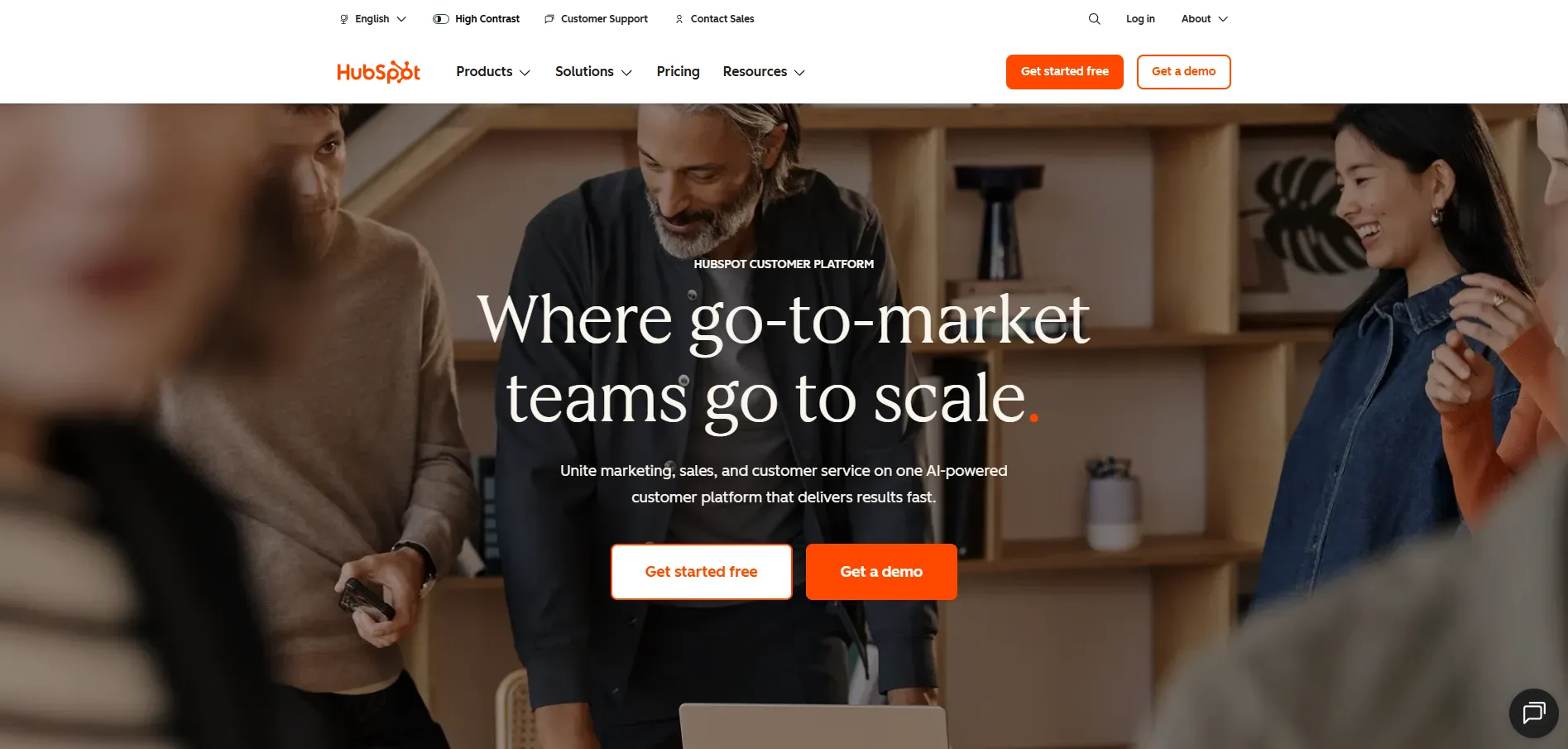
HubSpot is an all-in-one CRM and marketing automation platform that unifies customer data, email campaigns, contact management, deal tracking, and analytics in a single ecosystem. It includes a CMS for landing pages and native integrations with 1,500+ apps, eliminating much of the integration complexity that slows other stacks.
Key Features:
- Unified CRM with contact management, deal tracking, and pipeline visibility in one platform
- Marketing Hub includes email marketing, landing pages, forms, chatbots, and workflow automation
- Content Management through built-in CMS for blogs, landing pages, and website hosting with content creation tools
- Analytics Dashboards providing campaign performance, attribution reporting, and revenue tracking
- App Marketplace with 1,500+ native integrations, including Canva for content creation
Best Fit: HubSpot works well for SMB and mid-market B2B teams that want a single source of truth without managing multiple integrations. Yet HubSpot's automation focuses on nurturing rather than active qualification. Pairing it with 11x adds autonomous lead qualification that HubSpot's workflows cannot deliver.
Pricing: Free CRM tier; Marketing Hub starts at $800/month.
3. Salesforce
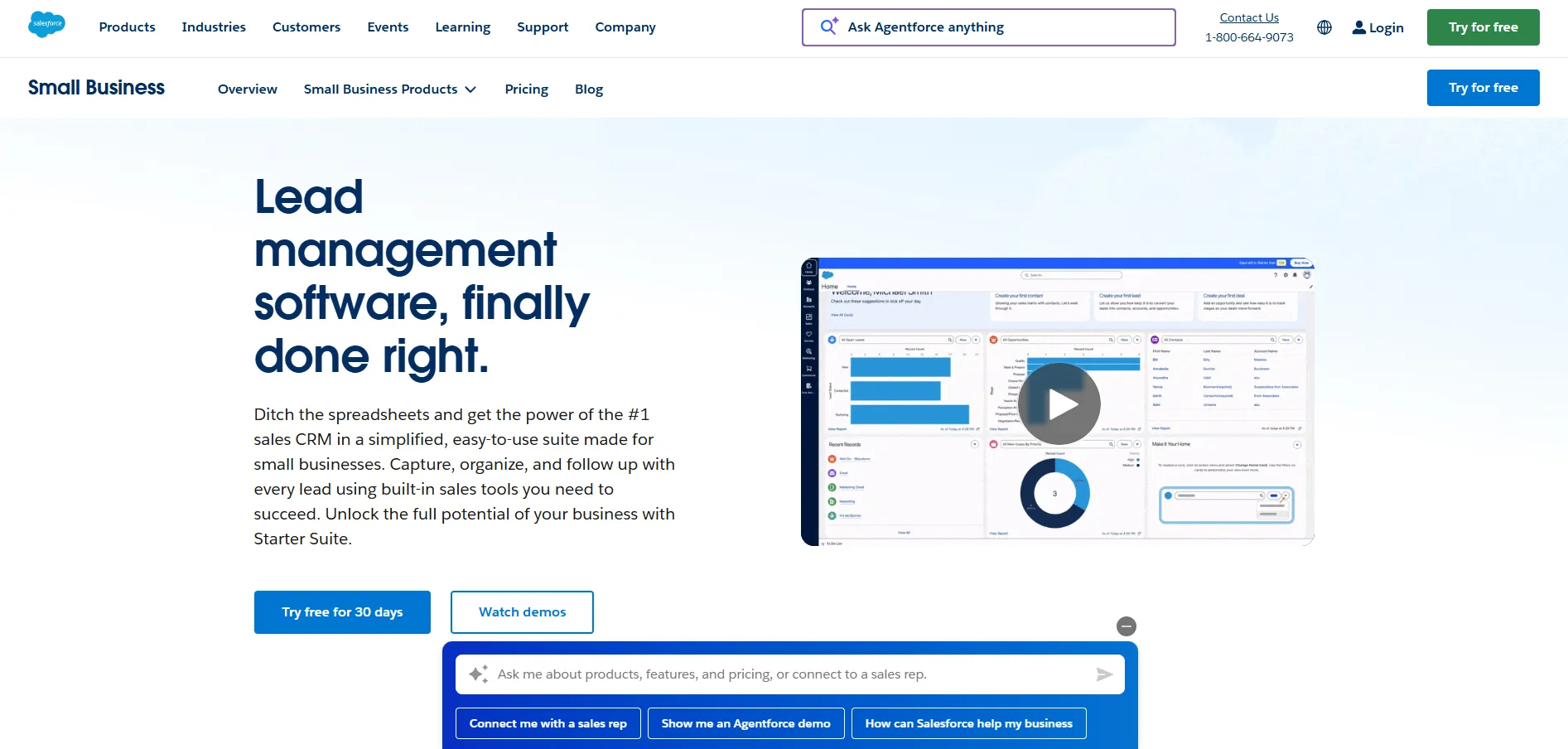
Salesforce is the dominant enterprise CRM platform with extensive customization options, Einstein AI for predictive scoring, Pardot marketing automation, and an AppExchange ecosystem of thousands of integrations. It functions as the system of record for complex B2B organizations with multi-stage sales cycles and large buying committees.
Key Features:
- Sales Cloud provides opportunity management, forecasting, and pipeline analytics
- Pardot Integration enables B2B marketing automation with lead scoring and nurturing
- Einstein AI delivers predictive lead scoring and opportunity insights
- AppExchange offers thousands of third-party integrations and custom apps
- Customization through extensive workflow rules, custom objects, and automation
Best Fit: Salesforce suits enterprise teams with complex requirements and dedicated resources. 11x integrates natively with Salesforce, logging all engagement activities and syncing outcomes directly to CRM records. This combination keeps your CRM current while autonomous agents handle qualification.
Pricing: Sales Cloud from $25/user/month; Marketing Cloud custom.
4. Marketo
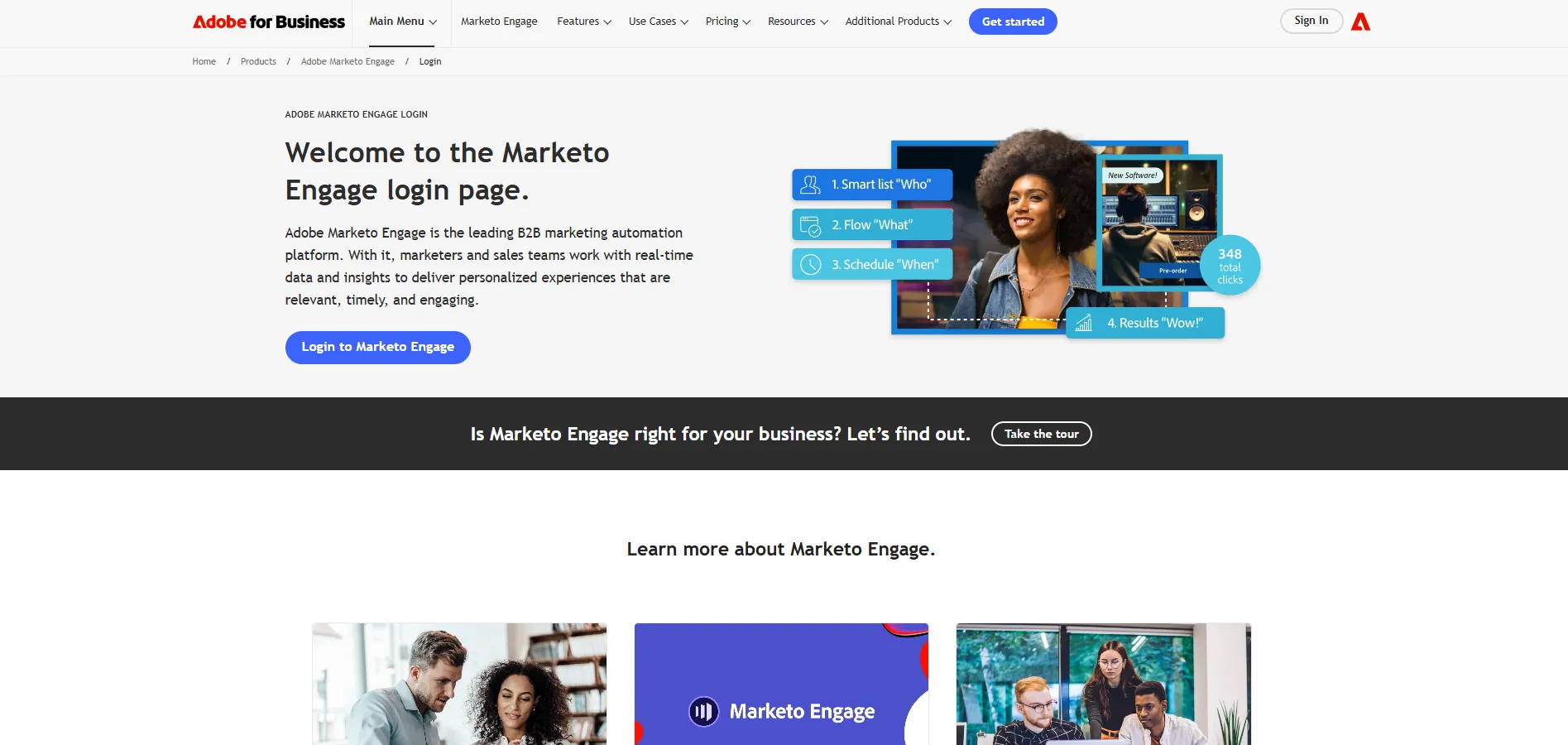
Marketo (part of Adobe Experience Cloud) provides enterprise-grade marketing automation with advanced lead scoring, email marketing, account-based marketing, revenue attribution, and native Salesforce/Dynamics integrations. It's built for complex, multi-touch B2B campaigns that require sophisticated segmentation and personalization at scale.
Key Features:
- Lead Management with advanced scoring models using behavioral and demographic criteria
- Email Marketing featuring dynamic content, A/B testing, and deliverability optimization across marketing campaigns
- ABM Capabilities, including account-level targeting, personalization, and reporting
- Revenue Attribution through multi-touch attribution, connecting marketing campaigns to closed revenue
- Engagement Programs with automated nurture streams and branching logic
Best Fit: Marketo suits enterprise teams with dedicated marketing operations resources. Its lead scoring is strong, but converting scores to sales conversations requires execution. Pairing Marketo with 11x allows autonomous agents to automatically engage leads that hit scoring thresholds.
Pricing: Custom enterprise pricing based on database size.
5. Demandbase
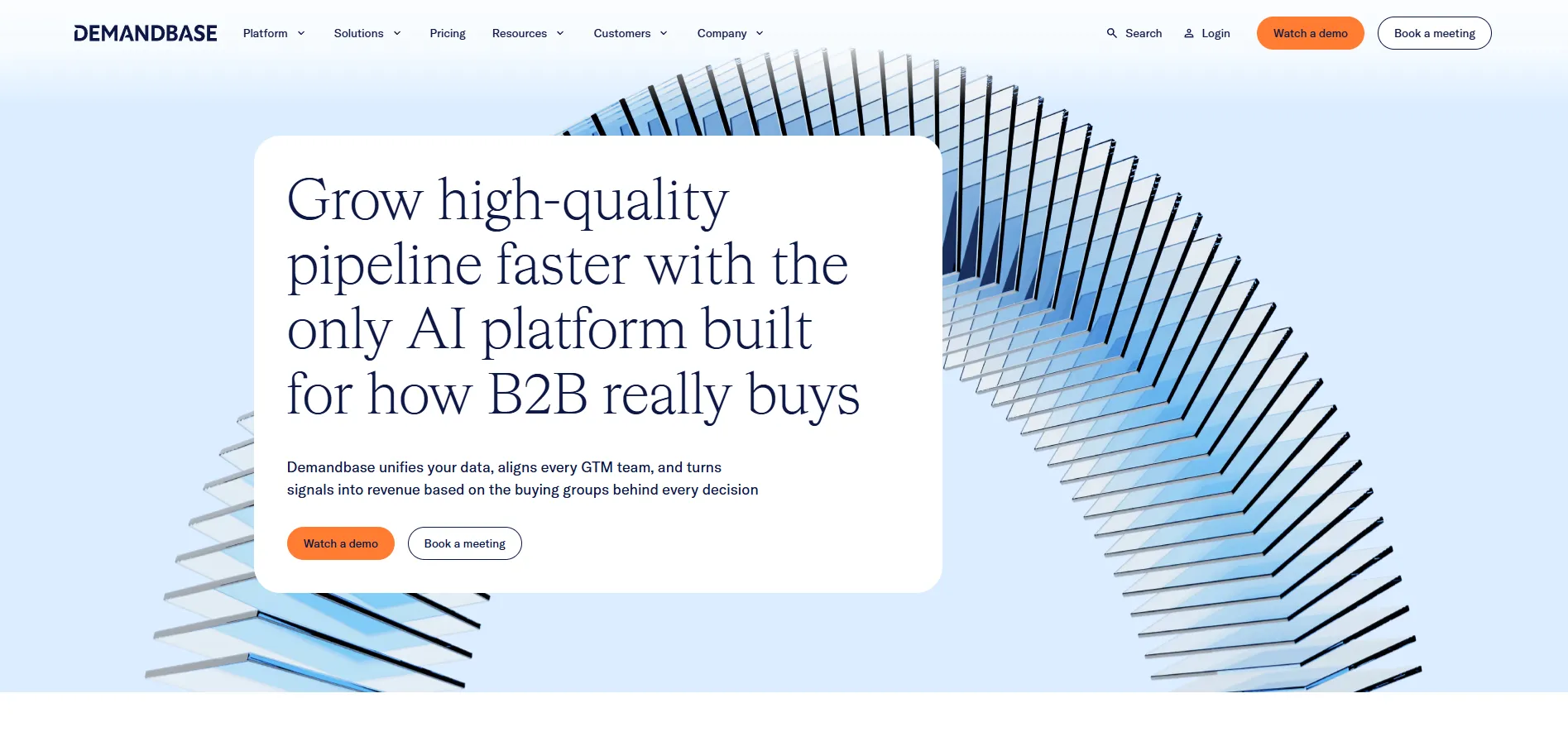
Demandbase combines intent data, account-based advertising (display, LinkedIn, connected TV), and sales intelligence to help B2B teams target high-value accounts. It identifies in-market accounts, provides buying intent indicators, and integrates with major CRM and marketing automation platforms to focus spend on accounts actively researching solutions.
Key Features:
- Intent Data tracks account-level research behavior across the web
- Account-Based Advertising across display, LinkedIn, and connected TV targeting
- Sales Intelligence providing account insights and engagement history for reps
- CRM Integration with native sync to Salesforce, HubSpot, and Marketo
- Audience Segmentation for building target account lists based on firmographics and intent
Best Fit: Demandbase works best for teams executing defined account-based strategies. Its intent data reveals which accounts are researching solutions. Pair it with 11x to engage those accounts immediately with personalized outreach before competitors reach them.
Pricing: Custom enterprise pricing based on account volume.
6. Google Analytics
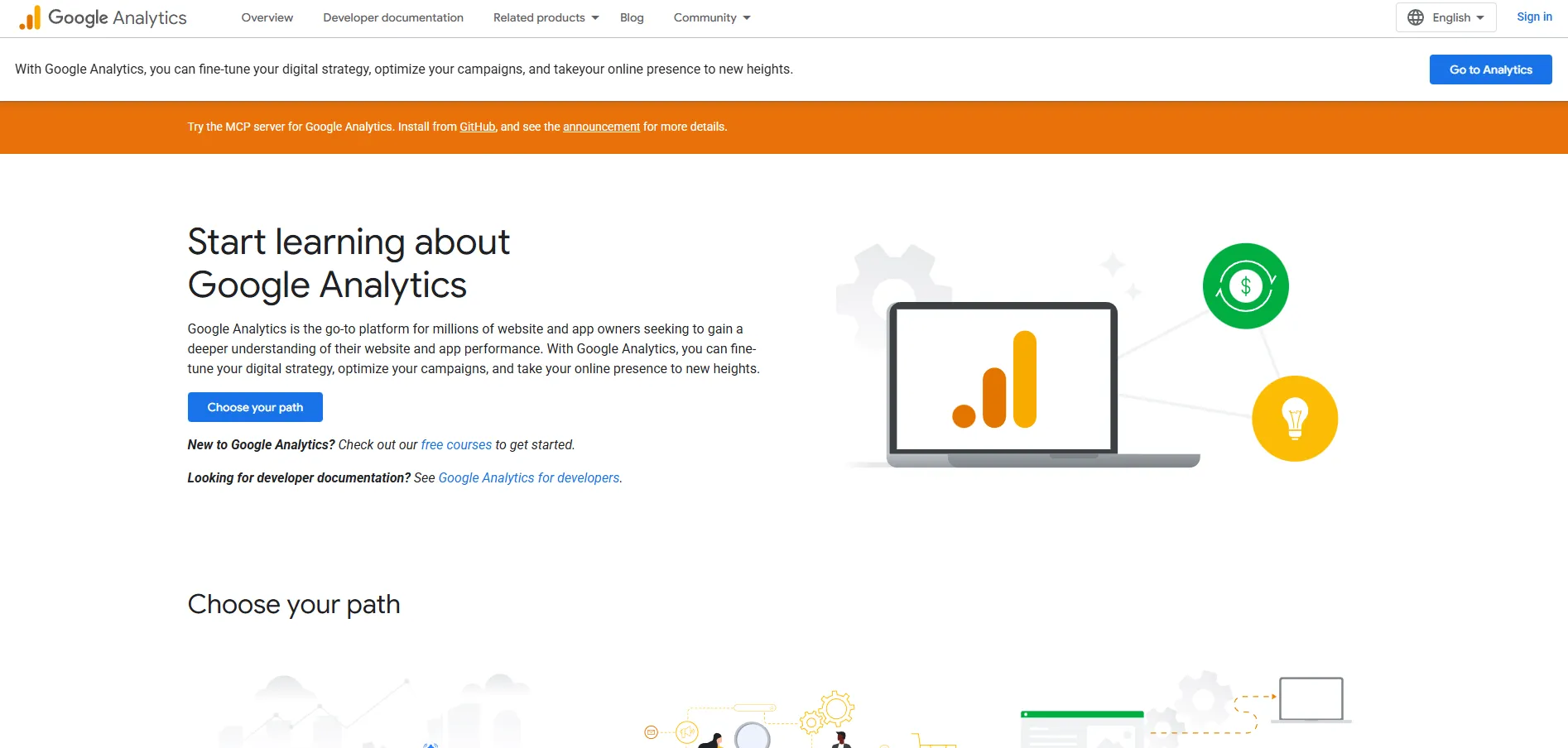
Google Analytics provides website analytics, conversion tracking, attribution modeling, and audience segmentation. GA4 offers enhanced cross-platform tracking and machine learning insights. It forms the measurement foundation for most B2B marketing stacks, tracking how visitors engage with content and convert.
Key Features:
- Traffic Analysis provides source, medium, and campaign attribution for all website visitors
- Conversion Tracking monitors goal completions, e-commerce transactions, and event tracking
- Audience Segmentation allows building segments based on behavior, demographics, and technology
- Attribution Modeling compares first-click, last-click, and data-driven attribution
- GA4 Machine Learning delivers predictive metrics and automated insights
Best Fit: Google Analytics is foundational for baseline measurement in every B2B stack alongside SEO tools that track organic performance. It tracks engagement but doesn't connect web behavior to account intelligence. Pair it with 11x to surface high-intent visitors and qualify them immediately through autonomous outreach.
Pricing: Free standard version; GA360 custom enterprise pricing.
7. Mailchimp
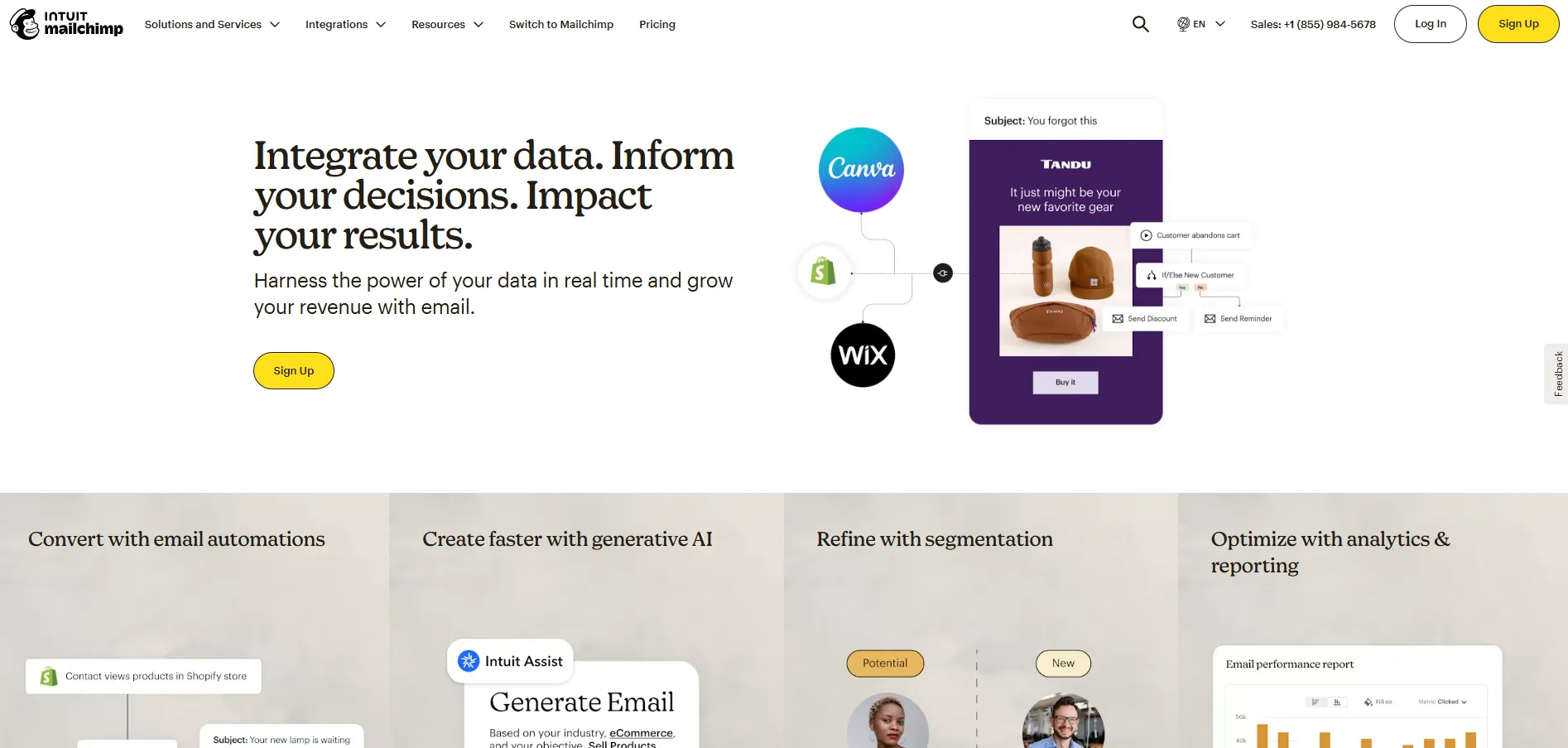
Mailchimp provides accessible email marketing with a campaign builder, basic automation, landing pages, audience segmentation, and integrations with e-commerce and CRM platforms. It's straightforward for teams with simple email needs but limited for complex B2B workflows requiring multi-touch nurturing.
Key Features:
- Email Campaign Builder with drag-and-drop editor, templates, and A/B testing for content creation
- Basic Automation including welcome sequences, abandoned cart, and simple triggers
- Landing Pages through built-in page builder for lead capture
- Audience Management with segmentation, tagging, and subscriber management
- Integrations with Shopify, WordPress, Salesforce, Canva, and 300+ apps
Best Fit: Mailchimp suits early-stage B2B companies with straightforward email needs. For teams outgrowing it, 11x handles the personalized outreach that basic email automation cannot deliver at scale, converting leads through multi-channel engagement.
Pricing: Free tier for up to 500 contacts; plans start at $13/month.
8. Hootsuite
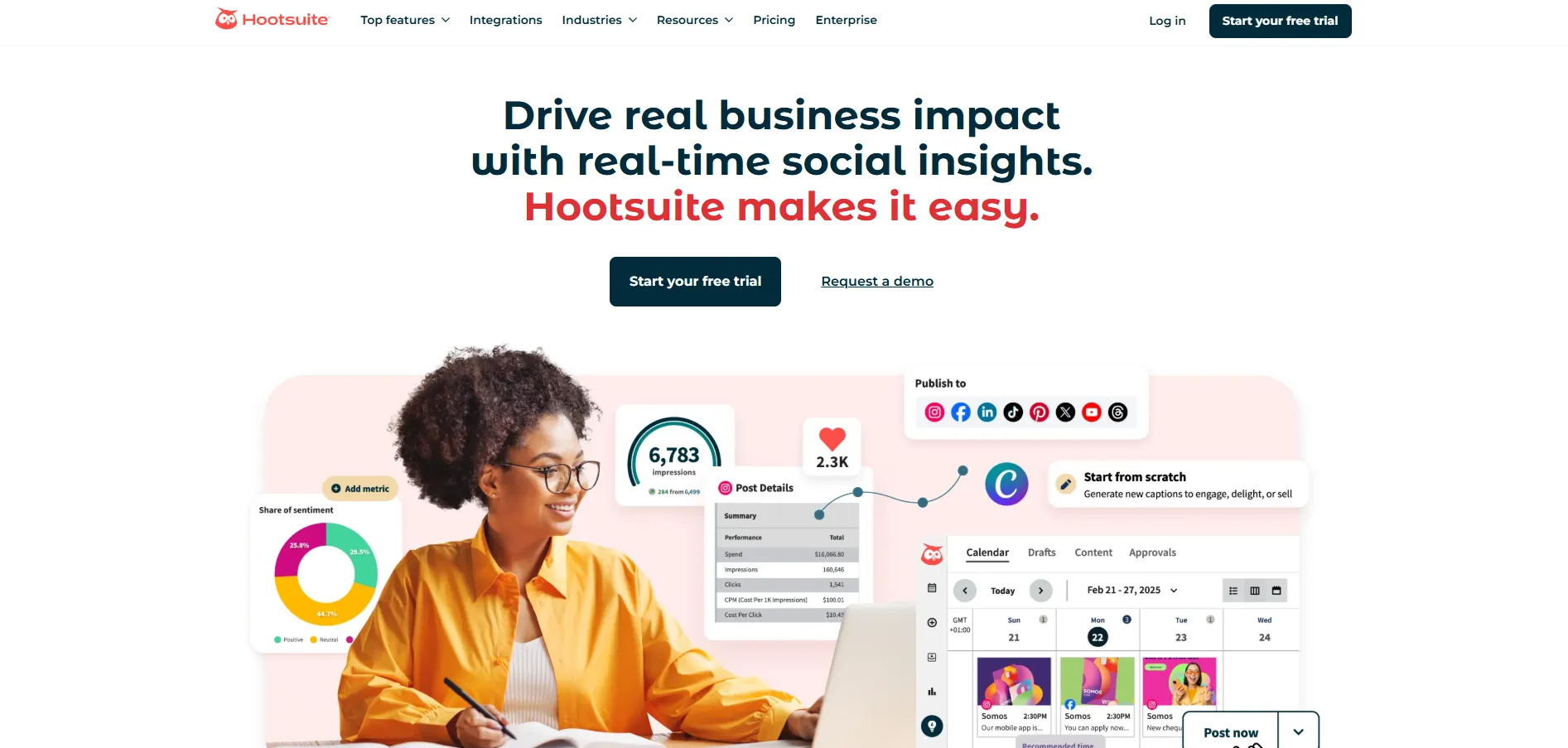
Hootsuite centralizes social media content scheduling, publishing, social listening, brand monitoring, and analytics across LinkedIn, Twitter, and other platforms. It includes team collaboration features and CRM integrations for coordinating social presence across marketing teams.
Key Features:
- Multi-Platform Publishing for scheduling posts across LinkedIn, Twitter, Facebook, and Instagram
- Social Listening to monitor brand mentions, keywords, and competitor activity
- Analytics tracking engagement, reach, and follower growth across platforms
- Team Collaboration with approval workflows, content calendars, and role permissions
- CRM Integration connecting social engagement to customer records
Best Fit: Hootsuite works well for B2B teams managing content creation and brand presence on social channels. Teams also consider Sprout Social as an alternative for advanced analytics and social listening. For LinkedIn prospecting that generates pipeline, 11x's Alice provides autonomous outreach that goes beyond scheduling to active lead generation.
Pricing: Professional plan from $99/month.
Key Comparison Criteria
The following criteria help GTM teams evaluate which B2B marketing tech stack tools best fit their pipeline goals, team structure, and automation needs. Each dimension reveals critical differences in how platforms deliver value, from basic automation to autonomous execution that transforms marketing investment into revenue.
AI Sophistication and Autonomy
The gap between AI-assisted and AI-autonomous platforms determines whether your team works faster or whether AI does the work entirely.
Marketing tools across the martech stack vary widely in AI capabilities:
Basic Automation: Mailchimp offers rule-based workflows (send email A when trigger B fires).
Predictive AI: Marketo and HubSpot provide machine learning for lead scoring, analyzing conversion patterns and recommending next actions.
Autonomous Execution: 11x AI agents independently research prospects, craft personalized outreach, execute multi-channel campaigns, and qualify leads without human intervention.
The Critical Difference: Assistive AI requires manual oversight, template creation, and constant optimization. Autonomous agents operate continuously, learn from every interaction, and refine their approach based on real engagement data. According to the 2025 State of Marketing AI Report, teams using autonomous AI execution see significantly higher conversion rates than those relying on AI-assisted tools. For marketing teams struggling with bandwidth, "AI suggests" versus "AI executes" determines whether leads get immediate follow-up or sit in queues.
Coverage Across Sales Lifecycle
Most tools specialize in one stage, creating dangerous gaps where leads stall between marketing and sales.
Single-Stage Tools:
- HubSpot and Salesforce handle CRM and pipeline management
- Marketo focuses on nurturing and scoring through email sequences
- Demandbase specializes in account identification and advertising
- Google Analytics tracks top-of-funnel engagement (no qualification)
The Handoff Problem: Most tools excel at one stage but create gaps between marketing and sales. Leads move from marketing automation to CRM but sit uncontacted for hours or days, killing conversion rates.
11x Advantage: Bridges the gap by handling lead qualification and engagement that typically bottlenecks pipeline growth. Converts marketing-qualified leads directly into sales conversations through immediate, autonomous outreach. Result: no gap, no delay, no leads going cold.
Data Quality and Sources
Your outreach is only as good as your data. Incomplete contact information kills conversion before campaigns even launch.
Data accuracy directly impacts campaign performance and deliverability.
Platform Limitations:
- Salesforce and HubSpot rely on manual entry and enrichment integrations that create contact gaps
- Marketing automation platforms inherit existing CRM data quality
- Demandbase provides intent data but lacks complete contact details and org structures
Research from Forbes shows B2B contact data decays at approximately 30% per year as professionals change jobs and companies.
11x Data Infrastructure: Connects to 21+ elite data providers for real-time enrichment, combining firmographic data, technographic intelligence, intent indicators, job changes, funding events, and social activity. This unified intelligence ensures outreach reaches the right contacts with relevant, timely messaging.
Impact: Poor data quality wastes budget on wrong contacts and bounced emails. Strong data infrastructure drives conversion by connecting the right message to the right person at the right moment.
Deliverability and Scale
Scaling email volume without a dedicated infrastructure sends your messages straight to spam folders.
Platform Capabilities:
- Mailchimp offers strong deliverability for basic campaigns through shared infrastructure
- Marketo and HubSpot provide monitoring and optimization features requiring manual intervention
- Volume Challenge shows even sophisticated platforms struggle with inbox placement at scale
11x Deliverability Infrastructure: AI-powered inbox rotation, automated domain warming, and intelligent send pattern optimization mimicking human behavior. Continuously monitors bounce rates, spam complaints, and engagement signals, automatically adjusting send velocity to protect sender reputation.
Scale Impact: Teams scale outreach from hundreds to thousands of personalized touches daily without degrading performance or triggering spam filters. According to Mailgun's 2025 deliverability benchmarks, inbox placement rates drop significantly without dedicated infrastructure. For high-volume campaigns, dedicated deliverability infrastructure determines inbox placement versus junk folders.
CRM Integration and Workflow
Tight CRM integration eliminates data silos and manual reconciliation that slow marketing teams.
Platform Integration:
- HubSpot provides native integration across the entire ecosystem
- Salesforce offers extensive AppExchange customization with pre-built connectors
- Marketo enables bi-directional sync with Salesforce and Microsoft Dynamics
Integration Challenges: Many require constant monitoring for sync errors, duplicate records, and field mapping issues, creating operational overhead. Research from Martech found that data integration remains the top challenge for marketing teams managing complex tech stacks.
11x CRM Integration: Seamless native connectors with Salesforce, HubSpot, and Pipedrive log every engagement, email, call, and meeting directly to CRM records with complete context. Bi-directional sync means sales rep activities inform marketing strategy, while marketing engagement enriches sales conversations.
Impact: Marketing activities automatically update pipeline data, providing accurate attribution and forecasting without manual data entry or reconciliation spreadsheets.
Enterprise Readiness and Governance
Enterprise buyers require comprehensive security certifications and compliance documentation before approving any marketing tool.
Platform Security:
- Salesforce and Marketo deliver enterprise-grade security with audit logs, role-based permissions, and compliance controls
- HubSpot maintains SOC 2 Type II compliance and strong enterprise support
Enterprise Requirements: Beyond basic certifications, enterprises need data residency options, single sign-on, custom retention policies, and dedicated infrastructure.
11x Enterprise Compliance: SOC 2 Type II, GDPR, CASA Tier 3, and CCPA compliance built from day one. White-glove onboarding includes security reviews, custom implementation, and dedicated customer success managers. Always-on Slack support provides immediate technical expert access.
Risk Management: Governance features protect sensitive customer data and ensure regulatory compliance across global operations, giving security teams confidence in vendor risk management.
Pricing and ROI
Monthly subscription costs hide the real expense, operational overhead, manual work, and missed conversions.
Pricing models vary dramatically across B2B marketing tech stack tools:
Entry-Level: HubSpot and Mailchimp offer free plans, scaling to thousands monthly as usage grows.
Enterprise: Salesforce and Marketo require substantial upfront investment. Demandbase and 11x use custom pricing tied to usage and integration scope.
True ROI Calculation: Evaluate total cost against measurable outcomes: time saved, pipeline generated, conversion rates.
11x Results:
- 50% decrease in cost per lead
- 80% increase in meeting-to-qualified opportunity conversion
- 30% more meetings booked per AE
A $50/month tool requiring three FTEs costs more than a $5,000/month autonomous platform replacing those roles. The right investment depends on pipeline goals, not just subscription cost.
Transform Your Marketing Stack Into a Revenue Engine
Most B2B marketing stacks excel at generating demand but fail at execution. Marketing automation captures leads, CRM systems track opportunities, and analytics measure performance, yet most martech stacks lack the capacity to act on high-intent leads immediately and at scale.
That's where 11x transforms the stack from a lead generation machine into a pipeline engine. Alice handles autonomous outreach across email and LinkedIn, converting leads with personalized messaging, while Julian qualifies inbound leads within seconds, so no hot lead goes cold. Together, they bridge the gap between marketing investment and booked meetings without adding SDR headcount.
Ready to turn your marketing tech stack into a predictable pipeline? Book a demo with 11x to see how AI-powered execution transforms lead generation into revenue.
Frequently Asked Questions
A B2B marketing tech stack is the collection of software tools that marketing teams use to attract, engage, and convert business buyers. It typically includes CRM platforms like Salesforce or HubSpot, marketing automation like Marketo, analytics platforms like Google Analytics, and specialized tools for ABM and email marketing. The most effective stacks integrate these tools into unified workflows where marketing activities connect directly to sales outcomes. 11x adds the execution layer most stacks lack: autonomous AI agents that qualify leads and book meetings without human intervention.
Map your go-to-market motion and identify real bottlenecks. If lead capture is strong but qualification lags, prioritize execution tools like 11x over additional lead sources. Evaluate tools based on integration depth with your CRM, not standalone features. Ensure data flows cleanly between platforms to maintain a single source of truth. Avoid tools that add complexity without solving specific workflow gaps.
B2C stacks focus on high-volume, short-cycle transactions with broad reach. B2B stacks prioritize account-based marketing, longer sales cycles, and deeper marketing-sales integration, with tools like Demandbase providing intent data for buying committees. B2B execution requires personalized engagement across multiple stakeholders, which 11x delivers through autonomous prospecting and qualification.
11x functions as the execution layer connecting lead generation to the sales pipeline. While marketing automation captures and nurtures leads, Alice actively qualifies them through outbound prospecting across email and LinkedIn. Julian qualifies inbound leads via phone within seconds of form submission. Both integrate with Salesforce, HubSpot, and Pipedrive, logging activities directly to your CRM. Teams report 50% decrease in cost per lead and 80% increase in conversion to qualified opportunities.
Martech stacks focus on lead generation, campaigns, content, and analytics. Sales tech stacks focus on CRM, prospecting, and deal management. The most effective B2B organizations integrate both, with tools sharing data and workflows. 11x bridges both by converting marketing-qualified leads into sales-ready opportunities through autonomous qualification, eliminating the gap between demand generation and pipeline creation.