Outbound Sales Automation: How Modern GTM Teams Scale Smarter
Outbound sales automation helps sales teams scale pipeline without extra headcount. See how AI SDRs like 11x Alice transform outreach, CRM workflows, and follow-ups.

Outbound sales is changing fast. The old playbook—manual prospecting, endless follow-ups, and fragmented spreadsheets—can’t keep up with today’s growth targets. Sales reps spend hours maintaining CRMs instead of closing deals, while repetitive tasks drain momentum.
Outbound sales automation gives sales teams leverage. It replaces manual data entry and outreach with AI workflows that run 24/7. These systems identify potential customers, send personalized emails, track engagement across email, and sync results directly into your CRMs.
In this guide, we’ll unpack what outbound sales automation really means today, compare the eight best platforms in the market, and walk through how automation flows actually run in modern GTM teams.
What Is Outbound Sales Automation?
Outbound sales automation is the use of AI-powered sales automation tools to streamline the outbound sales process, from lead generation to follow-ups. Instead of manually running cold email campaigns or updating records, automation workflows manage personalized outreach, qualification, and CRM integration in real time.
Modern sales automation platforms like 11x Alice, Outreach, and Apollo integrate directly with CRMs such as Salesforce and HubSpot. They handle lead data enrichment, intent data analysis, and automated email sequencing. For sales teams, automation doesn’t replace humans; it allows SDRs and account executives to focus on conversations and closing deals.
McKinsey’s research shows that early adopters of sales automation achieve 10–15% greater efficiency and up to 10% higher sales uplift, with more than 30% of sales activities now ready for automation. The takeaway is clear: High-performing teams aren’t debating automation. They’re scaling it to increase pipeline and close more deals.
Top Outbound Sales Automation Platforms
Here are eight of the top sales automation tools for outbound sales. For each, we’ve outlined the main features, strengths, and best-fit scenarios so you can find the right match for your sales strategy.
1. 11x — Autonomous Outbound With Alice, Your AI SDR
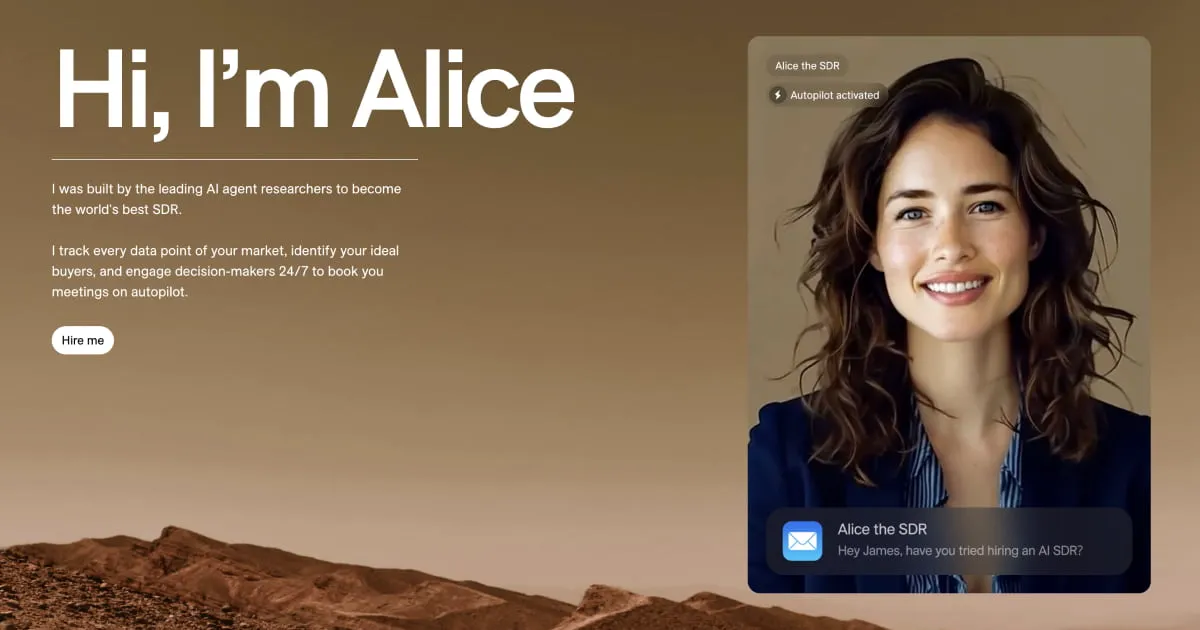
11x Alice is an AI SDR that autonomously manages B2B lead generation, outreach, and qualification. She identifies potential customers from a verified database of 400 million contacts that match your ideal customer profile, writes personalized emails using intent signals, and launches multi-channel outreach campaigns spanning email.
Key Features
- Unified data intelligence from 21+ premium providers with real-time signals and live search for sharper targeting.
- Research agents and personalization waterfalls that adapt messages by role, product, and market.
- Adaptive workflows that optimize conversion rates through real-time ICP scoring and A/B testing.
- Predictive insights for audience refinement by demographics, company size, and behavioral intent.
- AI-driven email warming, inbox rotation, and spam protection to maintain deliverability at high volume.
Strength:
- Delivers truly autonomous execution instead of task-based automation.
- Self-learning engine that continuously optimizes results.
- Enterprise-grade compliance (SOC 2, GDPR, CASA Tier 3) and white-glove onboarding via CSMs and Slack.
Best Fit: Sales teams aiming to book more qualified leads without increasing headcount—ideal for organizations needing autonomous execution, personalized outreach, and higher conversion rates across the sales pipeline.
ROI Impact: Gupshup saw a 50 percent increase in SQLs per SDR after adopting Alice, boosting rep output 1.5× and freeing time for strategic sales efforts like calling and rapid campaign testing, all without new headcount.
2. Outreach.io — Enterprise Engagement and Analytics
Outreach.io remains one of the most comprehensive sales automation platforms for enterprise sales teams. It orchestrates outbound sales processes and gives leaders data-driven visibility across every rep and touchpoint.
Key Features
- Multi-channel sequencing (email sequences and calls).
- AI assistant suggesting next actions during sales calls.
- CRM integration with Salesforce and Dynamics 365 for automated data sync.
- Analytics dashboards tracking activities, response rates, and forecasting metrics.
Strength:
- Enforces consistency in outreach campaigns while allowing reps to personalize messages.
- Detailed dashboards and reporting for pipeline optimization and manager coaching.
Ideal For: Large B2B sales organizations requiring structured workflows, compliance controls, and clear metrics to streamline their sales engagement strategy.
3. Apollo.io — Prospecting Plus Automation in One Workflow
Apollo.io merges prospecting and automation into a single dashboard that supports both data enrichment and email automation. It’s popular with startups because it simplifies outbound sales setup and accelerates lead generation.
Key Features
- Access to 260 million verified contacts with intent data and firmographic filters.
- Built-in email automation and follow-up sequences linked to CRM records.
- Chrome extension for real-time prospecting and quick data entry.
- Lead scoring and engagement metrics that prioritize high-intent prospects.
Strength:
- Combines data enrichment and sales outreach so sales teams don’t need multiple tools.
- Real-time analytics help optimize messaging and test email templates faster.
Ideal For: Startups and SMBs that want a budget-friendly sales automation tool to streamline prospecting, data entry, and outreach in one place.
4. Lemlist — Personalized Cold Outreach At Scale
Lemlist specializes in hyper-personalized emails and visual touchpoints to improve response rates in cold outreach. Its platform helps salespeople craft personalized emails that stand out in crowded inboxes without sacrificing automation.
Key Features
- Personalized email templates with custom images and video thumbnails.
- Deliverability management including email warm-up, domain rotation, and spam monitoring.
- Social media steps inside outreach workflows for multi-channel contact.
- Campaign dashboards tracking response rates and follow-up effectiveness.
Strength:
- Enables creative sales teams to run hyper-personalized outreach at scale.
- Strong deliverability features help optimize sender reputation for cold emails.
Ideal For: Agencies and boutique sales teams that win through personalization and storytelling rather than volume.
5. HubSpot Sales Hub — CRM-Native Sales Automation
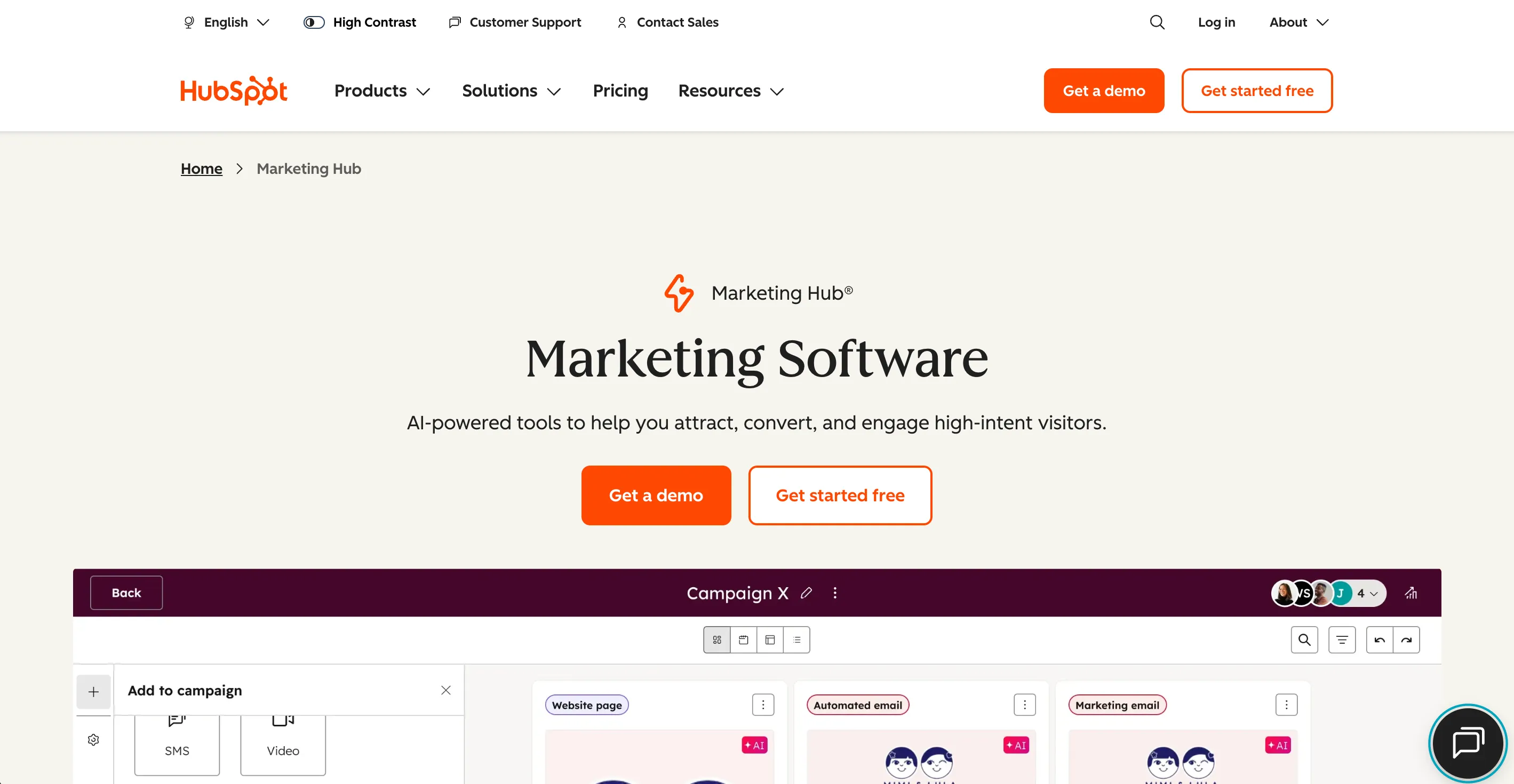
HubSpot Sales Hub brings outbound sales automation directly into the CRM, unifying sales, marketing, and customer success data. For sales teams already in the HubSpot ecosystem, this platform simplifies outreach, follow-ups, and deal management.
Key Features
- Automated email sequences triggered by contact behavior and lifecycle stage.
- Built-in meeting scheduling, pipeline tracking, and deal forecasting dashboards.
- Real-time lead scoring and notification workflows to prioritize hot prospects.
- Tight CRM integration with marketing automation for unified campaign execution.
Strength:
- Streamlines the sales process with a single source of truth for all contacts.
- Excellent onboarding, making it accessible to sales reps with minimal technical setup.
Ideal For: SMB and mid-market sales teams using HubSpot CRM that want to automate outbound workflows and follow-ups while maintaining visibility across marketing and customer functions.
6. Salesloft — AI-Assisted Cadence and Coaching
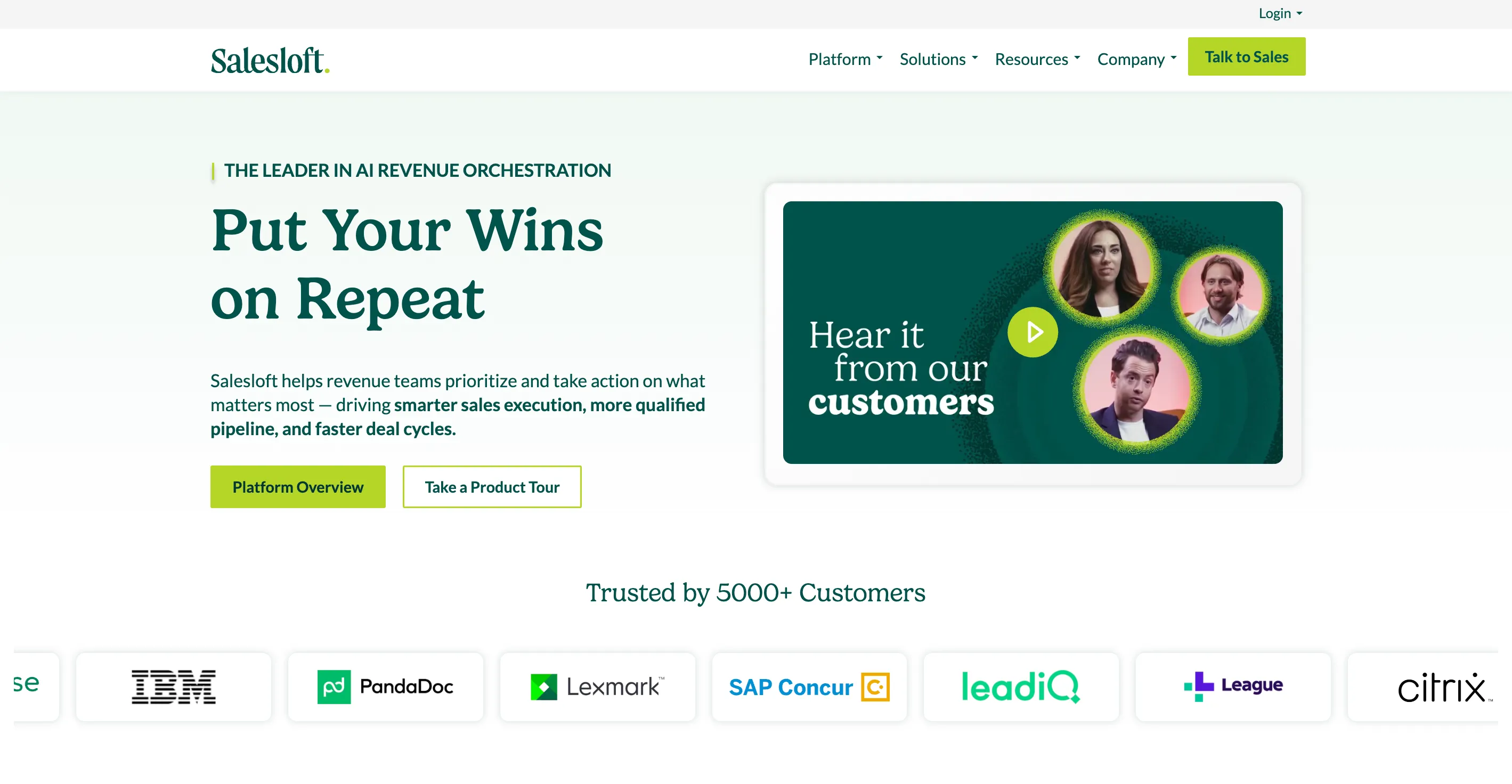
Salesloft focuses on enabling sales leaders to manage cadence quality and rep performance with AI-driven insights. It combines automation, analytics, and coaching to optimize every stage of the outbound sales process.
Key Features
- Multi-channel cadences (emails, calls, and social media touchpoints).
- Conversation intelligence to analyze sales calls and uncover winning talk tracks.
- Deal analytics and forecasting dashboards that identify risks and momentum.
- CRM integrations with Salesforce and HubSpot for live pipeline sync.
Strength:
- Uses AI to analyze engagement metrics, optimize cadences, and predict deal outcomes.
- Offers detailed coaching workflows to help managers train SDRs more effectively.
Ideal For: Mid-to-large sales teams needing clear visibility into outreach performance and standardized processes to scale consistent results.
7. Instantly.ai — High-Volume Cold Email Automation
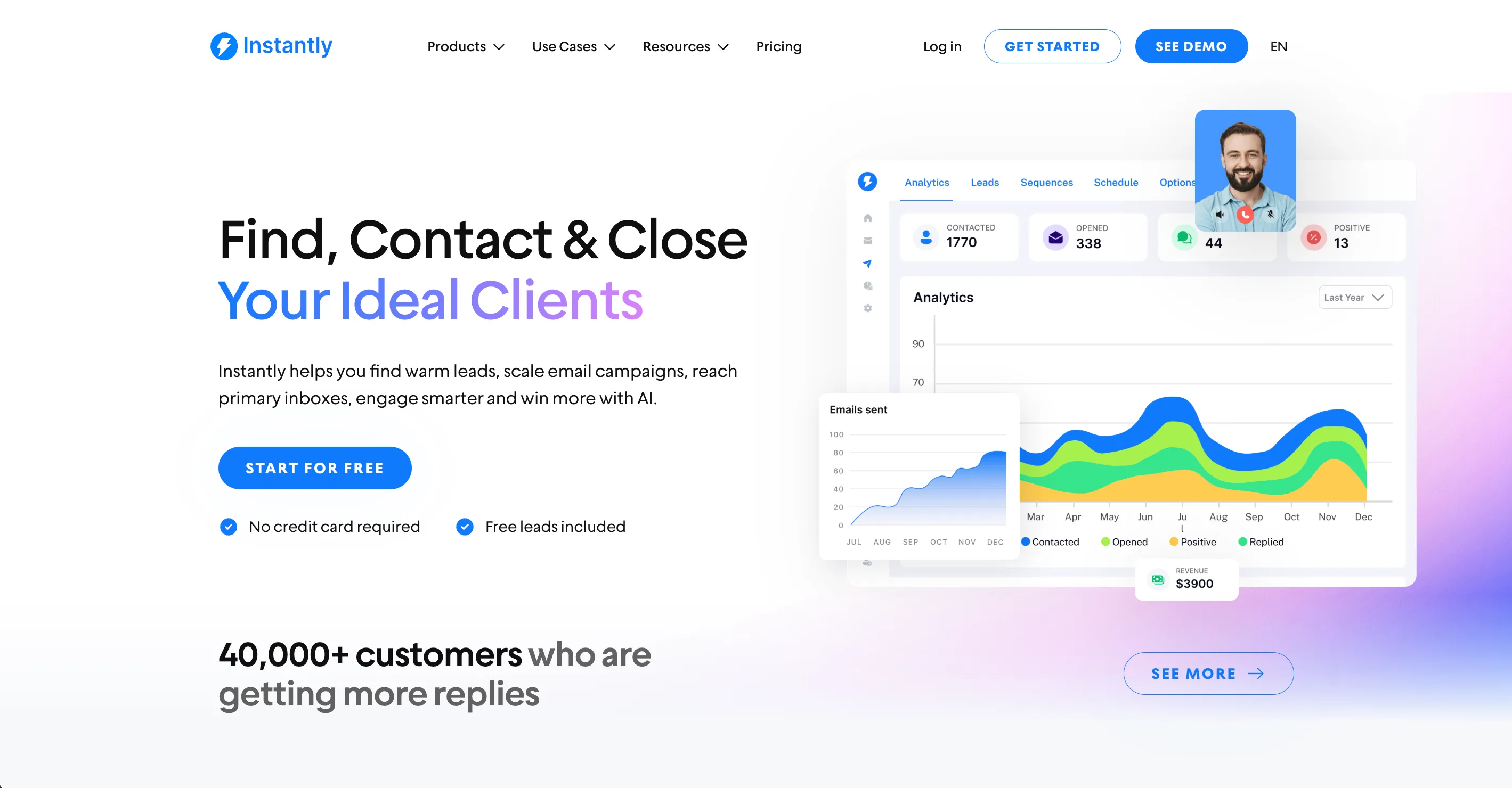
Instantly.ai is designed for growth and demand-generation teams running high-volume cold email campaigns. It automates large-scale outreach while maintaining deliverability and sender reputation—critical for teams sending thousands of emails daily.
Key Features
- Automatic inbox rotation to distribute sending volume across domains.
- AI-driven email warm-up and spam filtering.
- Central campaign dashboard for email sequences, response tracking, and performance metrics.
- Integration with CRMs and Google Workspace for seamless data sync.
Strength:
- Supports massive outreach experiments without deliverability issues.
- Saves agencies time through centralized monitoring across accounts.
Ideal For: Growth marketers, sales ops, or agencies managing multi-domain cold outreach who need scalability and visibility across multiple email campaigns.
8. Smartlead.ai — AI-Personalized Multi-Channel Outreach
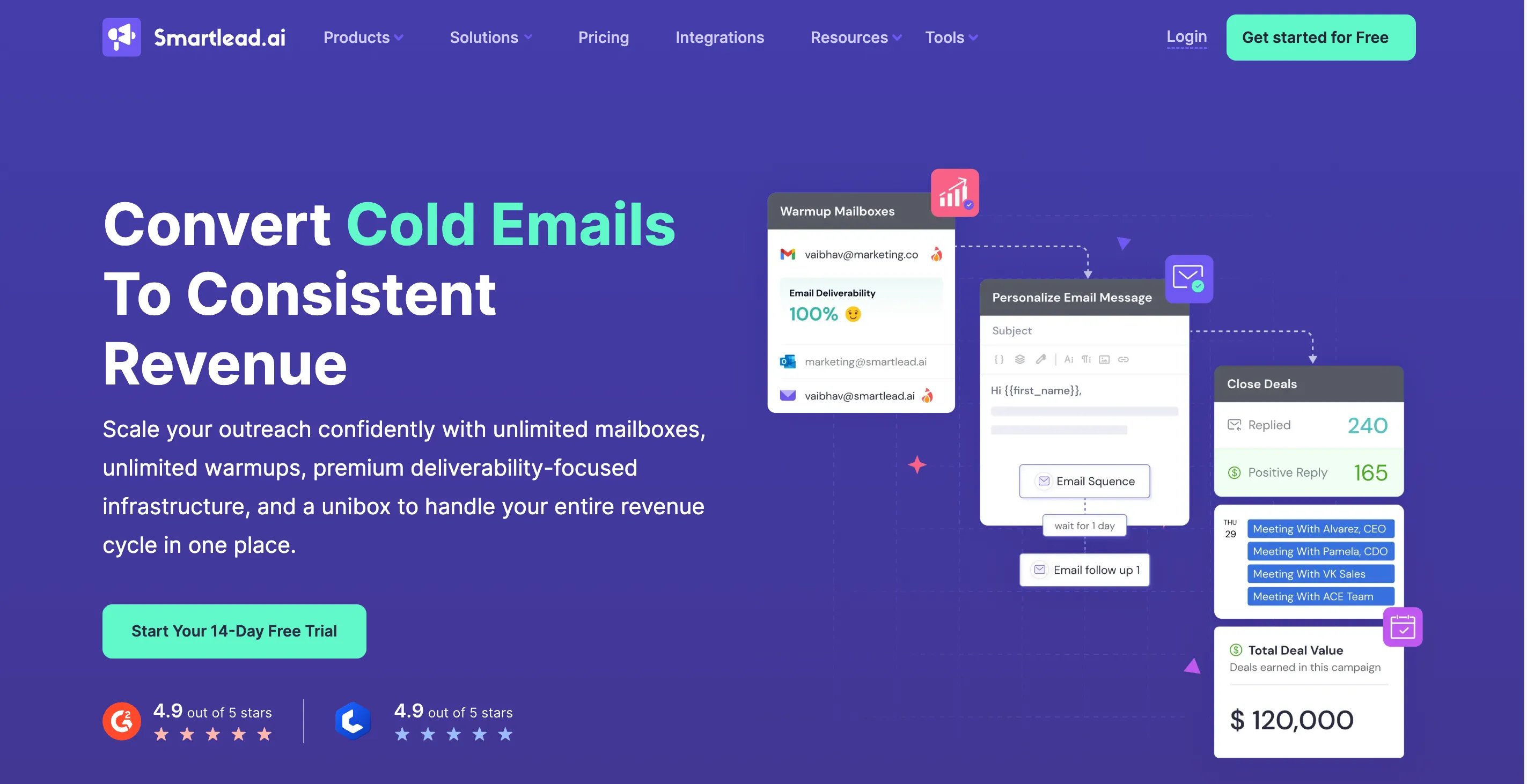
Smartlead.ai bridges email outreach with AI-generated personalization, helping outbound sales teams deliver high-quality messages at scale.
Key Features
- AI-generated first-line personalization and automated follow-up emails.
- Unified inbox consolidating responses from all sending accounts.
- Smart lead routing that assigns qualified leads to the right SDR or account executive.
- Deliverability management with warm-up, rotation, and CRM integration.
Strength:
- Balances automation and personalization with real-time insights.
- Simple onboarding and transparent pricing make it accessible for smaller teams.
Ideal For: Agencies, startups, and SMB sales teams that want to combine automation, personalization, and easy CRM integration without enterprise complexity.
How to Choose Your Outbound Sales Automation Platform
Choosing the right sales automation software depends on your company’s size, team structure, and outbound maturity.
1. Early-Stage Startups (0–10 Reps):
You need quick setup, clean CRM integration, and affordable pricing. Apollo and Smartlead offer the best balance between data enrichment and outreach automation.
2. Scaling Sales Teams (10–50 Reps):
As workflows grow more complex, prioritize analytics, dashboards, and automation features that streamline follow-ups and reporting. Outreach and Salesloft provide structure, optimization tools, and management visibility.
3. Enterprise GTM Teams:
Large, distributed sales teams benefit from the autonomous execution and compliance that 11x Alice offers.
Most sales automation platforms help teams complete the same tasks faster. 11x changes the equation by removing the tasks altogether. Alice, the AI SDR, runs the full outbound motion, including prospecting, lead enrichment, qualification, and outreach in one platform. Operating from unified data, every message and workflow is driven by context.
Teams like Gupshup use 11x to compound learning and efficiency across their GTM systems. They saw a 1.5× increase in SQLs per SDR and higher-quality leads, building an outbound engine that operates autonomously and scales pipeline with less manual oversight.
When evaluating sales automation platforms, consider:
- CRM Integration Depth: Does it connect seamlessly to Salesforce, HubSpot, or your existing stack?
- Automation Coverage: How many repetitive tasks can it remove from SDRs’ workload?
- Onboarding and Support: Is there guided setup or a dedicated success manager?
- Pricing Model: Does it scale with users, emails, or outcomes?
- Data Enrichment and Compliance: How accurate and legally sound is the contact data?
The best tool isn’t necessarily the one with the most features. It’s the one that helps your sales team operate with focus, precision, and predictable pipeline growth.
Outbound Sales Automation Flows
Outbound automation delivers real results when your workflows match how sales teams actually operate. Below are six tactical, proven workflows that align AI sales agents, CRMs, and sales reps into one coordinated outbound motion.
1. Intelligent Prospect Discovery and Enrichment
Goal: Build and maintain a continuously refreshed list of qualified leads that match your ideal customer profile (ICP).
How to Execute:
Start by defining your ICP across industry, role, company size, and tech stack. Use AI sales automation tools like 11x Alice to enrich lead data automatically using multiple sources. Configure daily enrichment directly in your CRM and lead scoring rules to add high-fit accounts automatically. Tag them based on intent data and qualification score. SDRs then receive updated lead lists enriched with firmographics and engagement history.
For step-by-step instructions, explore our guides on implementing lead scoring in HubSpot, Pipedrive, Salesforce, and Pardot.
Metrics to Track: Number of new leads per week, enrichment accuracy, and ICP match rate.
Outcome: SDRs no longer spend hours on research and data entry. Instead, they get clean, enriched leads ready for personalized outreach, keeping the outbound sales process efficient and predictable.
2. Adaptive Outreach Sequencing with Real-Time Engagement
Goal: Use engagement data to optimize outreach timing, tone, and channel.
How to Execute:
When new leads are added to the CRM, automation triggers a sequence that blends personalized emails. The system tracks opens, clicks, and reply intent in real time.
If a lead engages multiple times, the platform automatically accelerates the follow-up schedule or inserts a message. If a prospect ignores emails, the cadence automatically pauses or switches messaging style.
Pro Tip: Integrate your CRM dashboards with email automation and outreach campaign metrics so SDRs can review performance daily.
Outcome: Sales teams can run data-driven, personalized outreach at scale while maintaining authentic conversations, increasing reply rates and meetings booked.
3. Lead Nurture and Recycling
Goal: Re-engage cold or unresponsive leads and recycle them into new outbound campaigns.
How to Execute:
Set up an automated nurture track that sends educational or value-based content every few weeks. Use your CRM to detect intent signals (like visiting the pricing page) and automatically re-enroll contacts in active outreach campaigns.
For long-dormant leads, run a “recycle” workflow. Send a short, personalized email referencing past discussions or sharing new data that’s relevant to their function.
Pro Tip: Sync this flow with your marketing automation platform to ensure consistent messaging and visibility across departments.
Outcome: You recover pipeline that would otherwise be lost, keeping leads warm without manual follow-ups and improving the overall health of your sales pipeline.
4. Job-Change Trigger for Personalized Outreach
Goal: Capture attention from new decision-makers right as they start their role.
How to Execute:
Monitor job changes using Apollo’s job-change filters or Warmly alerts. Once a contact in your ICP takes on a leadership or budget-holding role, trigger a four-step outbound sequence:
- Day 1: Personalized email congratulating them, referencing new priorities for their department.
- Day 3: Connection request mentioning a specific initiative or team function.
- Day 6: Follow-up email sharing a short guide or case study on how peers in similar roles drive early wins.
- Day 10: Quick note offering to schedule a call to discuss strategies for the first 90 days.
Metrics to Track: Connection acceptance rate, reply rate, and meetings booked.
Outcome: You engage new decision-makers at the exact moment they’re most open to evaluating solutions, creating a first-mover advantage in outbound sales.
5. Event-Based Trigger Flow
Goal: Turn event engagement into qualified pipeline within days.
How to Execute:
After a webinar or conference, import attendee data into your CRM and run a data enrichment workflow to fill in missing fields. Segment by session type or product interest, then trigger an event-based outreach campaign:
- Day 1: Thank-you email with the presentation deck and session recording.
- Day 3: Personalized message referencing the topic discussed.
- Day 5: Follow-up email offering additional insights or a quick demo invitation.
Automation tools like HubSpot or 11x Alice can auto-sync all engagement metrics and update lead status in real time.
Outcome: Faster post-event follow-ups increase conversion rates and ensure no potential customer falls through the cracks.
6. Renewal and Expansion Automation
Goal: Automate outreach to existing customers for renewals, upsells, and cross-sells.
How to Execute:
Integrate your CRM with product usage data and renewal timelines. Ninety days before renewal, trigger a sequence with automated emails summarizing product performance and ROI.
Five days later, a follow-up email introduces upgraded features or add-ons. Ten days later, an account manager sends a message inviting the customer to discuss expansion opportunities. All activity syncs automatically with your CRM, providing full visibility into account health and renewal status.
Outcome: Retention becomes a proactive motion instead of a reactive one. Sales teams strengthen customer relationships and uncover new revenue without manual tracking.
Frequently Asked Questions
Outbound sales automation uses AI-powered workflows to automate prospecting, outreach, and follow-ups. It helps sales teams manage large lead volumes efficiently while maintaining personalization and clean CRM data.
Automation streamlines repetitive tasks, keeps outreach consistent, and optimizes follow-ups based on real-time data. Sales reps can focus on qualified leads, improving both conversion rates and forecasting accuracy.
Rule-based systems follow static outreach cadences, while AI-driven tools like 11x Alice adapt dynamically to engagement patterns, prioritizing the right leads and timing for higher response rates.
No. AI SDRs handle data enrichment, email automation, and qualification, but human SDRs are essential for building relationships, customizing messaging, and closing deals.
Implement AI-powered email warming, rotate domains, verify contact data, and authenticate your sending infrastructure. Regularly track key metrics like bounce rate and open rate within your CRM dashboard.