Sales Tech Stack: The 2026 Guide to Building an Efficient, Revenue-Driving Tech Ecosystem
Learn how to build a modern sales tech stack in 2026 with the right tools to boost productivity, improve forecasting, and drive revenue.

Sales enablement platforms are projected to reach $11.37 billion by 2033, yet 70% of companies struggle to integrate their sales plays into CRM and revenue technologies. This guide breaks down what defines an effective sales technology stack in 2026, how to evaluate tools across core categories, and which platforms deliver measurable ROI for different go-to-market motions.
What Is a Sales Tech Stack?
A sales tech stack is the collection of software tools and platforms that sales teams use to identify prospects, manage relationships, automate workflows, and close deals. Modern stacks integrate AI-powered automation, real-time data enrichment, and multichannel engagement orchestration to accelerate revenue by removing friction from the sales process and enabling sales reps to focus on high-value customer interactions.
Traditional vs. Modern Sales Tech Stack
Five years ago, buyers used roughly five channels during purchase journeys. Today that number has doubled to ten or more, forcing sales organizations to adopt technology that orchestrates customer engagement across email, phone, social media, and digital self-service simultaneously. For teams looking to modernize, understanding AI sales enablement capabilities provides a foundation for building stacks that streamline processes rather than complicate them.
Evaluation Criteria
Our methodology prioritizes neutral, criteria-driven analysis: 90% objective feature comparisons, 10% strategic insights from GTM experience. Each tool category is evaluated on integration depth, AI sophistication, workflow automation capabilities, data quality and enrichment, and proven impact on key sales metrics. These factors determine which platforms fit a given sales process, budget, and growth stage.
Key Categories in the Sales Tech Stack
1. Customer Relationship Management (CRM)
The CRM functions as the central data repository and system of record for all customer interactions. Over 90% of sales teams adopt CRM platforms, making them foundational to any sales technology stack.
How it works: CRMs track leads, contacts, accounts, and opportunities while logging every touchpoint across email, calls, and meetings. Modern CRMs include workflow automation, sales pipeline visualization, and forecasting dashboards that give sales managers real-time visibility into sales performance.
Leading platforms include Salesforce for enterprise customization, HubSpot for mid-market ease of use, and Pipedrive for SMB simplicity. For teams exploring AI CRM tools, platforms now embed predictive lead scoring and automated data entry directly into workflows, delivering actionable insights that help sales reps prioritize high-value opportunities.
Measurable Impact: 78% report improved sales-marketing alignment, 30-40% reduction in manual data entry, and 15-20 percentage point increases in sales forecasting accuracy.
Stand-alone CRMs require layering additional capabilities. Solutions like 11x integrate directly with leading CRMs to provide autonomous execution that turns static records into active revenue generation, helping sales operations teams scale without adding headcount.
2. Sales Engagement and Automation
Sales engagement platforms orchestrate multichannel outreach across email, phone, LinkedIn, and SMS while automating repetitive follow-up sequences. These tools bridge the gap between identifying prospects in the CRM and actually moving them through the sales pipeline.
How it works: Sales reps build cadences that combine touchpoints across channels, with triggers based on prospect behavior. The platform tracks engagement, suggests optimal send times, and automates follow-ups at scale while maintaining personalization.
Platforms like Outreach and SalesLoft excel at structured cadence management, while 11x's Alice represents autonomous digital workers that actively research prospects, craft personalized messaging, and adapt strategies based on responses. For companies exploring sales engagement platforms, the choice comes down to productivity tools versus autonomous execution that addresses key pain points in traditional workflows.
Measurable Impact: Multichannel cadences increase conversion rates by 2-3x, automated follow-ups recover 35-50% of deals that would go cold, and A/B testing optimizes messaging by 20-30%, delivering measurable improvements in sales performance.
3. Prospecting and Lead Intelligence
Prospecting tools help sales teams identify, research, and prioritize potential buyers through contact databases, intent signals, and enrichment capabilities. These platforms answer the fundamental question: who should we target, and when?
How it works: Prospecting platforms combine firmographic data, technographic signals, and buying intent indicators to surface high-fit accounts. Advanced solutions layer AI-powered lead scoring that predicts conversion probability based on historical sales data.
ZoomInfo and Apollo.io dominate data-rich prospecting. Cognism focuses on GDPR-compliant international coverage. 6sense specializes in account-level intent for ABM. LinkedIn Sales Navigator provides social selling capabilities for relationship-driven prospecting. For teams modernizing lead generation, AI lead generation tools provide predictive targeting that helps salespeople focus on decision-makers showing genuine buying signals.
Measurable Impact: Intent-based targeting improves conversion rates by 40-60%, verified contact data reduces bounce rates to under 5%, and automated enrichment saves 4-6 hours per rep weekly.
11x bridges the gap by combining intent detection with autonomous outreach execution, so personalized engagement launches automatically when prospects show buying signals, creating a truly scalable approach to pipeline management.
4. Conversation Intelligence and Coaching
Conversation intelligence platforms record, transcribe, and analyze sales calls to surface coaching opportunities, identify deal risks, and replicate winning behaviors. These tools transform qualitative interactions into actionable insights that sales managers can use to improve team performance.
How it works: These tools integrate with video conferencing and phone systems to capture every customer conversation. AI analyzes talk ratios, sentiment, keyword mentions, and objection handling, delivering insights through dashboards that highlight skill gaps and deal risks.
Gong leads the market in conversation analysis depth. Chorus.ai focuses on deal intelligence and sales forecasting accuracy. Revenue.io emphasizes real-time guidance during live calls.
Measurable Impact: AI-driven coaching improves win rates by 15-25%, deal risk alerts reduce slippage by 20-30%, and objection analysis accelerates new rep ramp time by 40%, helping sales managers build top-performing teams faster.
5. Sales Enablement and Content Management
Sales enablement platforms equip sales reps with the right content, training, and resources at the right moment in the sales cycle. These tools ensure consistent messaging, accelerate onboarding, and measure content effectiveness across team members.
How it works: Enablement solutions centralize playbooks, pitch decks, case studies, and battle cards while tracking which assets drive customer engagement. Advanced platforms incorporate AI recommendations based on deal stage and buyer persona, streamlining content discovery for sales workflows.
Highspot and Seismic dominate enterprise enablement with robust content management and analytics. For insights into how AI enhances this category, explore AI sales enablement strategies that help eliminate silos between marketing and sales.
Measurable Impact: Sales reps find content 70% faster, guided selling increases deal sizes by 10-15%, and onboarding time drops from 6 months to 3-4 months, improving overall sales performance across the organization.
6. Revenue Intelligence and Forecasting
Revenue intelligence platforms unify data across CRM, engagement tools, and conversation platforms to deliver predictive sales forecasting and pipeline health analysis. These systems provide actionable insights for sales operations teams and executive stakeholders.
How it works: These solutions aggregate activity data and deal stage progression to build predictive models that forecast close probability. RevOps teams spot pipeline gaps weeks before quarter-end and can reallocate resources toward high-probability opportunities.
Clari leads in forecast accuracy and pipeline management inspection. For comprehensive comparisons, see revenue intelligence platforms.
Measurable Impact: AI-powered sales forecasting improves accuracy from 60-70% to 85-95%, surfaces at-risk deals 3-4 weeks earlier, and increases win rates by 12-18%, giving sales managers confidence in their numbers.
7. Data Enrichment and Operations
Data enrichment tools automatically populate CRM records with firmographic, technographic, and contact information, eliminating manual research and ensuring data quality throughout your sales technology stack.
How it works: Enrichment platforms connect to your CRM and marketing automation tools, continuously updating records with company details, technology stack, funding events, and verified contact information, breaking down data silos that slow sales workflows.
Clearbit and ZoomInfo lead in real-time enrichment. Clay provides flexible data orchestration. For teams prioritizing enrichment accuracy, explore CRM data enrichment strategies.
Measurable Impact: Automated enrichment saves 10-15 hours per rep monthly, data accuracy improves from 60% to 90%+, and personalization effectiveness rises 40%, creating a more scalable foundation for the entire sales pipeline.
Benefits and Impact of a Well-Integrated Sales Tech Stack
Transformation Table
ROI Summary
Organizations implementing integrated sales software stacks typically see:
- 8-12 hours reclaimed per rep weekly from automation of manual tasks and sales data entry
- 25-35% increase in qualified pipeline through better targeting and streamlined workflows
- 15-20% improvement in conversion rates within 6 months through data-driven coaching
- Payback period: 4-6 months based on productivity gains and enhanced customer experience
Unlike traditional tools that structure work for humans, 11x delivers autonomous execution that handles complete job functions. Alice can execute the outbound workload of 3-5 SDRs while Julian qualifies inbound leads instantly, 24/7, offering an all-in-one approach to scaling revenue teams.
Sales Tech Stack Comparison Table
Solution Deep-Dives
11x - Best for Autonomous Outbound and Inbound Execution
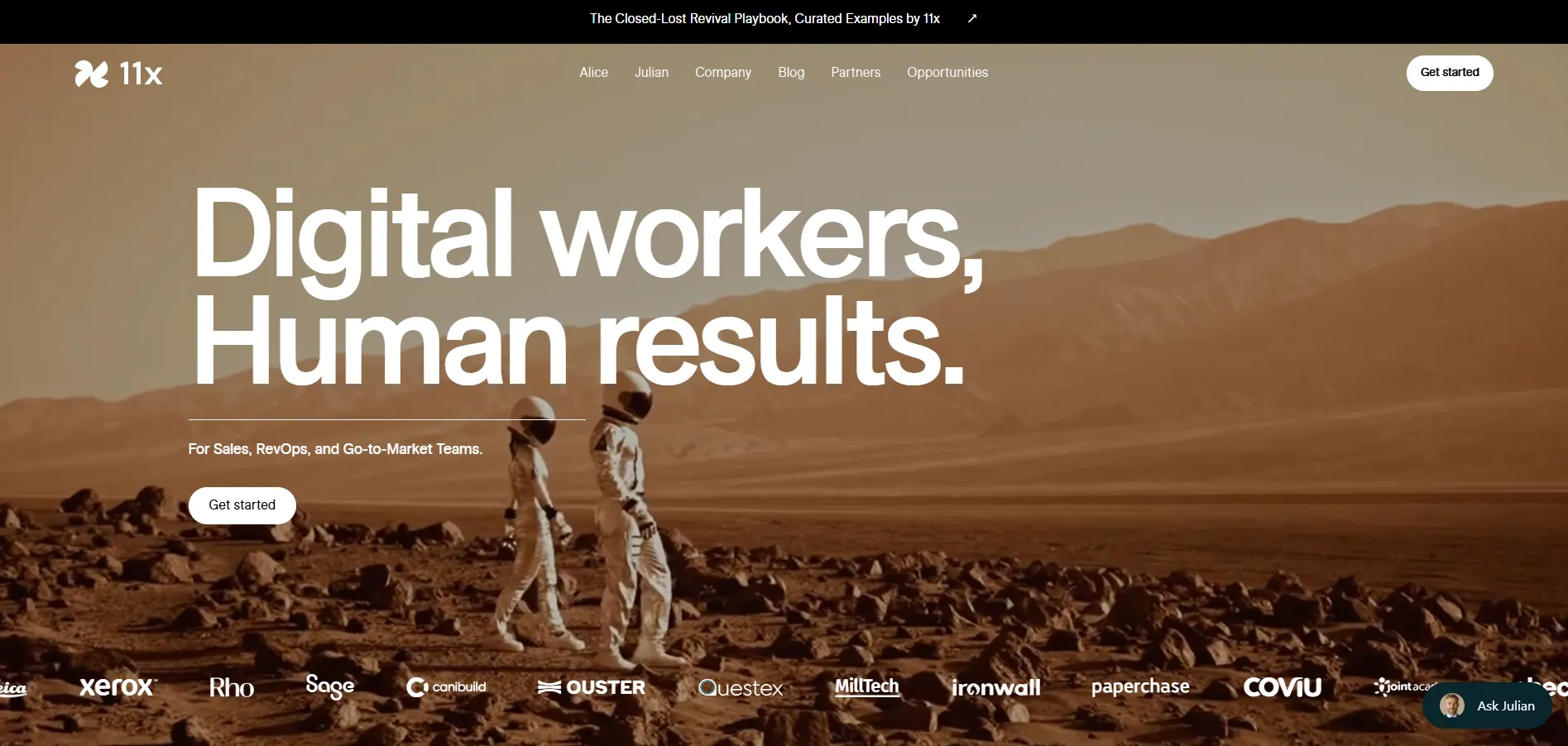
11x provides autonomous digital workers that replace fragmented tool collections with end-to-end execution. Instead of coordinating CRM, prospecting databases, and engagement platforms separately, 11x deploys AI agents that own complete workflows from signal detection through qualified meeting delivery, creating a truly scalable and all-in-one solution.
Key Features: Alice (AI SDR) for autonomous outbound across email and LinkedIn, Julian (AI phone agent) for inbound qualification within 60 seconds, native CRM integration with bi-directional sync, multilingual support (105+ languages for Alice, 30+ for Julian), and SOC 2 Type II certification for enterprise stakeholders.
Summary: Unlike traditional platforms that automate tasks while requiring human orchestration, 11x's digital workers execute autonomously from research through booking. Gupshup reported a 50% increase in SQLs per SDR after implementing Alice, demonstrating measurable pipeline acceleration from autonomous execution that helps sales teams achieve top-performing results.
Salesforce - Best for Enterprise Customization
Salesforce remains the dominant enterprise CRM with the broadest integration ecosystem and deepest customization capabilities, making it ideal for complex sales operations.
Key strengths: Comprehensive CRM functionality with custom objects, Einstein AI for predictive lead scoring and sales forecasting, massive AppExchange ecosystem, and robust governance features for large sales organizations.
Limitations: Significant implementation complexity requiring dedicated administrators, steep learning curve for sales reps, and higher total cost of ownership compared to modern alternatives.
HubSpot Sales Hub - Best for Mid-Market Ease of Use
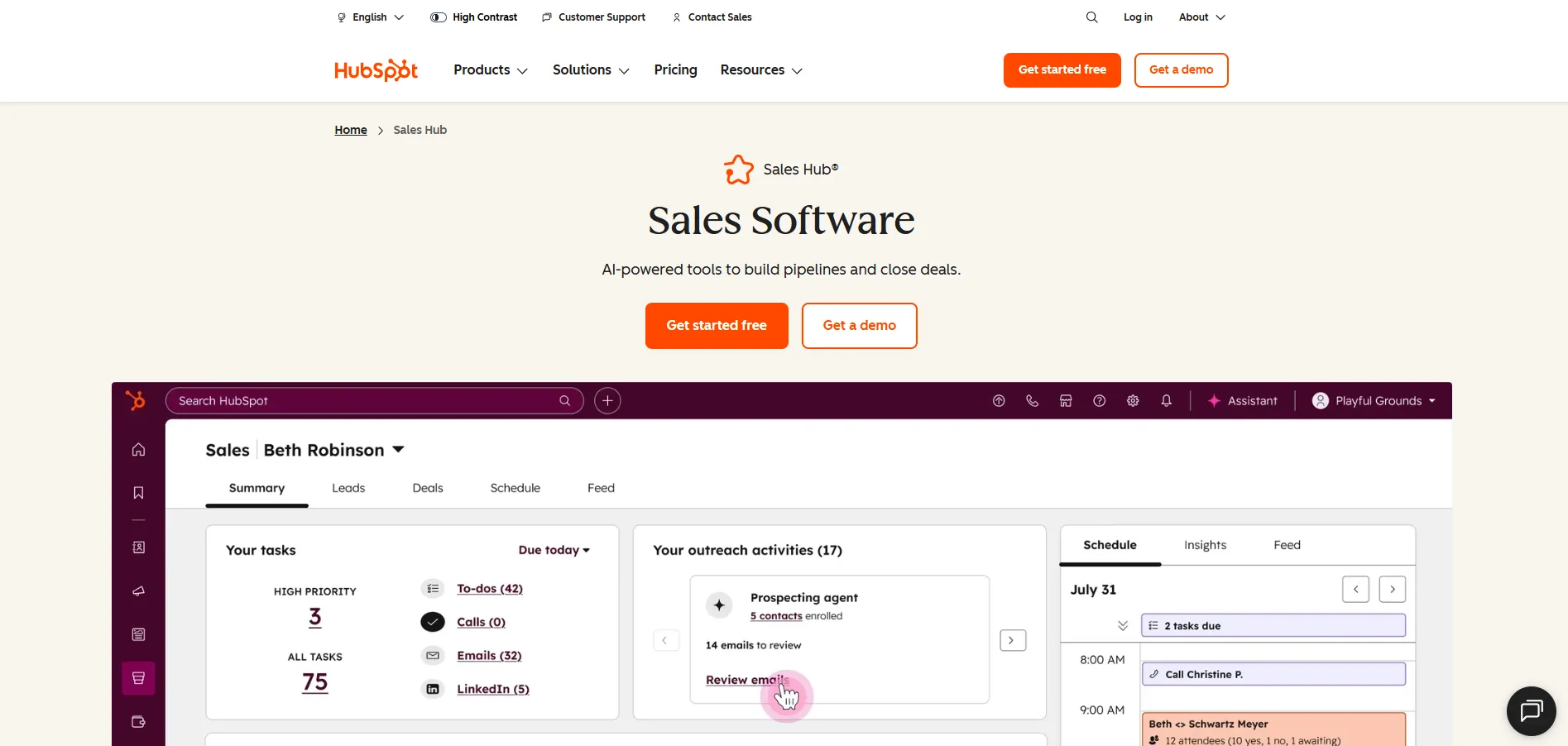
HubSpot combines CRM functionality with marketing alignment in an intuitive platform designed for rapid deployment, offering an all-in-one approach for SaaS companies and growing teams.
Key strengths: Free CRM tier, native email tracking and sequence automation that streamline sales workflows, unified data model that eliminates silos, and transparent pricing.
Limitations: Less customization flexibility than enterprise platforms and limited advanced sales forecasting compared to specialized revenue intelligence tools.
Gong - Best for Conversation Intelligence
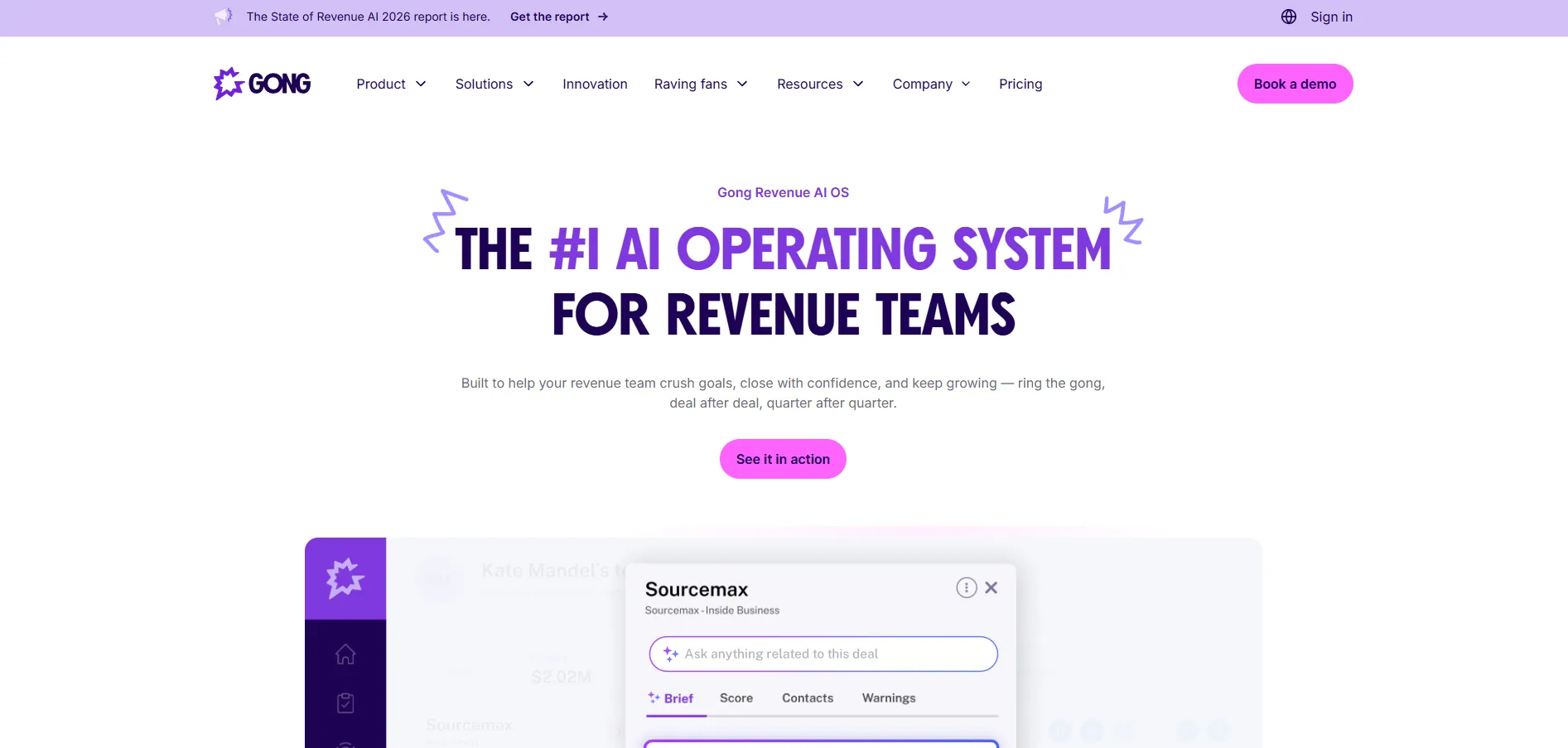
Gong specializes in analyzing every customer conversation to surface coaching opportunities and actionable insights that sales managers can use to improve team performance.
Key strengths: Industry-leading conversation analysis depth, powerful pattern detection revealing what top-performing salespeople do differently, and strong CRM integrations.
Limitations: Does not execute outreach or manage prospect engagement directly; requires integration with separate sales software for pipeline management.
ZoomInfo - Best for B2B Data and Intent
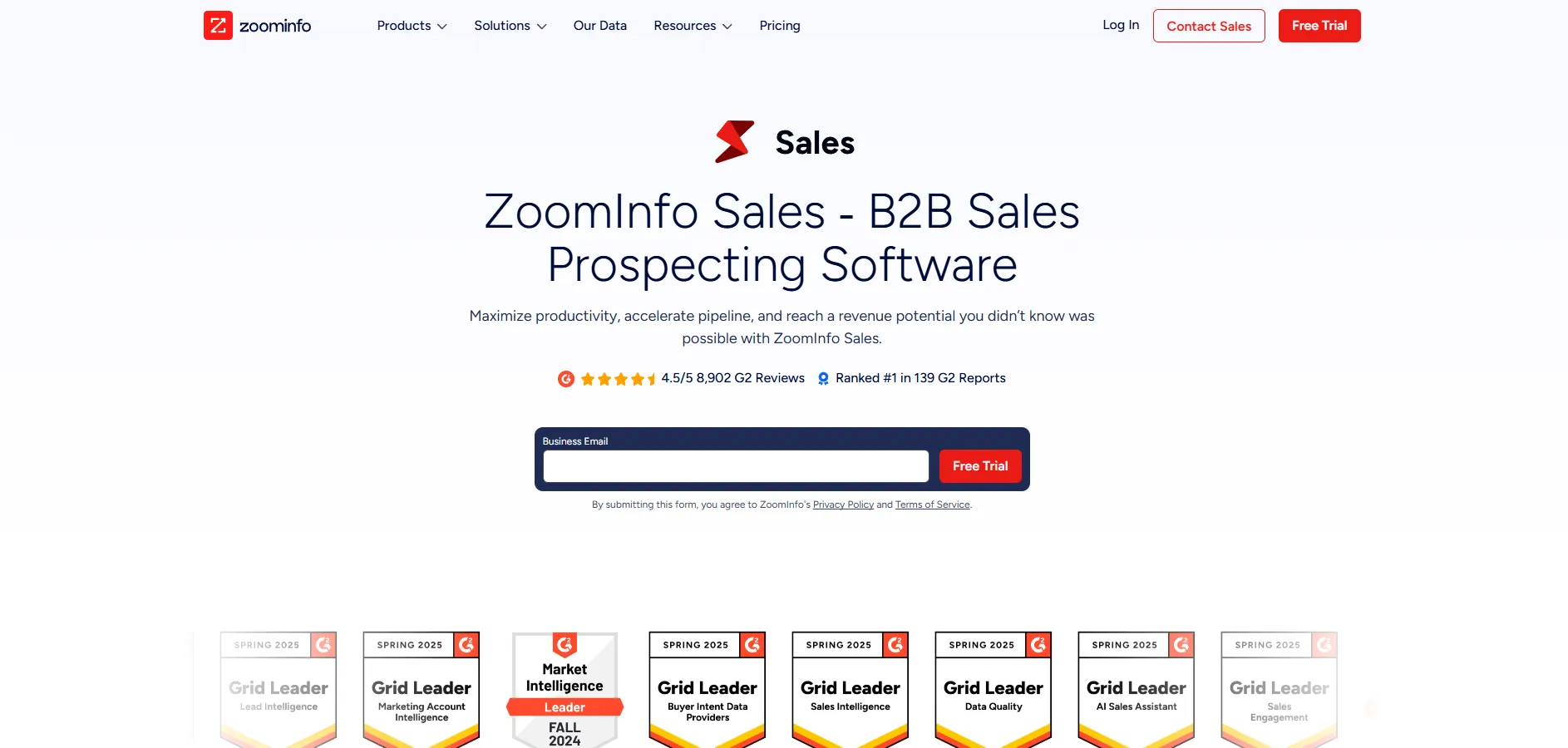
ZoomInfo provides the most extensive B2B contact database combined with technographic data and buying intent signals, essential for targeting decision-makers effectively.
Key strengths: 200M+ B2B contacts, high data accuracy, comprehensive filtering for precise ICP targeting, and strong integration ecosystem.
Limitations: Significant investment required and does not execute outreach. AI-powered prospecting platforms combine data access with autonomous execution for more scalable results.
Best Practices for Building Your Sales Tech Stack
Start with Outcomes, Not Tools
Define 3-5 measurable goals before evaluating technology: reduce sales cycle length by 20%, increase conversion rates by 15%, or improve sales forecasting accuracy to 90%+. This outcome-first sales strategy prevents tool sprawl. Explore revenue growth strategies that align technology to business objectives and go-to-market execution.
Prioritize Integration Over Features
A tool with 80% of desired features that integrates seamlessly delivers more value than a feature-rich platform that creates data silos. Organizations with well-integrated stacks report 42% higher sales productivity and better customer experience across the entire sales pipeline.
Consolidate Before You Expand
Audit your existing stack before adding new sales software. Most organizations discover 40-60% functional overlap between platforms. The average sales team uses 10+ tools, but top-performing teams consolidate to 5-7 integrated platforms that streamline operations. Consider how AI sales tools can replace multiple point solutions while improving sales performance.
Measure Adoption, Not Just Functionality
A powerful tool that sales reps don't use delivers zero ROI. Track login frequency and feature utilization to identify pain points in your sales workflows. Run quarterly stack audits with input from team members and sales managers. Tools used by <50% of reps become consolidation candidates.
Balance AI Capabilities with Human Oversight
AI-powered tools deliver significant productivity gains, but implementation requires governance frameworks ensuring brand consistency and compliance for key stakeholders. The goal is deploying AI for repetitive execution while salespeople focus on sales strategy, relationship building, and complex deal navigation. Review AI sales automation tools best practices for scalable implementation.
The modern sales tech stack isn't about collecting tools; it's about building an integrated system that removes friction, surfaces actionable insights, and accelerates revenue. By starting with outcomes, prioritizing integration, consolidating redundancies, and balancing AI with human oversight, sales organizations create tech ecosystems that scale the pipeline without overwhelming sales reps or creating data silos.
The highest-performing stacks combine CRM, engagement automation, prospecting intelligence, conversation analysis, enablement, and revenue forecasting into cohesive sales workflows. For organizations seeking to consolidate multiple point solutions while improving sales performance, customer experience, and go-to-market efficiency, autonomous digital workers like 11x represent the next evolution in scalable, all-in-one sales software.
Top-performing sales teams recognize that technology should empower salespeople, not replace them. The right sales technology stack gives sales managers real-time visibility into the sales pipeline, provides sales reps with the tools to close deals faster, and ensures sales operations teams can scale revenue predictably. Whether you're a SaaS startup building your first stack or an enterprise looking to streamline existing sales software, the principles remain the same: focus on integration, measure adoption, and choose platforms that deliver measurable improvements in conversion rates and sales data quality.
Ready to transform your sales strategy with autonomous execution? Start with 11x today and experience how digital workers can handle the entire outbound and inbound motion, from prospect research through qualified meetings, while your human team members focus on what they do best: building relationships and closing deals.
Frequently Asked Questions
A sales tech stack is the collection of software tools that sales teams use to identify prospects, manage customer relationships, automate workflows, and close deals. Modern sales technology stacks integrate CRM systems, sales engagement platforms, prospecting tools, conversation intelligence, and revenue intelligence platforms to streamline the sales process and help sales reps focus on high-value activities.
Consultative selling, solution selling, SPIN selling, challenger sale, account-based selling, value selling, and social selling. Modern tech stacks support these techniques by automating research and personalizing outreach to address specific pain points. Platforms like 11x enable social selling at scale through autonomous LinkedIn and email execution.
Follow up 2 hours after initial contact, then 2 days later, then 2 weeks after that. Modern sales engagement platforms enable sophisticated cadences that adjust timing based on prospect behavior rather than rigid schedules, improving conversion rates and customer engagement throughout the sales pipeline.
A typical mid-market B2B sales tech stack includes: CRM (HubSpot or Salesforce) for pipeline management, prospecting (ZoomInfo or Apollo.io) for accessing decision-makers, engagement (Outreach or SalesLoft) to streamline outreach, conversation intelligence (Gong) for coaching sales reps, enablement (Highspot) for content, revenue intelligence (Clari) for sales forecasting, and autonomous execution (11x Alice and Julian) for scalable all-in-one execution.
The 3-3-3 rule suggests spending 3 hours on prospecting, 3 hours on customer meetings, and 3 hours on follow-up activities each day. Modern sales technology stacks automate prospecting and follow-up, letting sales reps dedicate more time to high-value conversations with stakeholders and improving overall sales performance.