10 Best Sales Engagement Platforms in 2026
Discover the 10 best sales engagement platforms in 2025 and compare key features to help your team improve outreach and conversions.

Modern revenue sales teams rely on sales engagement platforms to structure outreach, automate follow-ups, and maintain consistent messaging across the buyer journey. These platforms help SDRs, AEs, and RevOps teams streamline workflows, improve outbound sales quality, and create predictable, repeatable engagement at scale, leading to significant revenue growth.
Here are the top 10 sales engagement platforms in 2025, evaluated for functionality, workflow depth, crm integration, and relevance to different GTM motions.
What are sales engagement platforms?
Sales engagement platforms are software tools that help revenue sales teams manage, automate, and optimize every interaction they have with prospects. These platforms centralize outreach across channels—email, calls, social media, sms, and tasks—so sales teams can follow up with consistent sales cadence and workflows, automate routine steps, and maintain visibility into how prospects engage throughout the sales process.
They reduce manual work, streamline sales activities, and provide the metrics sales leaders need to understand which messaging, sequences, and channels perform best. As a result, sales reps and AEs can spend more time talking to high-quality prospects and less time on administrative tasks.
Modern sales engagement platforms typically include:
- Multichannel sequencing: Automates structured outreach across email, calls, SMS, and task reminders.
- Follow-up automation: Sends the right message at the right time based on prospect engagement or inactivity.
- Analytics and reporting: Tracks performance across channels, sequences, reps, and stages.
- Conversation intelligence: Reviews calls and meetings to highlight insights, objections, and coaching opportunities.
- CRM integrations: Syncs activity, updates fields, and maintains accurate data across Salesforce, HubSpot, and other CRMs.
- Rep productivity tools: Provides templates, scheduling links, reminders, and time-saving workflow enhancements.
10 best sales engagement platforms you need to know
The sales engagement tools market is packed with tools promising better outreach, higher conversion rates, and more efficient workflows. But not all platforms support the same sales process or integrate cleanly into your tech stack. Below is a curated list of the 10 best sales engagement platforms in 2025, each evaluated for user-friendly interface, automation depth, crm integration, and overall impact on outbound sales performance.
1. 11x — Best Overall Sales Engagement Platform for AI-Driven Workflows
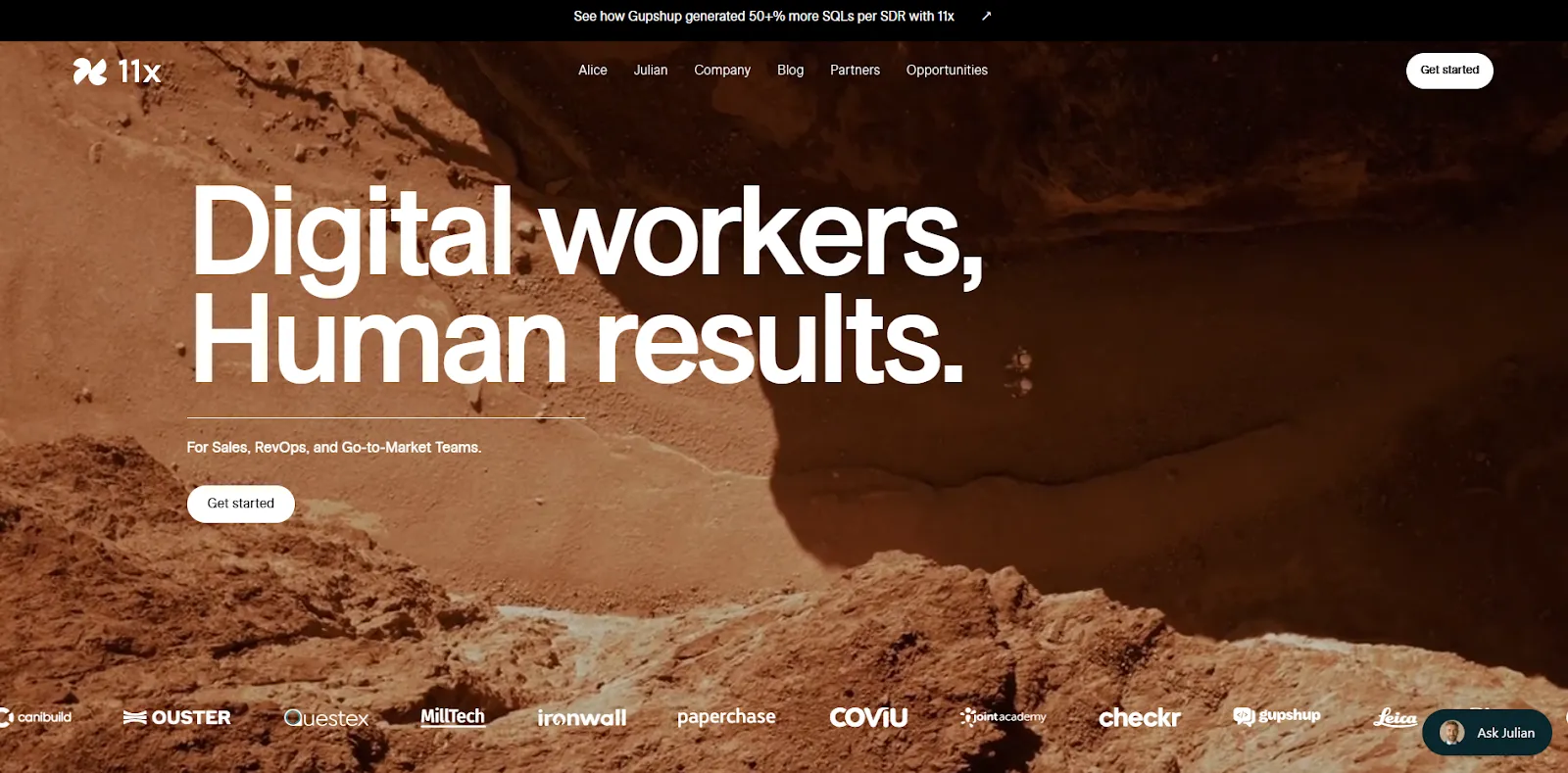
11x is an AI-powered sales engagement platform designed to automate prospecting, enrichment, and personalized outreach. It identifies high-intent accounts aligned with your ICP, enriches them using 21 premium data sources, and generates account-specific emails that drive real engagement. Leads are automatically qualified before being handed to sales, reducing manual workload while improving outbound consistency.
Key Features
- AI-driven email personalization: Generates contextual, account-specific messaging based on enriched insights.
- Automated account research: Surfaces buying triggers, relevance indicators, and contextual data from 21 premium sources.
- Intent-based targeting: Identifies accounts with active signals that match your ICP and buying patterns.
- Adaptive sequencing: Modifies outreach based on engagement signals and buyer behavior.
- Qualified lead handoff: Passes only sales-ready prospects into your CRM for reps to pursue.
Pros and cons of 11x
2. Salesforce Sales Engagement — Best for Salesforce CRM Users
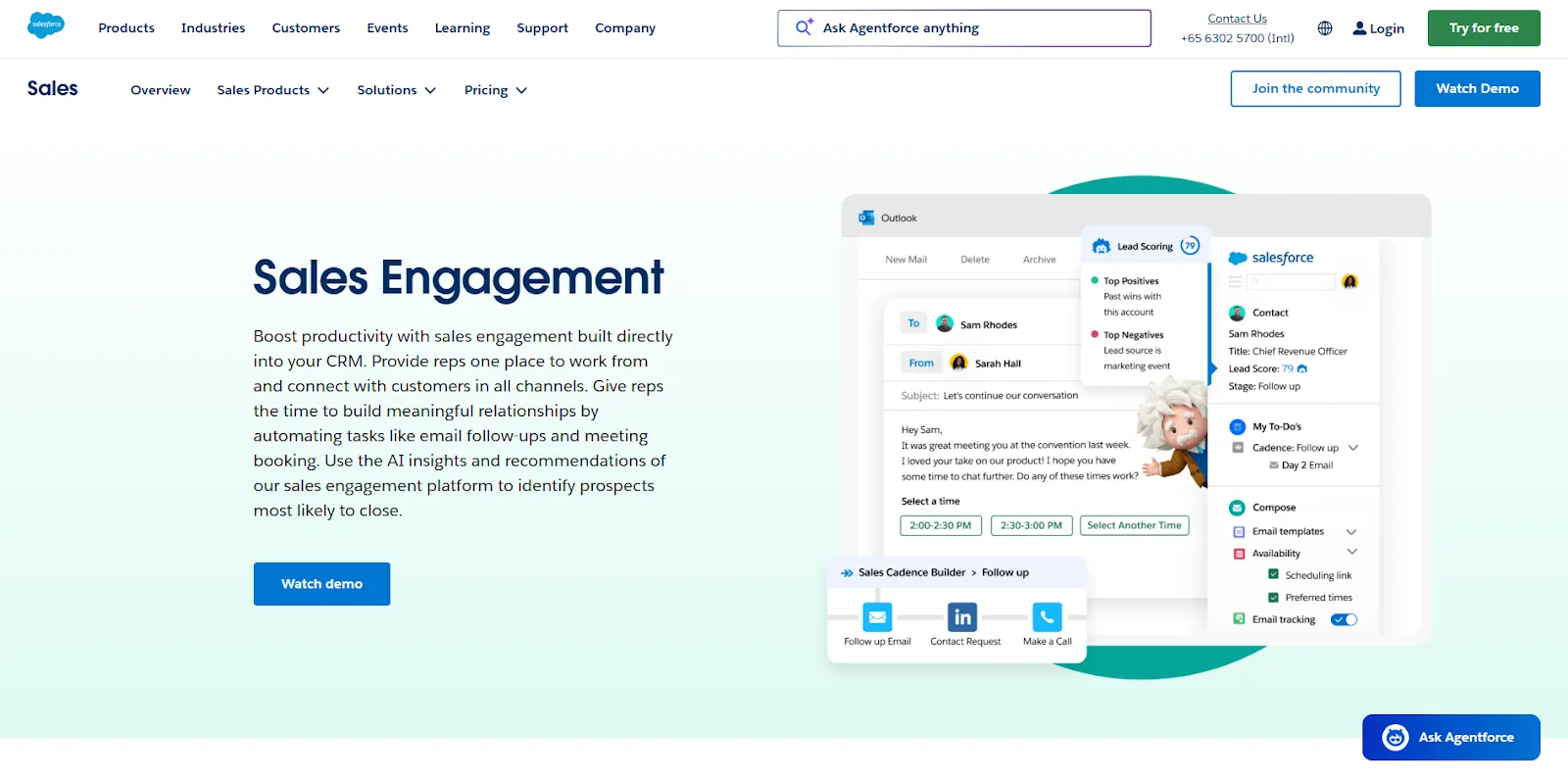
Salesforce Sales Engagement (formerly High Velocity Sales) is Salesforce’s native sales engagement platform layer. It allows sales teams to run sales cadence, automate tasks, and manage engagement workflows directly inside Salesforce. This eliminates data syncing issues common with third-party sales engagement tools and gives sales leaders a unified view of activity, sales pipeline, and forecast.
Key Features
- Native Salesforce cadences: Build and deploy automated email, call, and task sequences inside Salesforce.
- Einstein Activity Capture: Automatically logs engagement data for more accurate forecasting.
- Inbox integration: Personalize outreach from Gmail or Outlook while syncing every touchpoint to CRM.
- Task automation: Streamlines rep workflows with prioritized to-do lists based on engagement insights.
- Unified reporting: Leverages Salesforce dashboards for complete visibility across engagement and pipeline activity.
Pros and cons of Salesforce Sales Engagement
3. Outreach — Best for Enterprise Outbound and Pipeline Management
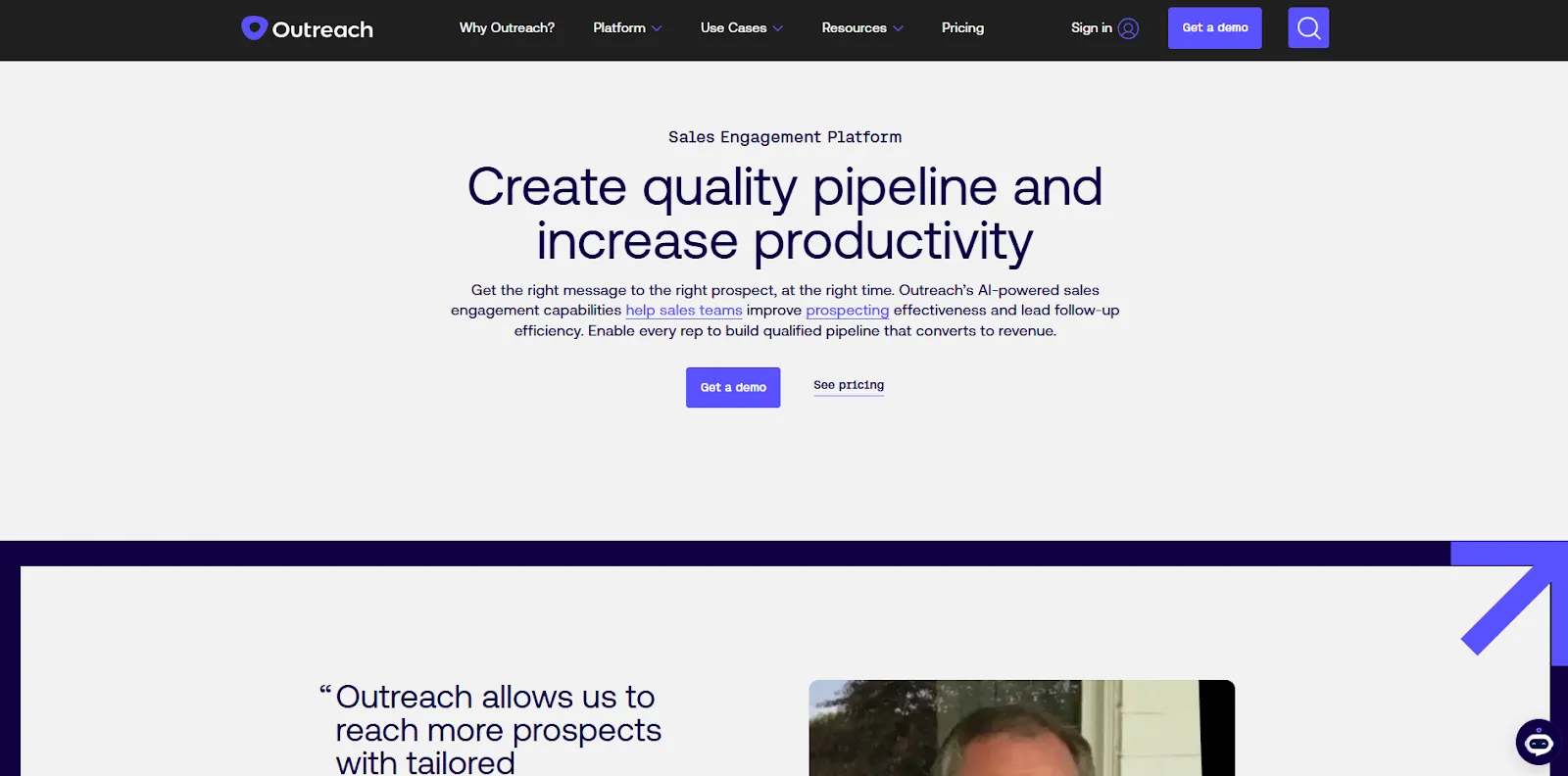
Outreach is a leading enterprise sales engagement platform used by mid-market and enterprise revenue sales teams. It offers advanced sequencing, conversation intelligence, and integrated sales pipeline management through Outreach Commit. Its robust workflows, automation, and analytics make it a strong fit for organizations with structured SDR and AE motions.
Key Features
- Multichannel sequences: Coordinate email, call, and social touches in structured cadences.
- Conversation intelligence: Analyze calls to improve rep performance and message quality.
- Deal management (Outreach Commit): Provides pipeline visibility and identifies at-risk deals.
- AI coaching: Highlights patterns in rep behavior and engagement outcomes.
- CRM integrations: Syncs with Salesforce and HubSpot for unified data.
Pros and cons of Outreach
4. Salesloft — Best for Multichannel Sales Workflows
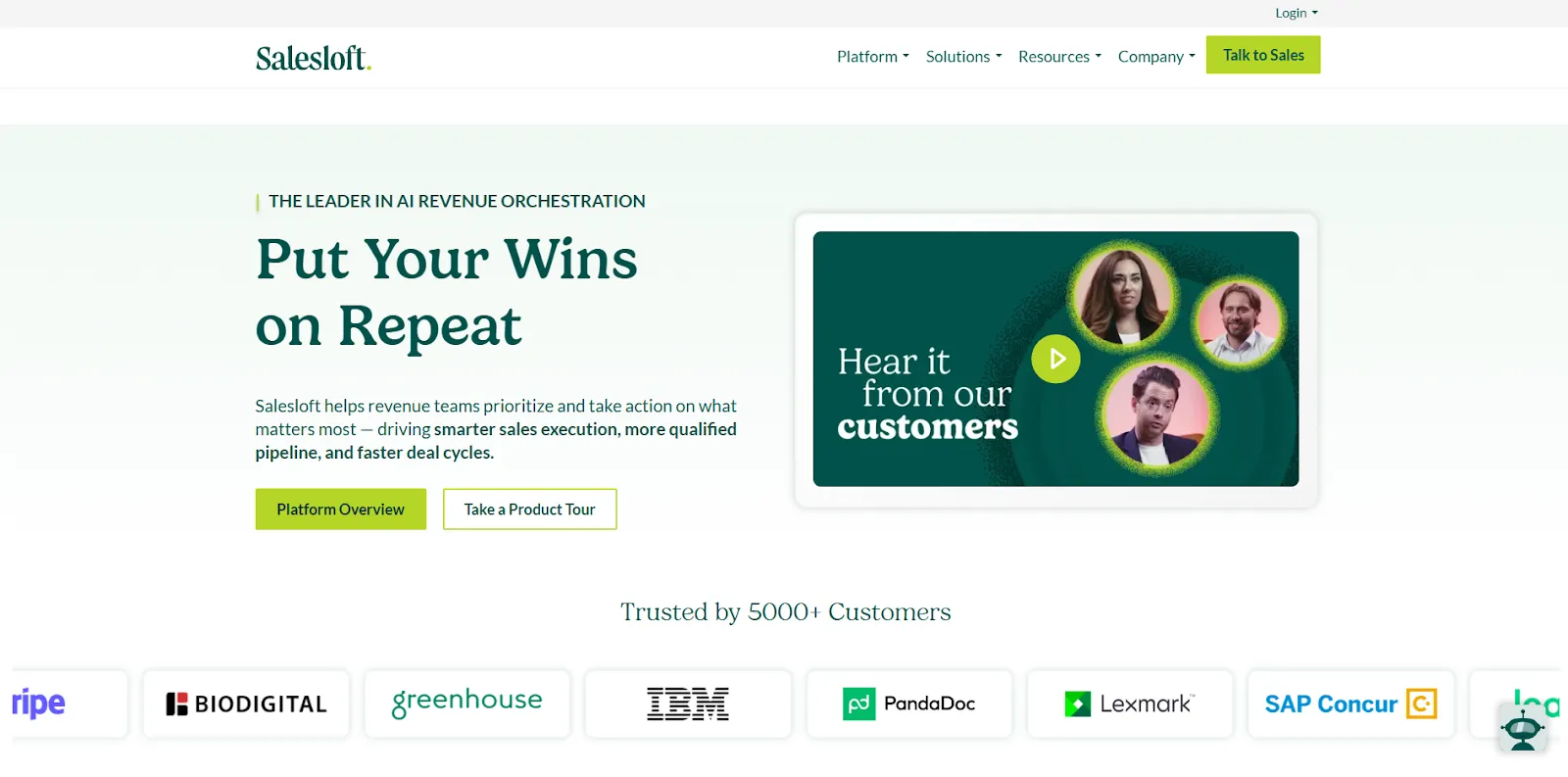
Salesloft is a widely used sales engagement platform known for its clean interface, flexible sales cadence, and support for both SDR and AE workflows. It provides multi-channel engagement, conversation intelligence, and sales pipeline management, making it a versatile solution for mid-market and enterprise sales teams.
Key Features
- Multichannel cadences: Engage prospects across email, phone, social, and manual steps.
- Integrated dialer + call recording: Support call-heavy workflows with built-in analytics.
- Conversation intelligence: Surface insights from calls to help reps refine messaging.
- Pipeline visibility: Enable AEs to manage deals and tasks inside the platform.
- Performance reporting: Track engagement metrics and workflow performance.
Pros and cons of Salesloft
5. Apollo.io — Best All-in-One for Prospecting + Sequencing
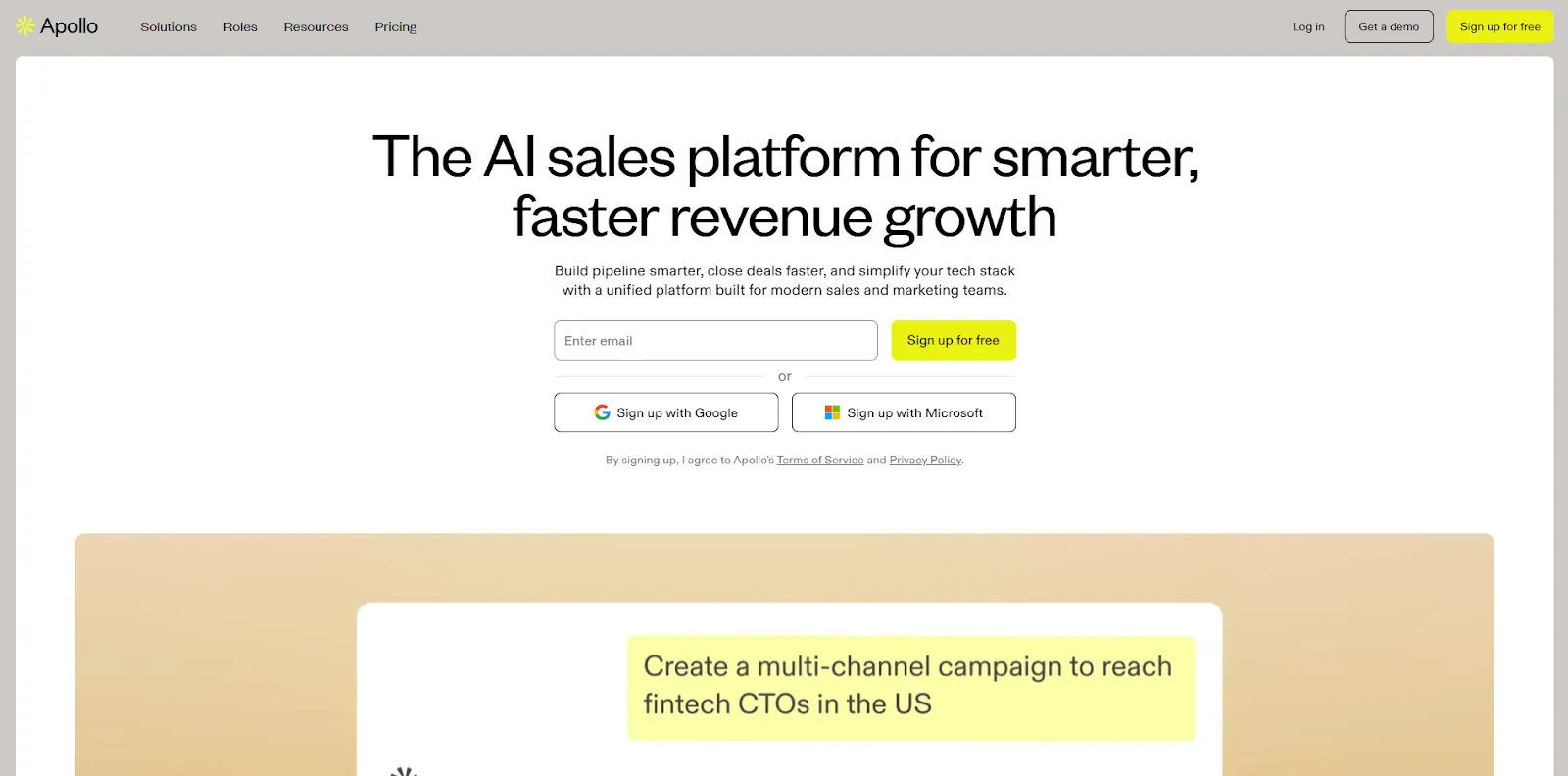
Apollo.io combines a large B2B database with built-in outreach sequences, giving sales teams an all-in-one platform for lead generation, list building, and engagement. It’s widely used by startups and SMBs because it bundles data, email sequencing, and basic intent filters into a single interface. While not as advanced as enterprise platforms, it offers strong value at an accessible pricing point.
Key Features
- B2B contact database: Provides access to global business emails and direct dials for outbound prospecting.
- Sequencing and automations: Supports multistep email workflows and task-based outreach for SDRs.
- Intent-based filters: Surfaces accounts showing relevant activity or buying signals.
- Lead scoring and qualification: Basic scoring to identify higher-potential contacts.
- CRM integrations: Connects to Salesforce, HubSpot, and other systems to sync engagement data.
Pros and cons of Apollo.io
6. HubSpot Sales Hub — Best for Teams Using HubSpot CRM
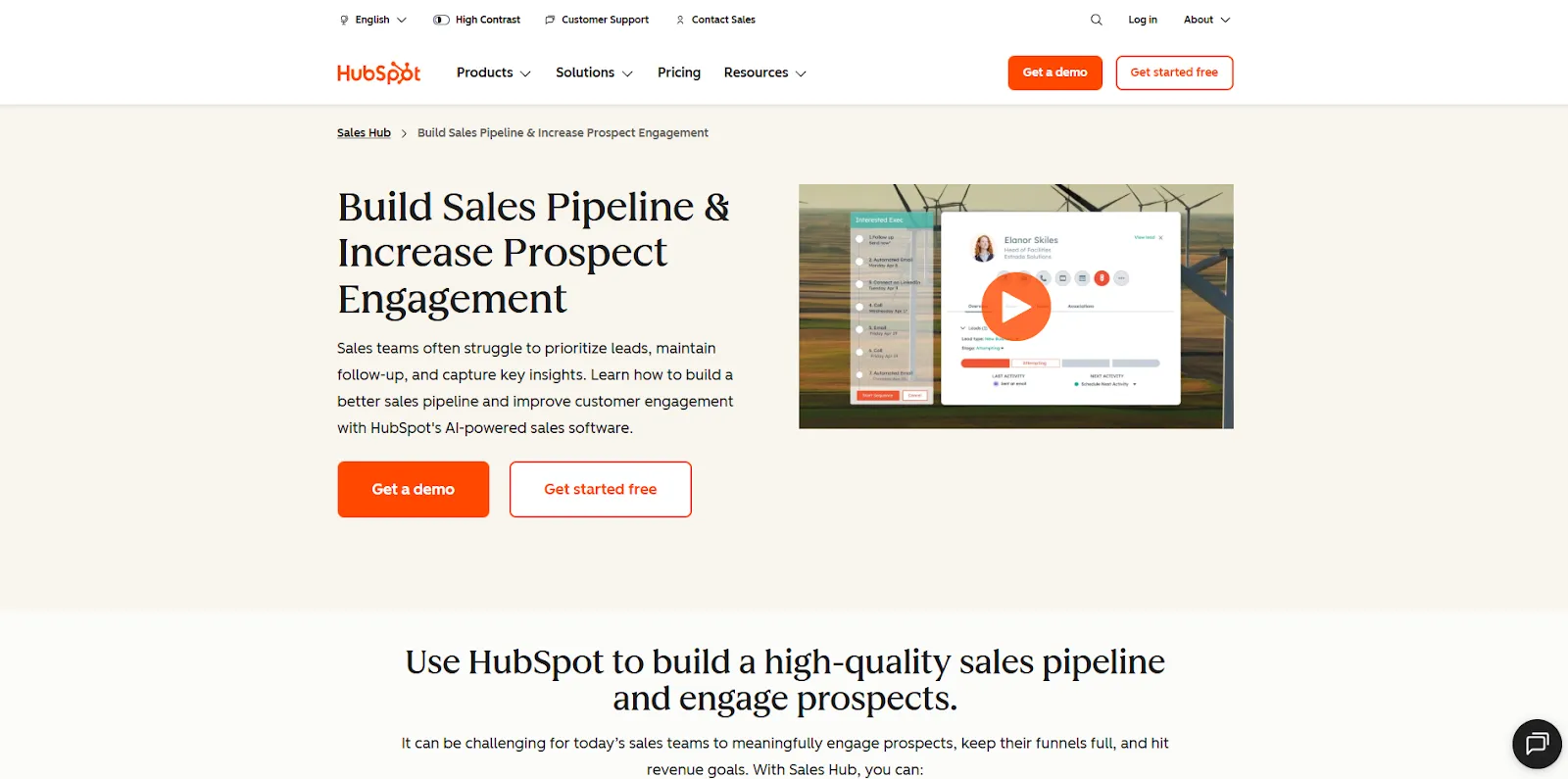
HubSpot Sales Hub provides built-in sales engagement tools, including email templates, sequences, call logging, task automation, and sales pipeline management, all natively integrated with HubSpot crm. Its tight alignment with HubSpot Marketing Hub creates a smooth, unified experience for revenue sales teams that want everything in one ecosystem.
Key Features
- Email sequences + templates: Automated outreach built directly into the HubSpot inbox experience.
- Meeting scheduling + routing: Reduce friction by allowing prospects to book directly with reps.
- Sales automation workflows: Trigger tasks, emails, and updates based on CRM activity.
- Playbooks and guidance: Help standardize messaging across the sales team.
- Native reporting + dashboards: Full visibility into engagement, pipeline, and rep activity.
Pros and cons of HubSpot Sales Hub
7. Groove — Best Google Workspace–Friendly Engagement (Salesforce Native)

Groove is a sales engagement platform designed primarily for Salesforce users who want workflow automation without the overhead of a heavy outbound platform. It emphasizes simplicity, calendar + email sync, and native Salesforce data alignment, making it popular with account management and customer-facing teams.
Key Features
- Native Salesforce integration: Eliminates sync delays and ensures accurate logging.
- Calendar + email sync: Streamlines daily workflows for SDRs and AEs.
- Flow automation: Helps reps follow structured outreach across email, calls, and tasks.
- Activity tracking: Provides visibility into prospect interactions inside Salesforce.
- Chrome extension: Allows reps to take action directly from their inbox.
Pros and cons of Groove
8. Reply.io — Best for Automated Multichannel Outreach
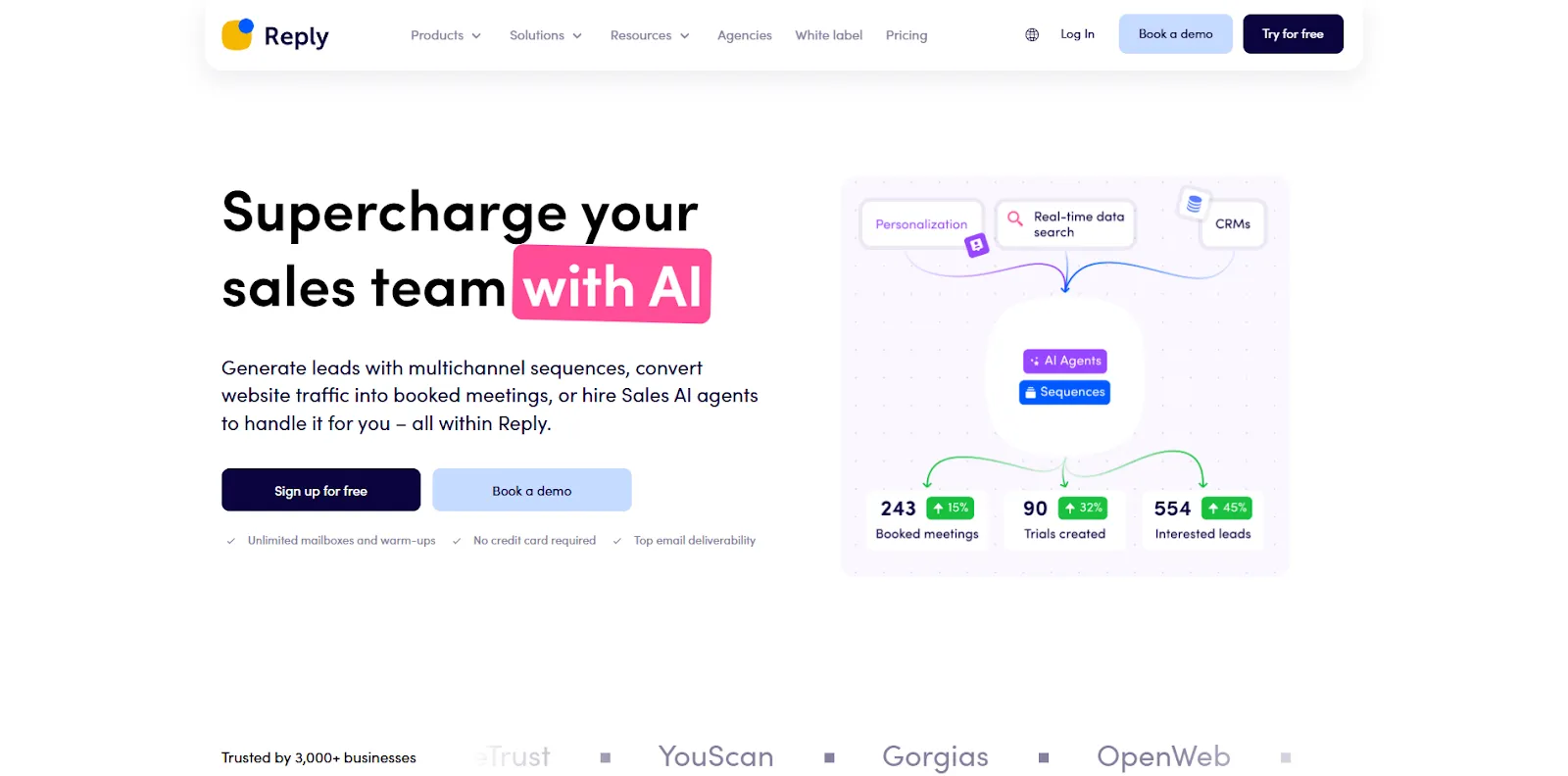
Reply.io focuses heavily on automating outbound outreach across multiple channels, email, calls, and SMS. It’s a popular option for SDR teams that want multichannel engagement without enterprise-level complexity or pricing.
Key Features
- AI email assistant: Generates drafts and improves message structure.
- Multichannel sequencing: Coordinates outreach across email, calls, and SMS.
- Inbox warm-up: Helps protect sender reputation.
- Basic reporting + analytics: Tracks performance across channels.
- CRM integrations: Works with Salesforce, HubSpot, and Pipedrive.
Pros and cons of Reply.io
9. Mixmax — Best Gmail-First Sales Engagement Platform
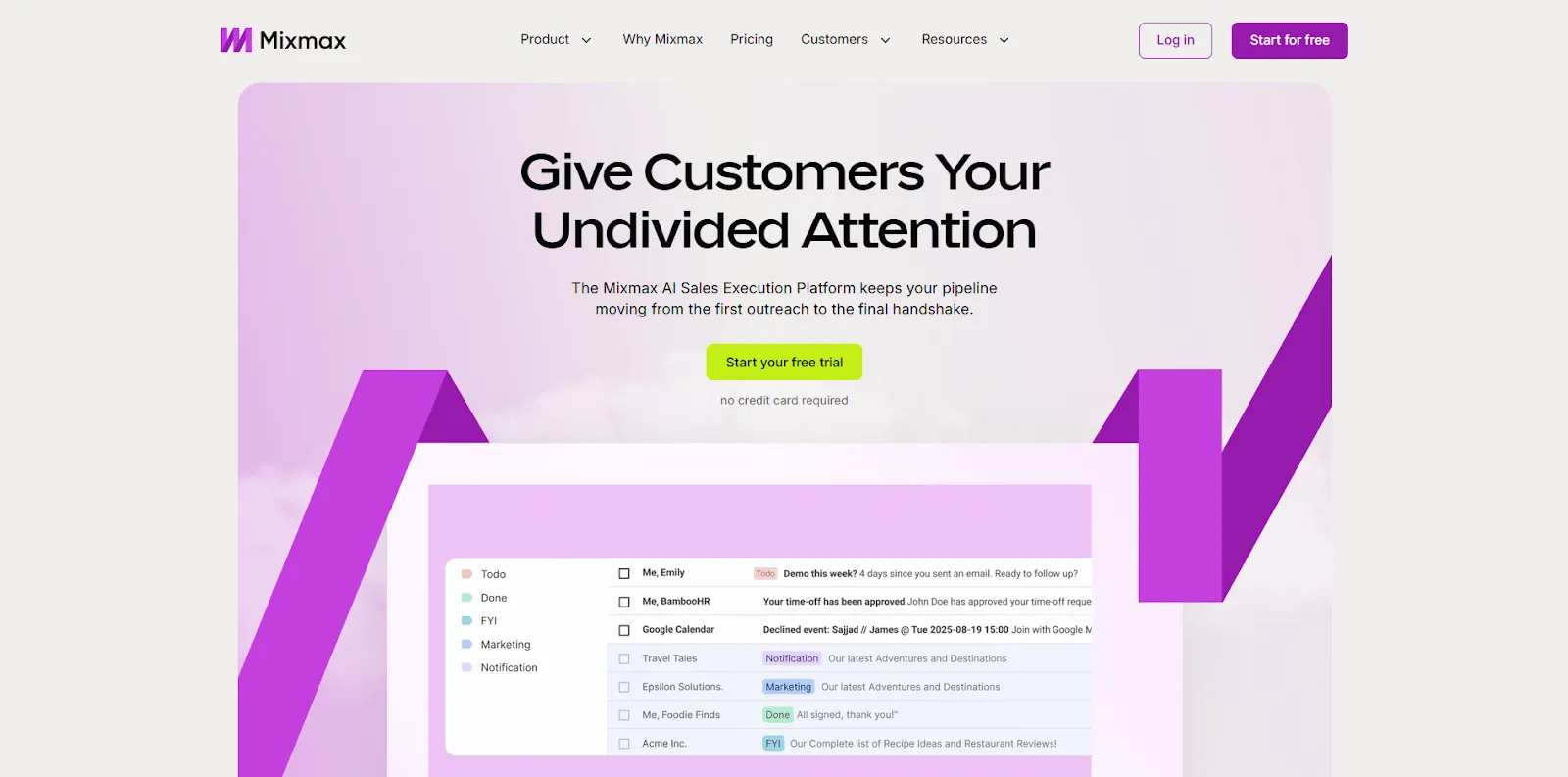
Mixmax is built specifically for Gmail users and blends email productivity tools with lightweight sales engagement platform key features. It’s ideal for sales reps who work primarily inside Google Workspace and need email sequences, calendaring, and analytics without the complexity of a full outbound sales platform.
Key Features
- Gmail-native sequences: Create and send automated follow-ups directly from your inbox.
- Calendar scheduling: Simplifies booking with embedded scheduling links.
- Email productivity tools: Includes templates, reminders, and send-later features.
- Engagement analytics: Tracks opens, clicks, and responses.
- Lightweight CRM sync: Connects to Salesforce, HubSpot, and Pipedrive.
Pros and cons of Mixmax
10. Yesware — Best for Simple, Email-First Outreach
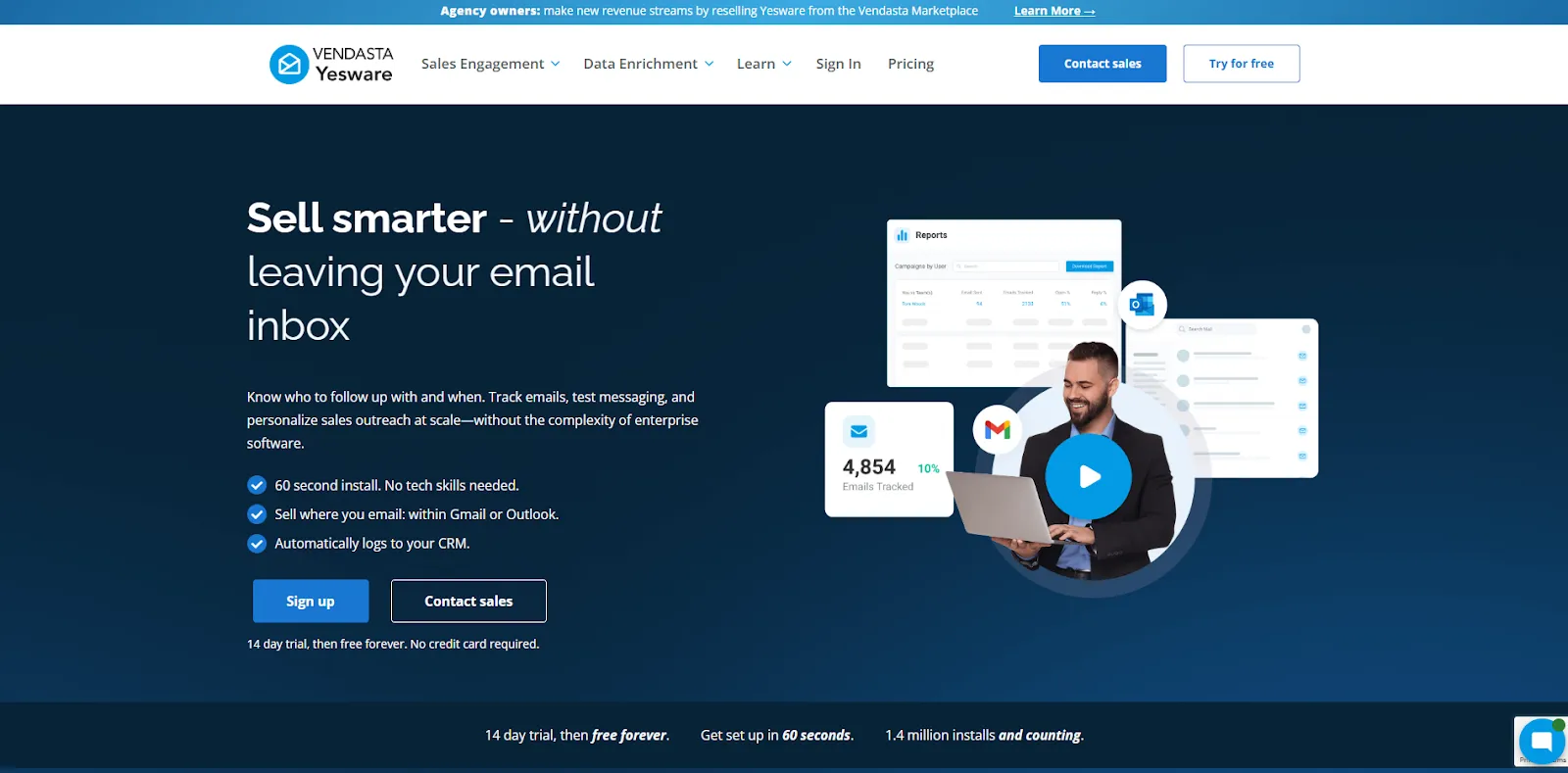
Yesware is an inbox-based sales engagement tool that focuses on email tracking, templates, and lightweight sequences inside Gmail or Outlook. It’s popular with teams who want straightforward outreach functionality without a heavy platform.
Key Features
- Email tracking + templates: Gives reps visibility into prospect engagement.
- Basic sequences: Supports simple automated follow-ups.
- Meeting scheduling: Allow prospects to book time easily.
- Attachment tracking: Shows when documents are opened or viewed.
- CRM sync: Connects email activity to Salesforce and other CRMs.
Pros and cons of Yesware
Drive stronger sales engagement with the right platform and 11x
Sales engagement platforms have become essential for modern GTM sales teams. By consolidating outreach, automating follow-ups, and improving visibility across workflows, these sales engagement tools help SDRs and AEs run more consistent, impactful outbound sales motions. Whether your sales team needs advanced sequencing, better analytics, or stronger crm integration, selecting the right sales engagement platform can significantly improve engagement, lead generation quality, and sales pipeline creation, leading to increased revenue growth.
As sales leaders look to scale personalization and reduce manual tasks, AI-powered sales engagement tools like 11x can naturally complement sales enablement workflows. With automated research, enriched insights, and tailored messaging, 11x helps sales reps engage high-quality accounts with the depth and precision today’s buyers expect. This AI-driven approach helps optimize team performance and win rates.
If you're exploring sales engagement platforms to streamline your sales process or level up outbound sales performance, now is a great time to see how 11x can support your sales team. Learn more or request a demo to see what AI-driven engagement looks like in action.
Frequently Asked Questions
A sales engagement platform is software that manages and automates outreach across channels like email, calls, and sms, helping sales teams run a structured sales cadence and track sales activities in one place. It is a critical part of the modern tech stack for sales development.
The best sales engagement platform depends on your workflows, pricing, and crm environment. Sales teams using Salesforce often prefer Salesforce Sales Engagement, while others choose sales engagement tools like Outreach, Salesloft, or AI-driven platforms like 11x for deeper automation and personalization. Sales leaders must evaluate the key features and functionality based on their sales process.
A crm stores customer success and sales pipeline data, while a sales engagement platform handles the day-to-day messaging, follow-ups, and tasks reps use to engage prospects. CRMs organize information; sales engagement platforms operationalize outreach. The crm integration is vital for end-to-end visibility.
The 2-2-2 rule recommends leaving two voice messages, sending two emails, and trying two social media touches before moving on. It helps sales reps balance persistence with efficiency during lead generation.
Look for multi-channel sequencing, automation, dashboards and metrics, crm integration, and key features that support personalization and reps productivity. Sales leaders should also consider onboarding support and deliverability rates.