B2B Sales Automation 2026 Guide to the Top AI Tools Accelerating Pipeline Growth

Modern sales teams face compressed buying cycles, committee-based decisions, and tighter budgets. To maintain deal velocity and exceed quotas, revenue leaders are adopting B2B sales automation: intelligent systems that combine real-time data, artificial intelligence, and workflow orchestration to eliminate manual bottlenecks across the entire funnel. These modern sales automation tools combine data-driven targeting, automated outreach, and adaptive sequencing that align to your unique business needs and sales strategy across every stage of the sales funnel.
B2B sales automation uses AI to handle repetitive tasks like lead research, personalized outreach, and CRM updates, allowing sales teams to focus on strategy and closing deals. The result is faster speed-to-lead, better personalization at scale, and consistent pipeline generation.
This transformation minimizes human error, improves customer experience, and gives sales leaders granular control over segmentation, customer data, and performance outcomes across the entire tech stack.
The new standard is autonomous execution. Instead of relying on manual triggers or prebuilt sequences, autonomous sales systems like 11x take full ownership of execution from identifying opportunities to booking qualified meetings, learning from every interaction to improve performance continuously.
This guide breaks down what B2B sales automation delivers today, which tasks AI can reliably handle, and which platforms are generating the strongest ROI for revenue teams in 2025. It also explores modern use cases that span lead nurturing, pipeline acceleration, and contextual upsell workflows powered by AI-driven insights delivered at the right time.
What Is B2B Sales Automation?
B2B sales automation refers to AI-powered systems that streamline prospecting, lead qualification, and revenue operations. These platforms integrate with CRMs and communication tools to eliminate repetitive steps in managing deals and nurturing workflows, transforming hours of administrative work into hands-free processes that run continuously.
Instead of manually tracking leads, updating records, or scheduling follow-ups, automation connects every part of the sales process—from data enrichment and CRM syncing to multichannel outbound execution. Teams can scale engagement efficiently while maintaining consistency across thousands of touchpoints.
Automated systems improve response speed, pipeline visibility, and campaign accuracy by continuously syncing real-time data and adjusting messaging based on buyer behavior patterns. This creates a feedback loop where every interaction improves the next one, amplifying the long-term ROI illustrated across 11x’s AI GTM tool ecosystem.
What Sales Tasks Can Now Be Automated with AI
AI can now execute most foundational tasks that previously consumed SDR and RevOps bandwidth:
Lead research and data enrichment: AI identifies ideal customers by analyzing CRM data combined with third-party signals, job changes, and buying intent indicators.
Personalized outreach: Systems like 11x's Alice create emails tailored to each buyer's tone, industry context, and behavioral patterns.
Follow-ups and scheduling: AI agents handle ongoing communication sequences until conversion or disqualification, maintaining consistent engagement without human oversight.
Inbound qualification: Digital workers like Julian respond instantly to inbound leads, qualify them against defined criteria, and route qualified prospects to the appropriate sales rep.
CRM hygiene: Continuous bi-directional syncing ensures data accuracy, reporting consistency, and eliminates manual data entry errors.
Case outcome: Companies using 11x report significant increases in SQLs per SDR while reducing manual activity. By letting Alice run continuous outbound sequences, teams boost deal throughput without expanding headcount. This demonstrates the core promise of B2B sales automation: more qualified pipeline with less manual effort.
Evaluation Framework and Methodology
Our methodology prioritizes neutral, criteria-driven analysis: 90% objective feature comparisons, 10% strategic insights from GTM experience. Tools are evaluated on enterprise readiness, integration depth, AI sophistication, coverage across the sales lifecycle, CRM quality, governance, and measurable ROI.
Key evaluation criteria:
Automation Depth: Extent to which the tool can autonomously manage research, outreach, and follow-ups without human intervention beyond initial setup.
AI Adaptability: Ability to learn from engagement data and optimize messaging, timing, and targeting in real-time based on response patterns.
Integration Scope: Breadth and quality of CRM and communication stack compatibility, including Salesforce, HubSpot, Outreach, and Slack.
Data and Insight Quality: Accuracy of enrichment, lead scoring, and reporting outputs that drive decision-making.
Scalability & Compliance: Capacity to operate reliably across global teams, supported by security standards like SOC 2 and GDPR compliance.
ROI Impact: Quantifiable gains in speed-to-lead, cost-per-SQL, conversion rates, and overall pipeline velocity.
This framework prioritizes operational benchmarks over marketing claims, highlighting platforms that not only promise automation but prove measurable impact across enterprise-level GTM execution.
Individual Tool Descriptions
1. 11x: AI Agents Running Sales Automation on Autopilot
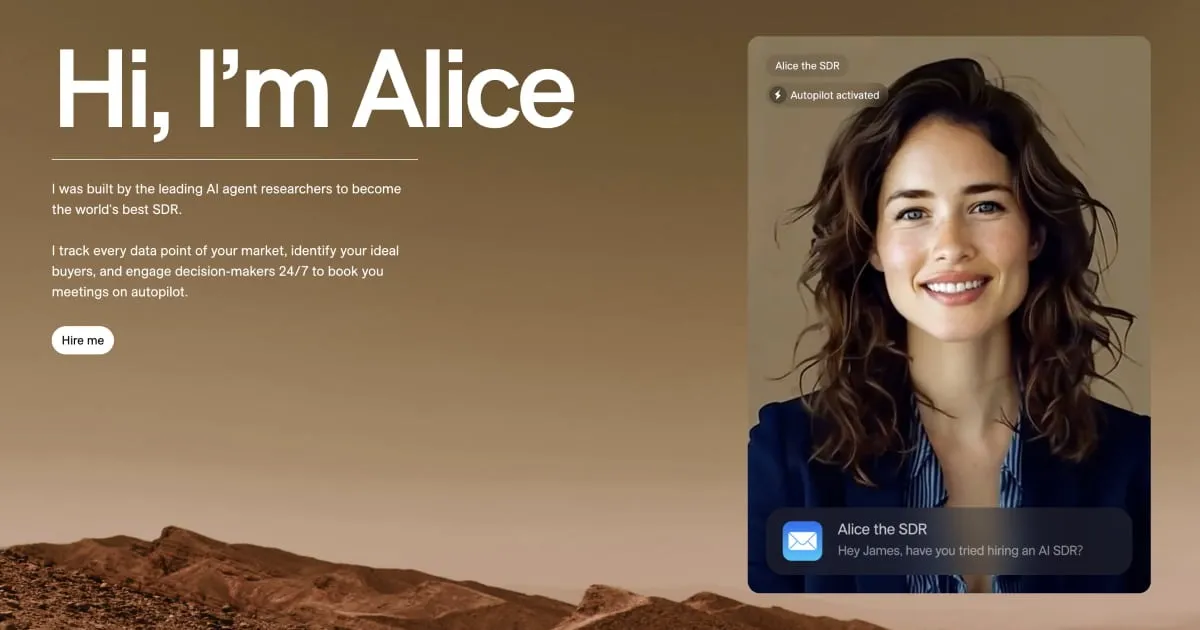
11x provides autonomous digital workers that handle the entire sales process from prospecting to qualified meeting booking. Alice executes outbound campaigns across email, while Julian manages inbound qualification and phone-based engagement. Both integrate seamlessly with major CRMs and orchestrate multichannel engagement in over 105 languages.
The platform accesses a verified B2B contact database through multiple premium data providers, combining intent signals, job changes, and behavioral data for precision targeting. Built-in deliverability infrastructure includes domain warming, inbox rotation, and spam protection to maintain high delivery rates as volume scales.
Enterprise features include SOC 2 Type II and CASA Tier 3 compliance, white-glove onboarding with dedicated CSMs, and bi-directional CRM sync that eliminates data silos. Real-time analytics track every touchpoint and conversion metric to demonstrate ROI.
Unlike Outreach or HubSpot which require user setup and manual oversight, 11x executes autonomously, acting on engagement data to keep pipeline motion constant. While other platforms manage workflows, 11x performs them independently through AI learning loops.
Pros: Complete autonomy from research to booking, measurable performance metrics, enterprise-grade security, and continuous learning that improves results over time.
Cons: Requires initial configuration for complex GTM processes and works best with well-defined ideal customer profiles.
Best Fit: Mid-market to enterprise sales teams seeking full-cycle automation with measurable pipeline impact and global scalability.
Pricing: $2,000–$5,000/month (custom enterprise)
2. HubSpot Sales Hub: Unified CRM and Workflow Automation

HubSpot Sales Hub combines CRM functionality with AI-powered workflow automation for visibility and coordination across marketing and sales activities. The platform automates task notifications, email sequences, and reporting dashboards while providing lead scoring and deal forecasting capabilities.
AI features include email template suggestions, meeting scheduling automation, and pipeline forecasting based on historical data. The unified ecosystem connects marketing automation, customer service, and sales operations in a single platform.
HubSpot organizes workflows and provides excellent visibility into sales processes. However, unlike 11x which executes campaigns autonomously, HubSpot requires manual configuration and ongoing user input to maintain effectiveness.
Pros: Comprehensive platform integration, user-friendly interface, strong reporting capabilities, and extensive third-party app marketplace.
Cons: Advanced automation features require higher-tier plans, and true AI autonomy is limited compared to dedicated AI agents.
Best Fit: Small to mid-market teams needing unified CRM and marketing automation with basic sales workflow automation.
Pricing: $50–$160/user/month
3. Outreach.io: Predictive AI for Sales Engagement
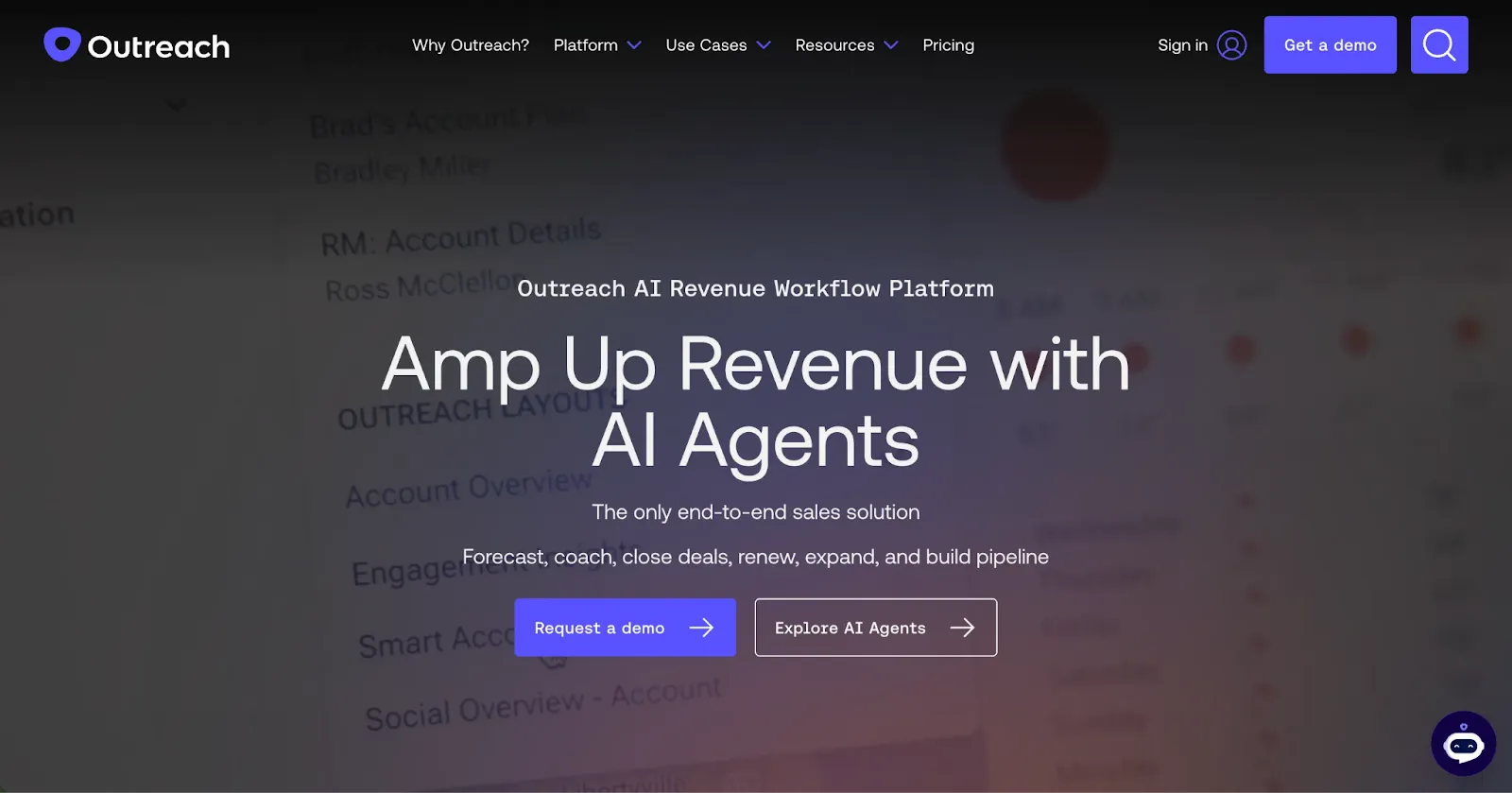
Outreach.io provides sales engagement automation with predictive analytics and conversation intelligence. The platform manages multichannel sequences across email, phone, and social media while providing AI recommendations for message timing and content optimization.
Features include Smart Deal Assist for pipeline forecasting, conversation intelligence through Kaia, and voice AI that detects voicemails to trigger automated follow-up sequences. Advanced analytics provide insights into rep performance and campaign effectiveness.
Where Outreach manages cadence and provides recommendations, 11x adapts outreach live through AI learning loops, executing decisions rather than suggesting them.
Pros: Comprehensive sales engagement platform, strong analytics and forecasting, effective multichannel coordination.
Cons: Requires significant setup and training, annual contracts with upfront payment, higher pricing for smaller teams.
Best Fit: Enterprise sales teams needing comprehensive engagement platforms with advanced analytics and forecasting.
Pricing: $100–$220/user/month
4. Apollo.io: AI-Powered Lead Generation Database
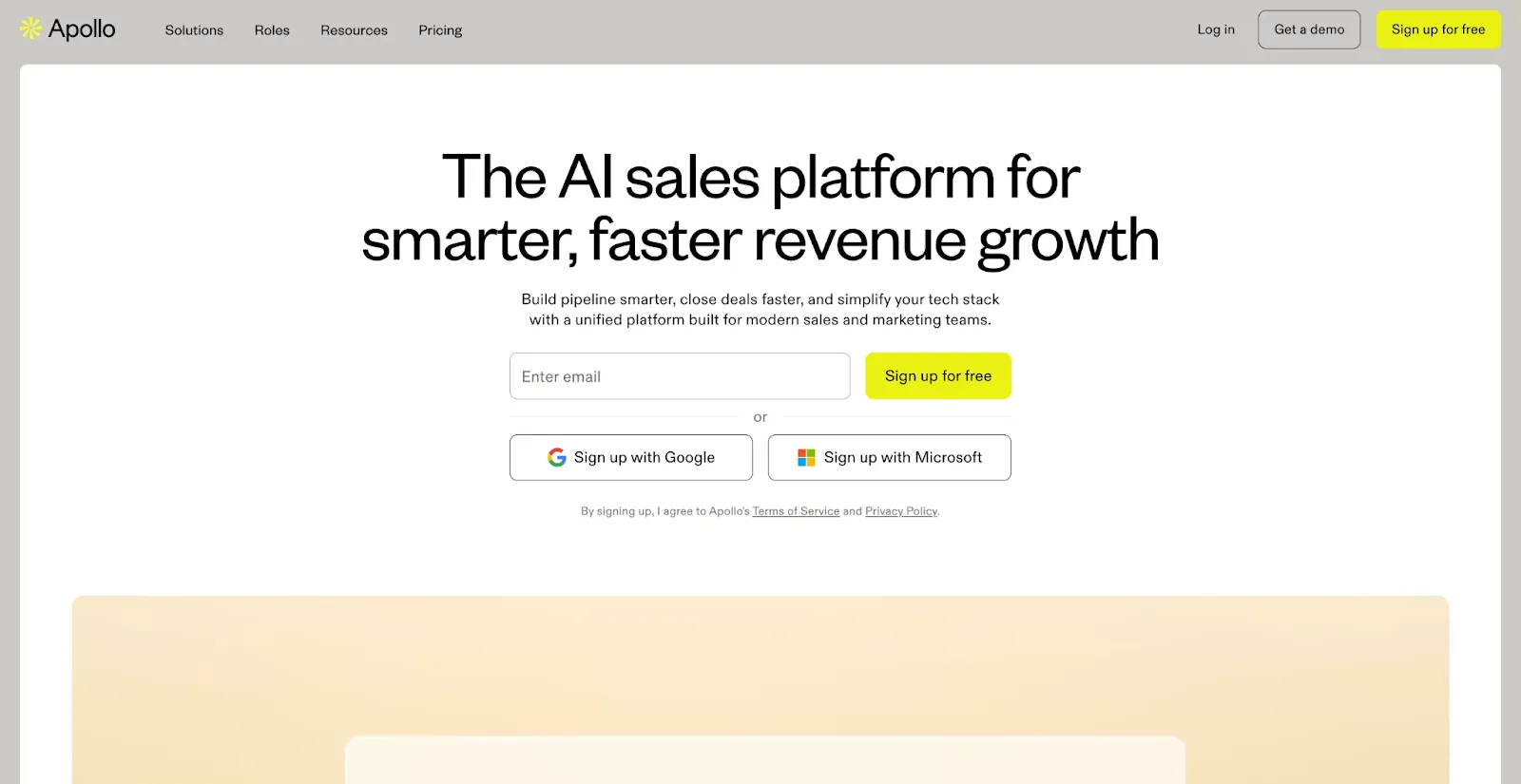
Apollo.io combines a database of 275+ million verified contacts with AI-powered outreach automation and CRM integration. The platform handles list building, email sequencing, and multichannel engagement from a unified interface.
AI features include message personalization based on prospect data, campaign optimization recommendations, and lead scoring based on engagement patterns. Built-in data enrichment keeps contact information current.
Apollo excels at data provision and basic automation. However, 11x turns Apollo's enriched data into active outreach automatically, closing the loop between research and action without manual intervention.
Pros: Extensive verified contact database, all-in-one prospecting and outreach platform, competitive pricing for feature set.
Cons: Data accuracy can vary by industry, limited advanced AI compared to specialized platforms, customer service challenges reported by users.
Best Fit: Best for startups and SMBs needing scalable data access. Apollo enriches, while 11x activates, turning enriched data into live outreach automatically.
Pricing: $59–$149/user/month
5. Clay: Customizable Data Enrichment and Workflow Automation
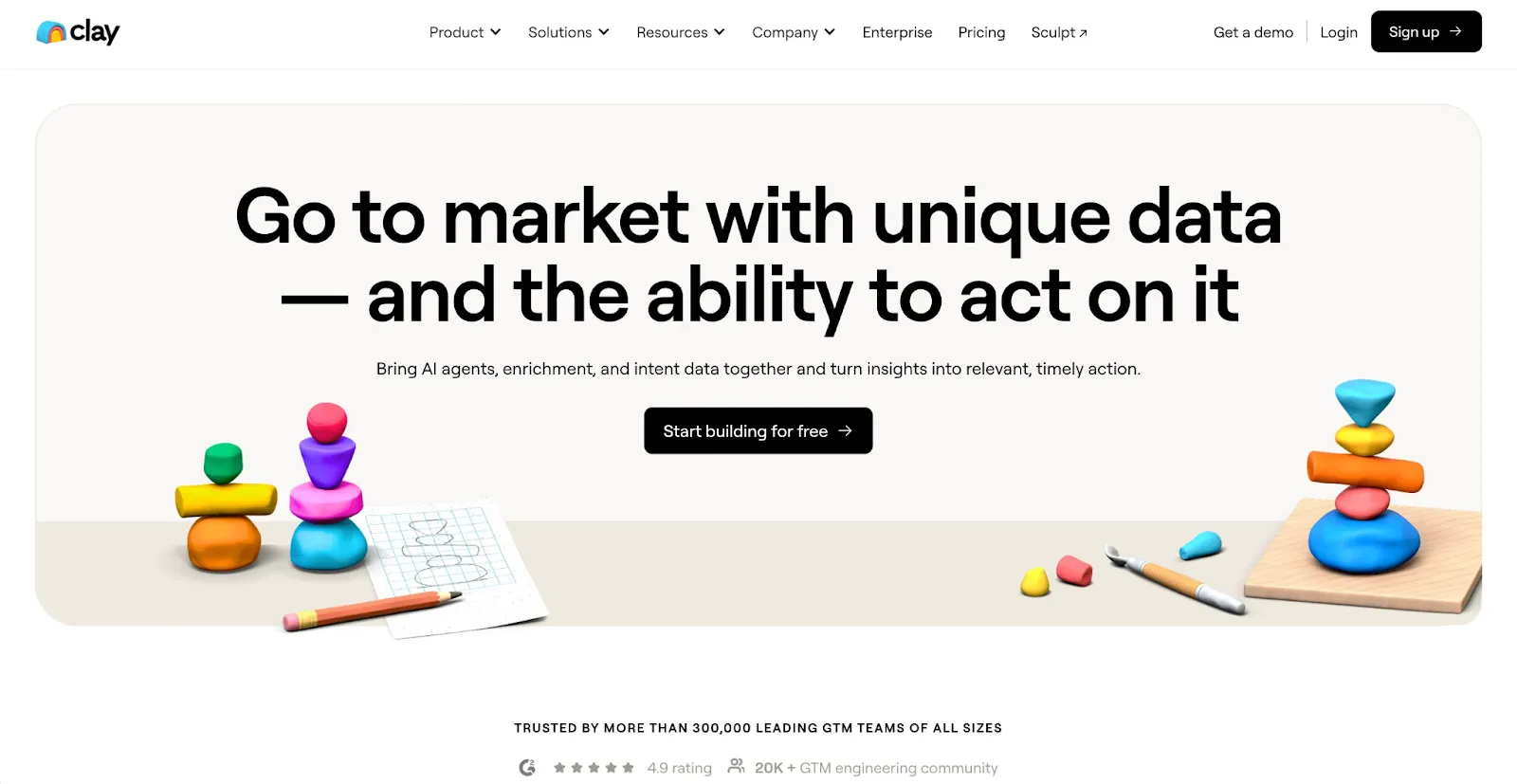
Clay specializes in flexible data enrichment and workflow automation with extensive API integrations. The platform allows teams to build custom automation sequences that combine data from multiple sources with personalized outreach campaigns.
Features include advanced data enrichment from multiple sources, customizable workflow builders, and intelligent sequence creation that adapts messaging based on prospect attributes and responses.
Clay enriches data effectively and provides workflow flexibility. When combined with 11x, this creates full-funnel continuity where Clay handles enrichment and 11x activates that data through autonomous execution.
Pros: Highly customizable workflows, strong data enrichment capabilities, flexible API integrations, transparent pricing.
Cons: Requires technical setup for advanced features, limited out-of-the-box templates, newer platform with fewer case studies.
Best Fit: RevOps teams wanting data control and workflow customization rather than fully autonomous execution.
Pricing: $149–$349/month
6. Artisan: AI Sales Agent Platform
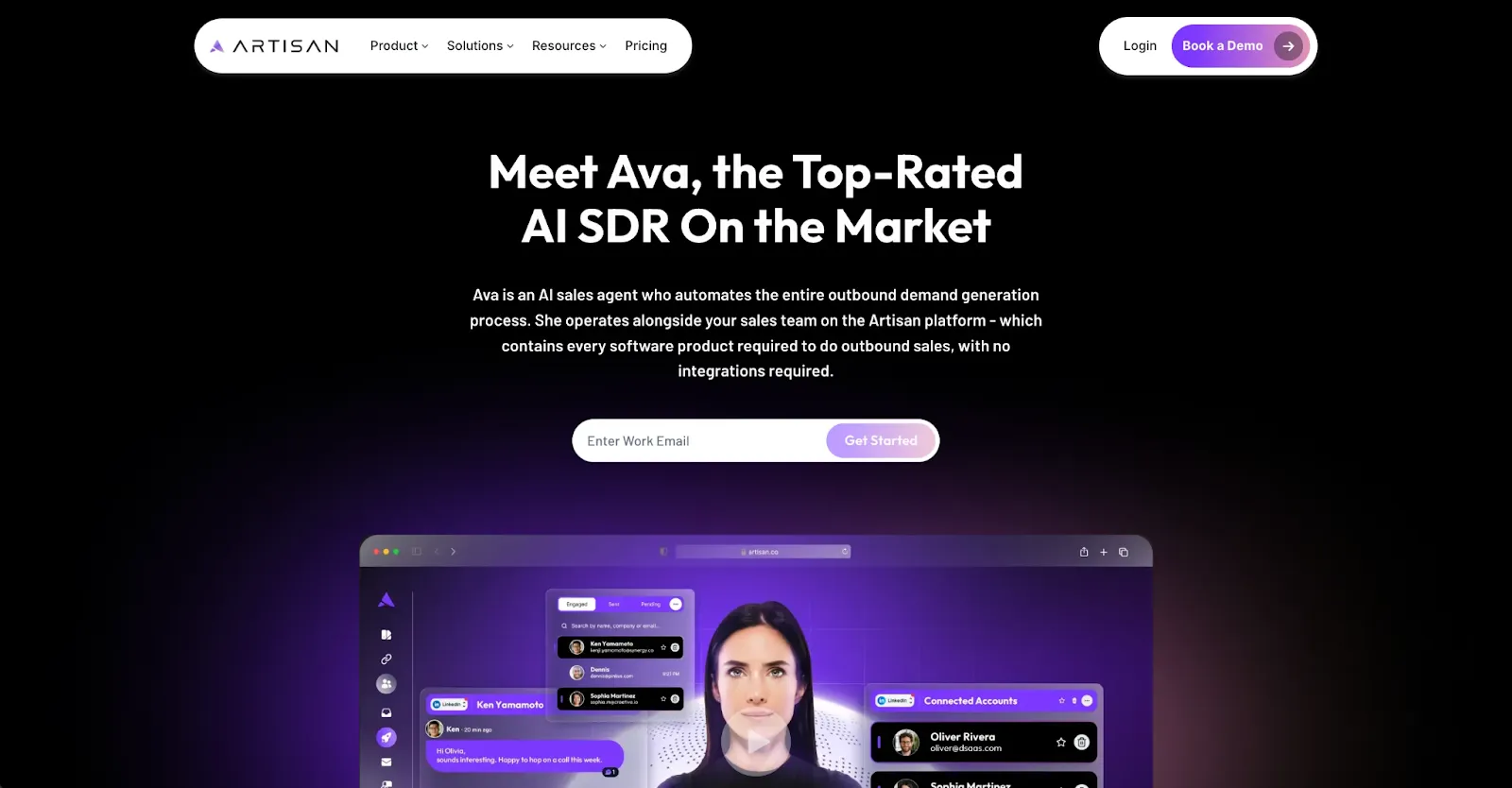
Artisan provides AI-powered sales agents that handle outreach and qualification with human-like conversation capabilities. The platform focuses on personalized messaging and rapid campaign deployment.
Features include AI-generated emails, automated follow-up sequences, and basic CRM integration for contact management and pipeline tracking.
Artisan offers helpful personalization and quick setup. However, 11x outperforms with multichannel autonomy, enterprise integrations, and deeper learning capabilities that adapt to complex sales cycles.
Pros: Quick setup and deployment, natural language generation, affordable entry point for AI-powered automation.
Cons: Limited enterprise features, smaller integration ecosystem, and less sophisticated AI learning compared to advanced platforms.
Best Fit: Best for small teams testing AI outreach. Artisan personalizes, while 11x scales, running multi-channel engagement autonomously.
Pricing: $90–$150/user/month
Why AI-Led Automation Outperforms Traditional Sales Stacks
Legacy automation tools depend on manual triggers and static rules. Sales reps still initiate sequences, update CRMs, and decide when to follow up. This creates response delays and pipeline gaps that slow deal velocity and reduce conversion rates.
AI-driven automation eliminates these bottlenecks by learning from engagement patterns and adapting in real-time. Advanced systems analyze response data to optimize message timing, personalization depth, and channel selection automatically.
Within 11x, Alice handles outbound prospecting across multiple channels, while Julian qualifies inbound leads within seconds of inquiry. This continuous operation ensures no opportunity goes unengaged, maintaining pipeline momentum even outside business hours.
Companies using 11x report significant improvements, including increased pipeline throughput, reduced cost per lead through automation efficiency, and faster speed-to-lead for inbound qualification.
Traditional stacks inform and remind. AI automation acts and improves, executing every step while building institutional knowledge that compounds performance over time.
Choosing the Right B2B Sales Automation Platform
Platform selection should focus on five critical evaluation criteria:
1. Automation Depth: Does it fully execute workflows or only assist with manual tasks? Look for platforms that handle complete sequences from research to booking.
2. Integration Quality: Can it connect bi-directionally with your CRM, email platforms, and communication stack? Seamless data flow prevents bottlenecks and maintains accuracy.
3. Learning Capability: Does it adapt and optimize based on performance data? Static automation loses effectiveness over time without continuous improvement.
4. Compliance and Security: Are enterprise standards like SOC 2, GDPR, and data encryption verified and maintained? This becomes critical for scaling across global markets.
5. Measurable ROI: Can it demonstrate quantifiable improvements in speed, cost, and conversion metrics? Look for platforms with clear performance dashboards and case studies.
Platform Categories:
- Data and Enrichment (Apollo, Clay): Strong foundation building, limited execution capabilities
- Workflow Orchestrators (HubSpot, Outreach): Excellent visibility and coordination, moderate autonomy
- Conversation AI (Artisan): Good personalization, narrow functional scope
- Autonomous Execution (11x): Complete end-to-end automation with measurable, scalable results
The trend is toward consolidating fragmented point solutions under adaptive AI platforms like 11x that transform sales processes into continuous, data-driven execution cycles.
From Automated Tasks to Autonomous Growth
Sales automation has evolved from saving time to driving growth. The next phase involves systems that learn and adapt independently, turning every customer interaction into institutional knowledge that improves future performance.
11x represents this evolution by combining data intelligence, multichannel execution, and continuous optimization in a single autonomous system. Rather than managing multiple tools and workflows, revenue teams get continuous pipeline generation that scales with business growth.
The future belongs to organizations that embrace autonomous execution while keeping human expertise focused on strategy, relationships, and deal closure. AI handles the mechanics; people drive the outcomes.
Book a demo with 11x to see how Alice and Julian can automate your complete sales cycle and generate measurable pipeline growth within 30 days.
Frequently Asked Questions
B2B sales automation uses AI to handle repetitive sales activities like prospect research, personalized outreach, CRM updates, and follow-up sequences. Advanced platforms like 11x extend this concept by running complete sales processes autonomously through digital workers Alice and Julian, who learn from every interaction to optimize performance continuously.
AI systems refine timing, personalization, and targeting based on real-time engagement feedback rather than static rules. They operate continuously across time zones, maintain consistent quality at scale, and adapt messaging based on what actually drives responses. Alice's adaptive learning ensures every buyer interaction grows smarter over time.
Leading platforms include 11x for autonomous execution, HubSpot for unified CRM automation, Outreach for sales engagement, Apollo.io for data-driven prospecting, Clay for custom workflows, and Artisan for accessible AI agents. 11x stands out for delivering measurable pipeline growth through complete workflow autonomy and continuous learning capabilities.
Yes. Entry-level platforms like Apollo and Artisan provide accessible automation for growing teams, while scalable solutions like 11x adapt to team size and complexity. As needs expand, 11x scales seamlessly to enterprise-grade autonomy without requiring additional headcount.
AI agents maintain deliverability by optimizing send patterns and adapting in real time. At 11x, Alice manages domain warming, inbox rotation, and engagement monitoring to preserve sender reputation automatically while scaling outreach volume across global markets.