B2B sales enablement: building a data‑driven strategy for scalable revenue growth
Learn how B2B sales enablement drives scalable revenue in 2026 with data-driven frameworks, AI tools, CRM integration, and measurable ROI.

B2B sales enablement has become the backbone of modern revenue organizations. As buying cycles lengthen and digital touchpoints multiply, sales teams need more than intuition to close deals. They need structured enablement efforts that align people, processes, and technology around measurable outcomes. This guide breaks down what effective sales enablement looks like in 2025, how to build a scalable framework, and which sales enablement tools can help your team operate with precision and speed.
What is B2B sales enablement?
B2B sales enablement is the function that equips sales reps with the right tools, content, and data to engage b2b buyers throughout the buyer’s journey. It connects marketing teams, sales leaders, and customer success functions under a unified strategy focused on revenue growth. The goal is simple: help salespeople deliver the right message to the right stakeholders at the right time.
An effective sales enablement strategy integrates technology, training, and content management into a single workflow. It ensures that every sales rep can access updated playbooks, messaging templates, and case studies that reflect current market conditions. When executed well, it shortens the sales cycle length, improves conversion rates, and drives consistent sales success.
B2B sales enablement tools in 2026
In 2026, the best sales enablement platforms combine content management, automation, CRM integration, and measurable impact on sales performance. They help sales reps engage buyers at the right time, maintain consistent messaging, and move deals through the sales funnel with confidence. Here are the best sales enablement software in 2026, evaluated on how effectively they support real-world B2B sales enablement strategy across the full buyer’s journey.
Evaluation criteria and methodology
To ensure fairness, transparency, and repeatability, each platform in this list is assessed using a structured, criteria-driven framework. The goal is to evaluate how well these sales enablement tools perform in real B2B environments, not how they position themselves in marketing materials.
- Neutral, criteria-driven approach: 90% objective feature comparison and 10% strategic insight informed by GTM experience.
- Enterprise readiness: Assessed on scalability, security, governance, and suitability for complex B2B sales environments.
- Integration depth: Evaluated based on CRM connectivity, including Salesforce and HubSpot, and alignment with the broader tech stack.
- AI sophistication: Reviewed on how effectively AI supports automation, real-time insights, and data-driven decision-making.
- Sales lifecycle coverage: Measured by how well tools support onboarding, enablement efforts, execution, and follow-up across the sales funnel.
- CRM data quality: Analyzed for accuracy, consistency, and impact on customer relationship management workflows.
- Governance and control: Considered for content oversight, messaging consistency, and compliance requirements.
- Measurable ROI: Judged by the platform’s ability to improve sales performance, sales success, and revenue growth through trackable metrics.
B2B sales enablement tools: Comparison overview
1. 11x
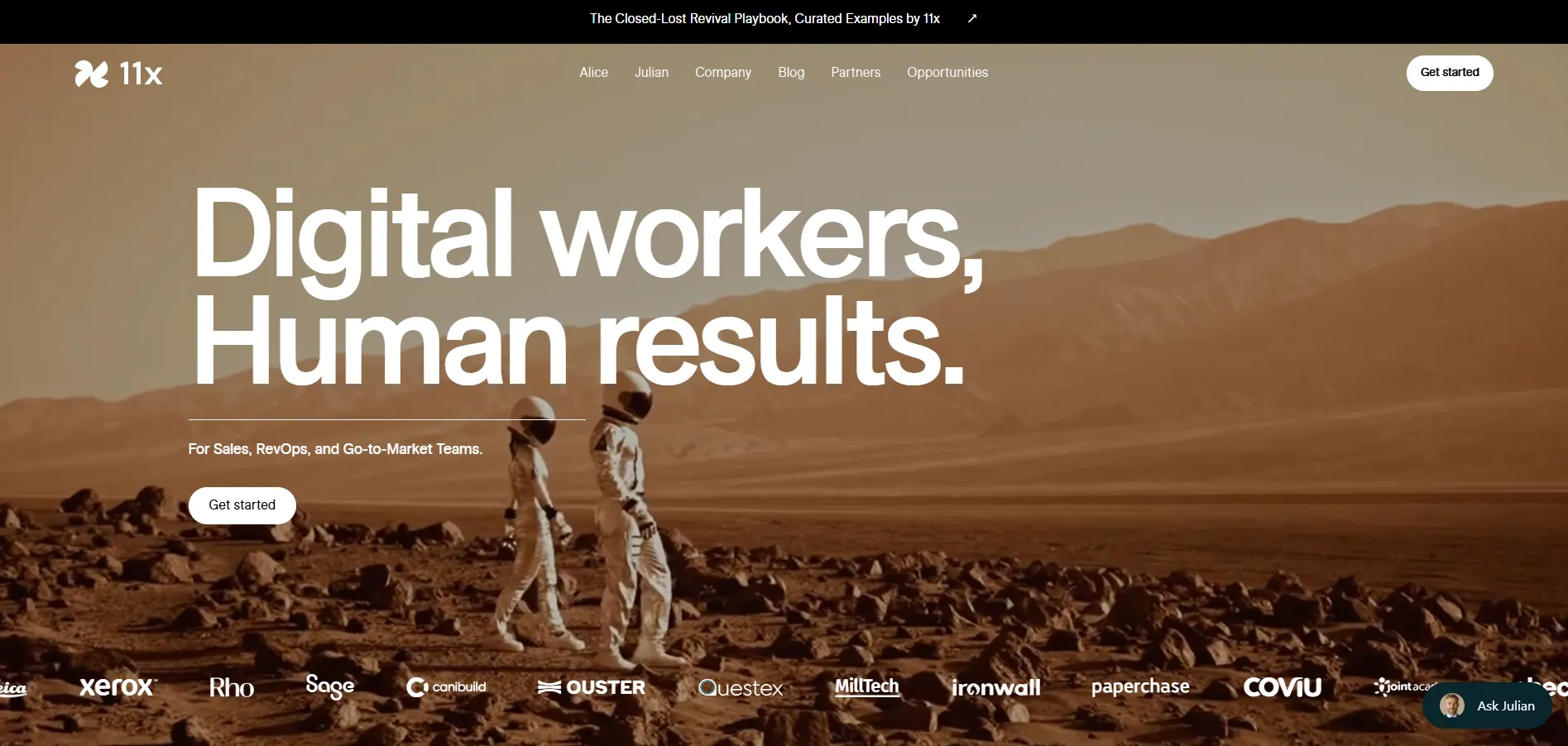
11x is an AI-powered sales enablement platform that delivers autonomous digital workers to execute core sales functions. It focuses on automation across outreach, qualification, and follow-up to help sales teams close deals faster.
Key features
- Autonomous sales execution: AI agents run outbound and inbound workflows end to end, supporting sales reps across the sales funnel.
- CRM-native integration: Activities sync directly with customer relationship management systems, including Salesforce and HubSpot.
- Real-time engagement: Inbound leads are contacted at the right time to improve buyer response and sales performance.
- Data-driven metrics: Every interaction feeds clean metrics and KPIs into the CRM for sales leaders and sales managers.
- Scalable automation: Reduces manual effort for sales enablement teams while supporting revenue growth.
Pros
- Removes repetitive outreach and follow-up from salespeople.
- Improves consistency across the sales process and buyer’s journey.
- Supports modern B2B sales enablement strategy without adding headcount.
Cons
- Primarily designed for teams ready to adopt automation-first workflows.
- Less focused on traditional content management and sales content libraries.
- Requires clean CRM data to optimize results.
Best for: B2B sales teams that want AI-driven automation to execute outreach, qualification, and follow-up at scale.
2. Highspot
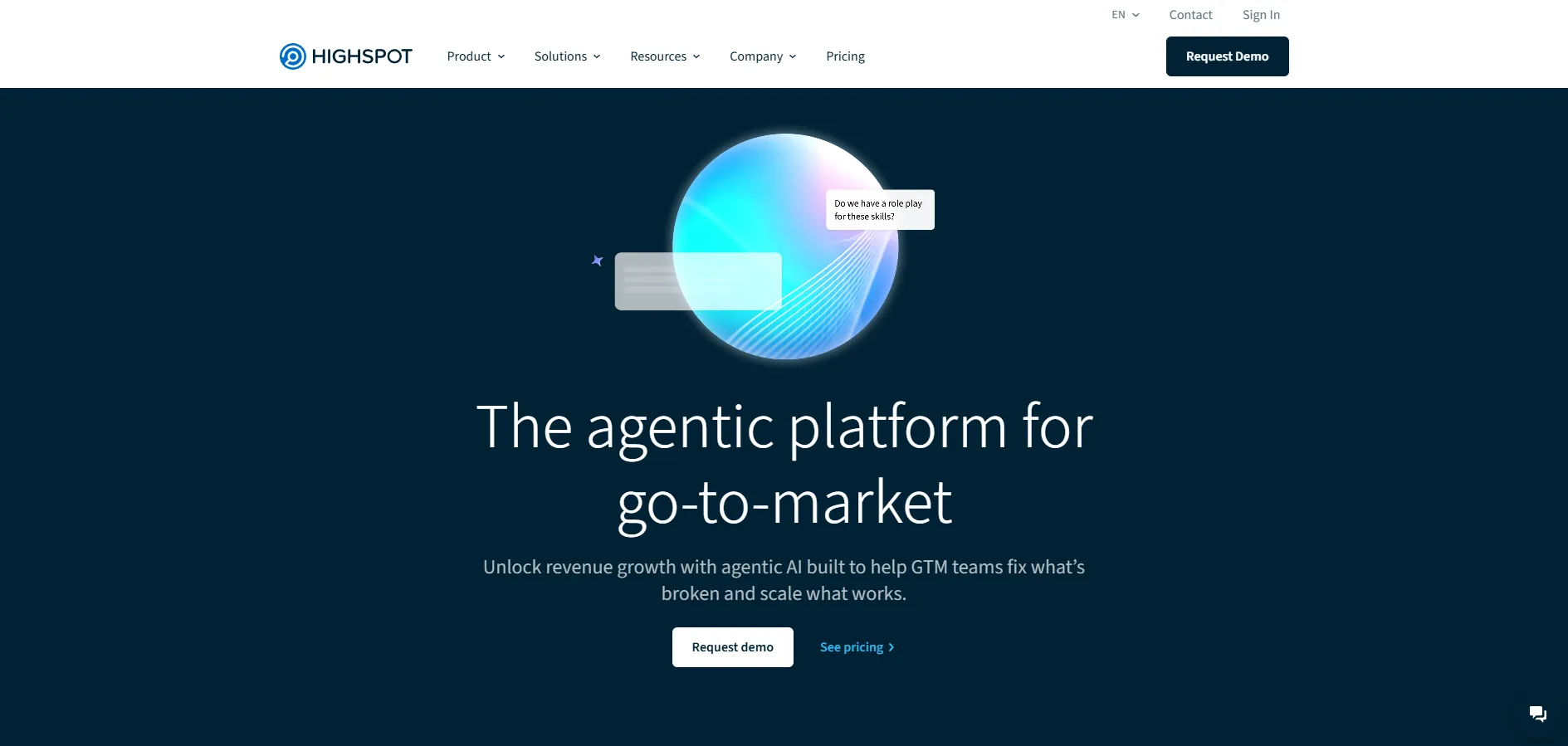
Highspot is a sales enablement platform focused on content management, guided selling, and sales training. It helps sales teams and marketing teams align messaging across the buyer’s journey.
Key features
- Content management: Centralizes sales content, case studies, and templates mapped to each stage of the sales process.
- Guided selling: Recommends the right assets based on buyer pain points and decision-making context.
- Sales training and onboarding: Supports new hires and ongoing training with structured learning paths.
- Engagement analytics: Tracks usage, follow-up activity, and sales performance metrics tied to revenue outcomes.
- CRM integrations: Connects with Salesforce and HubSpot to support consistent workflows.
Pros
- Strong alignment between sales enablement teams and marketing initiatives.
- Clear visibility into which sales content supports close deals.
- Helps sales leaders reinforce consistent value proposition messaging.
Cons
- Limited automation for direct outreach or execution.
- Pricing may be restrictive for smaller sales enablement efforts.
- Requires regular content updates from stakeholders to stay effective.
Best for: B2B sales enablement teams that prioritize content management, guided selling, and structured sales training.
3. Seismic

Seismic is an enterprise sales enablement platform built to manage sales content, messaging, and enablement workflows at scale. It supports a complex B2B sales enablement strategy across large sales teams and extended buying committees.
Key features
- Content management and personalization: Delivers sales content, case studies, and templates tailored to role, industry, and buyer stage.
- Enablement workflows: Automate playbooks and sales process guidance across the sales funnel.
- Advanced analytics: Tracks usage, influence on deals, and performance metrics tied to revenue growth and KPIs.
- Messaging governance: Ensures ca onsistent value proposition and compliant messaging across stakeholders.
- CRM and tech stack integration: Connects with Salesforce, LinkedIn, and broader customer relationship management systems.
Pros
- Strong support for complex sales cycles and multiple decision-makers.
- In-depth metrics help sales leaders evaluate enablement efforts.
- Scales well across global sales enablement teams.
Cons
- Implementation can be time-intensive.
- Pricing is typically suited to enterprise budgets.
- Requires change management to drive adoption among sales reps.
Best for: Enterprise B2B organizations with large sales teams that need structured content management, governance, and data-driven enablement at scale.
4. Showpad
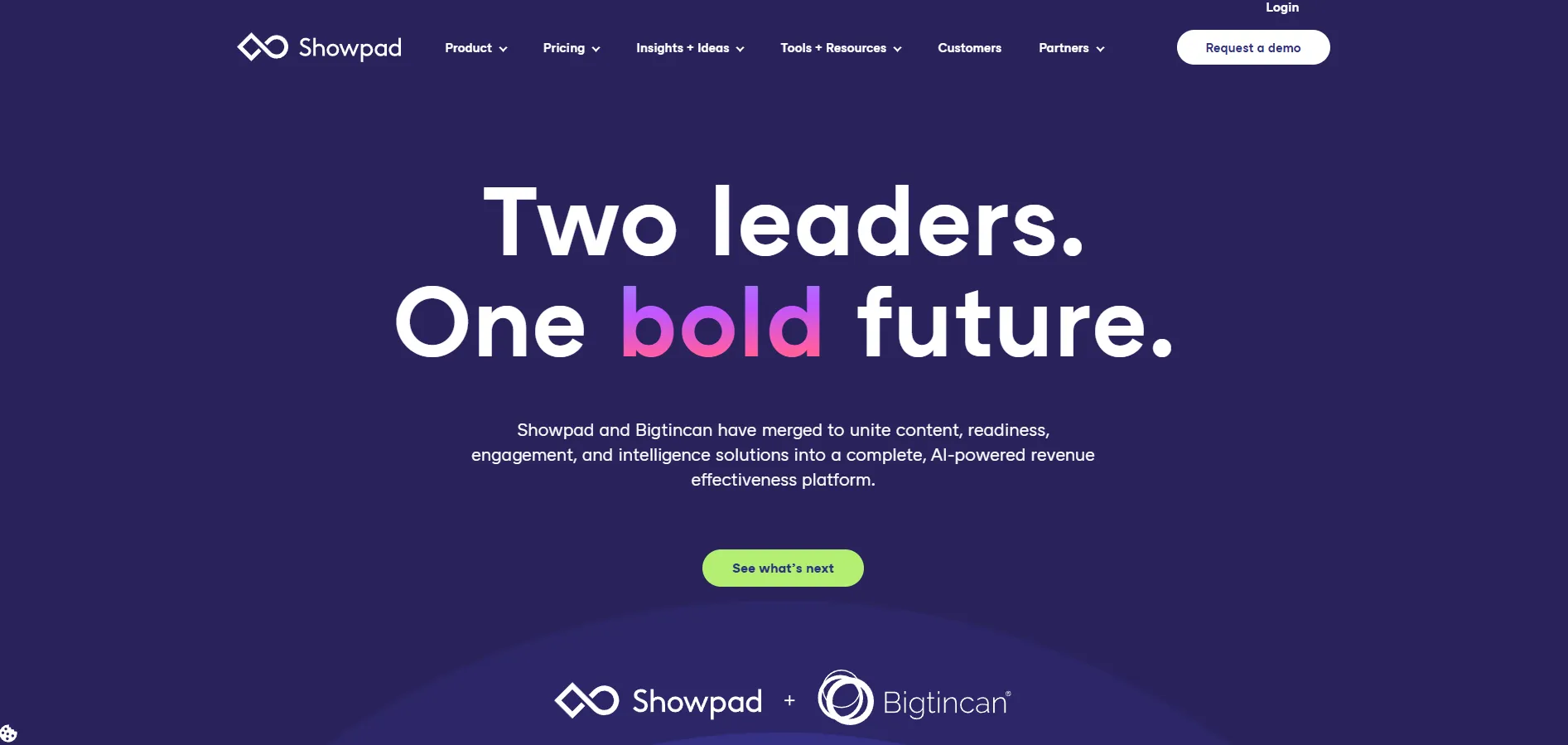
Showpad is a sales enablement software that combines sales content management with sales training and coaching. It helps sales teams deliver consistent messaging throughout the buyer’s journey.
Key features
- Unified content management: Organizes sales content, case studies, and templates across the sales process.
- Sales training and onboarding: Supports new hires and ongoing training through structured learning paths
- Playbooks and guidance: Provides playbooks that reinforce messaging and sales process workflows.
- Buyer engagement tracking: Measures how buyers interact with shared sales content in real time.
- CRM integration: Syncs activity and content usage with Salesforce to support clean workflows.
Pros
- Strong balance between content management and sales training.
- Improves messaging consistency across sales reps.
- Supports customer experience across the customer journey.
Cons
- Limited automation for outreach and follow-up.
- Analytics are less in-depth than enterprise-focused platforms.
- Requires ongoing content updates from sales enablement teams.
Best for: Mid-sized B2B sales teams that want combined sales content, training, and coaching in one platform.
5. Mindtickle
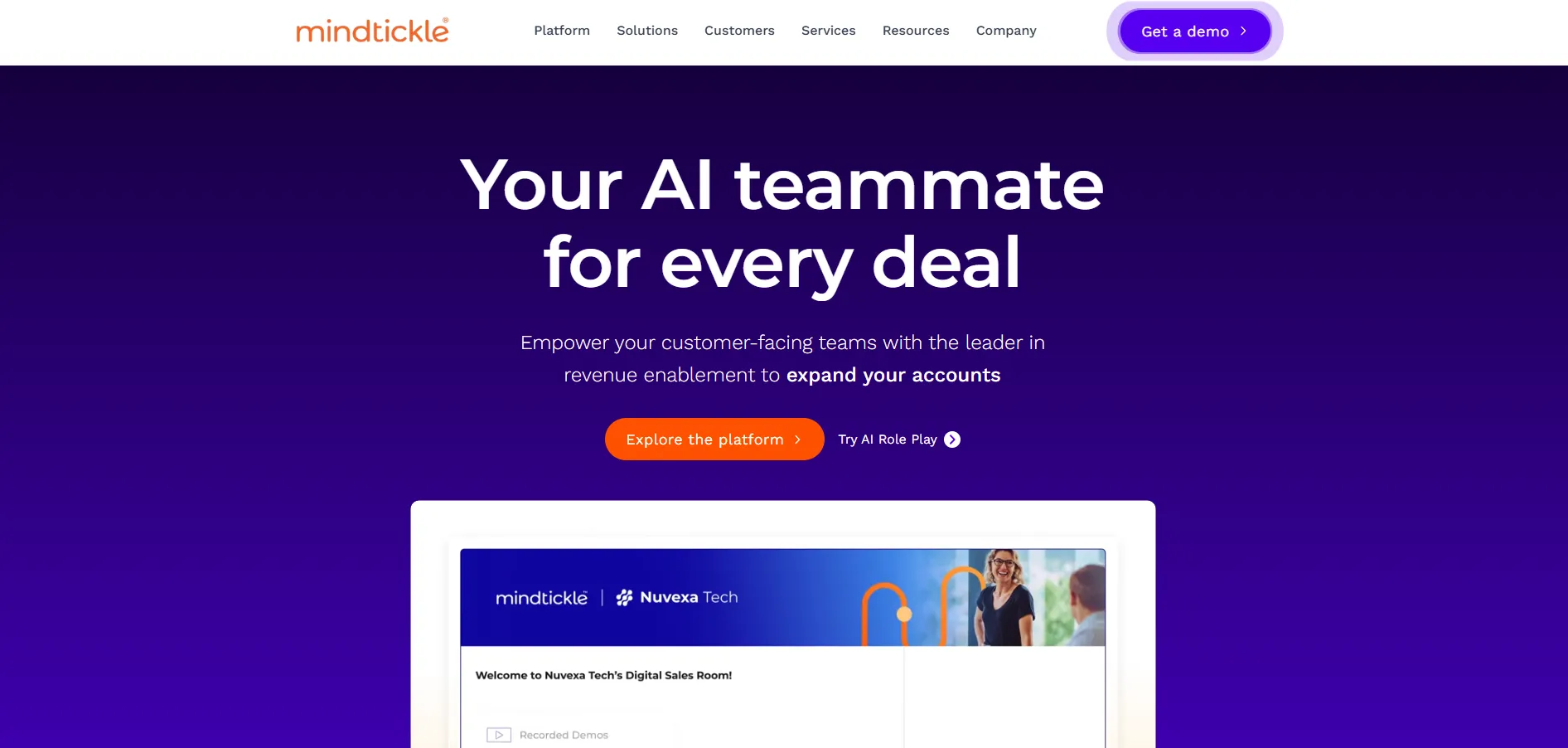
Mindtickle is a sales readiness and sales coaching platform focused on improving sales performance through skills development. It supports B2B sales enablement by linking training outcomes to real sales metrics.
Key features
- Sales readiness programs: Assesses salespeople on skills tied to the sales process, value proposition, and buyer pain points.
- Sales coaching workflows: Enables sales managers to run structured coaching and feedback initiatives.
- Performance metrics: Connects training activity to KPIs, sales success, and revenue growth.
- Ongoing training: Reinforces messaging, playbooks, and new product knowledge over time.
- CRM and data integrations: Links learning insights with customer relationship management systems like Salesforce.
Pros
- Strong focus on skill development and sales coaching.
- Helps sales leaders improve consistency across sales teams.
- Useful for onboarding new hires and reinforcing sales training.
Cons
- Not a full sales enablement platform for content management.
- Limited support for automation or outbound workflows.
- Often requires pairing with other sales enablement software.
Best for: B2B organizations that want to improve sales readiness, coaching, and training tied to measurable sales performance.
Building an effective B2B sales enablement strategy
Sales content serves as the foundation for meaningful B2B buyer engagement. Modern content management creates contextual, stage-specific resources supporting complex buying decisions.
- Content Creation Framework: Develop sales content mapped to specific buyer personas and customer journey stages. Early-stage materials focus on education and problem identification. Later-stage content addresses technical requirements and ROI justification.
- Dynamic Content Delivery: Deploy sales enablement platforms that deliver relevant materials based on deal stage, industry, and buyer role. Your sales reps present optimal content at the right time without manual library searches.
- Performance Tracking: Monitor which sales content generates engagement, advances opportunities, and influences closing rates. This data-driven approach optimizes content investment and identifies high-performing messaging themes.
Sales Training and Coaching Programs
B2B sales complexity demands continuous skill development. Your sales enablement teams design training programs addressing foundational sales skills and industry-specific knowledge.
- New Hire Onboarding: Structure comprehensive onboarding programs spanning initial role preparation. Include product training, competitive positioning, CRM workflows, and role-playing exercises, preparing new hires for customer interactions.
- Ongoing Training Modules: Implement continuous learning through micro-sessions, peer coaching, and skill-specific workshops. Focus areas include discovery questioning, objection handling, and consultative selling techniques.
- Sales Coaching Integration: Partner with sales managers to embed coaching frameworks into regular one-on-ones. Provide managers with conversation guides, performance metrics, and skill assessment tools.
Technology and Tool Optimization
Sales enablement platforms serve as central coordination systems for enablement efforts. These tools integrate with existing tech stacks, providing seamless user experiences and comprehensive performance visibility.
- CRM Integration: Ensure sales enablement tools sync seamlessly with Salesforce, HubSpot, or other customer relationship management systems. This integration provides unified activity tracking and eliminates duplicate data entry.
- Analytics and Reporting: Implement dashboards tracking enablement KPIs, including content usage, training completion rates, and correlation between enablement activities and sales outcomes.
- AI-Powered Automation: Leverage artificial intelligence features to automate repetitive tasks like follow-up sequences, lead scoring, and content recommendations based on deal characteristics.
Measuring the success of your enablement efforts
To prove the value of B2B sales enablement, you must track metrics that connect directly to business outcomes. A data-driven approach is key. Track these core metrics within your CRM:
- Sales Cycle Length: How long does it take for a rep to close deals? A shorter cycle means greater efficiency.
- Win Rate: What percentage of opportunities in the sales pipeline are converted to customers?
- Quota Attainment: What percentage of your sales team is hitting their quota? This is a direct measure of sales performance.
- Revenue Growth: The ultimate indicator of success. Effective sales enablement should lead to a measurable increase in top-line revenue.
By tracking these KPIs, sales enablement teams can show a clear return on investment. Tools that provide clean, real-time analytics are invaluable. Because 11x’s AI agents manage all outreach and sync activity directly to HubSpot or Salesforce, you get a perfect record of engagement without relying on manual data entry from sales reps.
The future of sales enablement is AI-powered execution
Traditional sales enablement focuses on equipping reps. The next evolution of the function is about executing for them. AI-powered automation is transforming what’s possible, allowing sales teams to operate at a scale and efficiency previously unimaginable.
Autonomous AI agents are digital workers that take on entire functions. Alice, an AI SDR, can identify ideal prospects, conduct in-depth research, and run personalized, multi-channel outreach campaigns on LinkedIn and email. She adapts her messaging based on real-time engagement data to optimize for success. Meanwhile, an AI phone agent like Julian can handle inbound lead qualification calls, improving speed-to-lead. This level of automation allows a sales team to streamline complex workflows and focus exclusively on revenue-generating activities. You can learn more about how AI CRM Tools are changing the game.
Want to see how AI-powered sales enablement works in practice? Explore 11x to understand how autonomous sales execution supports scalable revenue growth.
Frequently Asked Questions
Sales enablement is the structured function that equips sales teams with the tools, content, and training needed to engage buyers effectively. It connects marketing teams, sales leaders, and customer success to improve collaboration and drive revenue growth. 11x extends this approach by automating outreach, qualification, and follow-up through AI agents that integrate directly with your crm.
The 95‑5 rule states that only five percent of b2b buyers are actively in-market at any given time, while ninety-five percent are not yet ready to purchase. Effective sales enablement focuses on nurturing both groups through consistent messaging and content management. With 11x, sales teams can automate outreach to both active and dormant leads, maintaining engagement until the right time to buy.
Yes. Sales enablement roles often command competitive salaries because they directly impact revenue growth and sales performance. Professionals skilled in crm management, data-driven decision-making, and AI-powered tools like 11x are in especially high demand.
The rule of seven suggests that a prospect needs to encounter your brand at least seven times before taking action. Sales enablement tools help automate these touchpoints through email, LinkedIn, and other channels. 11x amplifies this by executing multi-channel outreach autonomously, ensuring consistent engagement across the buyer’s journey.