Improving Conversion Rates: 9 Proven Strategies
Learn 9 proven strategies for improving conversion rates across your funnel. Boost landing pages, CTAs, and lead response. Book a demo with 11x.

Sales and marketing teams face a conversion crisis. Even with heavy investment in traffic acquisition, the median B2B conversion rate sits at just 2.9%, with most organizations falling between 2.0% and 5.0%. Meanwhile, top performers consistently exceed 5%, effectively doubling their revenue from the same traffic volume.
This gap keeps widening as B2B buying committees now average 11 to 13 decision-makers, and nearly 75% of marketers admit their lead data is inaccurate or outdated. Static optimization tactics alone can't close it.
This guide breaks down nine proven strategies for improving conversion rates across your entire funnel, from landing page optimization to autonomous AI execution. You'll learn how to diagnose friction points, prioritize high-impact changes, and turn website visitors into paying customers at scale.
What Is Conversion Rate Optimization?
Conversion rate optimization (CRO) is the systematic process of increasing the percentage of website visitors who take a desired action, whether that's completing a purchase, requesting a demo, or filling out a lead form. Unlike traffic acquisition, which focuses on driving more visitors, CRO maximizes value from your existing audience by reducing friction and improving the user experience at every touchpoint.
Your conversion rate is calculated by dividing the number of conversions by the total number of visitors, then multiplying by 100. For ecommerce, the average conversion rate hovers around 2.3%, while B2B SaaS companies see rates ranging from 1% to 5% depending on product complexity and sales model. Knowing these benchmarks helps set realistic targets for your marketing strategy.
CRO covers multiple disciplines: user experience design, copywriting, A/B testing, analytics, and behavioral psychology. Effective conversion optimization examines the entire buyer path, identifying where potential customers drop off and testing hypotheses to improve each stage of the conversion funnel.
Why Improving Conversion Rates Matters for Revenue Growth
A 10% improvement at each stage of your funnel compounds into real bottom-line impact. According to conversion optimization research, improving visitor-to-lead by 10%, lead-to-opportunity by 10%, and close rate by 10% delivers roughly 32% more revenue from the same traffic and marketing spend.
Every percentage point gained in conversion rate reduces your effective cost per lead and improves return on marketing campaigns. For ecommerce businesses with thin margins, this difference separates profitable operations from those bleeding cash.
Our Evaluation Methodology
Our methodology prioritizes neutral, criteria-driven analysis: 90% objective feature comparisons, 10% strategic insights from GTM experience. Each evaluation considers measurable ROI potential, implementation complexity, and scalability across different business models.
Selection criteria include impact on conversion funnel metrics, integration with existing tech stacks, time to value, and ability to support both ecommerce and B2B lead generation use cases. We've weighted strategies based on their compound effect across the buyer path rather than isolated tactical wins.
Comparison of Conversion Rate Optimization Strategies
The nine strategies below vary in implementation effort, time to results, and ideal use cases. Some deliver quick wins with minimal technical lift, while others require sustained investment but compound over time. This comparison helps you prioritize based on your team's capacity, traffic volume, and immediate conversion bottlenecks.
Use this table to identify which strategies align with your current constraints and goals, then dive into the detailed breakdowns that follow for execution guidance.
9 Strategies for Improving Conversion Rates
The strategies below span the entire conversion funnel, from first impression to closed deal. Each addresses specific friction points that cause potential customers to abandon their path before taking the desired action.
1. Optimize Landing Pages for Clarity and Action
Landing pages serve as the front door to your conversion funnel. A well-optimized landing page matches messaging with visitor intent, eliminates distractions, and presents a clear path to the next step.
Key Elements for High-Converting Landing Pages
- Headline alignment matches your headline to the ad or link that brought visitors to the page. Disconnected messaging creates confusion and increases bounce rates.
- Single focus ensures each landing page drives one primary action. Multiple competing CTAs dilute attention and reduce overall conversion.
- Above-the-fold clarity ensures visitors understand your value proposition within five seconds of arrival. Place your strongest copy and CTA button where they're immediately visible.
- Form field optimization recognizes that every additional form field reduces completion rates by approximately 4%. Ask only for information needed for the next step in the purchase path.
Product pages in ecommerce require additional attention to high-quality images, clear pricing, and prominent calls to action. For B2B lead generation, focus on communicating specific outcomes rather than features.
2. Build a Systematic A/B Testing Program
A/B testing transforms conversion optimization from guesswork into data-driven decision-making. Quantum Metric recommends testing systematically, running experiments for full business cycles to account for behavioral variations.
High-Impact Elements to Test:
- Headlines and value propositions
- CTA button text, color, and placement
- Form length and field order
- Pricing presentation and social proof placement
Track both primary metrics (conversion rate) and secondary metrics (heatmaps, scroll depth) to understand why tests win or lose.
3. Eliminate Speed and Performance Friction
Load times directly impact conversion. Industry research shows that each additional second of page load time can reduce conversion rates by 7% to 12%. For ecommerce sites, slow checkout pages drive cart abandonment and cost real revenue.
Technical Quick Wins:
- Compress and lazy-load images
- Minimize JavaScript execution on critical pages
- Use content delivery networks for global audiences
- Implement browser caching for returning visitors
Monitor real user metrics, not just lab tests. Google Analytics reveals how website visitors experience your site across devices and connection speeds.
4. Deploy Social Proof Strategically
Social proof reduces purchase anxiety by showing potential customers that others have benefited from your product. According to Yotpo research, displaying reviews and testimonials near CTAs lifts conversion rates.
Effective Social Proof Formats:
- Testimonials use direct quotes from customers with names, titles, and company logos
- Case studies provide detailed results stories, particularly effective for B2B
- User-generated content includes reviews and photos from real customers that build trust. Webinars and live demos also generate shareable content that supports both social proof and SEO
- Trust badges display security certifications and partner logos to establish credibility
Place social proof near decision points. On product pages, position testimonials near the CTA button. On pricing pages, feature case studies that demonstrate ROI.
5. Optimize Calls to Action for Maximum Click-Through
Your CTA represents the moment of conversion. Every element surrounding that button or link influences whether visitors take the desired action or bounce.
CTA Best Practices:
- Action-oriented language means "Start Your Free Trial" outperforms "Submit" because it communicates value and outcome
- Visual contrast ensures CTA buttons stand out from surrounding elements through color, size, and whitespace
- Reduced friction uses language that minimizes perceived commitment, such as "See Pricing" rather than "Buy Now" for early-stage visitors
- Urgency and scarcity through limited-time offers and inventory indicators can boost conversions, but only when genuine
Test CTA placement across the page. Some audiences respond to CTAs above the fold, while others need more information before they're ready to act. Heatmaps reveal where visitors actually look and click.
6. Implement Personalization Based on User Behavior
Unbounce research shows personalized experiences convert at much higher rates than generic ones. Track user behavior across sessions and integrate CRM data to build profiles that inform dynamic content.
Practical Personalization Tactics:
- Display different homepage content based on traffic source
- Show returning visitors their recently viewed products
- Customize email marketing follow-ups based on website activity
- Surface case studies from similar industries or company sizes
Start with high-traffic pages like your homepage and expand personalization as you gather data.
7. Simplify the Checkout Process
For ecommerce businesses, the checkout process is where conversion lives or dies. Baymard Institute research shows average cart abandonment rates hover around 70%, with complicated checkout flows responsible for a large portion of lost sales.
Checkout Optimization Priorities:
- Guest checkout allows visitors to complete purchases without creating accounts, with optional registration offered post-purchase
- Progress indicators show customers exactly where they are in the checkout process
- Payment options include multiple methods such as digital wallets and buy-now-pay-later services
- Transparent pricing displays shipping, taxes, and total costs early to avoid checkout surprises
Recover abandoned carts through email marketing sequences. A reminder email sent within an hour of abandonment can recover 10% to 15% of otherwise lost orders.
8. Improve Lead Qualification to Boost Pipeline Conversion
The biggest drop-off in B2B conversion funnels occurs between marketing-qualified leads (MQLs) and sales-qualified leads (SQLs), where only about 15% of leads convert. Alignment requires clear criteria based on fit and buying indicators.
Qualification Improvement Tactics:
- Define explicit MQL and SQL criteria that both teams accept
- Implement lead scoring based on firmographic fit and behavioral engagement
- Route high-scoring leads directly to sales rather than into nurture sequences
Speed matters enormously. Winning by Design research shows contacting leads within five minutes increases connection rates by 100x. AI agents eliminate this delay entirely. Exit-intent pop-ups can also capture leads before they leave, but response speed after capture determines conversion.
9. Deploy AI-Powered Execution for Full-Funnel Automation
The largest conversion gains come from eliminating the gap between insight and action. Traditional CRO identifies what to optimize, but execution depends on manual processes. AI-powered automation changes this equation.
11x deploys autonomous AI agents that execute the entire lead engagement lifecycle. Alice handles outbound prospecting across email and LinkedIn. Julian qualifies inbound leads through phone conversations within seconds, eliminating speed-to-lead delays.
AI Execution Advantages:
- Instant response ensures leads receive replies within seconds rather than hours
- Consistent follow-up eliminates missed opportunities due to rep bandwidth constraints
- Personalization at scale delivers individualized messages for thousands of prospects
- 24/7 operation engages prospects continuously across time zones
Teams using 11x report 50% decrease in cost per lead and 80% increase in meeting-to-qualified opportunity conversion.
Top 7 Tools for Improving Conversion Rates in 2026
The strategies above require the right technology to execute effectively. While manual optimization works at small scale, the teams achieving consistent conversion gains use platforms that combine analytics, testing, personalization, and automated execution. Below are the leading tools that help marketing teams and sales organizations turn conversion insights into measurable revenue growth.
Comparison of Top Conversion Rate Optimization Tools
Not all CRO tools serve the same function. Some focus on analytics and diagnostics, others on testing and experimentation, while the most advanced platforms deliver autonomous execution that acts on conversion opportunities instantly. This comparison highlights the primary strengths, ideal use cases, and automation capabilities of each platform.
Use this overview to identify which tool category matches your team's current needs, then explore the detailed breakdowns below to understand how each platform fits into your conversion optimization workflow.
1. 11x
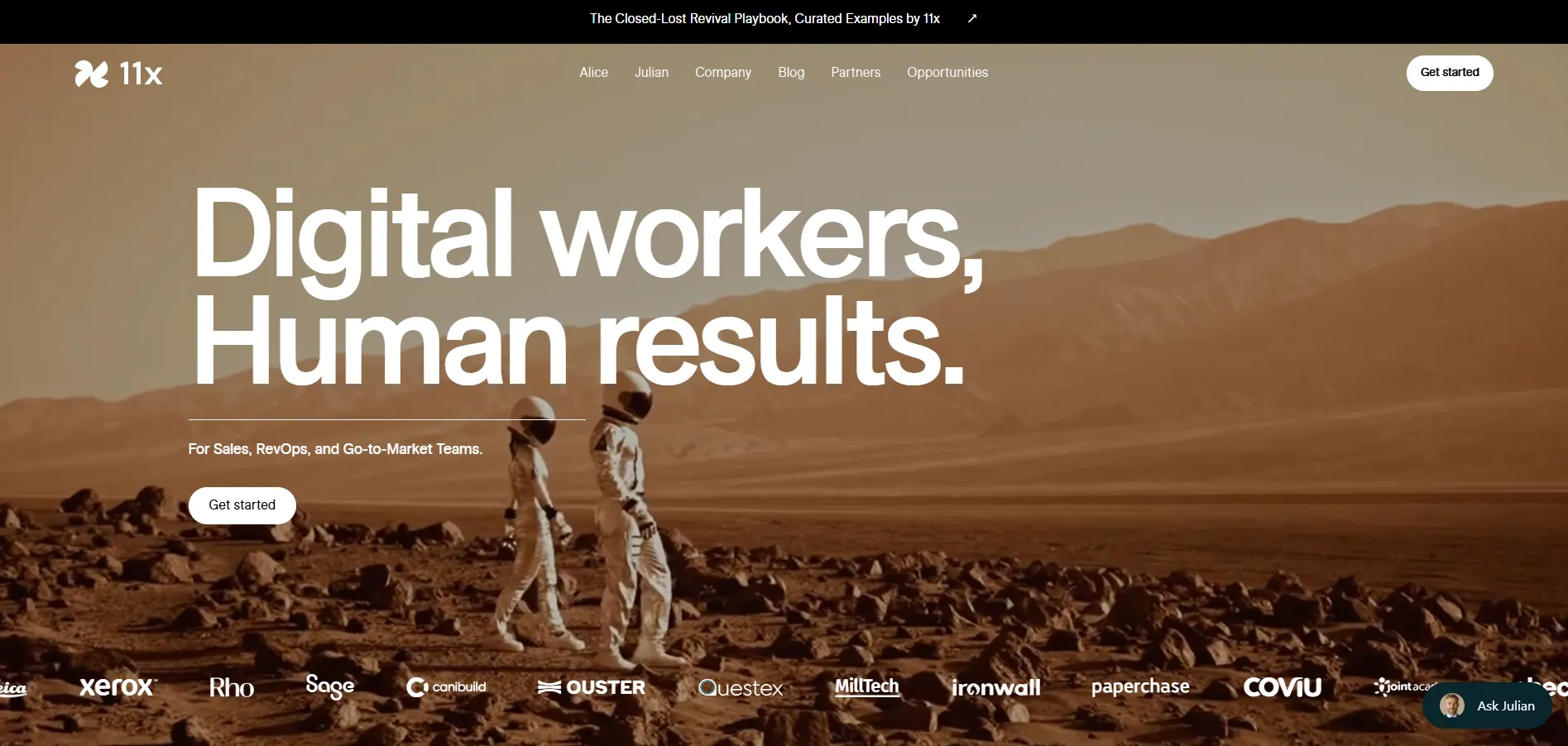
11x takes conversion optimization beyond insights and testing into autonomous execution. While traditional CRO tools identify friction points and run experiments, 11x deploys AI agents that act on conversion opportunities instantly, 24/7, eliminating the gap between identifying what to optimize and actually converting leads into revenue.
Key Features
- Alice autonomously engages prospects across email and LinkedIn with personalized outreach, converting top-of-funnel traffic into qualified meetings
- Julian responds to inbound leads within seconds, qualifying through natural conversations and eliminating speed-to-lead delays
- Instant Response Execution acts on high-intent signals (form fills, page visits, content downloads) within seconds rather than hours
- 24/7 Operation provides continuous engagement across time zones without human bandwidth constraints
- CRM Integration syncs activities with Salesforce, HubSpot, and Pipedrive for complete visibility
- Personalization at Scale creates individualized messaging for thousands of prospects based on real-time research
Pros and Cons of 11x
Best Fit: 11x is ideal for B2B sales and marketing teams where speed-to-lead directly impacts conversion rates. Unlike testing platforms that help you optimize pages, 11x optimizes the entire post-conversion engagement process through autonomous AI execution. Teams using 11x report 50% increases in SQLs per SDR while eliminating manual follow-up work.
Pricing: Custom enterprise plans based on lead volume and integration requirements.
2. VWO
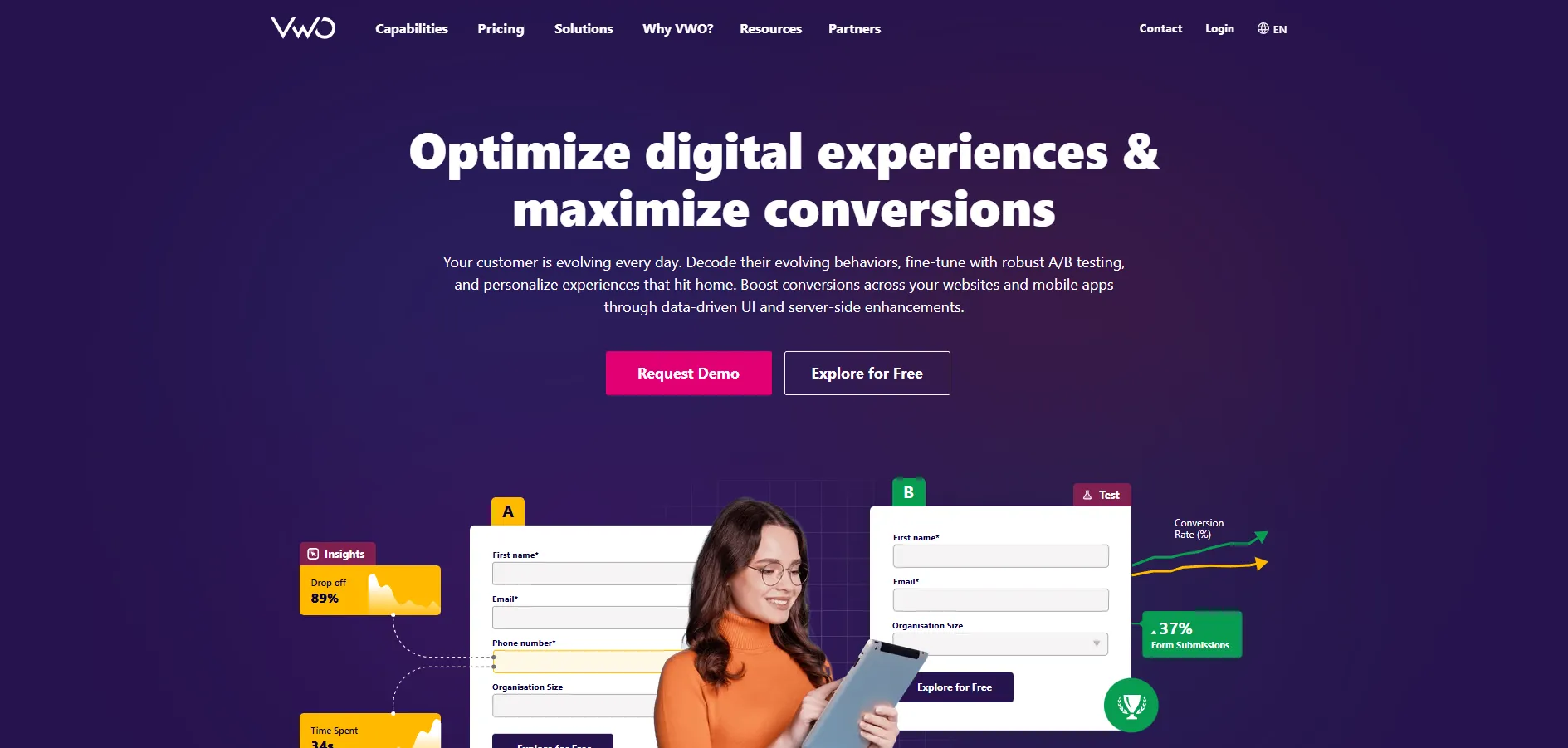
VWO (Visual Website Optimizer) provides comprehensive A/B testing, multivariate testing, and personalization capabilities for mid-market and enterprise teams. The platform enables marketing teams to test headlines, CTAs, layouts, and entire user flows without requiring developer resources for simple changes.
Key Features:
- Visual editor for creating test variations without coding
- Heatmaps, session recordings, and on-page surveys
- Server-side testing for backend changes
- Personalization engine for targeted experiences
- Integration with Google Analytics, Adobe Analytics, and major marketing automation platforms
Pros and Cons of VWO
Best Fit: VWO works well for established marketing teams that need to run systematic A/B testing programs. However, it identifies what to change but doesn't act on conversion opportunities. Teams often pair VWO insights with 11x to automatically engage leads the moment they convert.
Pricing: Plans start at $299/month; custom enterprise pricing for high-traffic sites.
3. Optimizely
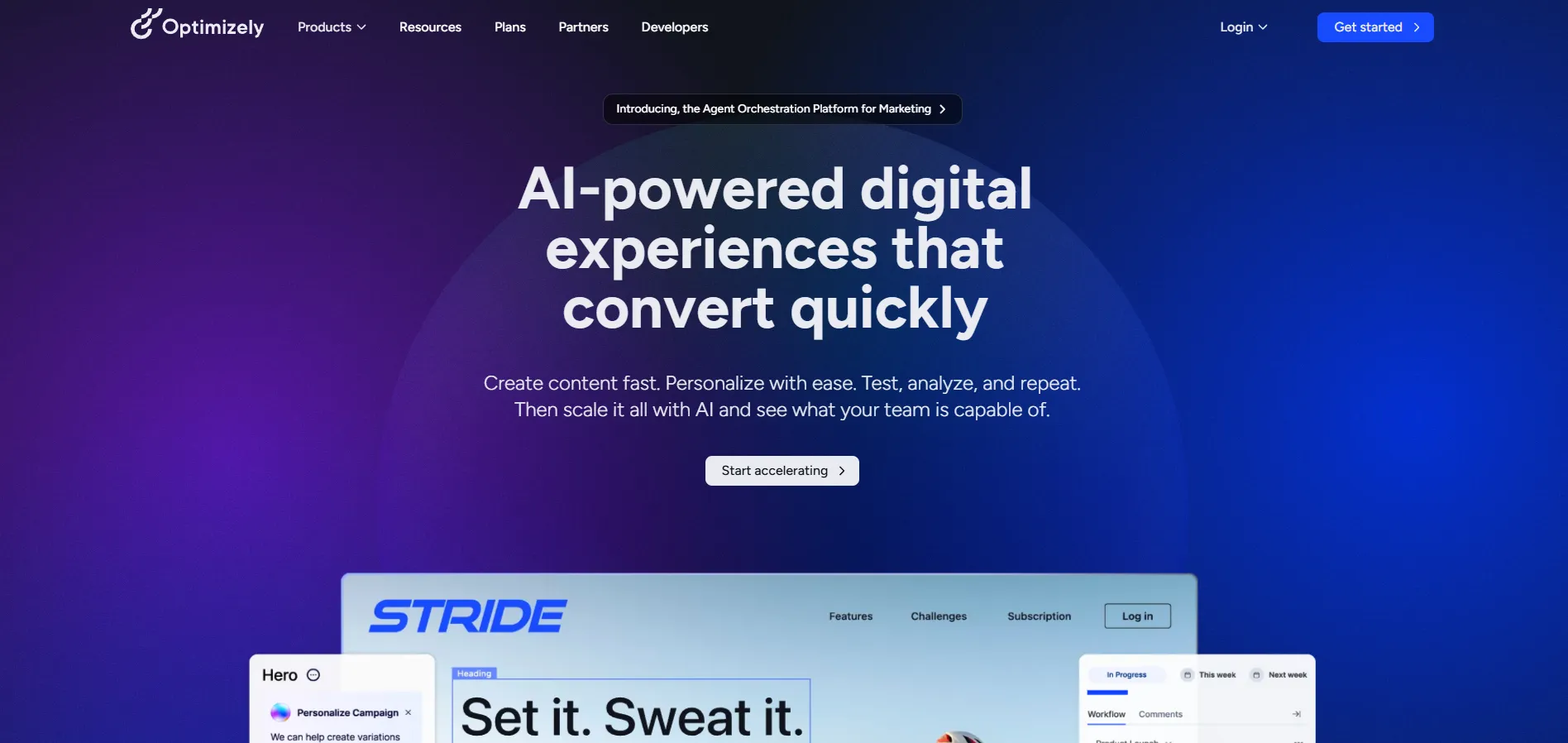
Optimizely serves large enterprises with sophisticated testing needs, combining experimentation, feature flags, and content management. The platform requires technical resources but delivers powerful capabilities for organizations running dozens of concurrent experiments.
Key Features:
- Full-stack experimentation (web, mobile, server-side, API)
- Feature flag management for controlled rollouts
- Statistical engine with advanced modeling
- Collaborative experiment planning and approval workflows
- Enterprise security and governance controls
Pros and Cons of Optimizely
Best Fit: Best for Fortune 500 companies with dedicated experimentation teams and developer resources. While Optimizely excels at page-level testing, it doesn't handle post-conversion lead engagement, where 11x delivers autonomous execution.
Pricing: Custom enterprise contracts, typically starting at $50,000+ annually.
4. Unbounce
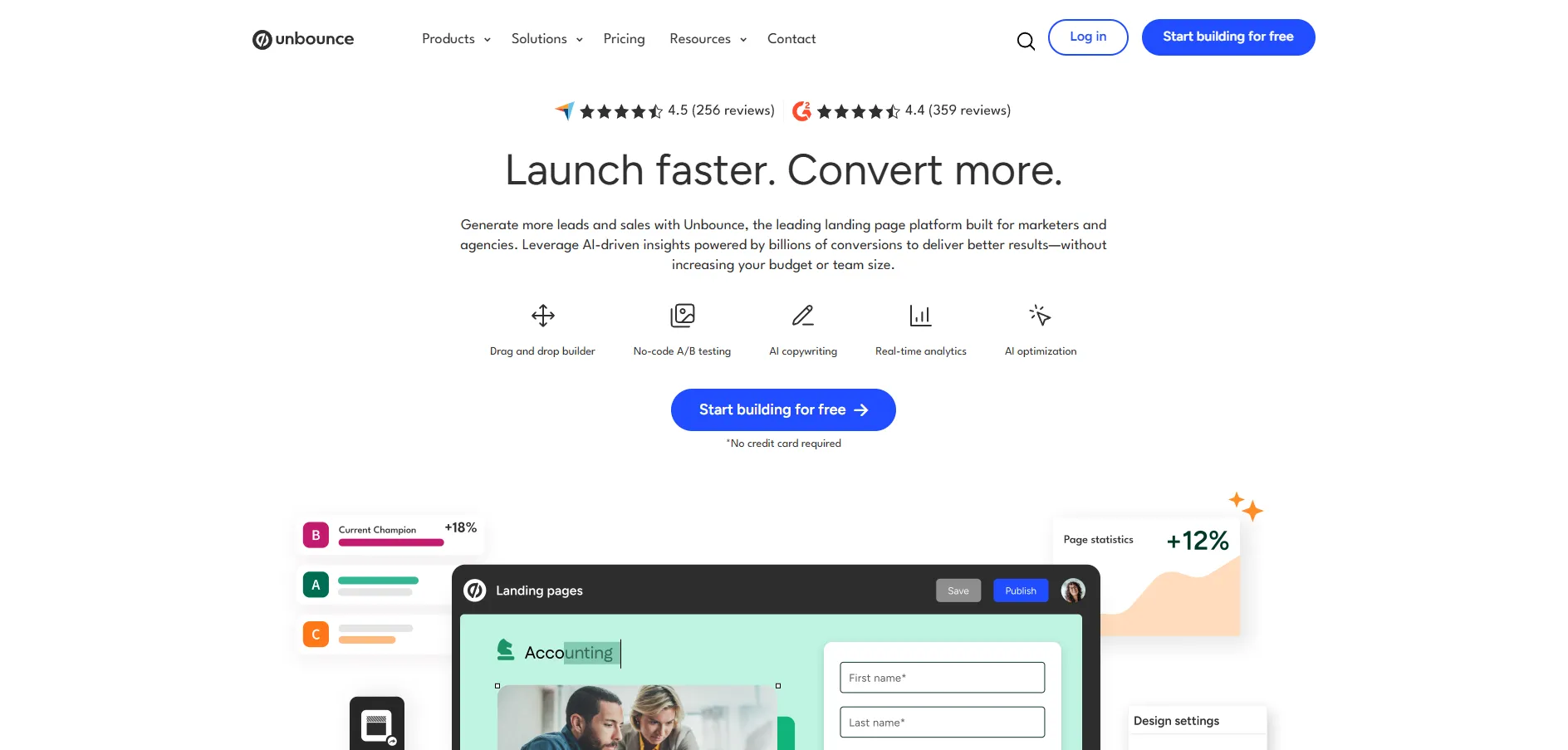
Unbounce specializes in creating and optimizing landing pages without developer help. The drag-and-drop builder, conversion-focused templates, and built-in A/B testing make it popular with small businesses, agencies, and marketing teams running paid campaigns.
Key Features:
- Drag-and-drop landing page builder
- Conversion-optimized templates by industry
- Built-in A/B testing functionality
- Dynamic text replacement for ad personalization
- AI-powered optimization recommendations
- Pop-ups and sticky bars for lead capture
Pros and Cons of Unbounce
Best Fit: Ideal for agencies and small businesses creating dedicated landing pages for campaigns. Unbounce optimizes the page experience, but once leads convert, 11x ensures instant follow-up and qualification through autonomous AI agents.
Pricing: Plans start at $99/month for up to 500 conversions; scales with traffic.
5. Hotjar
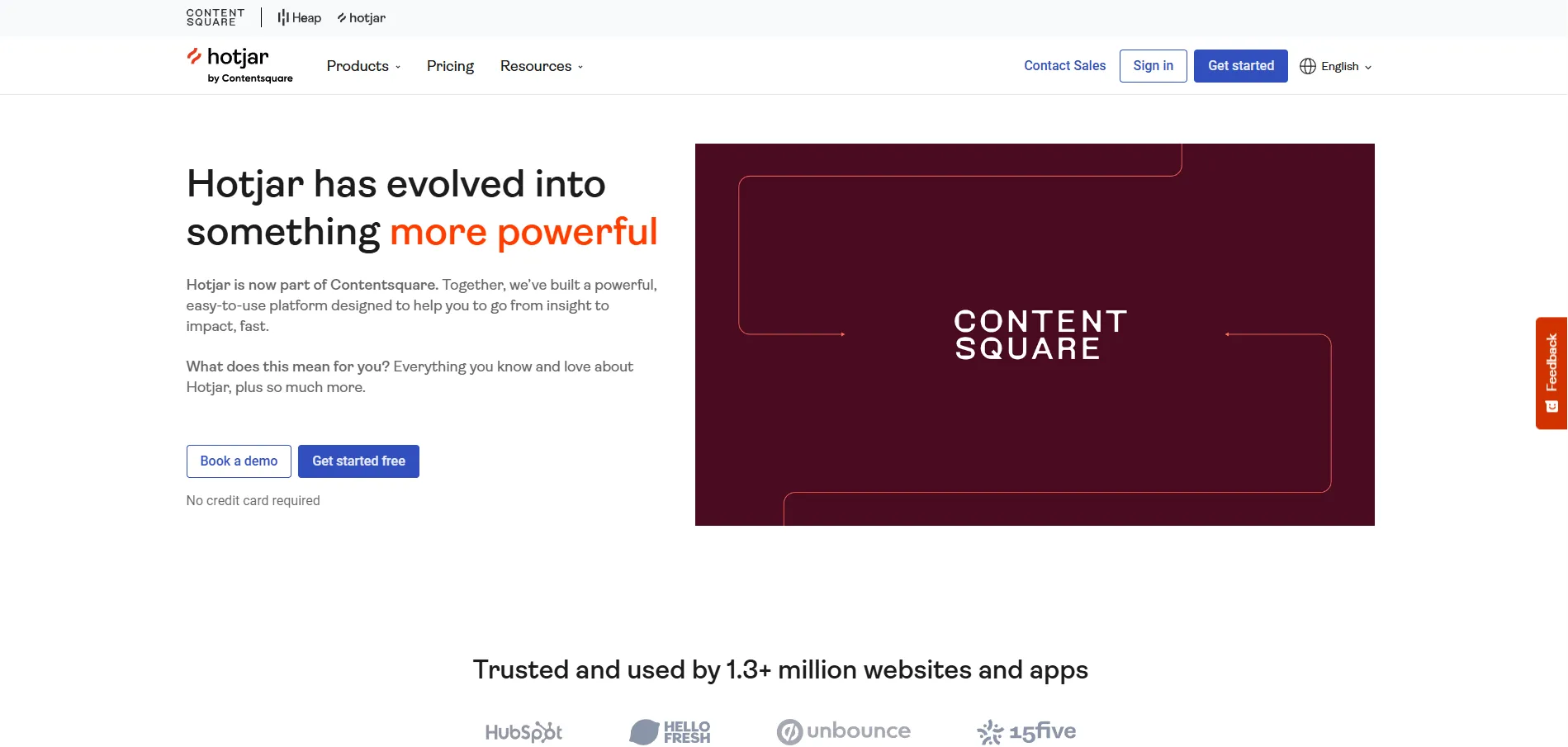
Hotjar helps teams understand how users interact with websites through heatmaps, session recordings, and on-site surveys. The visual feedback helps identify where visitors struggle, enabling data-driven optimization decisions.
Key Features:
- Heatmaps showing click, move, and scroll behavior
- Session recordings to watch individual user journeys
- Conversion funnel visualization
- On-site surveys and feedback widgets
- Form analytics showing field-level abandonment
Pros and Cons of Hotjar
Best Fit: Best for UX researchers and marketing teams diagnosing conversion problems. Hotjar reveals where friction exists, but teams need additional tools to act on insights. 11x complements these insights by automating the engagement that converts diagnosed opportunities into revenue.
Pricing: Free tier available; paid plans from $32/month.
6. Microsoft Clarity
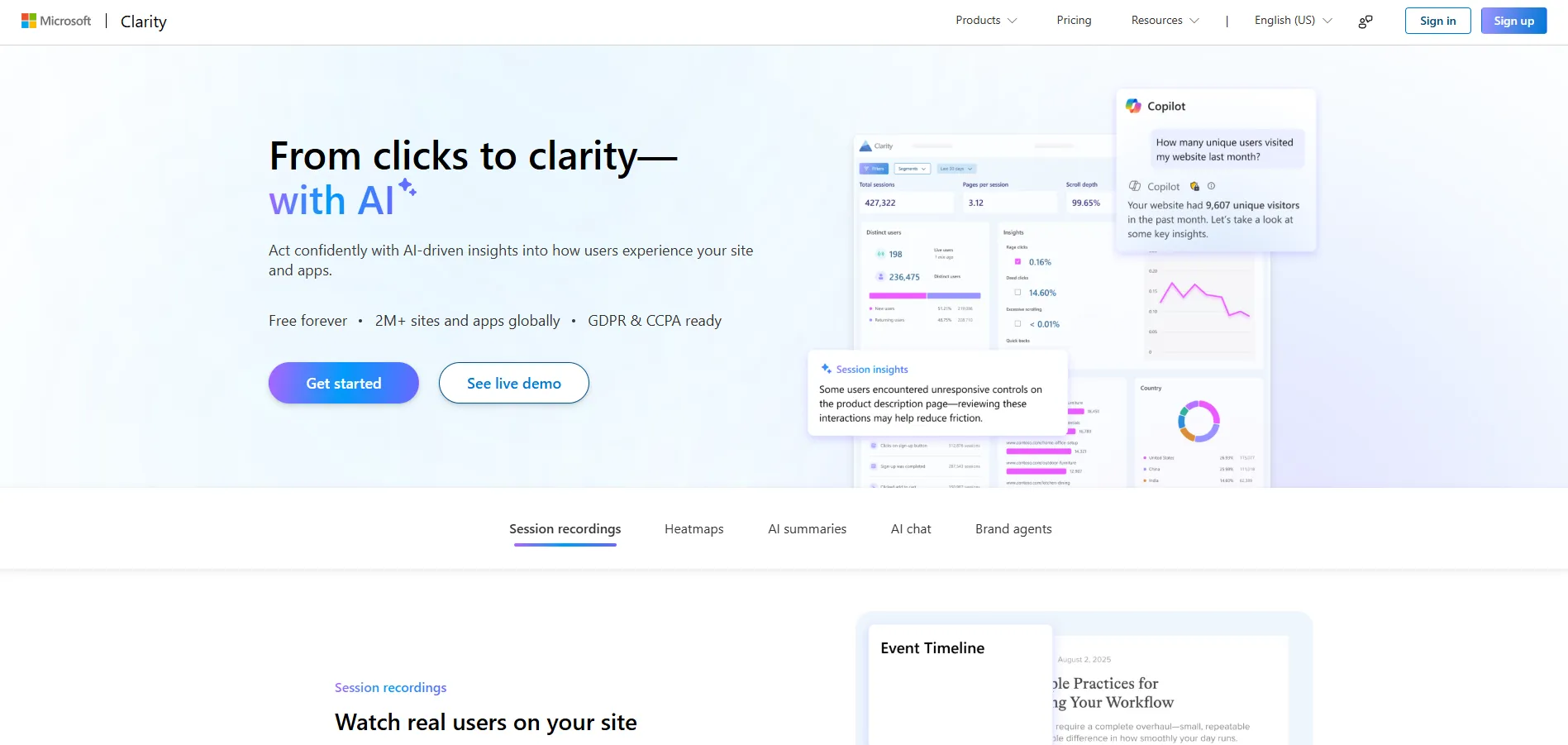
Microsoft Clarity provides session recordings, heatmaps, and basic analytics completely free. For budget-conscious teams or those just starting with behavior analytics, Clarity offers surprising depth without cost.
Key Features:
- Unlimited session recordings and heatmaps
- Rage clicks and dead clicks identification
- Integration with Google Analytics
- No traffic limits or sampling
- Privacy-focused with automatic masking of sensitive data
Pros and Cons of Microsoft Clarity
Best Fit: Perfect for startups and small businesses needing behavior analytics without budget. Use Clarity to diagnose conversion friction, then implement solutions through A/B testing platforms or autonomous execution with 11x.
Pricing: Free.
7. Crazy Egg
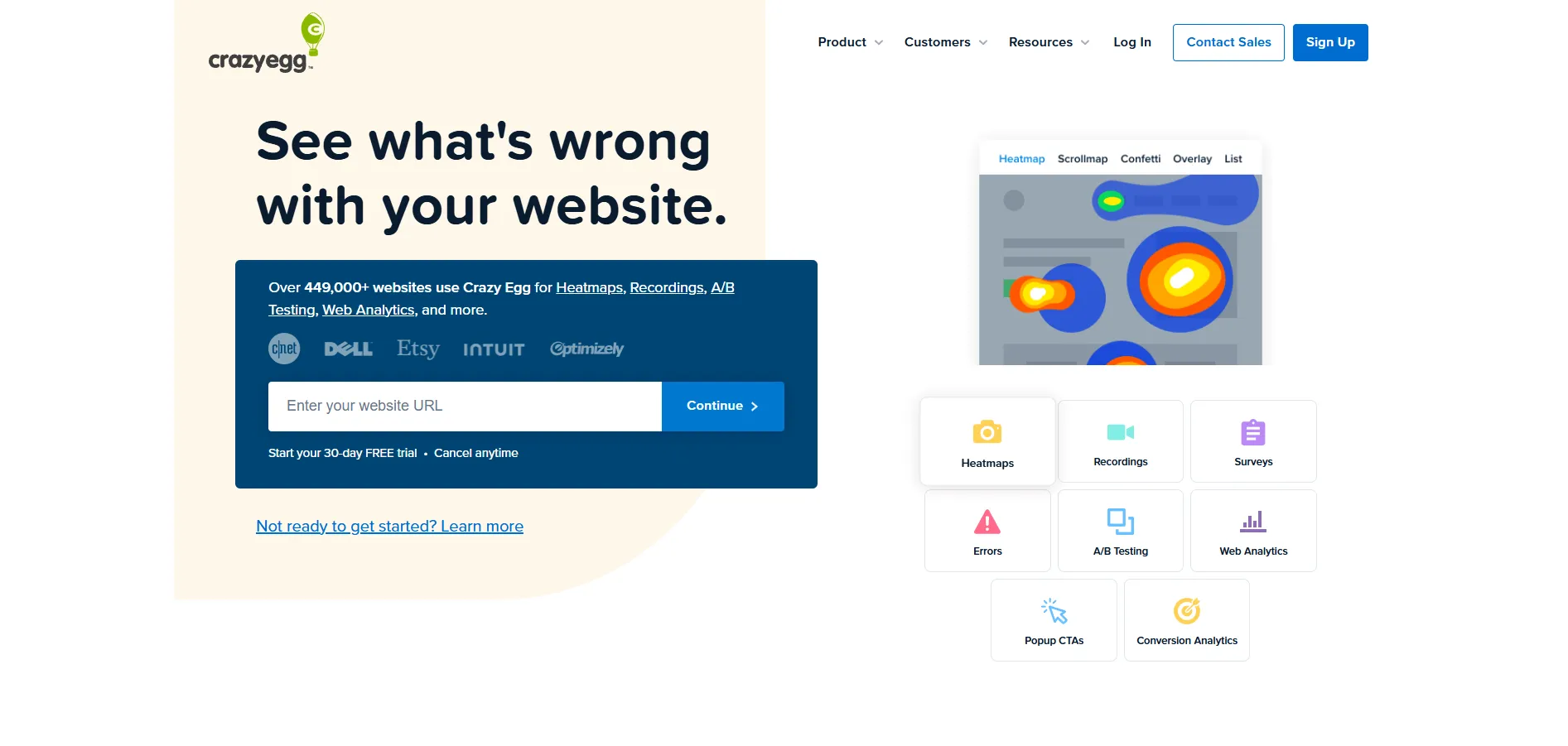
Crazy Egg combines heatmaps, session recordings, and A/B testing in one platform. The visual editor allows marketers to make changes and test variations without coding, making it accessible to small and mid-sized businesses.
Key Features:
- Heatmaps showing engagement patterns
- Scrollmaps revealing how far users read
- Session recordings of individual visits
- A/B testing with visual editor
- Snapshots comparing behavior across devices
Pros and Cons of Crazy Egg
Best Fit: Small to mid-sized marketing teams wanting both analytics and testing without multiple subscriptions. Crazy Egg optimizes page experiences, while 11x handles the critical post-conversion step, instantly engaging and qualifying leads through autonomous AI agents.
Pricing: Plans start at $29/month; scales with traffic and features.
Key Criteria for Evaluating Conversion Strategies
Not every strategy fits every business. When prioritizing your roadmap, focus first on high-traffic pages where improvements compound. A 10% lift on a page with 100,000 visitors delivers far more value than a 50% lift on a page with 1,000 visitors.
Match implementation complexity to your team's capacity and prioritize quick wins that build momentum. Choose strategies where success can be clearly measured, and ensure proper analytics instrumentation before launching experiments. Systematic approaches like A/B testing programs and AI execution platforms continue delivering value long after initial implementation.
Stop Losing Revenue to Slow Follow-Up, Start Converting on Autopilot
Conversion rate optimization requires both strategy and flawless execution across every stage of your funnel. The nine strategies above work, but only when leads receive instant, personalized engagement the moment they show interest.
11x automates the execution gap that kills most conversion improvements. Alice handles outbound engagement across email and LinkedIn, while Julian qualifies every inbound lead through real-time phone conversations within seconds. Together, they eliminate the delays and inconsistency that cause qualified prospects to vanish from your pipeline.
Ready to convert more of your existing traffic without adding headcount? Book a demo with 11x and watch autonomous AI agents turn your conversion strategy into predictable revenue growth.
Frequently Asked Questions
The most effective ways include optimizing landing pages for clarity, building systematic A/B testing programs, eliminating page speed friction, deploying social proof strategically, and streamlining checkout processes. For B2B teams, instant lead response delivers the highest impact. 11x automates these improvements through autonomous AI agents that respond to leads within seconds and eliminate manual follow-up delays, with customers reporting 80% increases in meeting-to-qualified opportunity conversion.
Improved conversion rates mean more visitors take desired actions like completing purchases or requesting demos. Higher rates translate to lower customer acquisition costs and more revenue from existing traffic. A conversion rate increase from 2% to 3% represents 50% more conversions without additional ad spend. 11x amplifies these gains by ensuring every lead receives instant engagement through Alice and Julian, turning higher conversion rates into predictable revenue growth.
Whether 2% is good depends on your industry. The global average sits around 2% to 3%. For B2B SaaS with complex products, 2% may be acceptable. For ecommerce, 2% falls below the 2.3% industry average. Top performers achieve 5% and above by eliminating friction and responding instantly. 11x helps teams break through average rates by deploying AI agents that engage every prospect within seconds, turning 2% conversion rates into 5%+ performance.
The 3-3-3 rule suggests sales reps make initial contact within 3 minutes, make 3 contact attempts across channels, and qualify within 3 days. This framework emphasizes speed-to-lead and persistence. 11x executes this automatically: Julian calls inbound leads within seconds, Alice runs multichannel sequences, and both qualify leads continuously without human bandwidth constraints.
Start by auditing your funnel to identify the biggest drop-off points using analytics and heatmaps. Prioritize the stage with the largest performance gap. Implement one high-impact change at a time and measure results. For most organizations, speed-to-lead and landing page clarity offer the fastest wins. 11x eliminates the execution gap by deploying autonomous AI agents that respond to every lead within seconds and run personalized multichannel sequences automatically, transforming conversion optimization into an always-on revenue engine.