The Complete Guide to Building a High-Quality Lead List (with Tool Comparisons)
Discover how to build accurate, compliant lead lists using modern tools, automation, and AI to improve B2B conversion rates.

Most GTM teams are under relentless pressure to fill their pipelines — but the real bottleneck isn’t outreach, it’s the data behind it. When contact lists are outdated or incomplete, even the strongest sales motion stalls.
A lead list is a curated database of potential customers, enriched with accurate contact information, company details, and buying signals that fuel outreach at scale. According to HubSpot’s State of Sales Report (Domain Authority: 92), 27% of sales professionals say poor data quality directly limits their ability to close deals, and 33% cite lack of automation as their top barrier to productivity. The difference between a generic list and a high-quality, verified one can determine whether your next campaign drives engagement or stalls at delivery.
This guide compares today’s leading lead list tools across data quality, automation depth, pricing, and integrations. It also shows how 11x unifies every stage of lead generation, enrichment, and outbound execution through AI-driven automation that ensures compliance and measurable ROI.
What are lead lists, and why do they matter?
Lead lists are curated databases of potential customers containing contact information, job titles, company name, phone numbers, email addresses, social profiles (LinkedIn), and company firmographic or technographic attributes. These databases serve as the foundation for lead generation, cold outreach, email campaigns, and sales pipeline optimization.
Quality benchmarks include real-time verification, segmentation by company size, industry, and demographic data aligned with your ideal customer profile (ICP). The most effective lead lists enable precise B2B lead targeting, email marketing automation, and CRM enrichment for streamlined sales workflows.
Without accurate lead data, even sophisticated automation tools fail. Poor contact info leads to bounced emails, wasted outreach efforts, and compliance violations. High-quality lead lists, conversely, improve conversion rates, reduce manual work, and accelerate time-to-revenue for sales teams across small businesses to enterprise organizations.
Evaluation Criteria
Our methodology prioritizes neutral, criteria-driven analysis: 90% objective feature comparisons, 10% strategic insights from GTM experience. Tools are evaluated on enterprise readiness, integration depth, AI sophistication, coverage across the sales lifecycle, CRM quality, governance, and measurable ROI.
Specific evaluation pillars:
- Data Coverage and Validation: Sources, verification tools, GDPR compliance
- Automation and Workflow Integration: CRM sync, API, webhook support
- Lead Enrichment: Firmographic, technographic, intent data
- Segmentation & Targeting: Industry, company size, decision-makers, ICP fit
- Pricing & Scalability: SMB affordability vs. enterprise performance
This framework ensures transparency and helps GTM teams select tools that align with their specific sales process, target audience, and compliance requirements.
Comparison of Data Types, Accuracy, Integrations, Automation Capabilities, and Pricing
Individual Tool Descriptions
11x
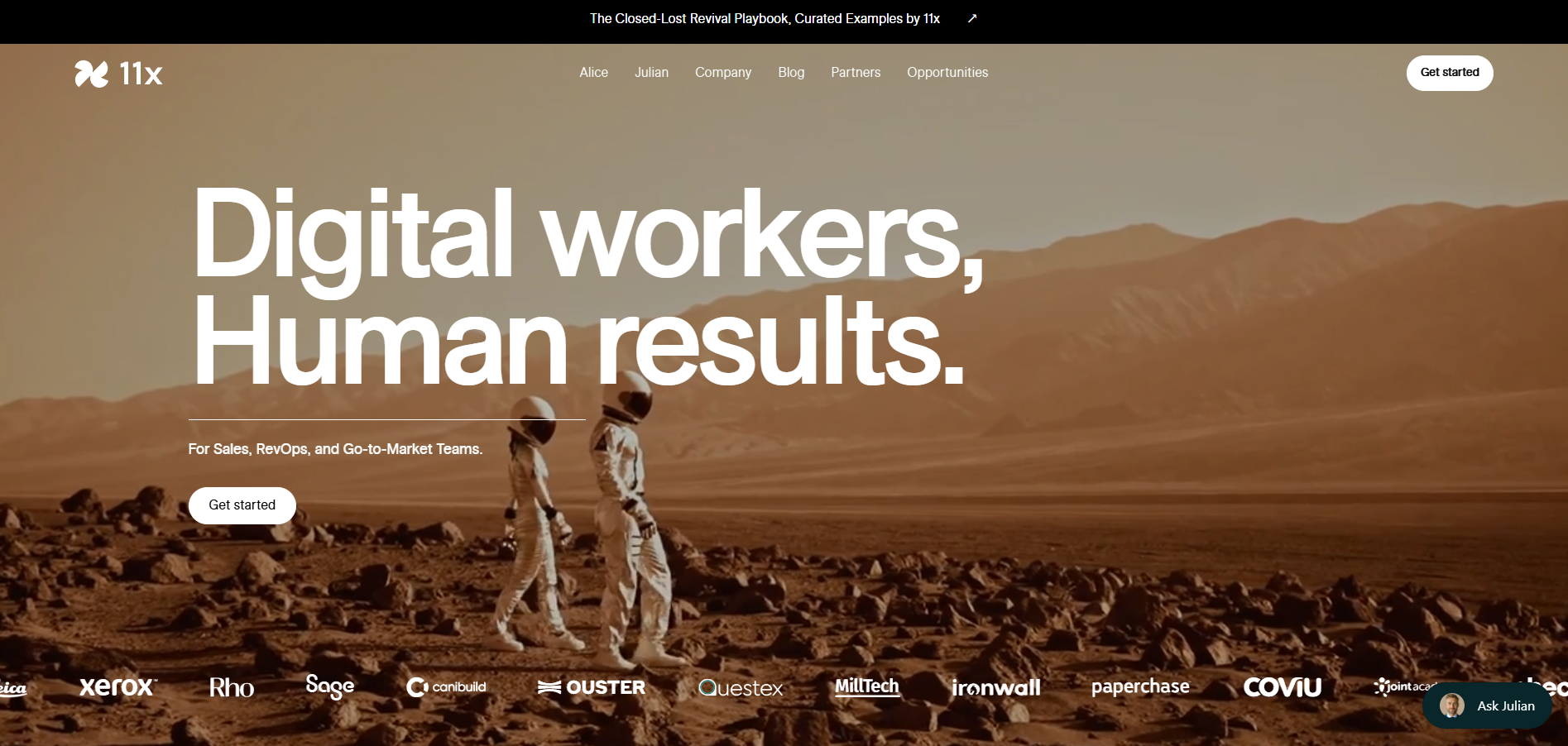
11x provides two autonomous AI sales agents: Alice for outbound prospecting and Julian for inbound phone qualification. Together, they function as digital workers that manage research, outreach, lead engagement, and qualification without human intervention. Their continuous operation gives teams a programmable SDR function that runs 24/7 and feeds accurate activity data into existing CRM systems.
Data & Features:
- Alice (AI SDR): Conducts outbound prospecting across email and LinkedIn to secure qualified meetings
- Julian (AI Phone Agent): Calls inbound leads within seconds and qualifies them through natural two-way conversations
- Autonomous Operation: Completes research, outreach, follow-ups, and lead qualification independently
- CRM Integration: Syncs with major CRMs to maintain clean activity logs and forecasting signals
- Global Language Support: Engages prospects across multiple languages for international campaigns
- Real-time lead scoring and intent detection for prioritized outreach
Pros and Cons of 11x
11x Best Fit:
11x is ideal for GTM teams, replacing SDR and contact-center tasks with continuous AI execution. Unlike assistive tools that require manual oversight, 11x autonomously identifies, engages, and qualifies leads across outbound and inbound workflows. Teams seeking to eliminate manual prospecting bottlenecks while maintaining personalization at scale benefit most from this approach.
11x Pricing:
Custom enterprise plan with usage-based tiers tied to lead volume and integration scope.
ZoomInfo
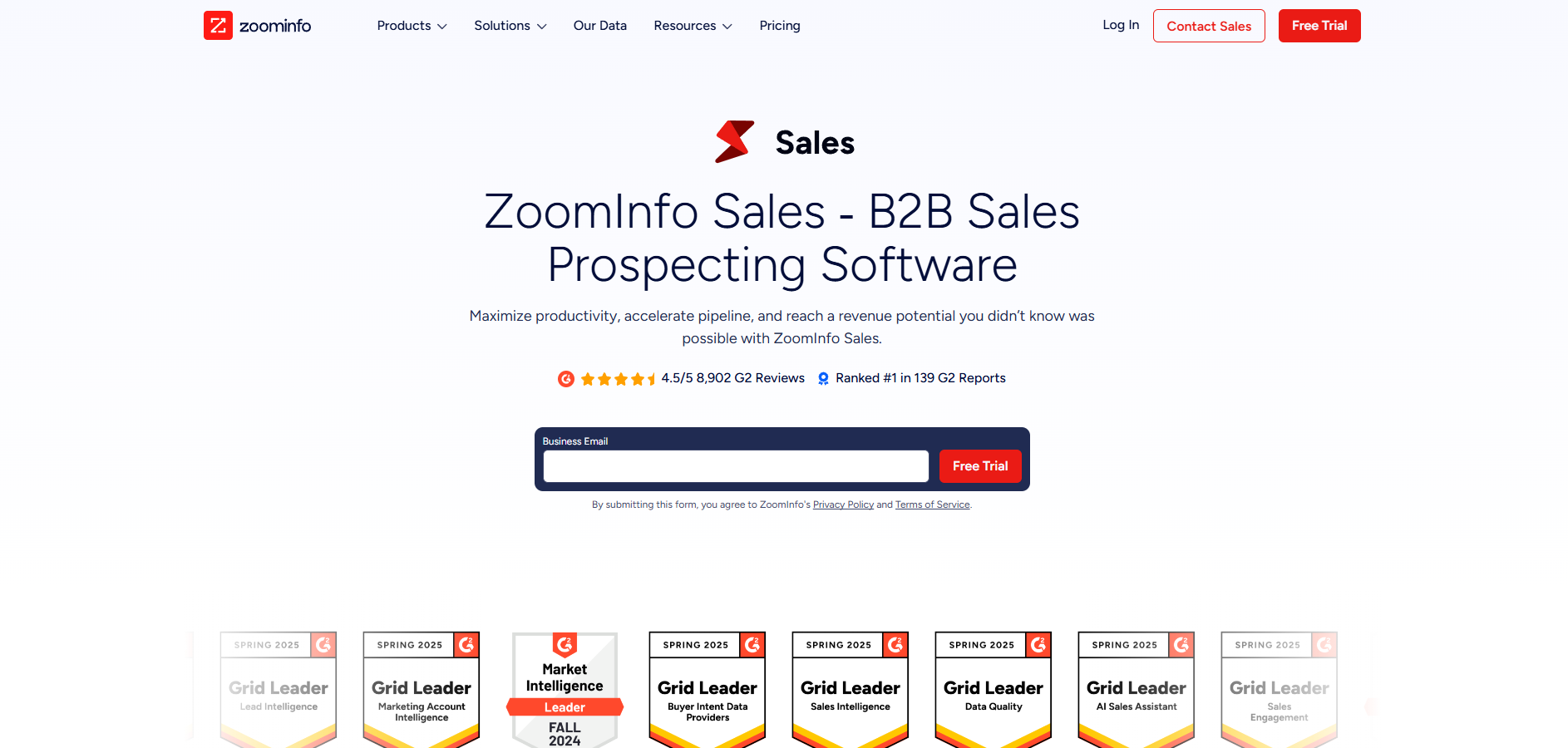
ZoomInfo operates as the market-leading sales leads database, providing comprehensive company firmographics, job titles, and direct phone numbers. The platform serves enterprise teams requiring deep B2B lead coverage with advanced segmentation capabilities and intent signals for targeted outreach campaigns.
Data & Features:
- Massive B2B contact database with verified email addresses and phone numbers across industries
- Intent data and technographic insights for lead scoring and timing optimization
- Advanced segmentation by company size, industry, job titles, and decision-maker roles
- Native integrations with HubSpot, Salesforce, and major marketing automation platforms
- Real-time data updates and GDPR-compliant verification tools for compliance
- Comprehensive firmographic data including revenue, employee count, and technology stack
Pros and Cons of Zoominfo
Zoominfo Best Fit:
Enterprise sales teams prioritizing data volume and accuracy over workflow automation. Organizations with dedicated sales operations resources to manage manual processes and complex integrations benefit most. ZoomInfo excels when data breadth matters more than autonomous execution.
ZoomInfo Pricing:
Starts around $15,000+ annually depending on seats and modules (as of December 2024).
Apollo.io
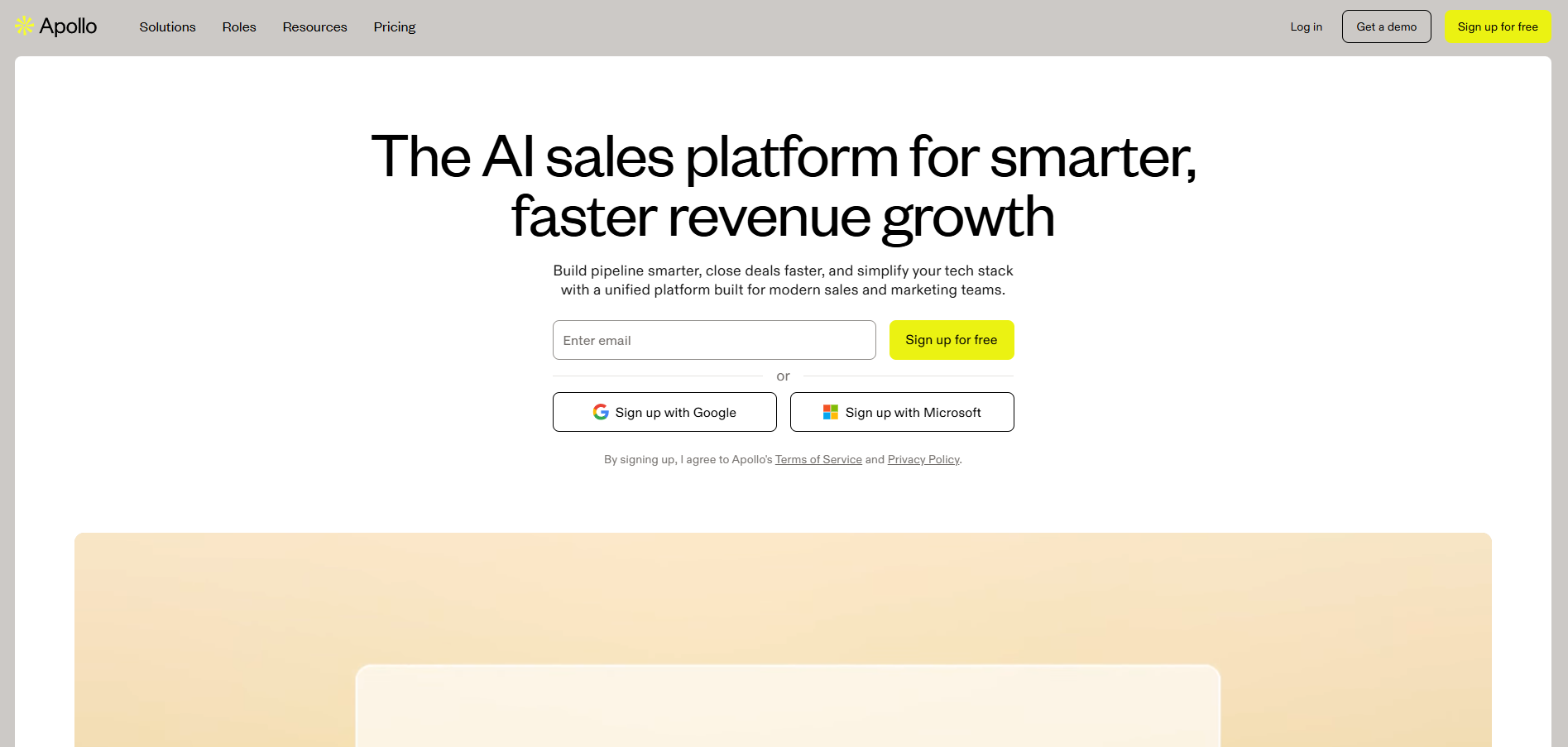
Apollo combines lead list generation with email outreach and sequencing tools in an all-in-one sales engagement platform. The system provides access to contact info, email verification, CRM sync, and workflow automation at pricing accessible to small businesses and mid-market teams seeking integrated prospecting solutions.
Data & Features:
- Integrated lead database with email verification and phone number lookup across B2B contacts
- Built-in email campaigns and cold outreach sequencing with template libraries
- CRM synchronization with real-time data updates and activity tracking
- Lead scoring based on engagement signals and demographic data alignment
- Chrome extension for LinkedIn prospecting and social media outreach automation
- Basic intent data and technographic information for enhanced targeting
Pros and Cons of Apollo.io
Apollo.ai Best Fit:
Mid-market teams seeking integrated prospecting and email marketing without multiple tool costs. Apollo works well for straightforward B2B lead generation but lacks the autonomous execution capabilities found in platforms like 11x. Teams comfortable with semi-manual workflows benefit most.
Apollo Pricing:
Free tier available, paid plans from $49/user/month (as of December 2024).
Hunter.io
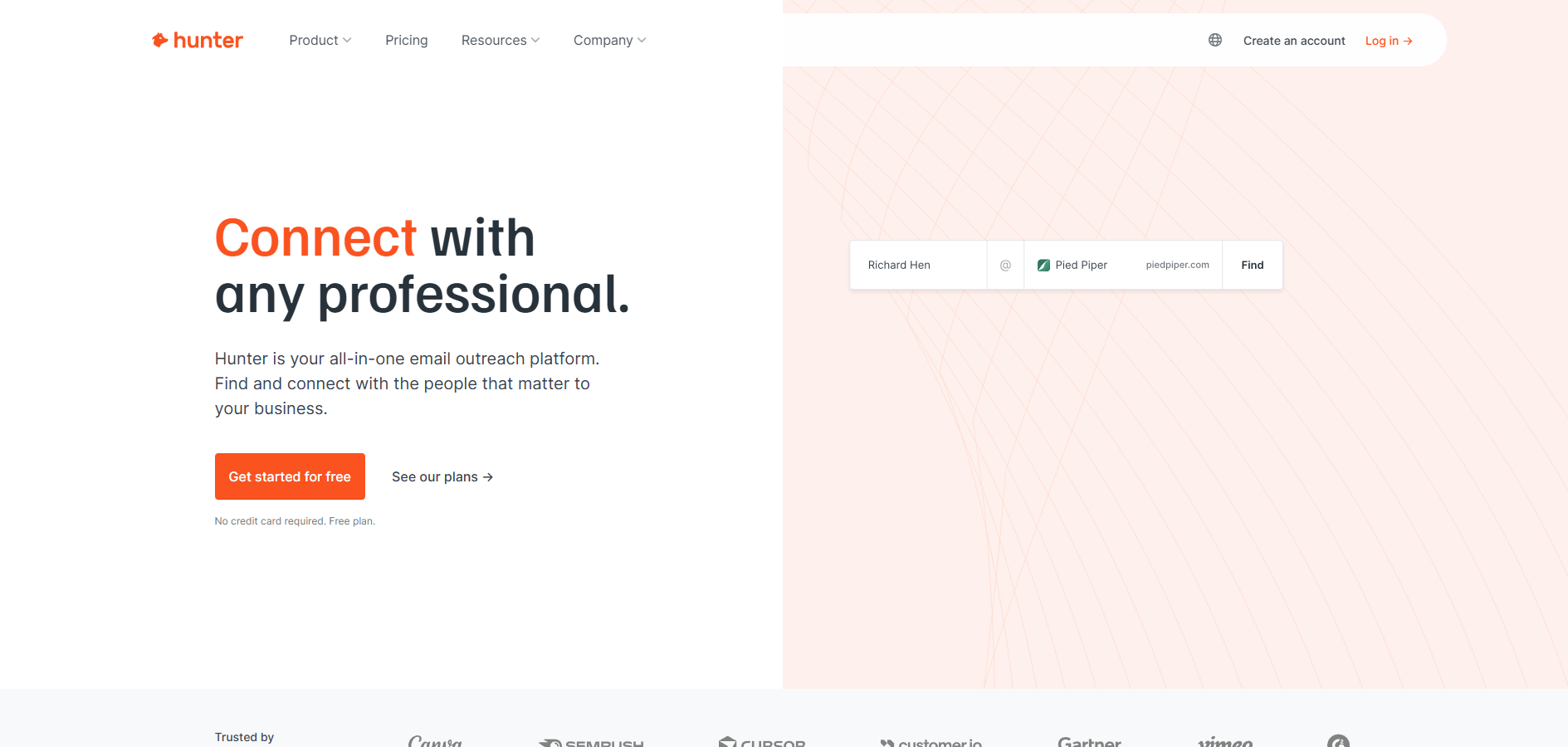
Hunter specializes in locating and verifying professional email addresses for cold outreach campaigns. The platform focuses on email finding and verification rather than comprehensive lead enrichment, making it ideal for teams prioritizing contact accuracy over broader demographic data collection and analysis.
Data & Features:
- Domain-based email discovery and verification with deliverability scoring
- Email pattern recognition and validation across company domains
- Chrome extension for real-time email finding during web browsing
- Basic API for CRM integration and workflow automation capabilities
- GDPR-compliant data collection and processing with opt-out mechanisms
- Bulk email verification for existing lead lists and database cleanup
Pros and Cons of Hunter.io
Hunter.io Best Fit:
Freelancers, consultants, or marketing campaigns needing verified email addresses quickly without complex segmentation requirements. Teams focused on email-first outreach that handle enrichment through other tools benefit most from Hunter's specialized approach.
Hunter.io Pricing:
Plans range from $49 to $399 monthly, depending on email verification volume (as of December 2024).
Clay
Clay automates data enrichment and personalization through workflow APIs and integrated lead scoring. The platform pulls data from multiple sources, including LinkedIn, Clearbit, and Crunchbase to create comprehensive prospect profiles with demographic and firmographic attributes for targeted campaigns.
Data & Features:
- No-code automation workflows for lead enrichment and data aggregation
- Multi-source data aggregation from 50+ providers, including social media and business databases
- Custom lead scoring models and segmentation rules based on multiple criteria
- Real-time verification and data validation with accuracy monitoring
- Advanced personalization capabilities for email campaigns and cold outreach sequences
- Webhook and API integrations for custom workflow automation
Pros and Cons of Clay
Clay Best Fit:
Operations teams with technical resources who need flexible data enrichment workflows. Clay complements existing CRMs effectively but lacks the autonomous execution found in platforms like 11x. Teams comfortable with workflow building benefit most.
Clay Pricing:
Starts at $149/month per workspace with usage-based scaling (as of December 2024).
Surfe
Surfe operates as a Chrome extension that syncs LinkedIn profiles directly into CRM systems with contact info capture. The tool specializes in LinkedIn-based prospecting and real-time enrichment for social media outreach campaigns, focusing on seamless data transfer between platforms.
Data & Features:
- One-click LinkedIn profile export to CRM with complete contact information
- Real-time contact information enrichment during LinkedIn browsing
- Two-way data synchronization with HubSpot and Salesforce systems
- Bulk profile processing and list building for campaign preparation
- Integration with email verification tools for data accuracy
- Social media engagement tracking and activity logging
Pros and Cons of Surfe
Surfe Best Fit:
Sales representatives focused on social media outreach who need efficient LinkedIn-to-CRM workflows. Works well as a tactical tool but benefits from autonomous follow-up capabilities like those provided by 11x for complete campaign execution.
Surfe Pricing:
From $30/month per user (as of December 2024).
How to Build a High-Quality Lead List
Building effective lead lists requires a systematic approach combining the right tools with proven processes. Follow these steps to create lists that drive consistent pipeline generation:
- Define Your ICP and Segmentation: Start with clear firmographic and demographic criteria, including company size, industry, job titles, and pain points. Document specific parameters: annual revenue ranges, employee counts, technology stack, and geographic focus. Use this foundation to guide all subsequent lead generation activities.
- Gather Leads Using Multiple Tools: Combine enrichment platforms like ZoomInfo or Clay with targeted prospecting through LinkedIn and industry databases. Focus on quality over quantity by applying strict ICP filters during initial data collection.
- Validate and Verify: Employ email verification tools and maintain GDPR-compliant data practices. Remove invalid contacts to preserve sender reputation and campaign effectiveness. Implement regular data hygiene processes to maintain list quality over time.
- Score and Prioritize: Apply lead scoring models based on engagement signals, demographic fit, and buying intent. Prioritize prospects most likely to convert using both explicit criteria (job title, company size) and implicit signals (website visits, content downloads).
- Automate Outreach: Execute email marketing and cold outreach campaigns using workflow automation. Maintain consistent follow-up sequences across multiple channels while personalizing messaging based on prospect attributes.
- Follow-Up and Convert: Sustain active CRM workflows with personalized follow-up sequences. Track engagement metrics to optimize messaging timing and channel selection for maximum response rates.
- Optimize Continuously: Regularly analyze conversion rates, response rates, and pipeline metrics to optimize performance. Refine targeting criteria and messaging based on performance data to improve campaign effectiveness over time.
AI automation platforms like 11x now combine these steps into autonomous workflows executed in real-time across LinkedIn, CRM, and email systems, removing manual friction while maintaining quality and compliance standards.
How to Choose the Right Lead List Tool for Your Team
Selecting the right platform depends on your team's specific needs, budget, and technical capabilities. Start by assessing your current workflow. Are you managing lead lists manually across spreadsheets? Do you need seamless CRM integration, or are you building from scratch? Consider these factors:
- Define your priority: If data volume and accuracy are paramount, platforms like ZoomInfo excel. If you need end-to-end automation from research through qualification and follow-up, 11x eliminates manual friction entirely by autonomously handling prospecting, outreach, and lead qualification 24/7.
- Evaluate integration depth: Some teams thrive with point solutions (Hunter for email verification, Clay for enrichment). Others prefer consolidated platforms that reduce tool sprawl. 11x integrates natively with major CRMs, automatically syncing all activity and lead scoring.
- Consider your operations capacity: Manual workflows require dedicated resources. If your team lacks bandwidth for playbook tuning and sequence management, autonomous execution becomes essential. 11x removes the need for constant workflow maintenance by continuously improving performance without human intervention.
- Budget realistically: Startups and SMBs often benefit from affordable, focused tools. Enterprise teams typically require comprehensive feature sets, compliance certifications, and dedicated support. 11x operates on usage-based pricing tied to outcomes, not seats, making it scalable for teams of any size.
The goal is choosing a tool that fits your current maturity level while enabling growth without exponential cost increases as your team scales.
Transform Every Lead into Opportunity with 11x
Building accurate lead lists is foundational to modern B2B GTM, but execution separates winners from the rest. The platform you choose determines whether lead lists become a pipeline or remain dormant data.
11x transforms how teams activate those lists. Rather than managing manual sequences and hoping for responses, Alice and Julian autonomously research prospects, personalize outreach across channels, qualify inbound leads, and book meetings, removing the friction between list and revenue. Unlike traditional lead list platforms that require constant human orchestration, 11x delivers full-cycle execution. Your lists feed directly into autonomous prospecting and qualification workflows that operate 24/7, continuously improving and adapting to buying signals in real-time.
Ready to move beyond lead lists to lead conversion? Explore how 11x eliminates manual prospecting bottlenecks and turns your database into a revenue engine. Book a demo to see autonomous GTM in action.
Frequently Asked Questions
A lead list typically includes contact info (name, email, phone), company name, job title, LinkedIn URL, company size, and industry segment. Advanced lists incorporate technographics, engagement history, and intent data for hyper-targeted campaigns.
With platforms like 11x, lead lists become dynamic databases that update automatically. The AI agents enrich contact information in real-time, track engagement patterns, and score prospects based on buying signals, creating living documents that improve campaign performance continuously.
Buying lead lists is legal when vendors comply with GDPR and data privacy laws. The key is ensuring proper consent, data accuracy, and transparent opt-out mechanisms for all contacts.
11x adheres to strict validation workflows and uses real-time verification to ensure data compliance and accuracy. The autonomous agents respect privacy regulations while maintaining aggressive prospecting, balancing legal requirements with sales effectiveness through built-in compliance monitoring.
Generative AI can assist with discovery and outreach writing, but lacks the systematic data collection and verification needed for quality lead generation at scale.
11x's AI agents go further by autonomously identifying, qualifying, and following up with prospects via email and phone outreach. Alice and Julian function as complete sales development representatives, handling research, initial contact, and qualification conversations without human oversight or intervention.
This rule helps prioritize leads by time: address 3 hot, 3 warm, and 3 cold prospects daily to maintain consistent sales pipeline momentum and avoid neglecting any segment of your funnel.
11x automates this prioritization through AI-driven lead scoring that evaluates engagement, demographic fit, and buying signals. The autonomous agents maintain consistent outreach across all priority levels, ensuring no opportunities fall through manual scheduling gaps or human oversight limitations.
Achieving 100 daily leads requires combining automation, enrichment tools, and consistent outreach sequencing. Manual processes cannot sustain this volume while maintaining quality and personalization standards.
With 11x, AI agents run 24/7 to compile and engage targeted leads at scale, maintaining daily pipeline generation without manual effort. Alice handles outbound prospecting while Julian qualifies inbound responses, creating a continuous lead generation system that operates beyond human working hours.