Lead Routing Tools: Top 8 Platforms for 2026
Compare the top lead routing tools for 2026. See features, pricing, and CRM integrations. Book a demo with 11x.

Speed kills deals when it works against you. According to a Harvard Business Review study, companies that contact leads within an hour are seven times more likely to qualify them than those that wait even 60 minutes longer. Wait 24 hours? Your odds drop by 60x. Yet a Drift analysis of 433 companies found that only 7% respond within five minutes while 55% take five days or more.
This gap between intent and action is where pipeline dies. Lead routing tools close it by getting the right lead to the right rep at the right moment, automatically. For GTM teams running inbound and outbound motions at scale, the difference between a well-routed lead and a misrouted one can mean thousands in lost revenue. Research from XANT shows that companies achieving optimal response times see dramatically higher lead qualification rates compared to those with delayed follow-up.
This guide compares the top lead routing software for 2026, breaking down routing logic, CRM integrations, automation depth, and pricing so you can choose the platform that matches your sales process.
What Is Lead Routing?
Lead routing is the automated process of assigning incoming leads to the appropriate sales reps based on predefined rules and criteria. Instead of manually distributing leads from a queue, lead routing software evaluates each new lead against factors like territory, account ownership, lead score, product interest, firmographic data, or rep availability, then assigns it instantly.
For B2B sales teams, lead routing sits at the intersection of speed-to-lead and sales efficiency. When a prospect fills out a demo form, downloads content, or shows buying intent, the routing system determines which rep should receive that lead and triggers the assignment in real time. Organizations using automated lead routing report significantly higher lead-to-opportunity conversion rates compared to manual distribution methods. This process supports round-robin distribution, territory-based assignment, lead-to-account matching, and complex routing rules that scale with your GTM motion. Platforms like 11x take routing further by combining lead distribution with autonomous engagement and qualification.
Why Look for Lead Routing Tools?
Sales teams outgrow basic CRM assignment rules quickly. Native Salesforce or HubSpot routing handles simple round-robin distribution, but cracks appear when territories overlap, accounts span multiple products, or inbound volume spikes. Research from LeanData confirms that 78% of customers buy from the company that responds first, making routing speed a competitive differentiator. Furthermore, according to RevenueHero, teams implementing automated routing see measurable improvements in both response times and conversion rates within the first 30 days.
Common reasons teams evaluate lead routing solutions include speed-to-lead requirements that demand sub-minute response times, complex territory structures that need weighted distribution and load balancing, lead-to-account matching for ABM motions, integration depth with existing CRM and sales engagement tools, and scalability concerns as lead volume grows. Some teams need multichannel routing across lead capture from form fills, phone calls, and chat. Others prioritize SLA tracking, workload management, and reporting to hold sales reps accountable for follow-up. According to InsideSales research, companies that respond within one minute are seven times more likely to have meaningful conversations with decision-makers. Additionally, research from Chili Piper demonstrates that instant lead routing combined with scheduling can eliminate the response gap entirely.
Our Evaluation Methodology
Our methodology prioritizes neutral, criteria-driven analysis: 90% objective feature comparisons, 10% strategic insights from GTM experience. Each evaluation considers enterprise readiness, integration depth, and measurable ROI potential. Selection criteria include coverage across the complete sales lifecycle, AI sophistication, routing logic flexibility, CRM integration quality, speed-to-lead capabilities, and proven customer outcomes.
Lead Routing Tools Comparison
The table below provides a snapshot comparison of the top lead routing platforms, highlighting their core strengths, CRM compatibility, routing approaches, and pricing models. Use this overview to quickly identify which tools align with your team's specific requirements before diving into detailed evaluations.
Top 8 Lead Routing Tools
The tools below range from full-stack GTM automation to specialized routing engines. Some focus purely on distribution logic, while others combine routing with scheduling, enrichment, or autonomous engagement. Your choice depends on whether you need a point solution for assignment or a platform that handles the entire lead lifecycle.
1. 11x
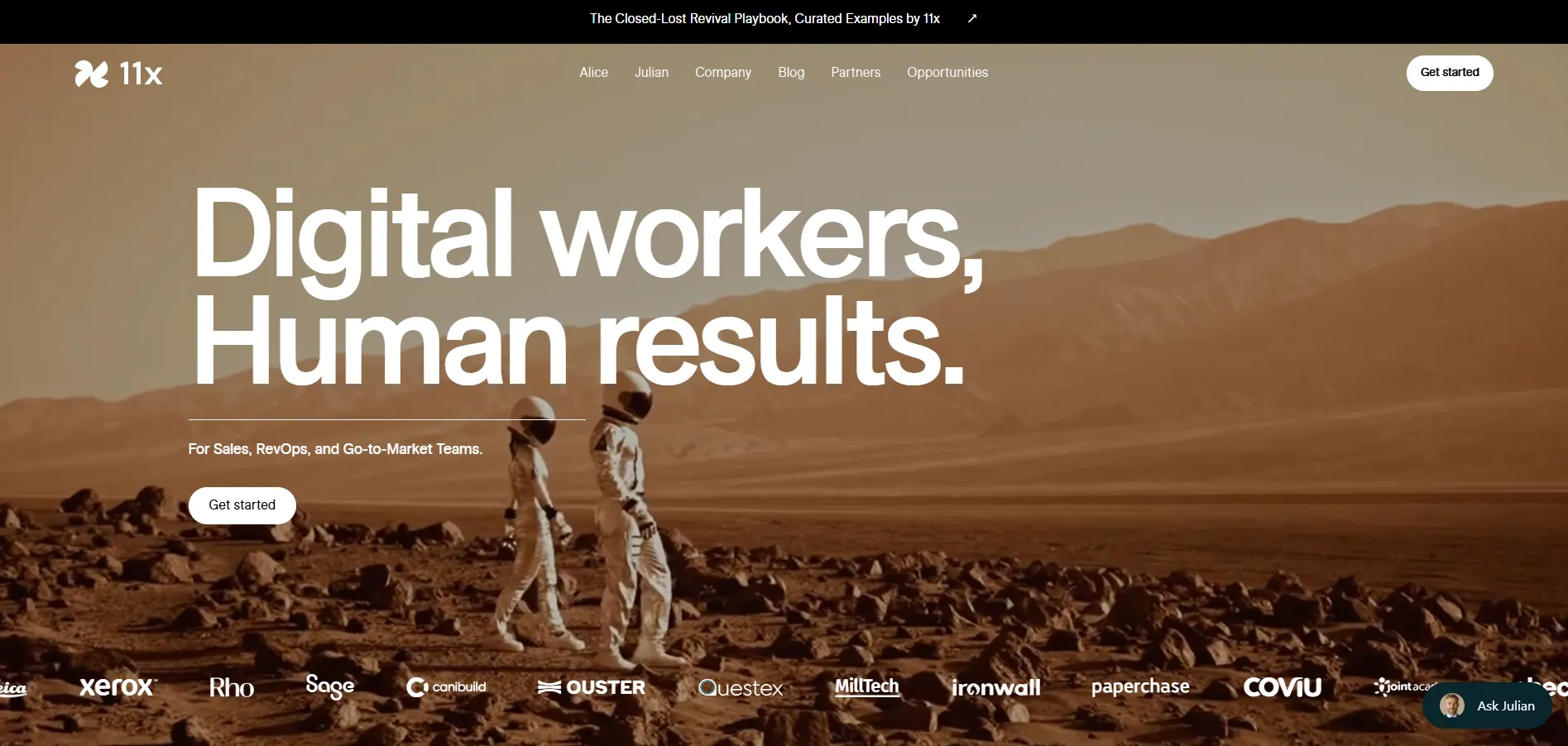
11x provides autonomous AI agents that transform lead routing from assignment into execution. Rather than simply distributing leads to reps, 11x's digital workers actively engage, qualify, and schedule meetings with prospects. Alice handles outbound prospecting across email and LinkedIn, while Julian responds to inbound leads within seconds via phone, qualifying them through natural conversations before routing to your sales team.
Key Features:
- Alice (AI SDR): Conducts autonomous outbound prospecting to secure qualified meetings across email and LinkedIn
- Julian (AI Phone Agent): Calls inbound leads within seconds and qualifies them through two-way conversations
- Autonomous Operation: Completes research, outreach, follow-ups, and lead qualification without human intervention
- CRM Integration: Bi-directional syncing with Salesforce, HubSpot, and Pipedrive via robust API connections
- Data Enrichment: Automatically enriches lead data from multiple sources to ensure data quality
- Enterprise-Ready: SOC 2 Type II, GDPR, CASA Tier 3, and CCPA compliant
Best Fit: 11x is ideal for GTM teams moving beyond simple lead assignment into autonomous engagement. Common use cases include high-volume inbound lead capture, instant qualification, and automated meeting scheduling. While traditional routing tools stop at distribution, 11x identifies, engages, and qualifies leads across outbound and inbound workflows, ensuring balanced workload distribution across sales reps.
Results: Teams using 11x report a 50% decrease in cost per lead, 80% increase in meeting-to-qualified opportunity conversion, and 30% more meetings booked per AE. Gupshup saw a 50% increase in SQLs per SDR after adopting Alice, enabling a 1.5x boost in output per rep without increasing headcount.
Pricing: Custom enterprise plan with usage-based tiers tied to lead volume and integration scope.
Book a demo with 11x to see how autonomous AI workers transform your lead response into booked meetings.
2. Chili Piper
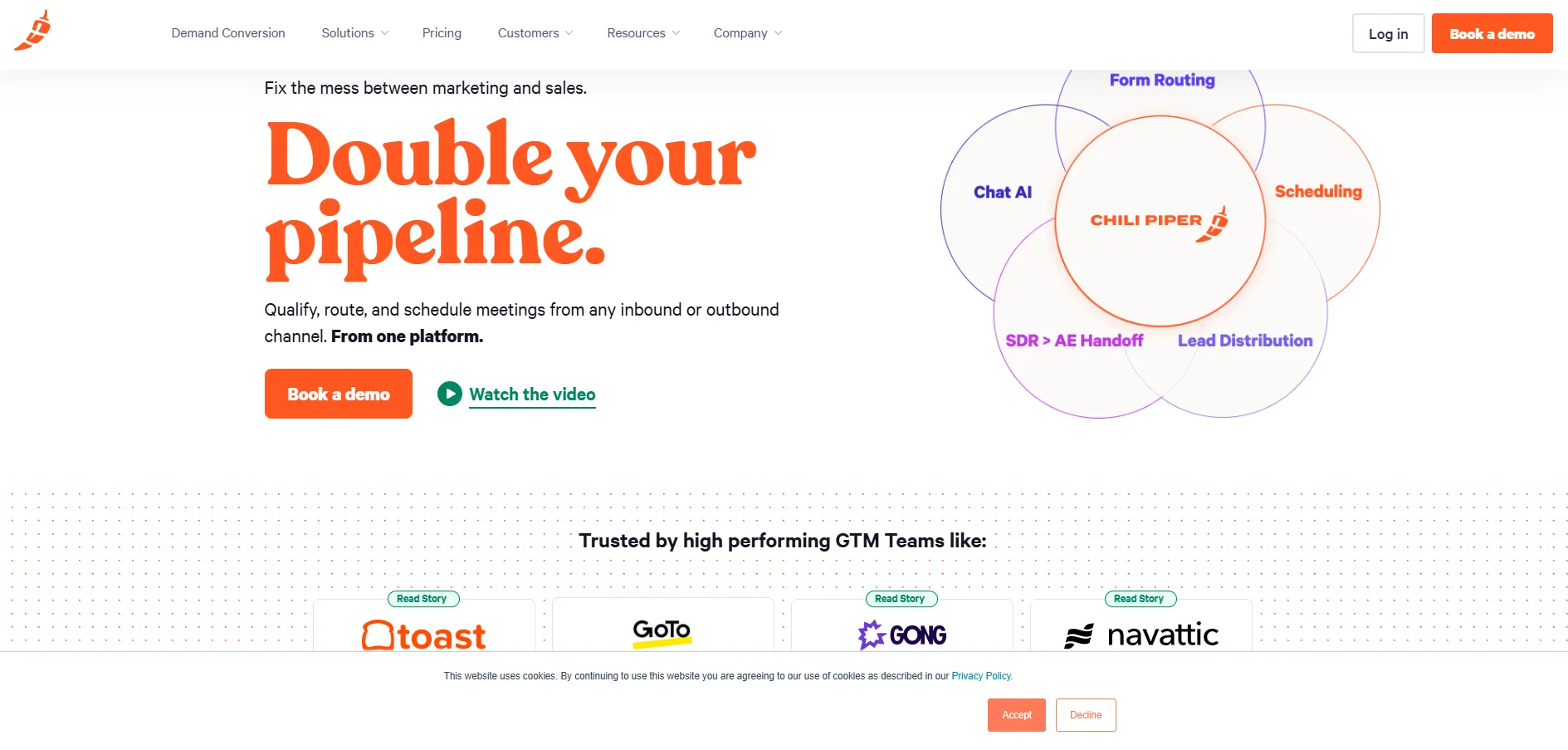
Chili Piper is a meeting lifecycle automation platform built for B2B revenue teams that need instant lead routing combined with scheduling. Its Form Concierge product qualifies and routes leads from web forms, then immediately presents calendar availability so prospects can book meetings without waiting for rep follow-up.
Key Features:
- Form Concierge: Qualifies, routes, and books leads directly from existing web forms
- Distro: Distributes leads from any source to prevent funnel leakage
- Handoff: Enables one-click meeting scheduling between reps
- Round-robin and territory-based routing logic
- Real-time lead qualification with custom rules
Best Fit: Chili Piper works well for inbound-heavy teams that want to convert form fills into booked meetings immediately. Unlike 11x, which provides autonomous engagement, Chili Piper requires human reps to take over after routing and scheduling occur.
Pricing: From $30/user/month plus $150 platform fee. Enterprise plans are available.
3. LeanData
LeanData is a Salesforce-native revenue automation platform designed for enterprise teams with complex routing requirements. Its visual flow builder lets RevOps teams create sophisticated routing logic across leads, contacts, accounts, and opportunities without code.
Key Features:
- Visual drag-and-drop flow builder for routing logic
- Cross-object routing across leads, contacts, and accounts
- Lead-to-account matching for ABM workflows
- SLA tracking and routing analytics
- Hold Until nodes for time-based routing rules
Best Fit: LeanData is ideal for large enterprises running complex ABM motions in Salesforce. Teams needing multi-CRM support or autonomous lead engagement would benefit from pairing LeanData's routing logic with 11x's execution capabilities.
Pricing: Custom enterprise pricing based on lead volume and feature requirements.
4. LeadAngel
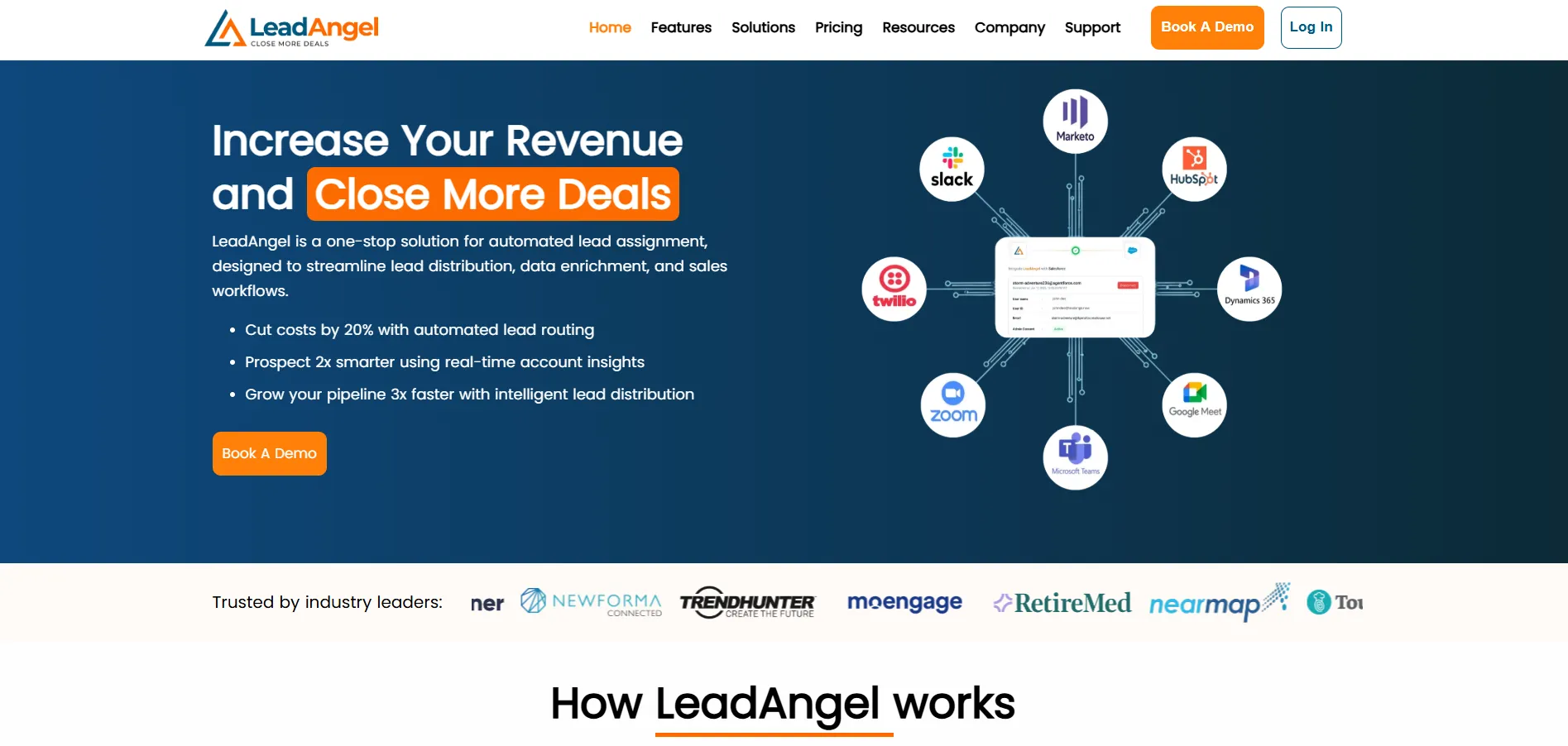
LeadAngel focuses on precision lead-to-account matching and territory-based routing. The platform eliminates guesswork from lead assignment by connecting incoming leads to existing accounts, territories, and owners automatically, making it particularly useful for ABM-focused teams with complex ownership structures.
Key Features:
- Advanced lead-to-account matching with high accuracy
- Territory-based and rule-driven routing
- Support for complex B2B and enterprise sales structures
- Deduplication and data hygiene automation
- Designed for high-volume lead distribution
Best Fit: LeadAngel works well for B2B teams prioritizing account-based routing accuracy. For teams that want leads engaged automatically after routing, combining LeadAngel's distribution with 11x's autonomous qualification creates end-to-end coverage.
Pricing: From $99/company/month with a six-month free trial available.
5. Default
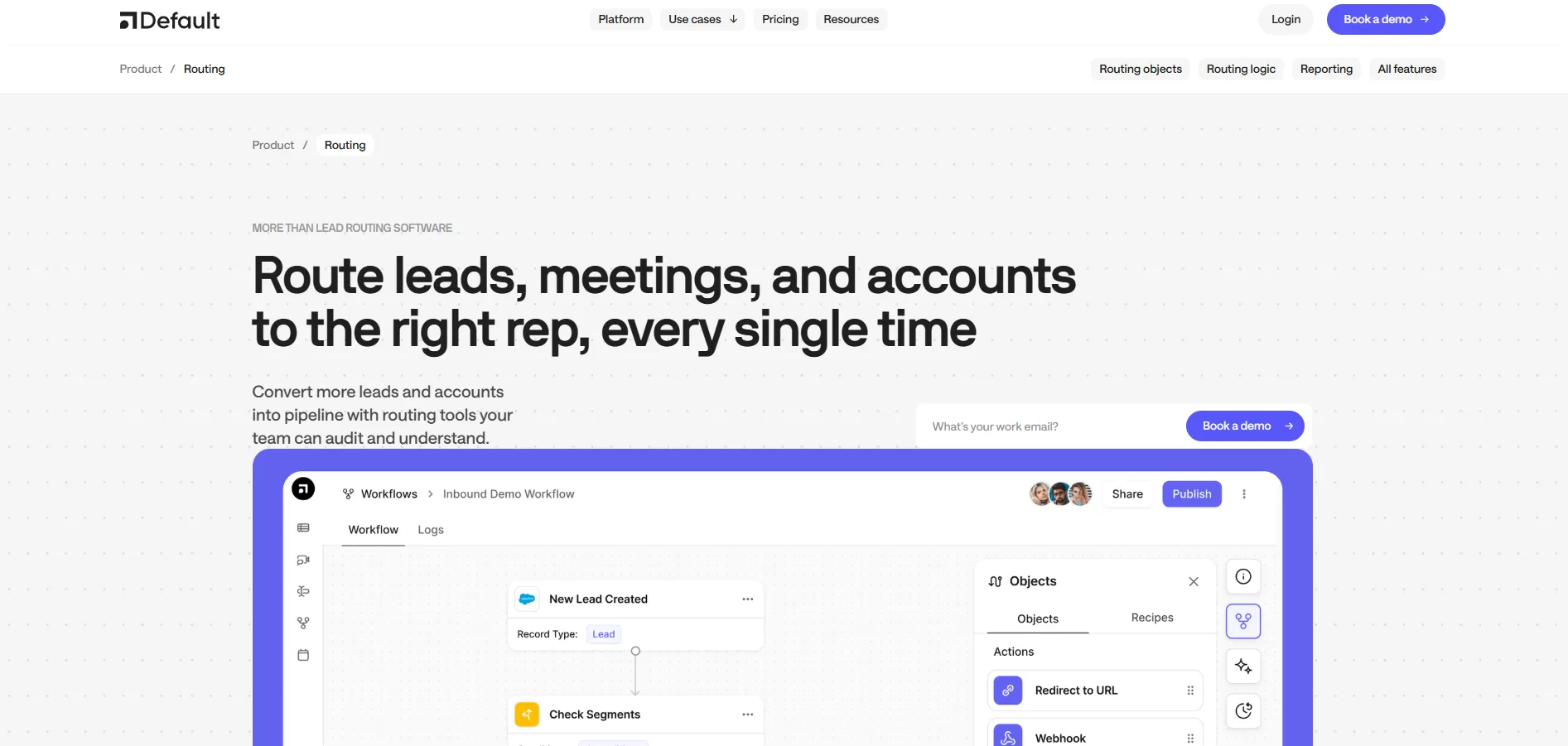
Default is a workflow automation platform that handles inbound, outbound, and self-serve GTM motions. Its routing capabilities include AI-powered fuzzy matching, weighted round-robin distribution, and real-time enrichment, all managed through a visual workflow builder.
Key Features:
- AI fuzzy matching to catch routing edge cases like misspelled domains
- Weighted round-robin with custom calibration
- Real-time lead enrichment during routing
- Multi-CRM syncing to Salesforce and HubSpot simultaneously
- Slack notifications with AI-summarized context
Best Fit: Default suits RevOps teams building custom routing workflows across multiple systems. Unlike 11x, which autonomously engages leads, Default focuses on orchestration and requires reps to handle follow-up.
Pricing: Custom pricing based on feature requirements and volume.
6. HubSpot (Native Routing)
HubSpot includes lead routing capabilities through its workflow automation. Teams on the HubSpot stack can create routing rules based on contact properties, form submissions, and lead scores without additional tools.
Key Features:
- Workflow-based routing with conditional logic
- Round-robin assignment across rep teams
- Lead scoring integration for prioritization
- Native CRM data without external syncing
- Form-based routing triggers
Best Fit: HubSpot's native routing works for smaller SaaS teams with straightforward assignment needs. Teams requiring speed-to-lead optimization or autonomous engagement should layer 11x on top for instant lead response.
Pricing: Included with HubSpot CRM tiers. Advanced features require Sales Hub Professional or Enterprise.
7. Salesforce (Native Assignment Rules)
Salesforce provides built-in lead assignment rules that handle basic routing without third-party tools. Assignment rules evaluate leads against criteria and assign them to users or queues based on the first matching rule.
Key Features:
- Rule-based lead assignment with criteria evaluation
- Queue-based distribution for team routing
- Integration with native Salesforce workflows
- No additional licensing required
- Simple round-robin through queue assignment
Best Fit: Salesforce native routing provides a starting point for teams with basic needs. As routing complexity grows, teams typically migrate to LeanData for orchestration or 11x for autonomous lead engagement.
Pricing: Included with Salesforce CRM licenses.
8. RevenueHero
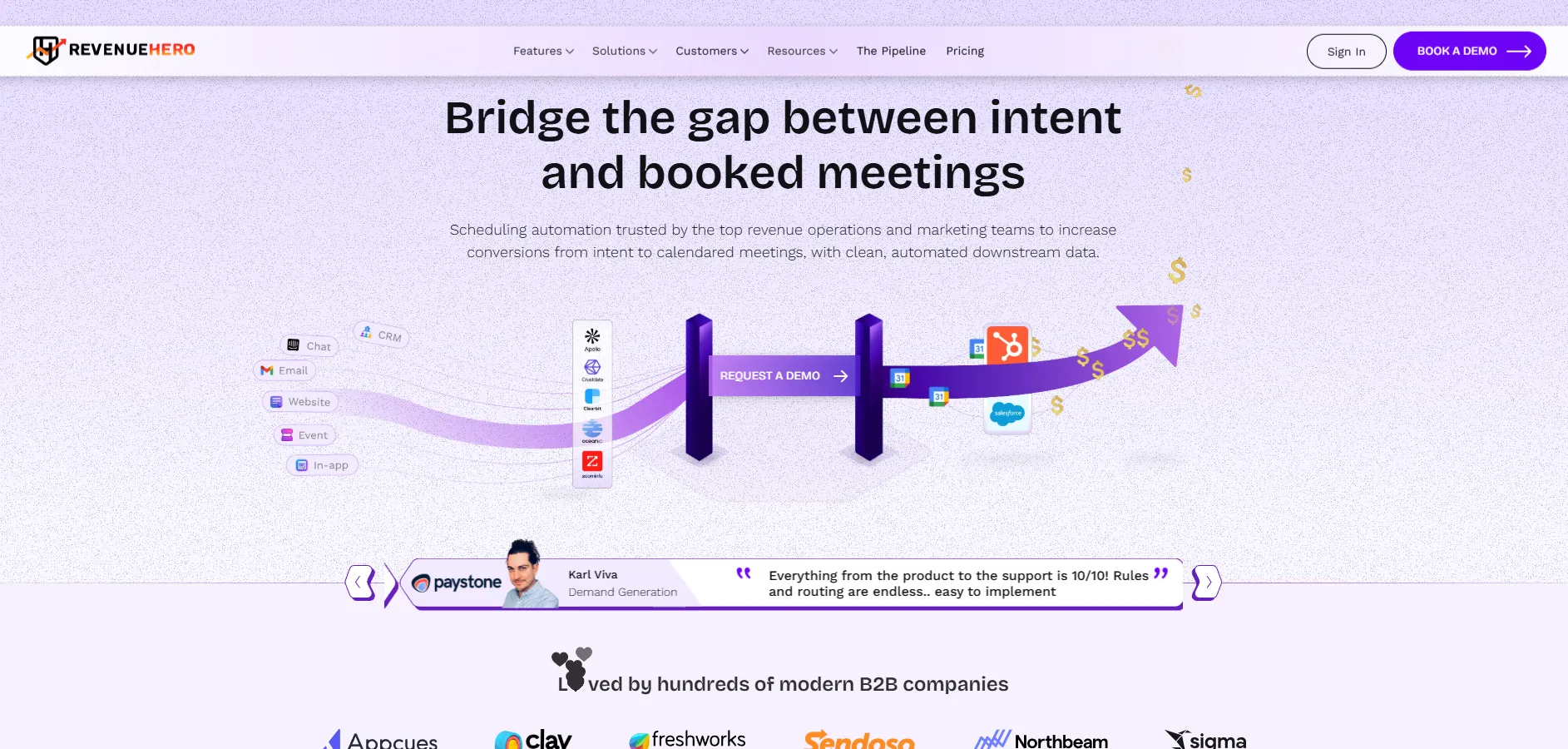
RevenueHero combines real-time lead routing with instant meeting scheduling. The platform routes inbound leads and presents booking options immediately, reducing the gap between form submission and scheduled call.
Key Features:
- Real-time lead routing with instant booking
- Dynamic round-robin with availability checks
- Salesforce and HubSpot integration
- Speed-to-lead optimization focus
- SMS and email notifications for reps
Best Fit: RevenueHero works for SaaS teams prioritizing instant booking over complex routing logic. Teams needing autonomous qualification beyond scheduling should evaluate 11x for full-funnel coverage.
Pricing: Custom pricing based on team size and feature needs.
How to Choose the Right Lead Routing Tools
Lead routing determines how quickly and accurately new prospects reach the right sales rep. If routing is slow or misaligned, high-intent leads lose momentum and conversion rates drop. The right lead routing tool ensures inbound and outbound leads move instantly to the correct owner based on territory, account rules, or buying signals.
Here are the key criteria to evaluate when selecting a lead routing platform:
- Routing logic flexibility: Look for tools that support round-robin, territory-based, account-based, product-line, and weighted routing rules. Advanced platforms allow conditional logic based on industry, company size, deal value, or intent signals.
- Real-time routing speed: Speed-to-lead directly impacts win rates. Ensure the system can route leads instantly after form submission or inbound engagement, not in delayed batches.
- CRM-native integration: The tool should integrate bi-directionally with your CRM, such as Salesforce or HubSpot. It must automatically assign ownership, update records, and prevent duplicate or conflicting assignments.
- Support for account-based routing: If multiple contacts from the same company convert, they should route to the same account executive. Confirm the platform can match new leads to existing accounts automatically.
- Workflow automation capabilities: Beyond assignment, the system should trigger notifications, task creation, Slack alerts, or email sequences. This ensures reps act immediately after receiving a lead.
- Visibility and reporting: Look for dashboards that show routing accuracy, response times, SLA compliance, and lead distribution by rep or region. Transparent reporting helps revenue leaders identify bottlenecks.
- Scalability for growth: As your GTM team expands, routing complexity increases. Ensure the platform can handle multi-region teams, different business units, and evolving territory models without manual reconfiguration.
- Error handling and fallback rules: If a rep is unavailable or capacity is exceeded, the system should automatically reroute leads. Built-in fail-safes prevent valuable opportunities from sitting unassigned.
Before committing, run a test scenario using historical lead data. Simulate real-world routing conditions to identify gaps in assignment logic or performance delays. A short pilot period often surfaces issues that product demos do not reveal.
Choosing the right lead routing tool strengthens speed-to-lead, improves rep productivity, and protects pipeline value. When routing works correctly, your entire revenue engine moves faster and with greater consistency.
Bringing It All Together
Lead routing software has evolved from basic assignment rules to sophisticated orchestration platforms. The right choice depends on your routing complexity, speed-to-lead requirements, and how much automation your team needs beyond distribution.
For teams with straightforward needs, HubSpot or Salesforce native routing provides a starting point. As complexity grows, LeanData offers powerful Salesforce-native workflow automation while Chili Piper combines routing with instant scheduling. LeadAngel and Default serve teams prioritizing account matching and workflow flexibility.
11x stands apart for teams ready to move beyond routing into autonomous execution. Rather than assigning leads to sales reps who may respond in hours or days, 11x's AI agents engage immediately, qualify through natural conversations, and schedule meetings, all while your team focuses on closing deals. The platform handles complex segmentation and routing logic that would otherwise require significant manual workload from RevOps team members. With proven results including 50% lower cost per lead and 80% improvement in meeting-to-opportunity conversion, 11x transforms lead routing from an operational task into a pipeline generation engine.
Book a demo with 11x to see how autonomous AI workers can transform your lead response into booked meetings.
Frequently Asked Questions
Lead routing is the automated process of assigning incoming leads to the appropriate sales representatives based on criteria like territory, account ownership, lead score, or rep availability. Instead of manual distribution, routing software evaluates each lead against predefined rules and assigns it instantly. At 11x, this process goes further: rather than just assigning leads, Alice and Julian engage and qualify them autonomously before handoff.
The 5-minute rule states that responding to inbound leads within five minutes dramatically increases conversion odds. Studies show that contacting leads in this window makes you 100x more likely to connect than waiting an hour. 11x's Julian addresses this by calling inbound leads within seconds of form submission, qualifying them through natural conversation while interest peaks.
Lead management tools help sales teams capture, track, qualify, and distribute leads throughout the sales process. This category includes CRM systems, lead scoring platforms, enrichment tools, and routing software. 11x combines several functions into one platform: Alice handles prospecting and outbound engagement while Julian manages inbound qualification, all syncing bi-directionally with your CRM.
The best lead generation tool depends on your motion. For data and enrichment, ZoomInfo and Apollo provide contact databases. For outbound execution, 11x's Alice autonomously prospects, researches, and engages leads across email and LinkedIn. For inbound, Julian qualifies phone leads instantly. Unlike point solutions that require manual follow-up, 11x generates pipeline through continuous autonomous execution.
ChatGPT can assist with writing outreach messages or drafting email templates, but it cannot execute sales workflows. It cannot find prospects, send emails, make calls, or book meetings. Autonomous AI agents like those from 11x are purpose-built for execution: Alice and Julian handle the entire sequence from research to qualification to scheduling, operating 24/7 without manual intervention.