The Top Lead Management Software in 2025
Compare the best lead management system platforms that automate workflows, improve pipeline visibility, and align marketing with sales.
.png)

It begins with chaos: scattered spreadsheets, missed follow‑ups, and a sales pipeline leaking potential revenue at every turn. For most sales teams, managing leads still means juggling tabs instead of closing deals.
Lead management software evolved to solve this problem by centralizing contact information, automating outreach, and aligning your marketing and sales teams. Yet efficiency gaps persist. 42% of sales professionals say low‑quality leads make selling harder than it was a year ago, slowing conversions and creating bottlenecks in the sales process. Modern CRM systems now blend automation, lead scoring, and real‑time routing to streamline workflows and optimize every touchpoint in the funnel.
This comparison guide explores the top lead management software platforms of 2025. We break down their functionality, pricing, and best use cases—helping you choose a solution that automates efficiently, supports your sales pipeline, and drives measurable growth.
What is a Lead Management System?
A lead management system is a platform designed to capture, track, qualify, and distribute new leads. Its primary function is to organize the top of the sales funnel, ensuring every potential customer moves efficiently through the initial stages of the sales cycle.
This includes capturing contact information from web forms and landing pages, tracking interactions across email and social media, and routing qualified leads to the right salespeople. It is the first step in building a structured, repeatable sales process.
Core Features of Modern Lead Management Software
Effective platforms offer more than just contact management. They provide a suite of tools that work together to optimize the entire lead generation and nurturing process.
- Lead Capture and Routing: Automatically collect lead information from sources like web forms, email campaigns, and social media, then route them to appropriate team members based on predefined rules.
- Workflow Automation: Set up automated follow-ups, notifications, and data entry tasks to reduce manual work and ensure no lead falls through the cracks.
- Lead Scoring and Segmentation: Prioritize high-intent leads by assigning scores based on their behavior and demographics. Grouping leads into segments allows for more targeted marketing campaigns and outreach.
- Real-Time Dashboards and Reporting: Visualize your sales pipeline, track key metrics like conversion rates, and generate reports to measure the effectiveness of your sales and marketing efforts.
- Integrations: Connect with your existing tech stack, including CRM software, marketing automation tools, and communication platforms like Zapier, through a robust API.
CRM vs. Lead Management System: What’s the Difference?
People often use the terms CRM and lead management system interchangeably, but they serve distinct purposes. A lead management system focuses on the pre-sale process of capturing and qualifying new leads. A Customer Relationship Management (CRM) platform is a broader system for managing all interactions with both potential and existing customers throughout the entire customer lifecycle.
A lead management tool prepares opportunities. A CRM nurtures and closes them. Many modern platforms, like HubSpot and Salesforce, now combine both functionalities into an all-in-one CRM solution. This integration blurs the lines, but the core distinction remains valuable for understanding your needs.
The Top Lead Management Software: 2025 Comparison
Selecting the best lead management software for your business is about choosing a platform that truly optimizes your sales workflow. The right tool automates follow‑ups, aligns marketing and sales teams, and provides real‑time visibility into your pipeline. This section compares today’s leading platforms by automation depth, pricing, and functionality to help sales teams streamline operations, close deals faster, and scale lead generation with precision.
Evaluation Criteria
Our methodology prioritizes neutral, criteria-driven analysis. The evaluation is 90% objective feature comparisons and 10% strategic insights from our go-to-market experience. Each platform was assessed on its ability to accelerate the sales pipeline, not just manage it.
Key evaluation factors include:
- Automation Depth: The extent to which the platform can execute tasks independently. This ranges from simple, rule-based workflow automation to the full, learning-based autonomy of AI agents.
- Sales Cycle Coverage: Does the tool only handle lead capture, or does it support the entire process from prospecting and lead nurturing to qualification and handoff?
- Data Handling & Enrichment: The platform's ability to capture data from multiple sources (web forms, APIs, social media) and enrich it in real-time to create a complete view of each potential customer.
- Integration Ecosystem: The quality and breadth of its API and pre-built connections to essential tools like CRM systems, marketing automation platforms, and third-party apps via Zapier.
- Measurable ROI: The platform's capacity to deliver quantifiable results, including higher conversion rates, faster sales cycles, and a lower cost per qualified lead.
Comparison of Top Lead Management Platforms
With these criteria in mind, the following comparison highlights how today’s top lead management platforms stack up in performance, scalability, and automation depth.
1. 11x
11x provides two autonomous AI sales agents: Alice for outbound prospecting and Julian for inbound phone qualification. Together, they function as digital workers that manage research, outreach, lead engagement, and qualification without human intervention. Their continuous operation gives teams a programmable SDR function that runs 24/7 and feeds accurate activity data into existing CRM systems.
11x Key Features:
- Alice (AI SDR): Conducts outbound prospecting across email and LinkedIn to secure qualified meetings.
- Julian (AI Phone Agent): Calls inbound leads within seconds and qualifies them through natural two-way conversations.
- Autonomous Operation: Completes research, outreach, follow-ups, and lead qualification independently.
- CRM Integration: Syncs with major CRMs to maintain clean activity logs and forecasting signals.
- Global Language Support: Engages prospects in more than 100 languages.
Pros and Cons of 11x
11x Best Fit:
11x is ideal for GTM teams replacing SDR and contact-center tasks with continuous AI execution. Compared to assistive tools, 11x autonomously identifies, engages, and qualifies leads across outbound and inbound workflows.
11x Pricing:
Custom enterprise plan with usage-based tiers tied to lead volume and integration scope.
2. HubSpot CRM
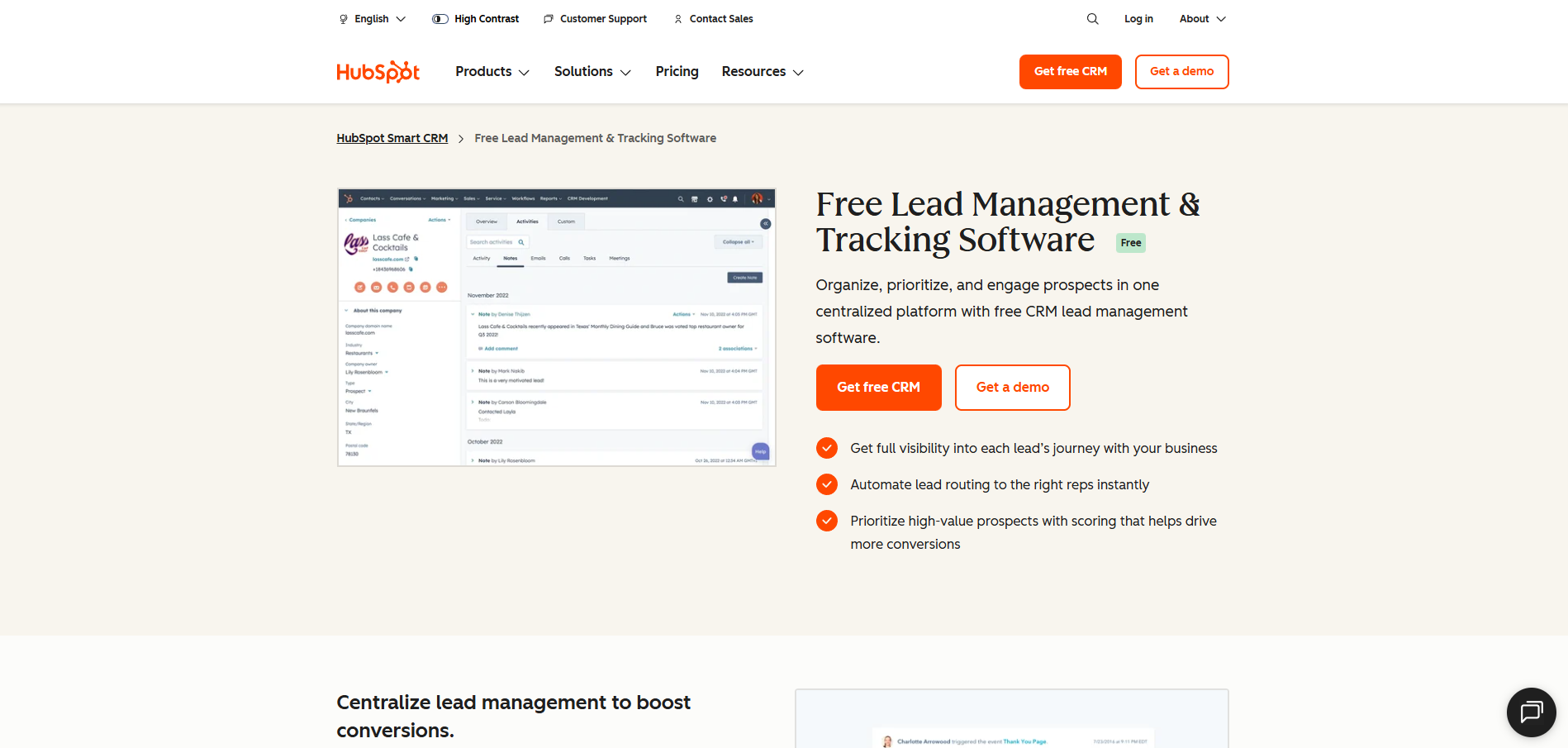
HubSpot CRM offers a powerful, all-in-one platform that combines lead management, sales, marketing, and customer support tools. It is known for its user-friendly interface and extensive free CRM offering, making it an excellent choice for a small business or startup.
HubSpot CRM Key Features:
- Lead capture via web forms.
- Email marketing and workflow automation.
- Contact management and pipeline visualization.
- Detailed reporting tools and real-time dashboards.
- Integration of marketing and sales functionality in one platform.
Pros and Cons of HubSpot CRM
HubSpot CRM Best Fit:
Small to mid-sized businesses looking for a comprehensive, scalable platform that supports their entire customer lifecycle. HubSpot is ideal for teams that value ease of use and tight alignment between sales and marketing.
HubSpot CRM Pricing:
Offers a free CRM with basic tools. Paid plans start at around $18 per month.
3. Salesforce Sales Cloud
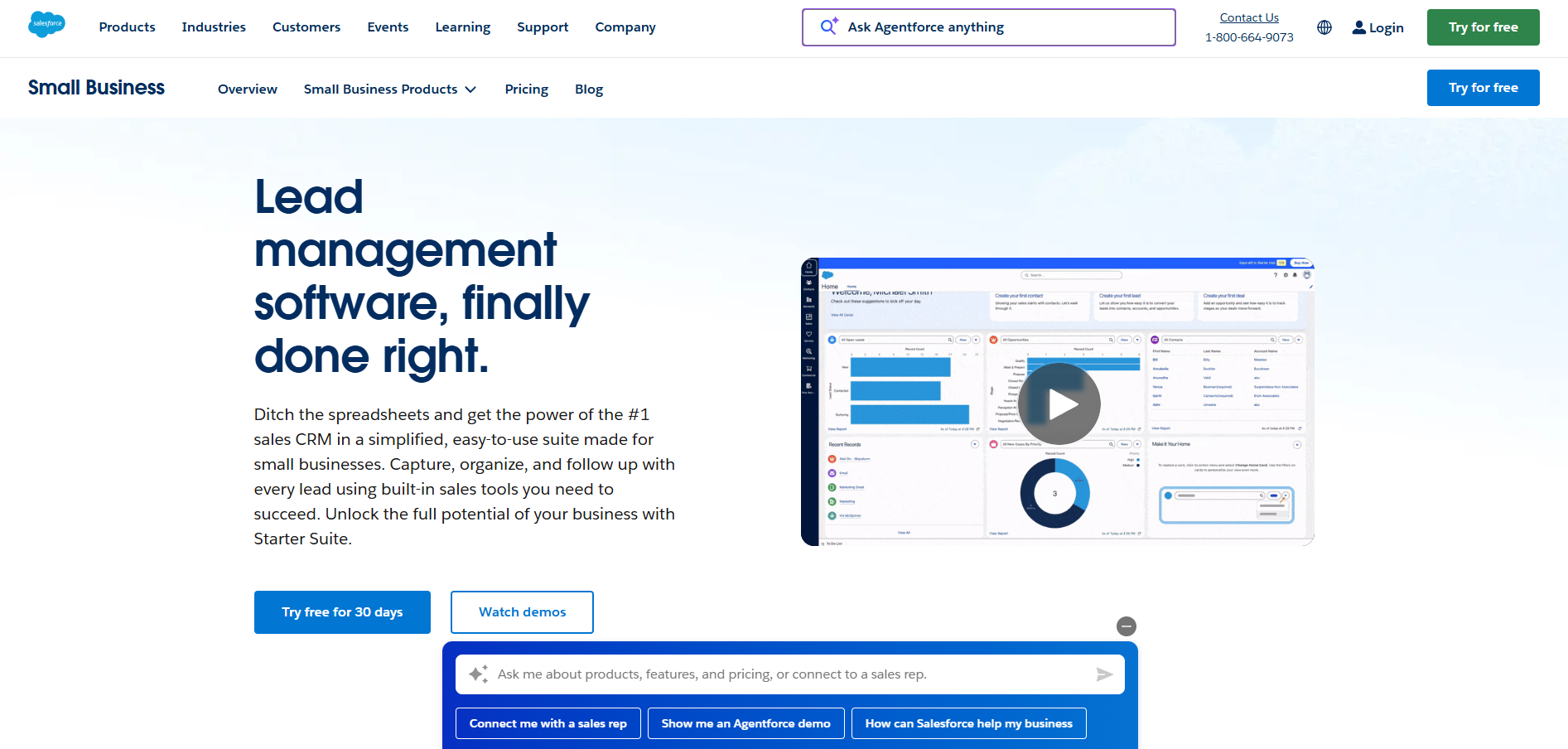
Salesforce Sales Cloud is the industry standard for enterprise-level CRM and lead management. It offers unparalleled customization, allowing large organizations to tailor the platform to their exact sales process.
Salesforce Sales Cloud Key Features:
- Advanced lead scoring and routing.
- Customizable dashboards and robust API.
- Extensive third-party app marketplace.
- Powerful sales forecasting and reporting.
- Mobile app for iOS and Android.
Pros and Cons of Salesforce Sales Cloud
Salesforce Sales Cloud Best Fit:
Enterprise organizations and large sales teams with complex sales cycles that need a highly customizable and powerful CRM system.
Salesforce Sales Cloud Pricing:
Plans start at around $25 per user per month (billed annually).
4. Flowlu
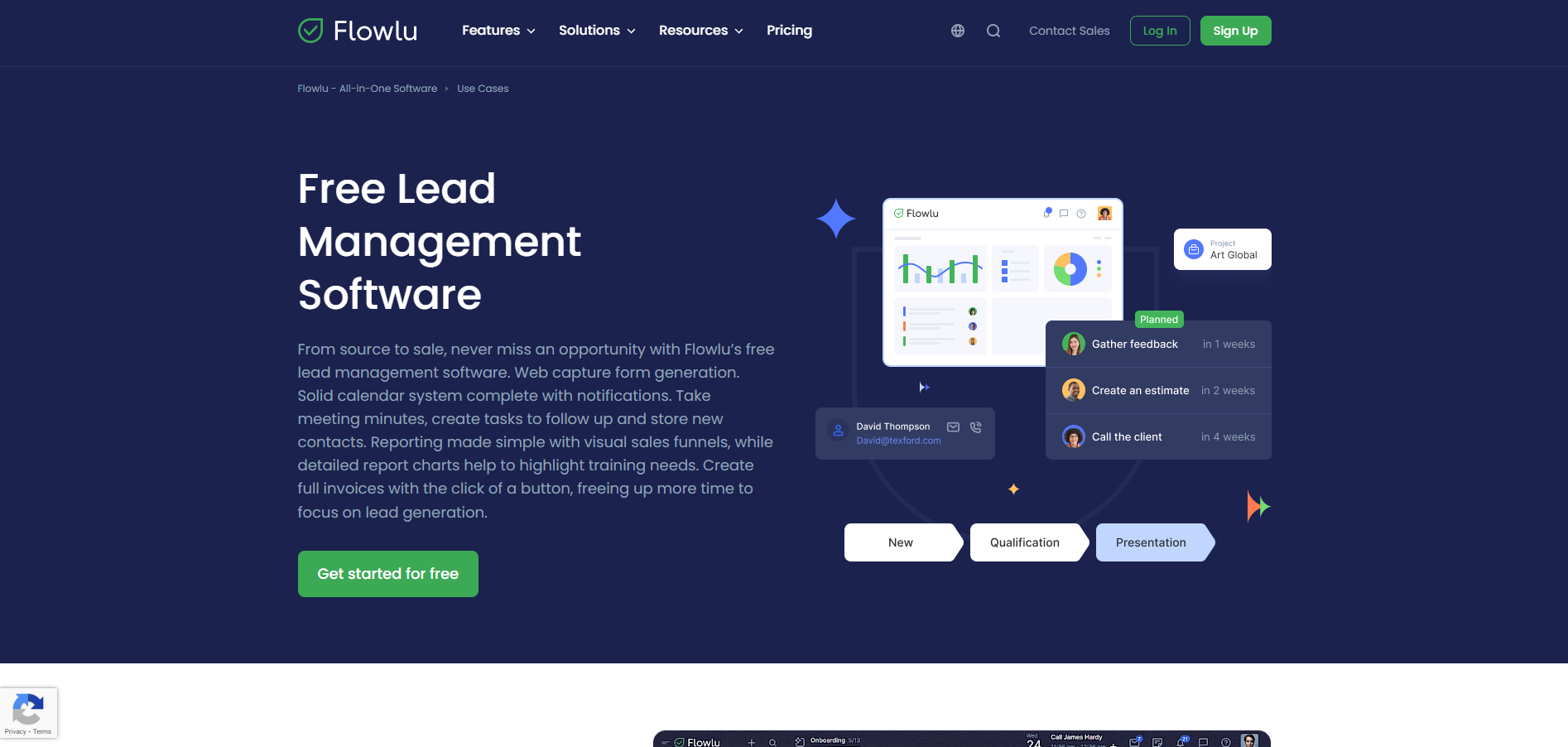
Flowlu is a business management platform that combines CRM functionality with project management, invoicing, and collaboration tools. Its free CRM offering is surprisingly robust, making it a great option for a small business or startup on a tight budget.
Flowlu Key Features:
- Visual sales funnel to track deals and leads.
- Lead capture from web forms and integrations.
- Task management and collaboration.
- Basic workflow automation.
- Project management integration.
Pros and Cons of Flowlu
Flowlu Best Fit:
Small businesses, startups, and freelancers looking for a free or low-cost all-in-one tool to manage both leads and projects.
Flowlu Pricing:
Offers a generous free plan. Paid plans with more features start at around $29 per month for the team.
5. Zoho CRM
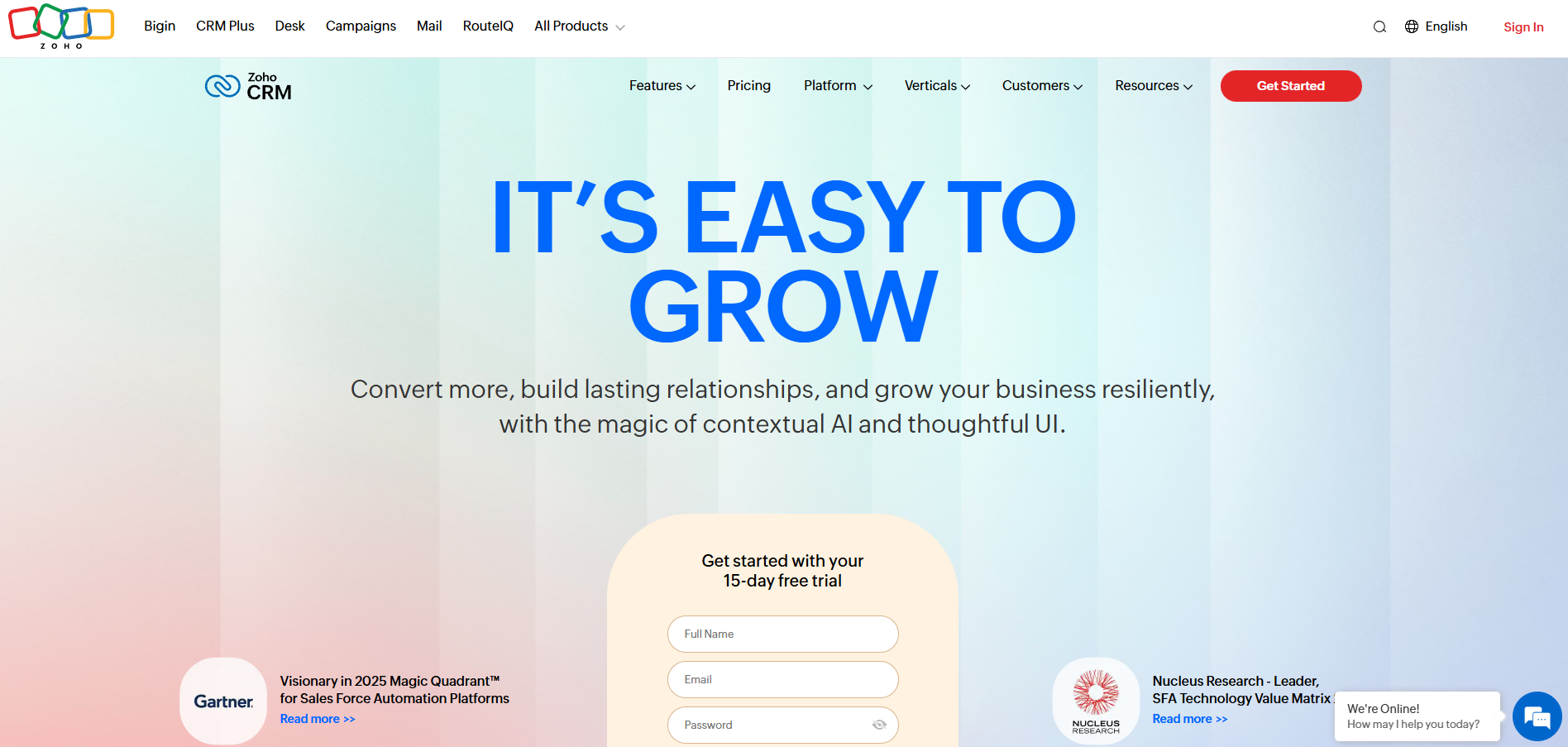
Zoho CRM is a popular choice for small and mid-sized businesses due to its affordable pricing and extensive feature set. It offers strong lead management capabilities, including lead scoring, segmentation, and workflow automation.
Zoho CRM Key Features:
- Multichannel communication via phone, email, and social media.
- AI-powered sales assistant.
- Advanced analytics and reporting.
- Marketing automation and lead nurturing.
- Lead scoring and segmentation tools.
Pros and Cons of Zoho CRM
Zoho CRM Best Fit:
Startups and SMBs that need a powerful, scalable CRM system without the enterprise price tag. It’s a great fit for teams that want to grow into a more complex sales process.
Zoho CRM Pricing:
Includes a free version for up to three users. Paid plans start at around $14 per user per month (billed annually).
6. Pipedrive
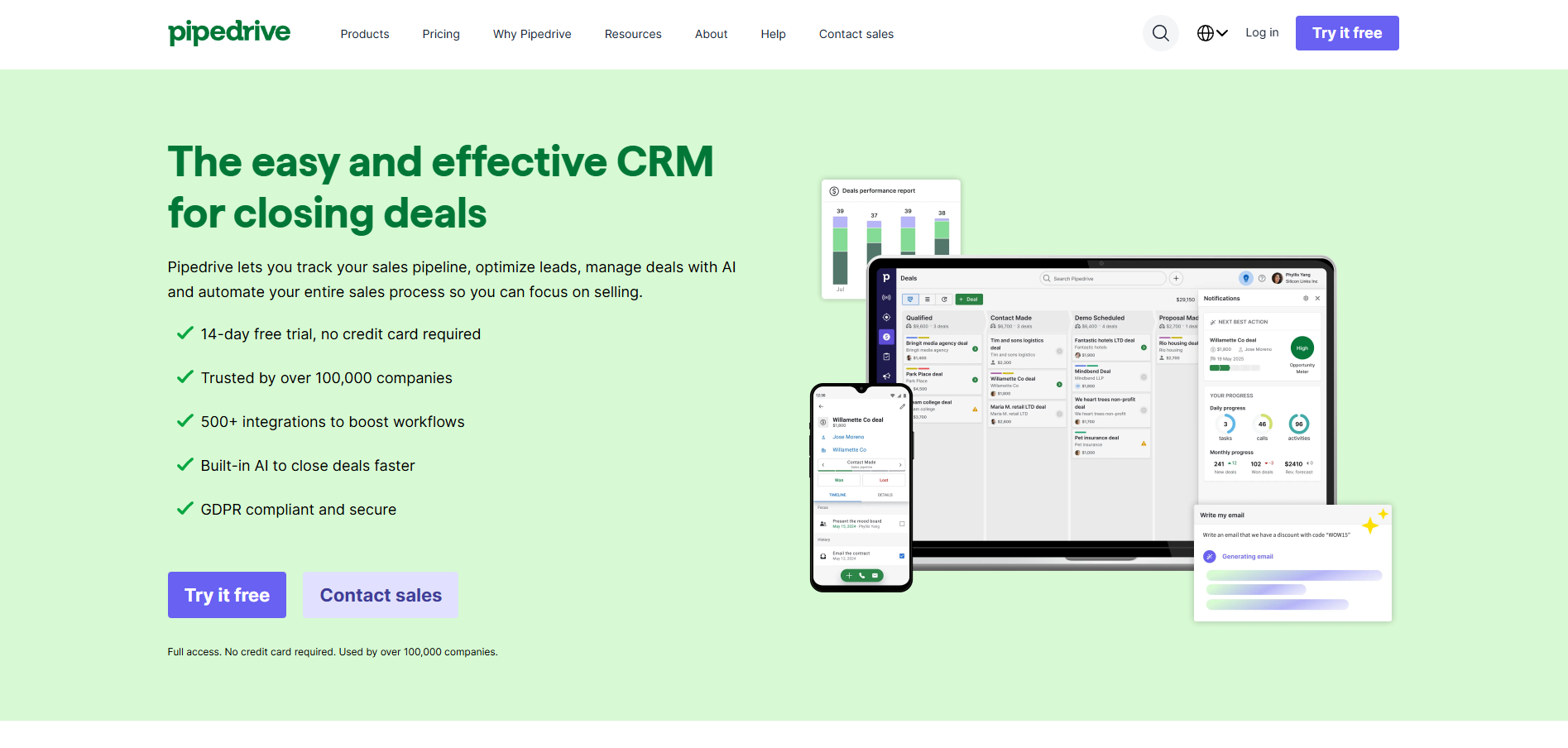
Pipedrive is a CRM built by and for salespeople with a laser focus on pipeline management. Its defining feature is its clean, visual interface that allows sales teams to manage their pipelines with ease.
Pipedrive Key Features:
- Visual drag-and-drop sales pipeline.
- Activity reminders and notifications.
- Workflow automation.
- Customizable reporting dashboards.
- Easy deal and stage tracking.
Pros and Cons of Pipedrive
Pipedrive Best Fit:
Sales teams that want a simple, intuitive, and visually-driven tool to manage their sales funnel and track deals effectively.
Pipedrive Pricing:
Plans start at around $14 per user per month (billed annually).
7. Brevo (formerly Sendinblue)
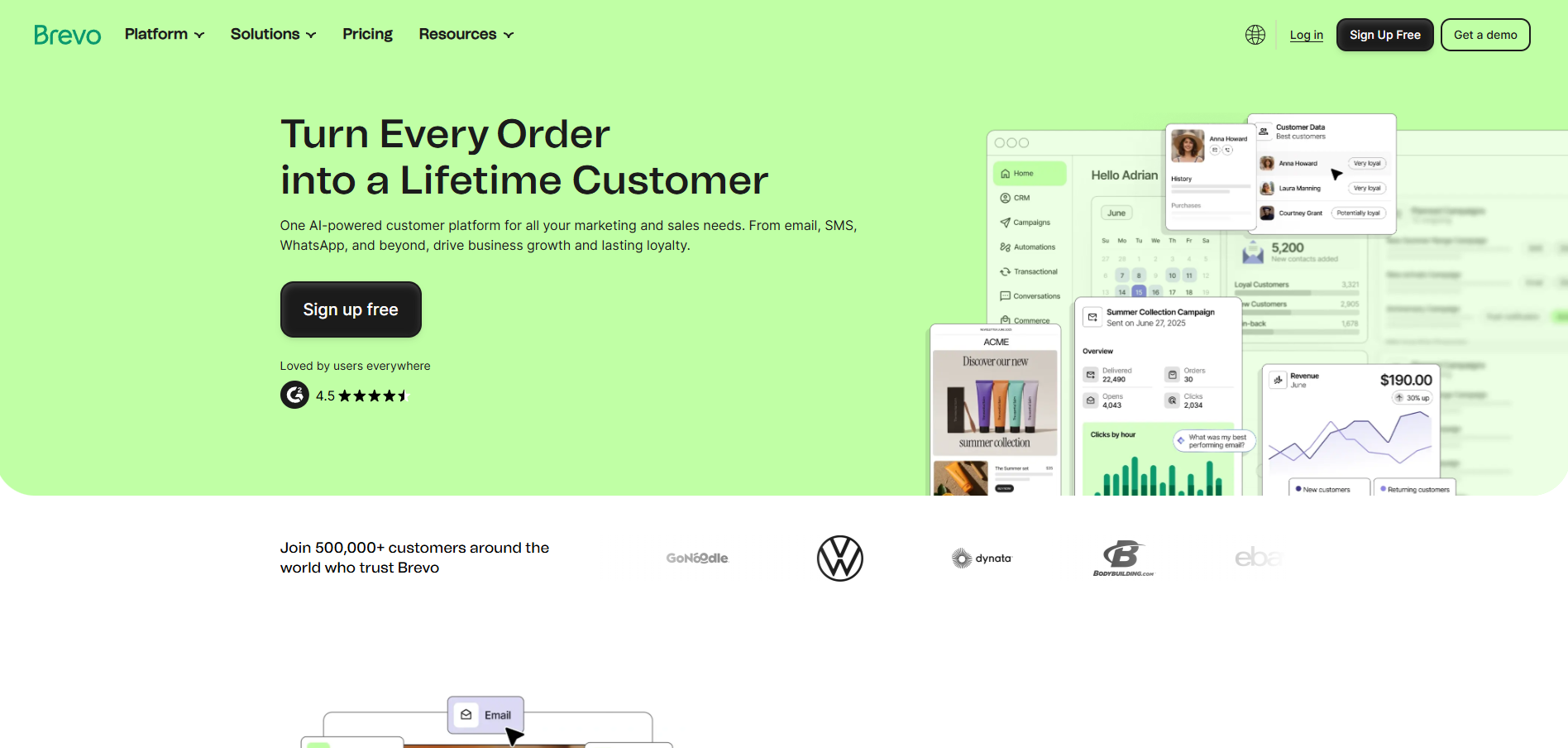
Brevo began as an email marketing platform and has evolved into an all-in-one sales and marketing solution. Its strengths remain in multichannel communication, offering email, SMS, and live chat tools ideal for lead nurturing.
Brevo Key Features:
- Email and SMS marketing automation.
- Landing page builder and live chat.
- Shared inbox and sales CRM.
- Real-time segmentation and tracking.
- Advanced contact and engagement insights.
Pros and Cons of Brevo
Brevo Best Fit:
Businesses that rely heavily on email and SMS marketing to generate and nurture leads. Ideal for marketing-driven sales teams focused on engagement.
Brevo Pricing:
Offers a free plan with daily sending limits. Paid plans start at around $25 per month.
8. Monday Sales CRM
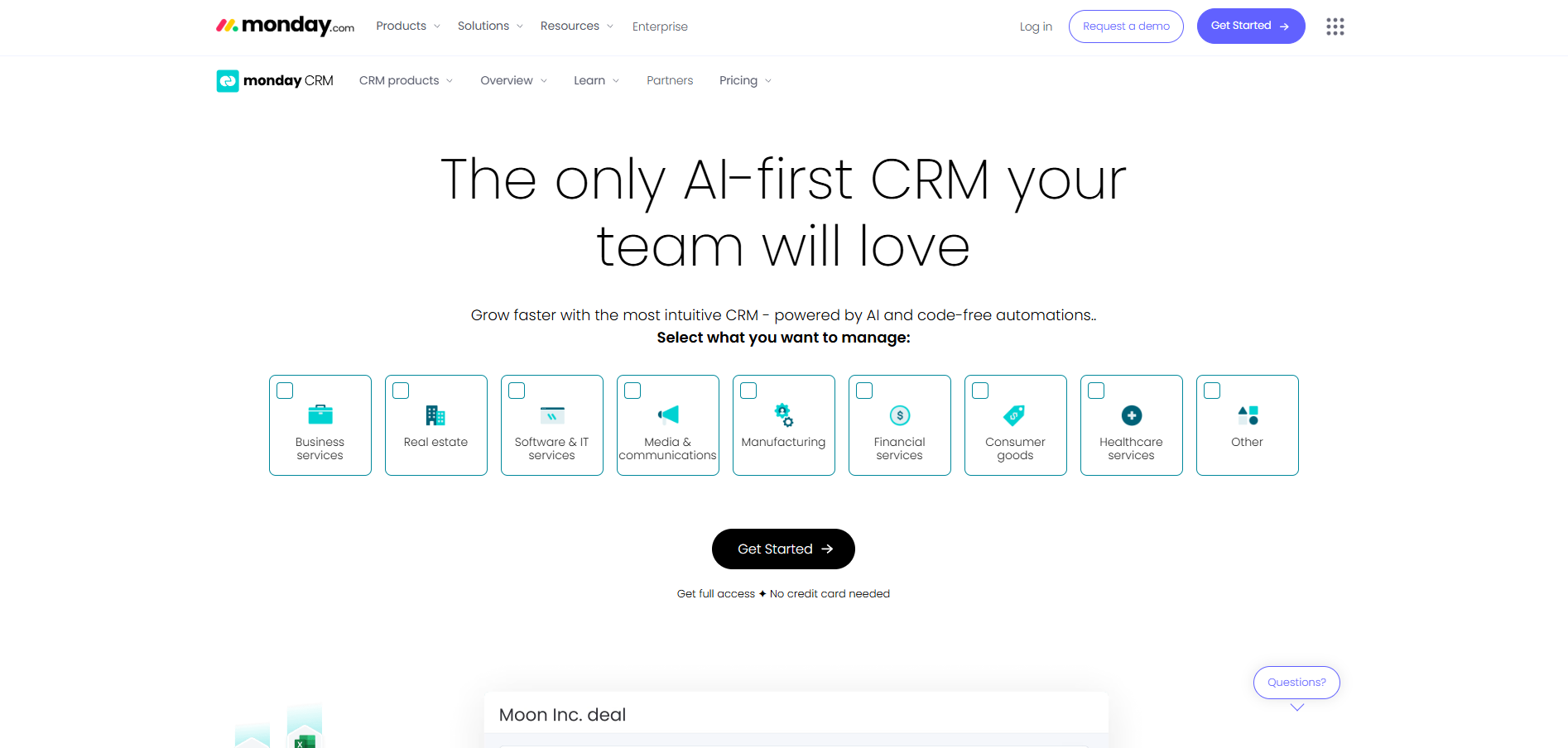
Monday Sales CRM is built on top of the popular work management platform Monday.com. It brings visibility and customization to sales workflows, bridging project management and deal tracking.
Monday Sales CRM Key Features:
- Custom dashboards and visual boards.
- Lead and contact management.
- Email templates and tracking.
- Workflow automation and deal pipelines.
- Task-based approach to sales operations.
Pros and Cons of Monday Sales CRM
Monday Sales CRM Best Fit:
Teams already using Monday.com for project management or those who prefer a highly visual, task-oriented approach to lead management. Comparable alternatives include Asana for workflow-style operations.
Monday Sales CRM Pricing:
Plans start at around $10 per user per month (billed annually).
9. Zapier-Connected Systems

Zapier acts as the integration glue for customized lead management setups. It connects thousands of applications, automating actions between marketing, CRM, and communication tools without any code required.
Zapier Key Features:
- 5,000+ app connections and integrations.
- Trigger-based workflows (“Zaps”).
- Multi-step and conditional automation logic.
- Notification and data-sync triggers.
- Modular customization for unique workflows.
Pros and Cons of Zapier
Zapier Best Fit:
Startups and tech-forward teams that need a flexible, custom-built lead management system and have the technical know-how to manage multiple connected tools.
Zapier Pricing:
Free plan for simple automations. Paid plans start at around $19.99 per month.
How to Choose the Right Lead Management Software
Finding the best CRM or lead management system starts with knowing your team’s specific needs. Consider your current sales process, the number of leads you manage daily, and how much of your workflow you want to automate. Modern platforms offer varying levels of automation, integrations, and reporting tools, so clarity on your priorities will guide the right match.
For small businesses and startups, look for an all‑in‑one solution with simple onboarding, built‑in email marketing templates, and a free CRM tier—platforms like Flowlu, Zoho CRM, or HubSpot excel here. They streamline contact management, automate follow‑ups, and provide clear dashboards for tracking conversion rates without requiring advanced technical setup.
Scaling sales teams should prioritize platforms with strong automation workflows, customizable routing rules, and advanced reporting capabilities. HubSpot and Salesforce Sales Cloud allow for integrated marketing automation, lead scoring, and deep CRM functionality that connects every stage of the sales funnel.
For enterprises or high‑volume organizations, flexibility and autonomy are key. Look for systems that integrate through robust APIs, handle large datasets in real time, and support complex routing logic. Autonomous AI‑driven platforms like 11x push beyond automation by executing multichannel outreach, enriching data, and continuously optimizing the sales pipeline without manual oversight.
The right platform should optimize your sales process, not complicate it—automating repetitive tasks, aligning your teams, and enabling faster, data‑driven decisions. Once you’ve defined these criteria, selecting the ideal lead management software becomes less about features and more about fit.
The Future of Lead Management: From Automation to Autonomy
The tools listed above represent the best of rule-based automation. They can streamline tasks, organize data, and send pre-programmed follow-ups. They all still depend on a human to set the strategy, write the copy, and interpret the results. The future of lead management is full autonomy.
AI-driven systems like 11x are leading this transition. Instead of following a rigid workflow, digital workers like Alice learn from every interaction. She refines her messaging, identifies new market signals, and adjusts her outreach strategy based on real-time engagement data. She optimizes your sales process.
This shift from automation to autonomy is profound. It means your pipeline can grow without adding headcount, and your sales team can spend less time on repetitive tasks and more time building relationships and closing deals. The line between managing leads and converting them is disappearing.
Find Your Next Lead Management System
Choosing the right lead management software depends on your team's size, budget, and goals. For small businesses, a free CRM like Flowlu or a scalable option like Zoho provides a solid foundation. For growing teams, HubSpot offers an excellent all-in-one solution. Enterprises will continue to rely on the power and customization of Salesforce.
For organizations looking to build a true competitive advantage, the goal should be to move beyond management and toward execution. Autonomous AI is redefining what's possible in sales. It’s time to stop just tracking your pipeline and start putting it into perpetual motion.
See how 11x’s autonomous AI agents can turn market signals into qualified meetings by handling every step of lead generation without manual input. Experience what it feels like to have an AI‑driven sales team that never stops optimizing your results. Book a demo today to see how 11x can streamline your sales process and accelerate qualified pipeline growth.
Frequently Asked Questions
Frequently Asked Questions
What is the best software for lead management?
The best software depends on your specific needs. For all-in-one functionality, HubSpot is a top contender, while Salesforce is unmatched for enterprise customization. For teams seeking to eliminate manual work, autonomous platforms like 11x represent the peak of efficiency by using AI agents to run the entire lead engagement process.
What are the 4 types of CRM?
CRMs are typically categorized by their primary function: Operational (streamlining sales and marketing processes), Analytical (analyzing customer data), Collaborative (sharing information across teams), and Strategic (focusing on a customer-centric culture).
Most modern platforms, including the ones discussed here, blend these types. An autonomous system like 11x acts as an operational and analytical layer, executing tasks and learning from the data.
What is the difference between a CRM and a lead management system?
A lead management system focuses on the top of the sales funnel: capturing and qualifying new leads. A CRM is a broader platform for managing the entire relationship with both leads and existing customers. Platforms like 11x expand on this by not just managing leads but autonomously engaging them to book meetings, bridging the gap between the two systems.