12 Top AI GTM Agents for Modern Go-To-Market Teams
AI GTM platforms turn static plans into self-optimizing systems. Compare 12 leading tools for forecasting, execution, and analytics in 2025.

Your go-to-market playbook is outdated. Manual tasks and disconnected systems slow teams down, while sales, marketing, and customer success operate in silos that hinder alignment and delay decisions. Without integrated AI workflows, opportunities slip and sales cycles stretch.
AI changes that. Strong AI GTM Agents unify forecasting, execution, and analytics into a single, continuous loop. They help GTM teams act on real-time buying signals, streamline operations, and scale outreach with precision. With the right AI automation, you can accelerate lead qualification and elevate the customer experience from the very first interaction.
In this guide, we’ll review the top 10 AI GTM Agents and how to choose the right one for your team.
What Is an AI GTM Agent?
A go-to-market strategy defines how a company positions its product. When you use AI, it evolves from a static plan into a self-optimizing ecosystem. An AI GTM Agent integrates forecasting, personalization, and decision-making into one adaptive ecosystem. This approach helps GTM teams optimize high-value activities and improve their overall GTM motion.
An effective AI GTM Agent connects every one of your customer interactions to live data. It links your personas, customer experience, and outreach into one connected system. Each conversation and campaign feeds new, actionable insights back into the sales process, allowing for continuous optimization. From content creation to prospect research and sales enablement, every task becomes smarter over time, an evolving engine that runs your AI workflows end-to-end.
This ensures that your messaging is always relevant and your follow-ups are timely, improving both lead generation and customer retention.
The Leading AI GTM Agents for GTM Teams
The market for AI GTM Agents has exploded, but not all agents solve the same problems. Some specialize in data and analytics, others in outreach, forecasting, or full-scale AI automation. The AI GTM agents below represent the leading options across those categories, covering everything from enrichment and personalization to autonomous AI agents.
11x.ai

11x provides autonomous AI agents, a form of agentic AI, that are designed to manage the entire go-to-market process end-to-end. Its multi-agent system, featuring Alice and Julian, work together to handle outbound prospect research and inbound lead qualification, allowing human sales teams to focus on closing deals. This creates powerful AI workflows that streamline the entire sales process.
Key features:
- Autonomous Prospecting (Alice): As a leading AI SDR, this AI GTM Agent conducts market research to identify the ideal ICP, tracks real-time buying signals, and engages potential customers 24/7, improving lead generation.
- Adaptive Messaging (Alice): This AI sales agent avoids static templates by creating personalized outreach based on prospect research and behavioral signals, and continuously improves from customer interactions.
- Rapid Inbound Response (Julian): Responds to new inbound leads in under 20 seconds to increase the likelihood of lead qualification and conversion, a critical part of any GTM motion.
- AI-Powered Calling (Julian): Handles inbound calls to generate qualified leads and can also execute targeted phone outreach campaigns to revive cold prospects, reducing churn.
- Unified Digital Workforce: The seamless handoff and orchestration between Alice and Julian creates a single, all-in-one system that covers the full GTM funnel, from initial outreach to final follow-ups.
Pros and cons of 11x.ai
HubSpot AI
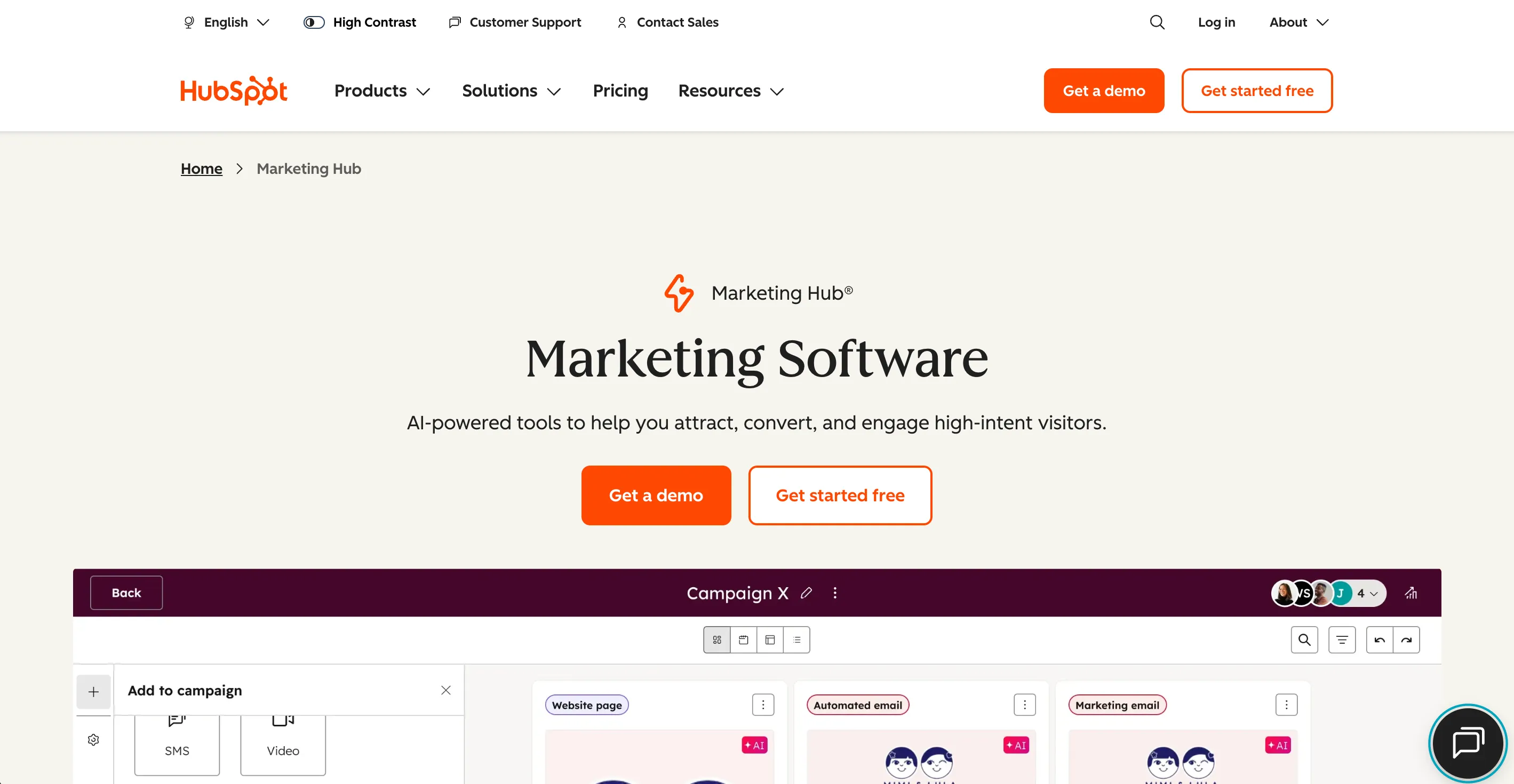
HubSpot AI integrates AI agents directly within the existing HubSpot platform, creating a unified ecosystem. This AI GTM Agent is designed to assist with repetitive tasks across sales, marketing, and customer success, using the data already stored in the HubSpot CRM to inform its actions. This is a great example of how to use AI within an existing tech stack to streamline AI workflows.
Key features:
- Content Generation: This AI assistant handles marketing and sales content creation, such as emails and blog posts, designed to align with a company's brand voice. This AI automation helps with SEO.
- Performance Reporting: Automates performance reporting from unified dashboards and provides actionable insights on campaign effectiveness, pulling data directly from the HubSpot CRM.
- SEO Assistance: Assists with search engine optimization by analyzing data to identify potential ranking opportunities, a key part of any GTM strategy for GTM teams.
- Asset Creation: Drafts and refines marketing assets for campaigns, helping to speed up the content creation process for marketing teams.
- Native Integration: Fits natively into the HubSpot ecosystem for users of their Sales, Marketing, and Service Hubs, providing a unified customer experience and simplifying onboarding.
Pros and cons of HubSpot AI
Apollo.io
Apollo.io is a sales intelligence AI GTM Agent that combines a large B2B contact database with automation tools for email sequencing and analytics. It uses AI to help with lead scoring and provides templates to streamline the outreach process for sales teams. This is one of the more popular AI GTM Agents for startups.
Key features:
- Contact Database: Provides access to a large database of B2B contacts and company data for prospecting and lead generation.
- Email Sequencing: Includes a built-in tool for email sequences to automate multi-step outreach campaigns, a core part of marketing automation.
- AI-Powered Lead Scoring: Uses an AI-powered lead scoring system to help sales teams optimize leads based on their likelihood to convert.
- Dynamic Templates: Offers dynamic templates for creating outreach messages, which can be populated with prospect data from their CRM.
- Data Enrichment: Enriches existing contact and account records with additional data points from its database, a key enrichment feature.
Pros and cons of Apollo.io
Clay
Clay is a data workflow automation platform that acts as a powerful research agent. It helps users build enriched lead lists by integrating with various data providers and using a waterfall enrichment model to find and validate information. This AI GTM Agent is ideal for teams that want to build custom data workflows for personalized outreach.
Key features:
- Data Provider Integration: Integrates with over 100 data providers, including sources for both person and company data, to improve enrichment.
- Waterfall Enrichment: Uses a waterfall logic to run sequential searches for data points across multiple providers, stopping when a result is found. This optimization saves money.
- AI Web Scraping: Features AI-powered web scraping and research agents to find specific information from websites and other online sources.
- AI Text Generation: Connects with ChatGPT (from OpenAI) to help generate personalized text for outreach messages based on the enriched data, similar to other LLMs.
- Workflow Builder: Allows users to build and share complex data enrichment AI workflows with a visual, no-code interface. This is a powerful workflow automation tool.
Pros and cons of Clay
Cognism
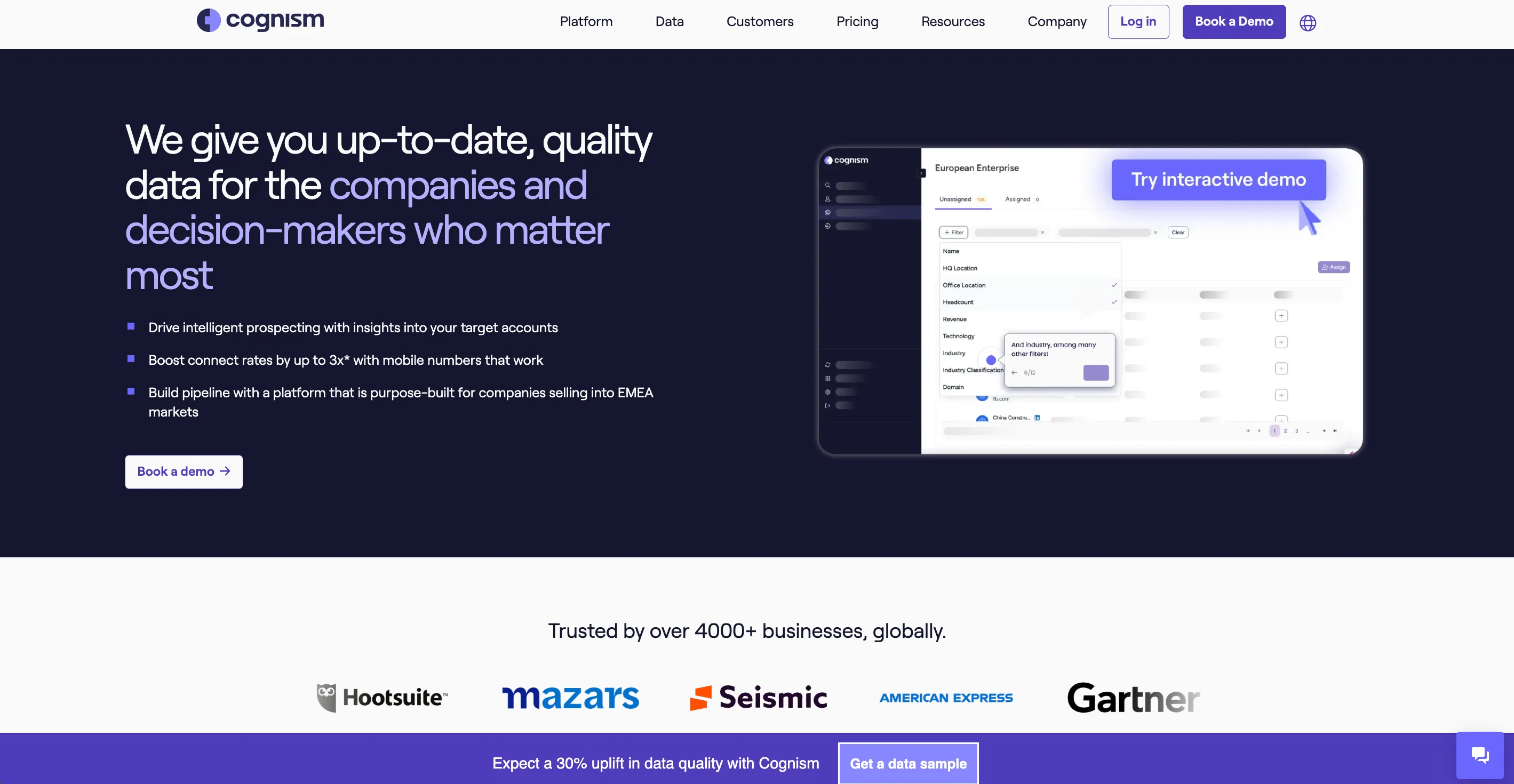
Cognism is a sales intelligence AI GTM Agent that provides verified B2B contact data with a focus on compliance. It helps sales teams identify and connect with relevant prospects while adhering to data privacy regulations like GDPR and CCPA. This focus on high-quality data is a key differentiator for GTM teams concerned with deliverability.
Key features:
- Contact Database: Provides a database of B2B contact information, including verified email addresses and mobile phone numbers, for lead generation.
- Data Verification: Verifies its contact data against a range of sources to improve the accuracy and reliability of the information, ensuring high-quality outputs.
- Intent Data: Includes intent data to help sales teams identify accounts that are actively researching relevant topics and keywords, a key source of buying signals.
- Browser Extension: Offers a browser extension that allows users to access contact data while they are on company websites.
- CRM Integration: Integrates with popular CRM platforms like Salesforce and sales engagement platforms to sync data and streamline workflows.
Pros and cons of Cognism
Hightouch
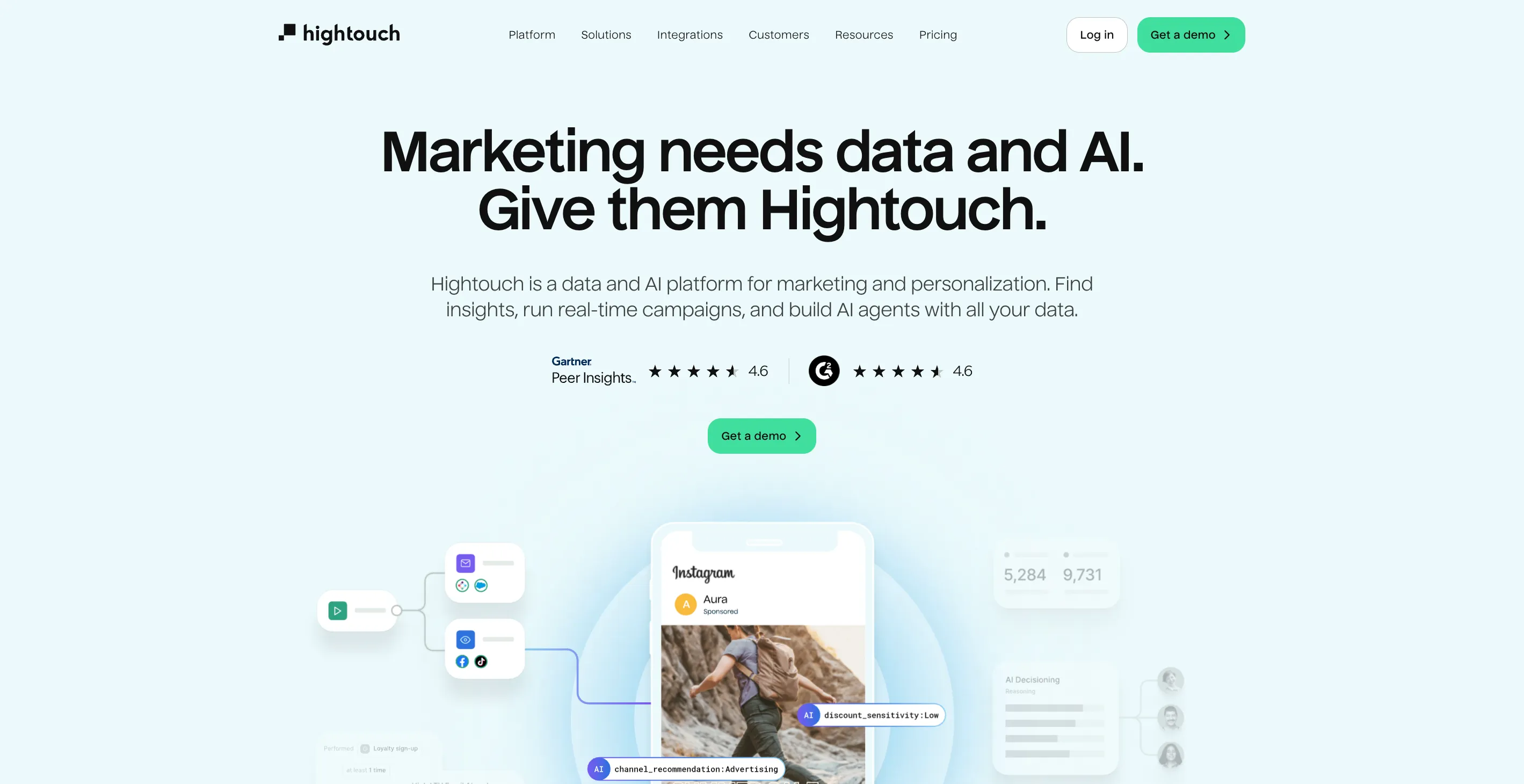
Hightouch is a Data Activation platform that acts as a data orchestration AI GTM Agent. It syncs data from a company's data warehouse to their various business tools, allowing teams to use AI to power marketing, sales, and operational workflows. This process, often called reverse ETL, is a form of data orchestration that helps RevOps teams.
Key features:
- Data Syncing: Moves data from a central data warehouse to over 200 marketing, sales, and support tools, including Salesforce and HubSpot.
- Audience Segmentation: Allows teams to build customer segments and audiences using the data directly in their warehouse, improving persona targeting.
- Workflow Automation: Can trigger automated workflows and actions in downstream tools based on changes in the warehouse data, a core part of marketing automation.
- Visual Interface: Provides a visual interface for mapping data from the warehouse to the various destination tools, similar to a no-code workflow builder.
- Data Consistency: Helps to maintain data consistency and a single source of truth across the entire GTM tech stack, improving attribution.
Pros and cons of Hightouch
Mutiny
Mutiny is a website personalization AI GTM Agent that uses AI to tailor website content for different visitor segments. It identifies visitors and dynamically changes the website's copy, images, and calls-to-action to match their industry, company size, or stage in the buying journey. This helps improve the customer journey and conversion metrics.
Key features:
- Visitor Identification: Identifies website visitors using IP lookup and integrations with CRM and marketing automation platforms to understand buying signals.
- No-Code Personalization: Allows marketers to create different website experiences (or "segments") for different audiences without writing any code, making content creation easier.
- AI Recommendations: Uses AI to recommend which segments to create and provides suggestions for personalized copy to use for each one, acting as an AI assistant.
- Performance Analytics: Provides analytics to show how personalization is impacting key website metrics, such as conversion rates and bounce rates, offering actionable insights.
- CMS Integration: Integrates with a company's existing content management system (CMS) to make content changes and streamline workflows.
Pros and cons of Mutiny
ZoomInfo Copilot
ZoomInfo Copilot is a sales engagement AI GTM Agent that combines ZoomInfo's B2B data with AI-powered outreach capabilities. It is designed to help sales teams identify and engage with accounts that are showing buying signals of being ready to buy. This is a powerful AI GTM Agent for GTM teams looking to optimize their sales process.
Key features:
- Intent Data: Uses ZoomInfo's proprietary intent data to identify accounts that are actively researching relevant products or services, showing strong buying signals.
- Automated Outreach: Automates multichannel outreach sequences across both email and phone to engage target accounts, a key automation feature.
- AI Content Generation: Provides AI-generated talking points and email copy for sales reps to use in their outreach, similar to other AI tools.
- Engagement Tracking: Tracks engagement with outreach and provides analytics on which accounts and messages are performing best, offering valuable metrics.
- Native Integration: Integrates directly with the broader ZoomInfo data platform for a seamless workflow, simplifying the tech stack with strong integrations.
Pros and cons of ZoomInfo Copilot
Lavender
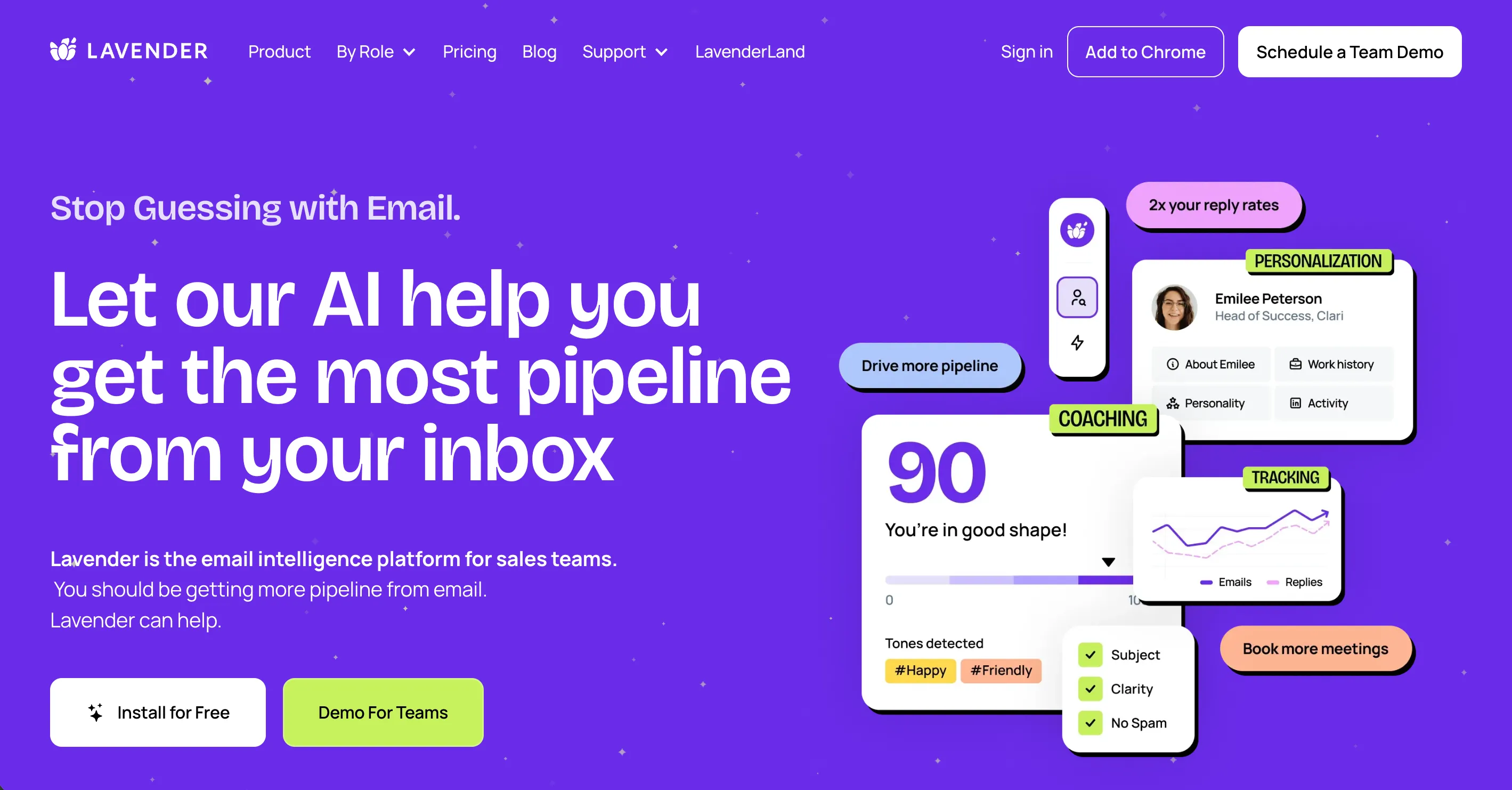
Lavender is a real-time sales email coach that acts as an AI GTM Agent to help sales reps write better emails. It integrates with a rep's email client and provides instant feedback on the quality of their writing, with the goal of increasing reply rates. This is a great AI GTM Agent for improving messaging and personalized email outreach.
Key features:
- Real-Time Analysis: Analyzes emails in real-time for factors like tone, readability, complexity, and clarity, offering instant optimization.
- Email Scoring: Provides a score from 1-100 on the likelihood of the email getting a reply, based on its analysis, a key metric for AI SDRs.
- Improvement Suggestions: Offers specific suggestions for improving the email's subject line, opening, body, and call-to-action, acting as an AI assistant.
- Personalization Assistant: Includes a personalization AI assistant that researches the recipient and suggests relevant talking points to include in the messaging for personalized outreach.
- Team Analytics: Provides team-level analytics on email performance and identifies coaching opportunities for sales managers, offering actionable insights.
Pros and cons of Lavender
Gong
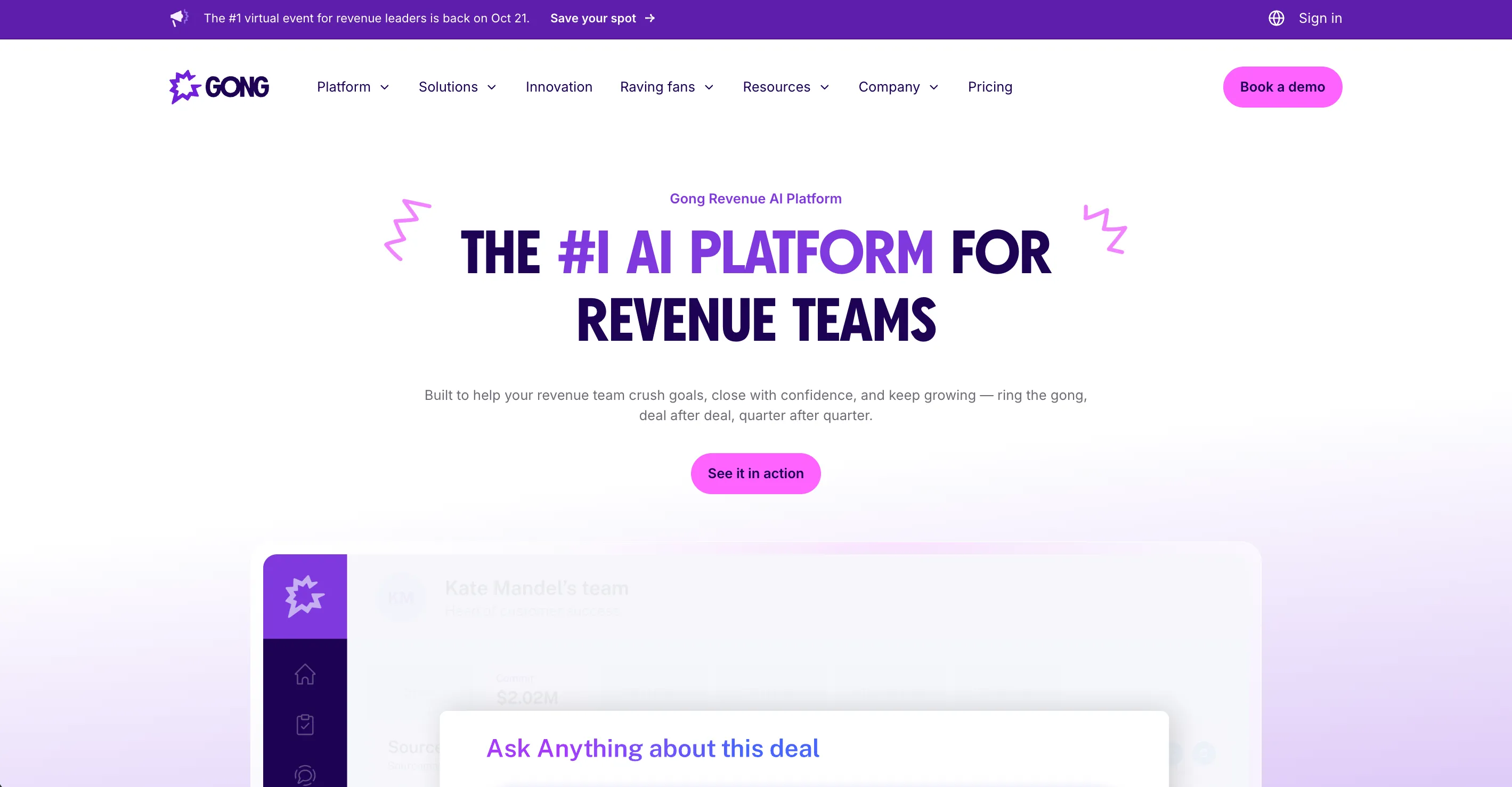
Gong is a conversation intelligence platform that acts as an analytical AI GTM Agent. It records, transcribes, and analyzes sales conversations, using AI to identify patterns in the language used by both sales reps and customers. This provides actionable insights that can be used for coaching, forecasting, and strategic decision-making. Gong is a leader in this category of AI GTM Agents for sales teams.
Key features:
- Conversation Recording: Records and transcribes audio and video calls, as well as email conversations, to create a complete record of customer interactions.
- Conversation Analysis: Analyzes conversations to identify topics discussed, key questions asked, competitor mentions, and other key moments, a key part of GTM AI.
- Searchable Library: Provides a searchable library of all sales conversations, allowing reps and managers to review specific calls or topics, a great tool for AI SDRs.
- Deal Intelligence: Uses AI to surface deals that are at risk based on the content of conversations and provides insights into pipeline health, improving forecasting accuracy.
- Coaching Tools: Offers tools for managers to provide targeted feedback to their reps based on specific moments in a recorded call, improving the sales playbook.
Pros and cons of Gong
Hockeystack
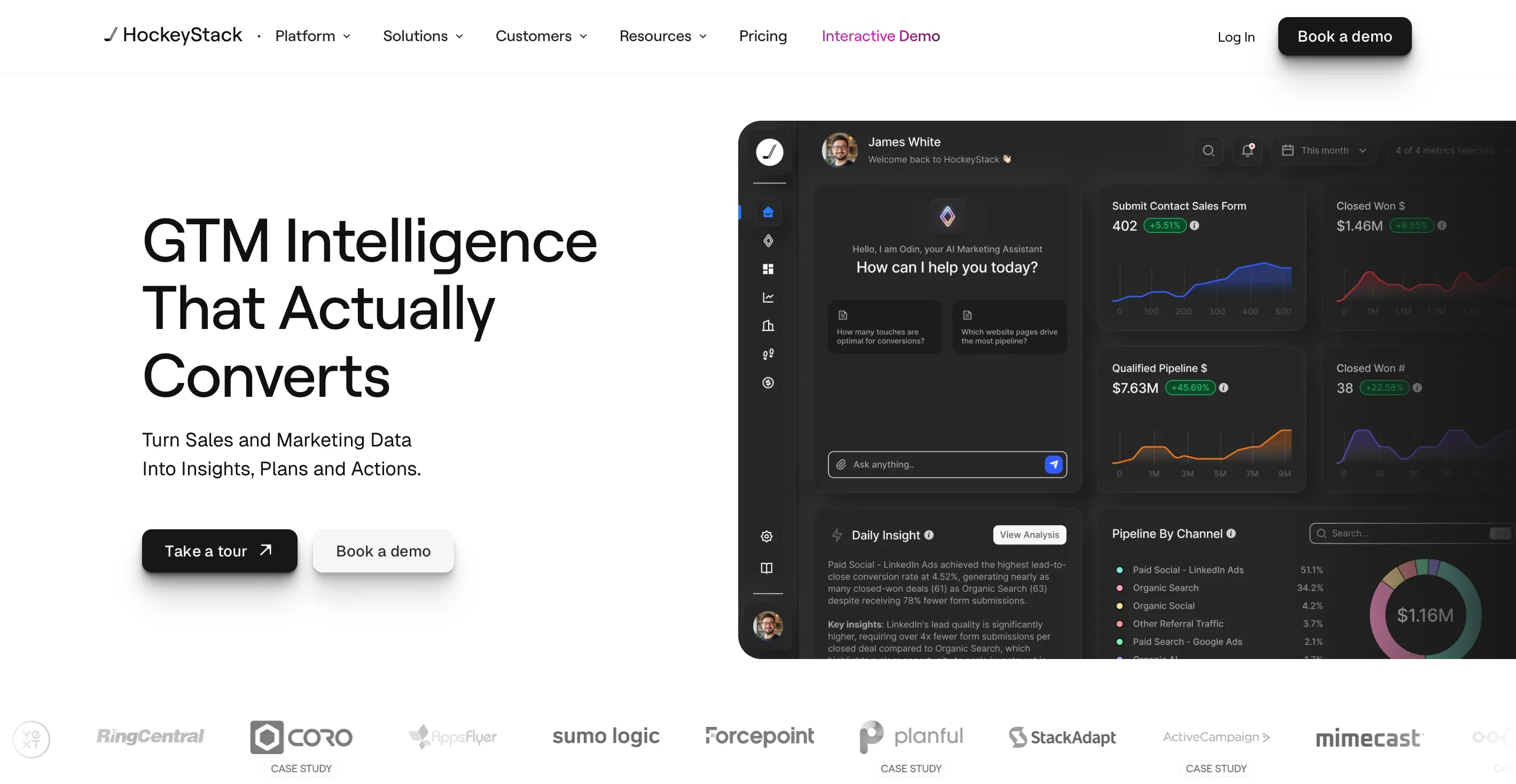
Hockeystack is a GTM analytics platform that acts as an analytical AI GTM Agent. It consolidates data from a company's CRM, advertising platforms, and marketing automation tools into a single dashboard. It aims to provide a unified view of revenue and attribution across the entire customer journey. This helps GTM teams understand their GTM motion better and make data-driven decision-making.
Key features:
- Data Consolidation: Integrates with a wide range of sales and marketing tools to pull all GTM data into one place, including from Salesforce and HubSpot.
- Unified Reporting: Provides a single source of truth for revenue and attribution reporting, from first touch to closed deal, offering valuable metrics.
- AI Assistant: Features an AI assistant, Odin, that can answer natural language questions about business performance, making data more accessible.
- Full-Funnel Attribution: Helps to connect marketing activities (like ad spend and SEO) to downstream revenue outcomes, a key part of GTM AI.
- Customizable Dashboards: Offers customizable dashboards and reports for different stakeholders across the business, improving decision-making.
Pros and cons of Hockeystack
Tray.io
Tray.io is a low-code workflow automation platform that acts as an orchestration AI GTM Agent. It connects a company's entire software stack, allowing users to build automated workflows that pass data and trigger actions between different applications, including CRM, marketing automation, and data platforms. This orchestration is key for complex GTM workflows and AI workflows.
Key features:
- Visual Workflow Builder: Provides a visual, drag-and-drop interface for building automated processes without writing code, a powerful no-code workflow builder.
- Connector Library: Offers a large library of pre-built connectors for hundreds of common enterprise applications, simplifying tech stack integration with strong integrations.
- GTM Automation: Can be used to automate a wide range of GTM tasks, such as lead routing, internal approvals, and follow-ups coordination.
- Conditional Logic: Allows for the creation of complex, multi-step workflows with conditional logic to handle different scenarios and use cases.
- User Accessibility: Is designed to be used by both technical and non-technical users, empowering business teams to build their own automation in a user-friendly way.
Pros and cons of Tray.io
How to Choose the Right AI GTM Agent for Your Team
Choosing the right AI GTM Agent for your GTM teams is a critical decision-making process that can significantly impact your sales cycles, lead generation, and overall revenue growth. With so many AI GTM Agents and GTM platforms available, it's essential to evaluate your options systematically based on your team's specific needs, tech stack, and GTM strategy. Here's an expanded guide to help you make the right choice:
- Define Your Primary Goal and Use Case: Start by identifying your main objective. Are you focused on automating repetitive tasks like prospect research and outreach, gaining deeper analytical insights from your data, or activating inbound leads across different channels? Your goal will narrow down the type of AI GTM Agent you need. For example, if you want end-to-end AI automation from prospecting to closing deals, autonomous AI agents like 11x.ai are ideal. If you need to improve email messaging, a coaching AI GTM Agent like Lavender might be better.
- Evaluate Integration Capabilities and Tech Stack Fit: Ensure the AI GTM Agent integrates smoothly with your core systems, such as Salesforce, HubSpot, or other CRM platforms. Deep integration with your CRM is crucial for a seamless data flow and to avoid creating new data silos. Check if the agent offers API access for custom integrations and whether it supports multichannel communication (email, phone, Slack, etc.). An AI GTM Agent with strong integrations will streamline your workflows and reduce manual data entry.
- Consider Your Company Stage, Size, and GTM Motion: Early-stage startups might benefit from AI GTM Agents that offer speed and a broad top-of-funnel approach, like Apollo or Clay. In contrast, larger enterprises may require the end-to-end orchestration and robust security of a multi-agent platform like 11x.ai. Consider your GTM motion: if your business relies heavily on inbound leads from your website, a chatbot or conversational AI GTM Agent would be a strong fit. If you're focused on outbound sales automation, look for AI SDRs or AI sales agents that can handle personalized outreach at scale.
- Assess the Level of Automation and Autonomy: Determine how much automation you want. Some AI GTM Agents act as an AI assistant that helps sales reps with repetitive tasks, while others are fully autonomous AI agents that can operate on autopilot. If you want to free up your reps to focus on closing deals, look for agentic AI platforms that can handle prospect research, lead qualification, follow-ups, and even books meetings without human intervention. If you prefer more control, choose agents that provide AI-driven recommendations but require human approval.
- Evaluate Data Quality, Enrichment, and Deliverability: The quality of your outputs depends on the quality of your inputs. Look for AI GTM Agents that offer high-quality data enrichment and verification to ensure your outreach reaches the right people. Check if the agent includes warm-up features for email domains to improve deliverability and avoid spam filters. AI GTM Agents with built-in enrichment capabilities can save you from needing multiple data providers in your tech stack.
- Consider Onboarding, Learning Curve, and User-Friendliness: Some AI GTM Agents are user-friendly and offer quick onboarding, while others require significant technical setup and training. If your team is not highly technical, look for no-code or low-code platforms with intuitive interfaces. Check if the vendor offers white-glove onboarding and ongoing support to ensure you can get up and running quickly. A steep learning curve can delay ROI and frustrate your team.
- Analyze Pricing, ROI, and Scalability: Pricing models vary widely across AI GTM Agents. Some charge per seat, others per contact or per use case. Consider the total cost of ownership, including integrations, onboarding, and ongoing maintenance. Calculate the potential ROI by estimating how much time and money the agent will save by automating repetitive tasks and improving sales processes. Ensure the AI GTM Agent can scale with your business as you grow from a startup to an enterprise.
- Focus on Actionable Outcomes and Metrics: The right AI GTM Agent should not just provide data; it should strengthen your team's collaboration and turn insights into clear, actionable outputs. The goal is to reduce complexity in your tech stack and create a more efficient path from initial insight to revenue generation, improving sales cycles and customer retention. Look for AI GTM Agents that provide real-time dashboards and metrics that help you track performance and optimize your GTM strategy.
- Test for Multi-Agent Orchestration and Workflow Automation: If you're looking for an all-in-one solution, consider platforms that offer multi-agent orchestration and workflow automation. These platforms can manage complex AI workflows that involve multiple functions, such as prospect research, personalized email generation, multichannel outreach, lead qualification, and seamless handoff to human reps. This level of orchestration is especially valuable for RevOps teams managing complex sales processes.
- Leverage AI-Powered Features Like LLMs and ChatGPT Integration: Many modern AI GTM Agents integrate with LLMs like ChatGPT to enhance content creation, personalized outreach, and research agents. If you want to leverage the latest AI-driven capabilities, look for agents that offer ChatGPT integration or similar AI assistant features. These tools can help you generate high-quality messaging, templates, and personalized email content at scale.
- Consider the Ecosystem and Community: Some AI GTM Agents have a strong ecosystem of partners, integrations, and community support. This can be valuable for troubleshooting, learning best practices, and discovering new use cases. Check if the agent has an active user community, comprehensive documentation, and responsive customer support.
The Future of Go-to-Market Execution
The era of tool overload is ending. Intelligent systems and AI GTM Agents now execute prospect research, engagement, forecasting, and analysis continuously while your human team focuses on creativity and relationships. This is the future of GTM AI, where autonomous AI agents work alongside sales teams to deliver unprecedented speed and precision.
Adopting AI as a partner, not a plugin, delivers measurable results. The right AI GTM Agent can transform your GTM motion from manual workflows to intelligent automation, reducing sales cycles and improving lead generation. By leveraging AI-driven orchestration, multichannel outreach, and real-time decision-making, modern GTM teams can focus on what matters most: building relationships and closing deals.
See how 11x’s autonomous digital workers elevate every aspect of modern revenue execution. Hire Alice or Julian today and transform your go-to-market strategy from manual to self-driving.
Frequently Asked Questions
GTM means go-to-market, your company’s operational blueprint for launching, selling, and scaling a product. It encompasses sales processes, marketing strategies, and customer success functions to ensure a cohesive approach to revenue generation.
An AI GTM Agent applies artificial intelligence to automate and optimize go-to-market strategies, connecting data, forecasting, and execution. It enables GTM teams to use AI for prospect research, personalized outreach, lead qualification, and real-time decision-making.
Generative AI, like ChatGPT and other LLMs, accelerates campaign creation by producing high-quality AI content, automating testing, and reducing time to market. It helps with content creation, personalized email generation, and messaging at scale.
An AI GTM Agent analyzes performance data and customer buying signals in real-time, surfacing actionable insights that guide GTM leaders toward smarter strategic choices. This improves forecasting, attribution, and overall GTM strategy.
AI-driven onboarding eliminates setup friction by syncing data automatically between platforms like Salesforce and HubSpot, accelerating setup and revenue impact. It streamlines the onboarding process and reduces the learning curve for new users.