5 Sales Data Management Tools to Boost Revenue in 2026
Master sales data management to improve forecasting, streamline workflows, and drive data-driven decisions. Get started with 11x.

Revenue teams generate more sales data than ever, yet most organizations struggle to turn it into actionable intelligence. Harvard Business Review finds poor data quality costs companies an average of $15 million per year, while decaying records, duplicates, and outdated contacts compound the problem across CRMs, spreadsheets, and disconnected tools.
Effective data management turns scattered records into a single source of truth, enabling accurate forecasting, personalized outreach, and informed GTM decisions. This article provides a practical framework for improving sales data quality and leveraging it to drive consistent revenue performance.
The Best Sales Data Management Tools
Our analysis covers leading platforms across data enrichment, CRM integration, automation depth, and real-time validation. Each evaluation considers enterprise readiness, integration depth, and measurable ROI potential.
1. 11x
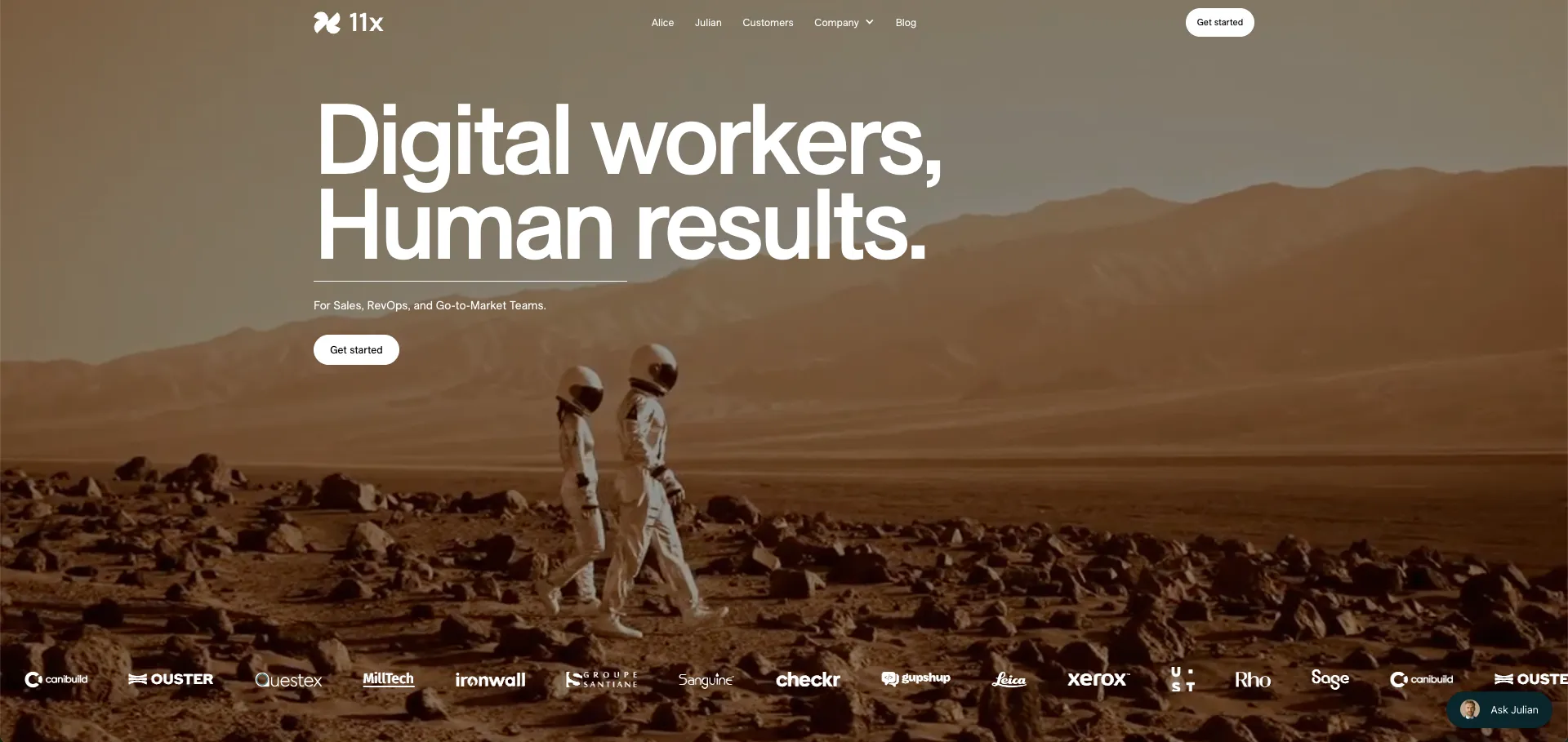
11x provides autonomous digital workers that function as true virtual team members, maintaining sales data quality as a natural byproduct of revenue execution. Alice handles outbound prospecting across email and LinkedIn while Julian manages inbound qualification via phone, both continuously enriching and validating CRM records during every interaction.
Core Capabilities:
- True autonomy with goal-driven agents executing complete workflows without manual data entry
- Real-time data validation, as buying activity is detected across channels, triggers instant profile updates
- Automated deduplication and standardization during prospecting workflows eliminate manual cleanup cycles
- Deep CRM integration with bi-directional sync to Salesforce and HubSpot, maintaining audit trails
Standout Features:
- 24/7 operation across time zones with support for 100+ languages
- Intent tracking for job changes, funding events, and research behavior
- Self-learning algorithms that refine data quality rules based on conversion outcomes
- Enterprise-ready security with SOC 2 Type II, GDPR, and CCPA compliance from day one
Competitive Advantages:
- First platform to deliver truly autonomous digital workers that maintain data hygiene during execution
- Superior multichannel orchestration ensuring consistent data capture across email, phone, and LinkedIn
- Continuous enrichment that prevents data decay rather than periodic batch fixes
Ideal Fit: GTM teams that want to eliminate manual data cleanup while improving CRM accuracy continuously.
ROI Impact: Gupshup saw a 50% increase in SQLs per SDR after adopting Alice, enabled partly by consistently clean and enriched CRM data powering outreach.
Book a demo to see how 11x transforms your sales data management.
2. Salesforce
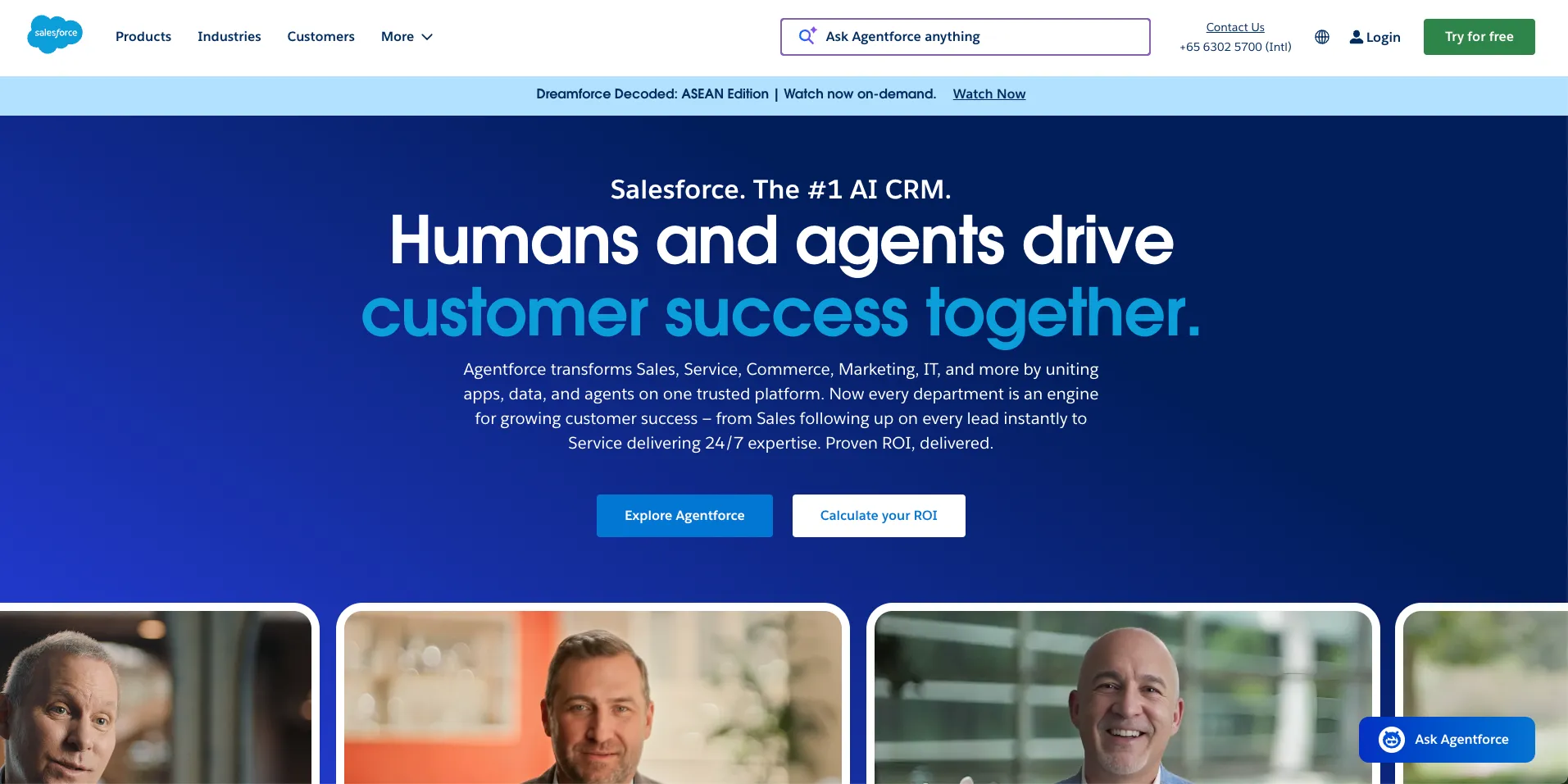
Salesforce provides the industry-standard CRM platform with built-in analytics, reporting dashboards, and data management capabilities for enterprise sales teams requiring deep customization.
Strengths:
- Comprehensive native ecosystem with Einstein AI for predictive analytics and lead scoring
- Extensive customization options for data fields, validation rules, and workflow automation
- AppExchange marketplace offering thousands of integrations for data enrichment
- Enterprise-grade security and global data residency options
- Strong reporting and dashboards for sales performance tracking
Limitations:
- Requires dedicated administration to maintain data quality
- Data enrichment depends heavily on third-party integrations
- Higher total cost of ownership when factoring in implementation and add-ons
- Complexity can slow adoption across teams
Ideal Fit: Large enterprises with dedicated Salesforce administrators and implementation budgets.
3. HubSpot

HubSpot combines CRM, marketing automation, and sales tools in one platform, making it accessible for mid-market teams seeking unified data management without heavy technical overhead.
Strengths:
- Unified data model connecting marketing, sales, and service interactions
- Built-in data quality tools, including deduplication and property standardization via the Operations Hub
- Free tier enables smaller teams to start with core features
- User-friendly interface reduces training time and encourages adoption
Limitations:
- Advanced automation requires higher-tier subscriptions with steep price increases
- Less customization flexibility compared to enterprise platforms
- Data enrichment still requires third-party integrations
- Reporting depth is limited for complex analytics needs
Ideal Fit: Mid-market sales and marketing teams wanting integrated workflows and gradual platform growth.
4. ZoomInfo
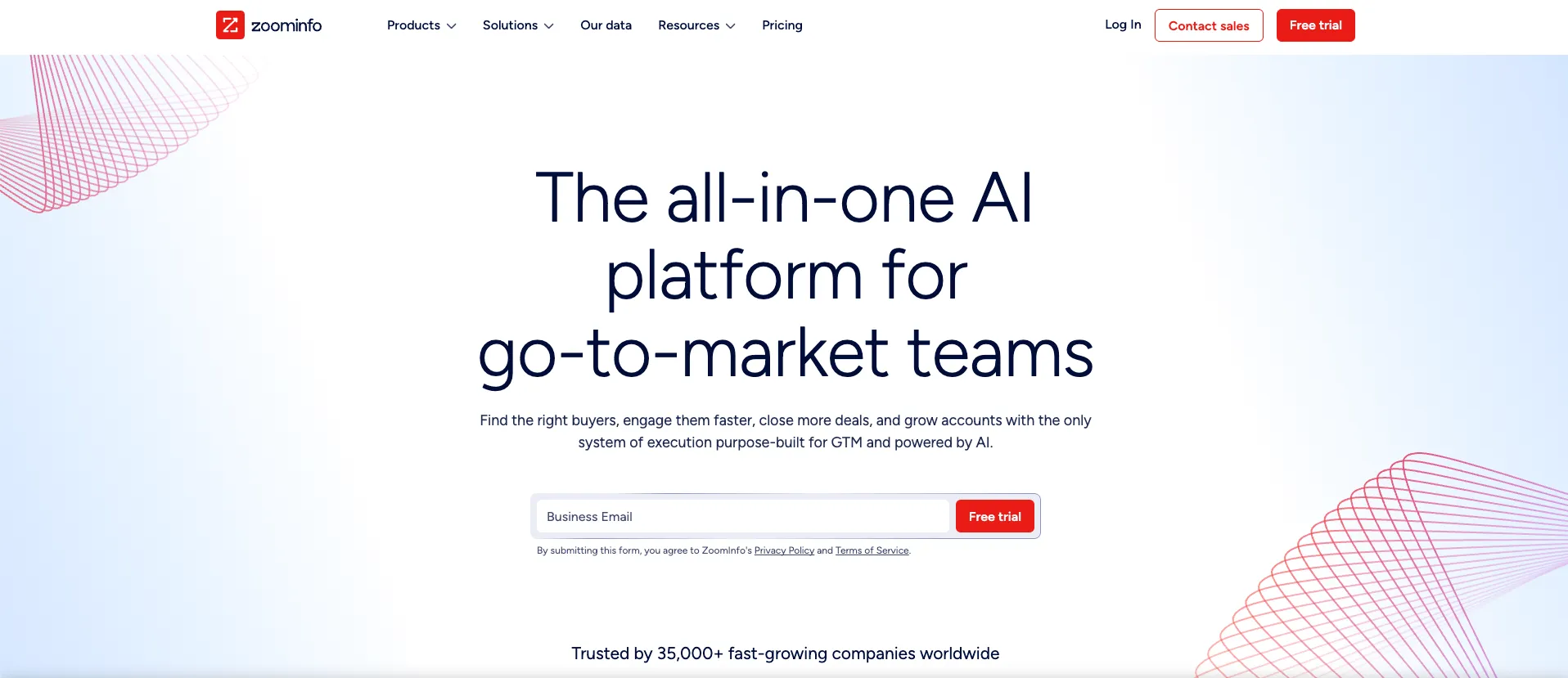
ZoomInfo offers one of the largest verified B2B contact and company databases, providing batch enrichment to fill gaps in customer data with over 200 million verified contacts.
Strengths:
- Comprehensive database with firmographic and technographic information
- Intent data for prioritizing accounts showing active buying behavior via the ZoomInfo platform
- Strong integrations with major CRM systems for automated record updates
- Territory planning and segmentation tools for sales managers
Limitations:
- Enrichment occurs in batch cycles rather than real-time validation
- Premium pricing with contracts starting at $15K annually
- Data remains static after enrichment, requiring refresh cycles
- International coverage varies widely by region
Ideal Fit: Large B2B organizations focused on accurate enrichment for account-based sales strategies.
5. Outreach
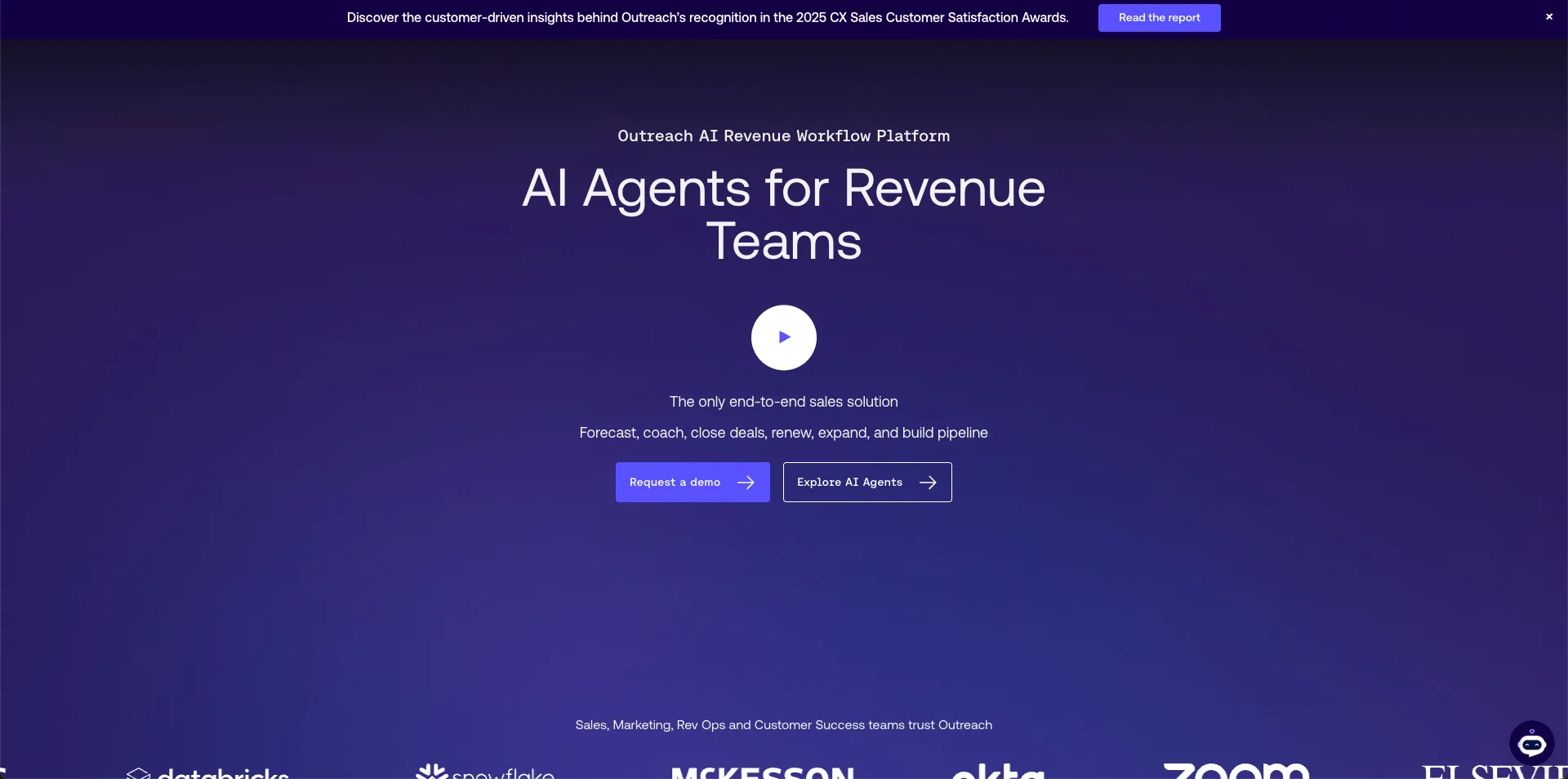
Outreach provides sales engagement capabilities that capture interaction data across email, phone, and meeting touchpoints, feeding activity metrics back into CRM systems automatically.
Strengths:
- Automated activity logging reduces the manual data entry burden via the Outreach platform
- Sequence analytics identify which messaging and timing drive conversion
- Deal intelligence features flag risks and suggest next-best actions
- Strong Salesforce integration ensures smooth data flow
Limitations:
- Primarily captures engagement data rather than full data management
- Requires clean underlying CRM data to function effectively
- Contact enrichment depends on complementary tools
- Pricing positions it toward mid-market and enterprise
Ideal Fit: Sales teams prioritizing engagement tracking within existing CRM infrastructure.
Platform Comparison: AI Depth, Automation, and Integration
The sales data management market ranges from traditional CRMs requiring manual upkeep to fully autonomous digital workers that maintain data quality in real time. Understanding differences in AI sophistication, automation, and integration helps you match platforms to your GTM motion.
The table below compares five leading platforms on AI-driven enrichment, workflow autonomy, native CRM integration, and built-in governance standards.
This comparison provides a clear starting point to evaluate which sales data management platform best supports accurate, scalable, and actionable revenue operations.
What Is Sales Data Management?
Sales data management is the systematic process of collecting, organizing, validating, and maintaining information that supports your sales process. It covers contact information, customer profiles, sales activities, pipeline metrics, and historical data that drives forecasting.
Unlike basic CRM usage, effective sales data management ensures data remains accurate, complete, and actionable across your entire tech stack. It transforms disconnected spreadsheets and silos into a single source of truth.
Key components:
- Data collection: Capturing information from CRM systems, marketing automation, social media, and third-party providers
- Data validation: Verifying accuracy through automated rules and enrichment
- Data cleaning: Removing duplicates, correcting errors, and filling missing values
- Data governance: Establishing ownership, access controls, and quality standards
- Data analysis: Transforming raw information into insights for sales strategy
Sales data examples include contact records, opportunity stages, activity logs, customer behavior patterns, and demographics.
How Modern Sales Data Management Differs From Traditional Approaches
Traditional sales data management relied on manual data entry, periodic cleanup projects, and disconnected spreadsheets that quickly became outdated. Sales reps spent hours updating CRM systems, while data quality degraded between infrequent audit cycles.
Modern approaches use automation, real-time data validation, and AI-powered enrichment to maintain accuracy continuously. According to McKinsey research, companies implementing data-driven sales approaches see measurable productivity gains by eliminating manual research and data entry tasks.
Crunchbase analysis indicates that sales teams with clean, enriched data close deals faster than those working with incomplete records. Real-time data management catches changes like job transitions and company mergers immediately, as Outfunnel research notes. Common data management mistakes include failing to align sales and marketing teams around shared data definitions and neglecting to establish clear ownership.
This evolution enables sales teams to focus on high-value activities while automation handles repetitive data hygiene work. Platforms like 11x embed data management directly into autonomous prospecting workflows. Records improve with every interaction rather than degrading between manual updates.
Core Use Cases Across the Sales Lifecycle
Data quality problems surface everywhere in your sales process. Your SDRs waste hours researching contacts. Your AEs discover job titles are outdated mid-call. Your forecast collapses because opportunity data contradicts reality. Clean data fixes all of it, from the first prospecting touch through renewal conversations.
Prospecting and Lead Generation:
- Contact enrichment fills missing phone numbers and email addresses
- Intent tracking identifies accounts actively researching solutions
- ICP refinement sharpens ideal customer profiles using customer data
Pipeline Management and Forecasting:
- Opportunity data standardization ensures consistent stage definitions
- Historical data analysis improves forecast accuracy
- Activity metrics flag at-risk deals early
Sales Engagement and Follow-Up:
- Real-time validation ensures outreach reaches the right contacts
- Behavioral data personalizes messaging based on customer interactions
- CRM integration logs activities without manual data entry
Customer Retention and Expansion:
- Customer profiles consolidate purchase history and engagement patterns
- Health scoring identifies churn risk for proactive intervention
- Upsell intelligence surfaces expansion opportunities
Teams using AI-powered enrichment see conversion rate improvements compound as data quality improves. This competitive advantage grows over time as clean data enables better targeting and personalization.
Autonomous Digital Workers vs. Manual Data Management
Understanding the fundamental difference between autonomous digital workers and manual data management determines whether your data quality scales with revenue or collapses under volume. This distinction shapes every downstream decision about platform selection, team structure, and operational costs.
Manual data management requires human intervention at every step. Sales reps enter information into CRM systems, and operations teams run periodic cleanup projects. This model introduces delays and inconsistencies as data decays between updates.
Autonomous digital workers operate as goal-driven agents that maintain data quality as a byproduct of workflow execution. They research, validate, enrich, and update CRM systems continuously.
11x demonstrates the autonomous approach. Alice and Julian maintain clean, enriched records while prospecting and qualifying, turning data management into an inherent part of revenue execution.
How to Choose the Right Sales Data Management Platform
Selecting the right platform requires a systematic approach focused on fit, feasibility, and future-proofing. Start with an outcome-first methodology: identify 3-5 prioritized use cases with measurable targets like data accuracy rates, enrichment coverage, or reduction in manual data entry hours.
Evaluation Criteria for Enterprise Buyers
Security and Compliance:
- SOC 2 Type II certification for security controls validation
- GDPR and CCPA alignment for data protection
- Data residency options and SSO/SAML integration
Governance and Data Quality:
- Automated deduplication to prevent record fragmentation
- Validation workflows that catch errors at entry
- Role-based access controls for sensitive data
Integration Depth:
- Native CRM connectors with bi-directional sync
- API access for custom integrations
- Marketing automation connectivity
Automation Capabilities:
- Real-time enrichment versus batch processing schedules
- Machine learning models that improve over time
- Self-healing data that corrects decay automatically
According to Nucleus Research, organizations with comprehensive data management platforms see higher productivity per rep compared to fragmented tools. Quotapath research emphasizes that effective sales data management requires clear processes for data collection, validation, and governance across the entire sales organization.
Best Sales Data Management Approach for Small Business
Criteria That Matter:
- Affordability: Low entry cost with pricing that scales gradually
- Simplicity: Minimal setup and configuration requirements
- Core coverage: Basic enrichment and validation without excessive features
- CRM compatibility: Clean integration with existing systems
Recommended Approach:
11x delivers enterprise-grade data management through autonomous digital workers without requiring dedicated operations staff. Alice handles prospecting while continuously enriching records.
For teams prioritizing manual control, HubSpot's free tier provides foundational CRM and data quality tools.
Best Sales Data Management Approach for Mid-Market Teams
Mid-market organizations need scalability alongside governance. Dedicated roles handle data operations while automation manages routine enrichment and validation.
Look for solutions that maintain data quality across sales, marketing, and customer support systems without creating new silos.
Best Sales Data Management Approach for Enterprise Organizations
Enterprise requirements demand strong governance, global scalability, and deep customization. Security certifications, audit capabilities, and compliance features become non-negotiable.
Consider the total cost of ownership, including implementation, training, and administration, rather than just licensing fees.
Implementation Best Practices
Most data management initiatives fail not from choosing the wrong platform but from poor execution during rollout. Without a structured approach, teams face incomplete integrations, low adoption rates, and data quality that degrades within weeks of launch. The framework below delivers measurable improvements within 30 days while building the governance infrastructure that maintains quality long-term. Successful implementations follow a phased approach that balances quick wins with sustainable processes, ensuring your team sees value before complexity increases.
Phase 1: Foundation (Weeks 1-4)
The foundation phase establishes baseline data quality and connects core systems. Focus on understanding your current state before attempting fixes. This diagnostic work prevents you from optimizing the wrong fields or building validation rules that conflict with actual workflows.
Key activities:
- Audit current data quality across CRM fields to identify completion rates and error patterns
- Define field formats and validation rules for priority fields like email, phone, and company
- Implement automated deduplication rules that catch duplicates at entry rather than cleanup cycles
- Connect primary data sources, including marketing automation, sales engagement, and enrichment providers
- Document baseline metrics for field completion, bounce rates, and duplicate creation to prove improvement
Phase 2: Process Integration (Weeks 5-8)
Integration embeds data quality into daily workflows rather than treating it as a separate maintenance task. Configure automation that validates and enriches records as they flow through your sales process. This phase determines whether your team adopts the system or routes around it.
Key activities:
- Train sales reps on data quality expectations and how validation prevents wasted outreach effort
- Configure real-time validation triggers that catch errors at form submission and CRM entry
- Establish governance roles with explicit ownership for contact data, account data, and opportunity data
- Integrate with sales enablement tools to ensure clean data flows to sequencing and analytics
- Deploy 11x digital workers to maintain enrichment during prospecting workflows
Phase 3: Optimization (Weeks 9-12)
Optimization refines your data quality rules based on real performance data. Analyze which enrichment sources deliver the highest accuracy, which validation rules create friction without benefit, and where automation can expand to additional workflows. This continuous improvement cycle sustains quality as your GTM motion evolves.
Key activities:
- Analyze enrichment accuracy by source and adjust provider mix to maximize contact quality
- Expand automation to additional workflows, including post-sale customer success and renewal processes
- Document processes for self-service so reps can request data fixes without RevOps bottlenecks
- Review governance effectiveness and adjust ownership assignments based on actual field management
- Connect data quality metrics to business outcomes like reply rates and pipeline velocity
Success metrics validation: Organizations following this phased approach typically see field completion rates improve 40-60% within 90 days, bounce rates decline by 30-50%, and SDR productivity increases 20-30% as manual research time decreases. Teams using 11x accelerate these improvements by embedding enrichment directly into autonomous prospecting and qualification workflows.
Common Pitfalls and How to Avoid Them
Even well-funded organizations with experienced RevOps leaders make predictable mistakes when implementing data management systems. These errors compound over time, turning initial wins into long-term technical debt that requires expensive cleanup projects to fix.
Pitfall 1: Treating data management as a one-time cleanup project
Teams schedule a major data cleansing initiative, celebrate the results, then watch quality degrade within months as new records enter the system without validation. Contact information decays at roughly 30% annually as people change jobs, companies merge, and phone numbers disconnect. Without continuous maintenance, your CRM returns to its previous state of disorder.
How to avoid: Build data quality into ongoing workflows rather than periodic projects. Deploy automation that validates and enriches records at entry points. Autonomous digital workers like 11x maintain hygiene continuously as they execute prospecting and qualification, preventing decay rather than reacting to it quarterly.
Pitfall 2: Boiling the ocean with initial implementation
Organizations attempt to clean every field across every record simultaneously, overwhelming teams with complexity and delaying time-to-value by months. This all-or-nothing approach creates change fatigue and makes it impossible to measure which improvements actually drive business outcomes.
How to avoid: Start with the 5-10 fields that directly impact sales performance: email, phone, job title, company, and industry. Prove value through improved reply rates and meeting bookings before expanding to secondary attributes. Phased rollouts build momentum and demonstrate ROI that justifies continued investment.
Pitfall 3: Ignoring the sales rep experience during tool selection
RevOps teams choose platforms based on feature checklists without testing how tools fit into daily workflows. If enrichment requires manual lookups or validation creates extra clicks, reps route around the system entirely. Adoption collapses within weeks, leaving you with shelfware and unchanged data quality.
How to avoid: Involve frontline reps in evaluation and prioritize tools that reduce friction rather than add steps. Autonomous digital workers eliminate this tension by managing data quality as a byproduct of execution. Reps never touch the enrichment system because it runs invisibly during prospecting and qualification workflows.
Pitfall 4: Launching without clear governance and ownership
No one owns data quality explicitly, so everyone assumes someone else handles it. Field definitions remain undocumented. Validation rules conflict across teams. Data quality metrics go unmeasured, making it impossible to prove improvement or identify regression.
How to avoid: Assign explicit ownership for each major field category before launch. Document field definitions, validation rules, and refresh cadences in a shared wiki. Track completion rates, duplicate creation, and bounce rates monthly. Connect these metrics to pipeline velocity and conversion rates to demonstrate business impact that justifies continued focus.
Stop Losing Revenue to Poor Data Quality
Sales data management is the foundation that makes everything else work. Clean, enriched data enables accurate forecasting, personalized outreach, and informed decisions, while poor data quality costs sales teams hours on manual research and undermines forecast confidence.
Traditional methods require manual effort that scales linearly with team size. 11x eliminates the trade-off by embedding data management into autonomous revenue execution. Alice and Julian maintain clean records while prospecting and qualifying leads around the clock.
Ready to transform data management into a competitive advantage? Book a demo to see how 11x automates data quality at scale.
Frequently Asked Questions
Sales data management is the practice of collecting, organizing, validating, and maintaining information that supports your sales process. It includes customer data, contact information, activity records, pipeline metrics, and historical data used for forecasting and decision-making. Effective management transforms scattered data into a single source of truth. 11x automates this process through digital workers that maintain data quality during prospecting and qualification.
Track field completion rates across email, phone, company, and job title. Monitor duplicate creation rates, bounce rates, and contact decay to quantify data health over time. Connect these metrics to business outcomes like pipeline velocity and conversion rates to demonstrate ROI. 11x improves these metrics automatically by enriching records during prospecting