
.png)

67% of sales operations leaders admit that creating accurate sales forecasts is more challenging now than it was three years ago, which means traditional methods are falling short. This shift is pushing sales teams to adopt more AI-driven approaches that help them make faster, smarter decisions and anticipate future revenue with greater confidence.
This guide provides a comprehensive, criteria-based comparison of the best AI-powered sales forecasting platforms in 2025. Each tool demonstrates how artificial intelligence enhances the sales forecasting process by analyzing customer data, identifying trends, and helping teams streamline workflows without relying solely on manual reporting. With these capabilities, sales organizations can replace guesswork with data-driven insights and improve overall decision-making.
What is AI sales forecasting?
AI sales forecasting uses machine learning and predictive analytics to generate accurate predictions about upcoming sales performance. Instead of only reviewing past results, these systems process large datasets in real time to understand behavior patterns, such as deal progression, rep performance, and customer behavior. Many tools examine metrics that humans would miss and produce forecasts that are both adaptable and grounded in constantly updated new data.
These models support sales managers who want greater visibility into pipeline health without manually stitching reports together in Excel or other legacy formats.
How is AI used in sales forecasting?
AI enhances forecasting by going beyond static historical analysis to evaluate real-time signals across multiple channels. Machine learning models can now identify which opportunities are most likely to close deals, which helps sales reps to focus on high-value pipeline segments rather than spreading efforts too thin.
Natural language processing or NLP is the technology that enables this. It analyzes communications such as emails and calls and generates insights that help teams understand whether deals are progressing or facing hidden bottlenecks. Predictive modeling also compares different sales forecasting methods and use cases, giving leaders valuable insights into likely sales outcomes.
In combination, these capabilities completely transform traditional forecasting into a dynamic, responsive system that continuously improves as it processes more data analysis.
Top 5 AI Sales Forecasting Tools in 2025
Here are the top AI sales forecasting tools that can help your sales team predict revenue with greater accuracy and confidence.
1. 11x (Alice & Julian)
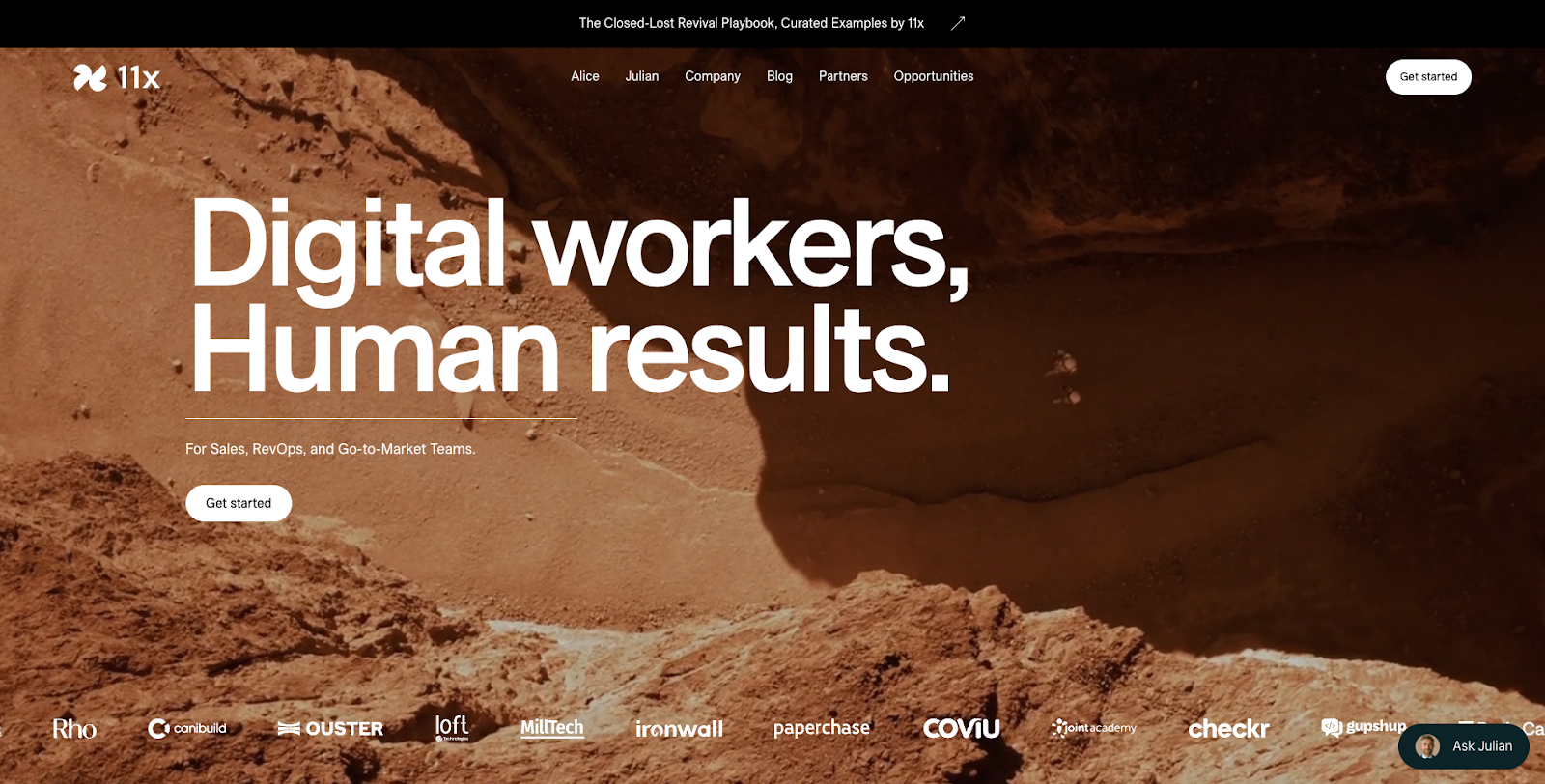
11x provides two distinct AI agents: Alice, an AI SDR, and Julian, an AI Phone Agent. Alice handles outbound prospecting and engages prospects across multiple channels to build a pipeline, while Julian specializes in inbound phone qualification, learning from every call to adapt to business needs. These agents are designed to operate as autonomous members of a sales team, executing complete workflows from start to finish and feeding rich, real-time data into your forecasting models.
Key features:
- Alice (AI SDR): Conducts multi-channel prospecting across email and LinkedIn, helping teams scale outreach while uncovering valuable insights about prospect engagement.
- Julian (AI Phone Agent): Handles inbound calls, qualifies prospects in real time, and updates the CRM automatically to maintain clean sales forecasting software inputs.
- Autonomous Operation: Both agents function with human-like intelligence and require no direct human intervention to complete tasks.
- CRM Integration: Syncs seamlessly with major CRMs, ensuring accurate activity logs that improve the reliability of your sales forecasting process.
ROI Impact: Gupshup saw a 50 % increase in SQLs per SDR after adopting Alice, enabling a 1.5× boost in output per rep, and freeing up time for strategic initiatives like calling and rapid campaign testing, all without increasing headcount.
Book a product walkthrough with our team.
2. Clari
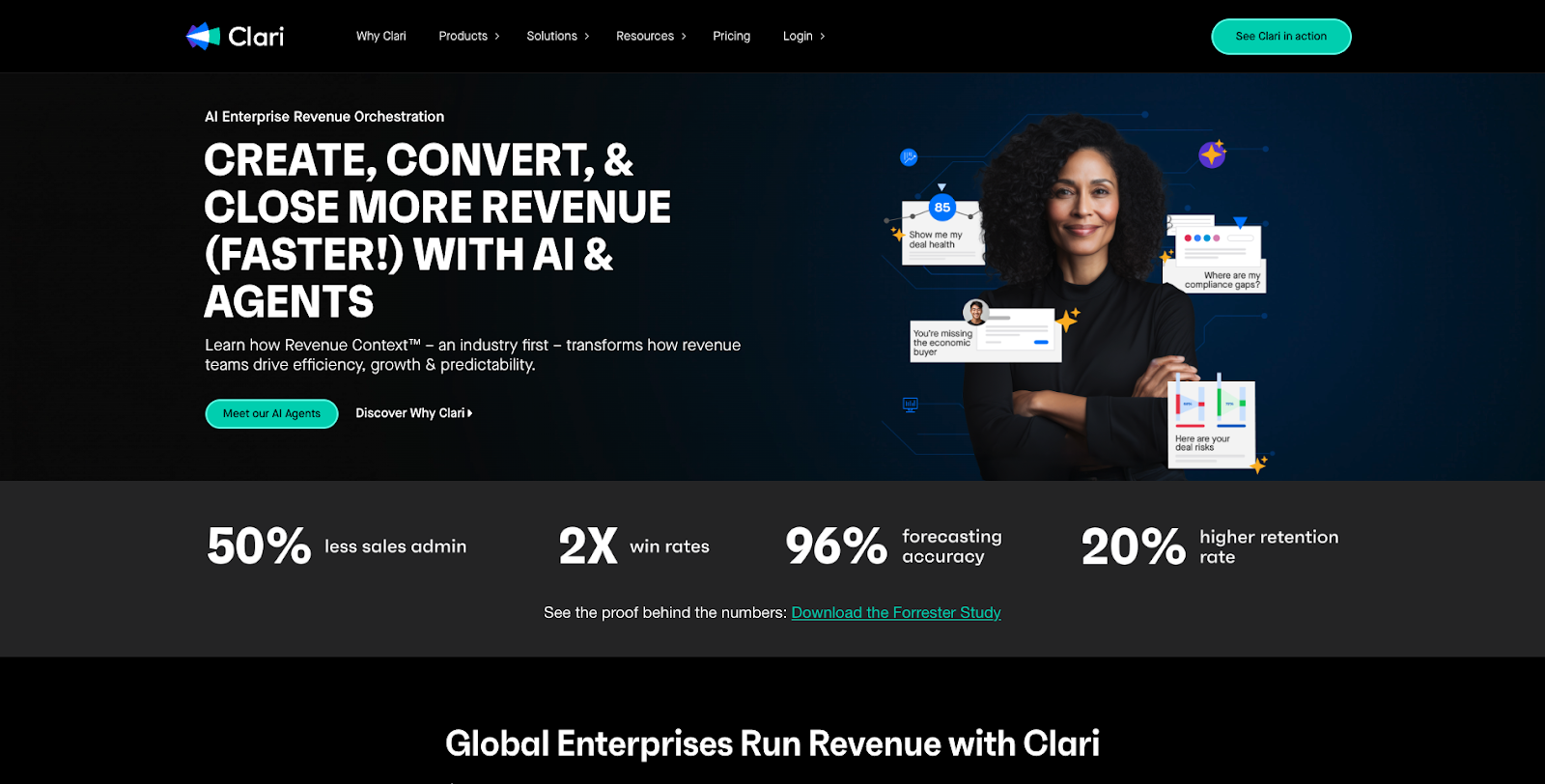
Clari is a revenue intelligence platform built to give leaders complete visibility into pipeline health, deal momentum, and overall revenue projections. By leveraging AI-driven modeling, Clari helps companies identify gaps earlier and address risks before they impact quarterly performance.
Key features:
- Predictive Forecasting: Uses AI to project revenue with high accuracy, often claiming up to 95%.
- Pipeline Inspection: Offers deep visibility into pipeline health, deal progression, and identifies at-risk deals.
- Deal & Account Engagement: Tracks engagement signals across various sources to provide a comprehensive view of deal health.
- Revenue Collaboration: Provides a workspace for sales teams to collaborate on forecasts and strategy.
Pros and cons of Clari
3. Avoma
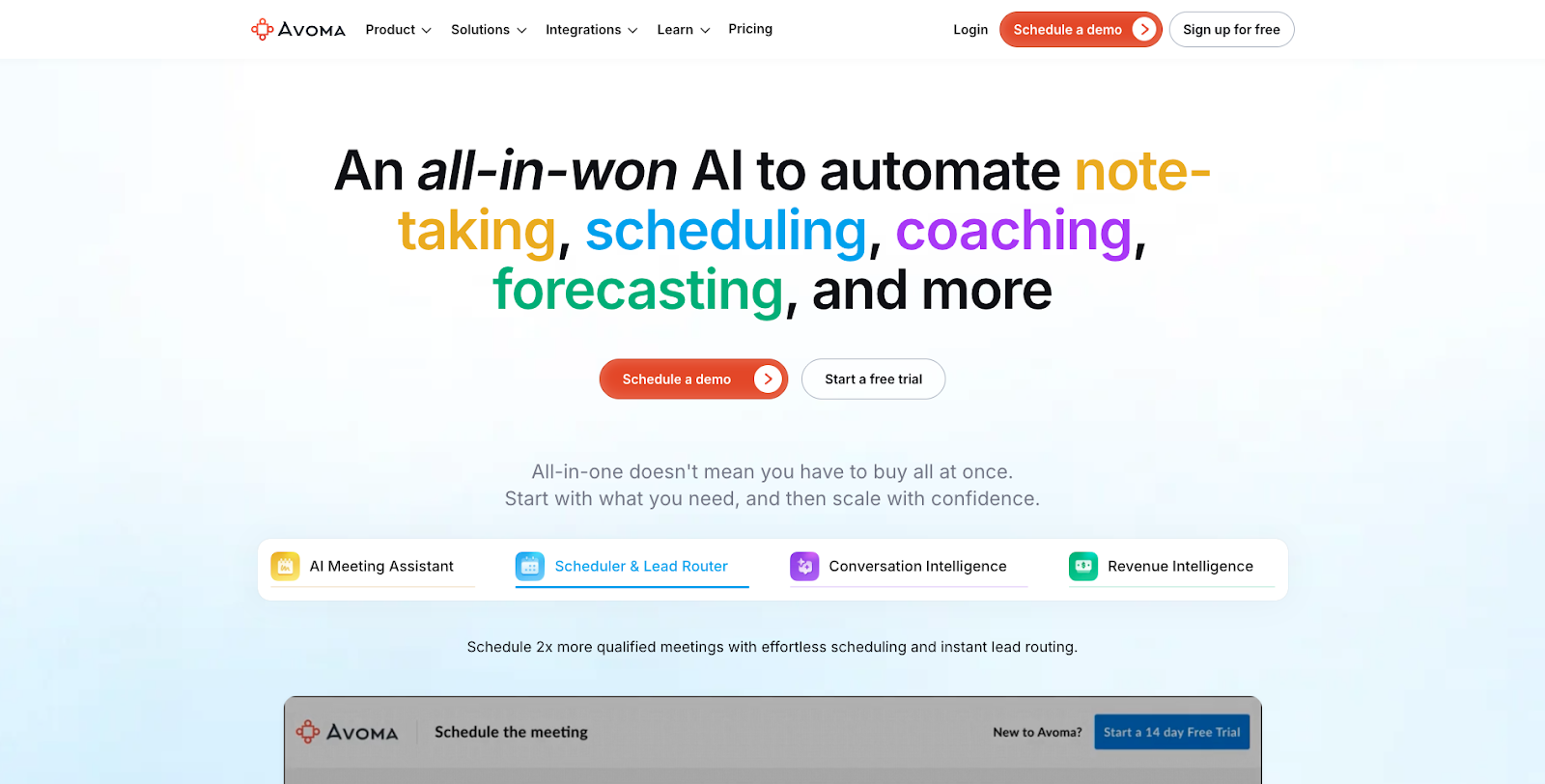
Avoma is an AI-powered conversation intelligence platform that helps sales teams by analyzing customer interactions to provide insights for coaching and forecasting. It captures and analyzes every conversation, providing a wealth of qualitative data to improve sales performance and add context to quantitative forecast data.
Key features:
- AI Deal Health Scores: Analyzes deal activity and conversation sentiment to assign health scores, helping to predict which deals are likely to close.
- Aggregated Forecasting: Provides Best Case, Middle Case, and Worst Case forecasting scenarios to help leaders make more informed decisions.
- Forecasting Dashboard: A real-time dashboard to monitor revenue attainment and track team performance against goals.
- Conversation Analysis: Transcribes and analyzes calls and meetings to extract key topics, action items, and sentiment.
Pros and cons of Avoma
4. Aviso
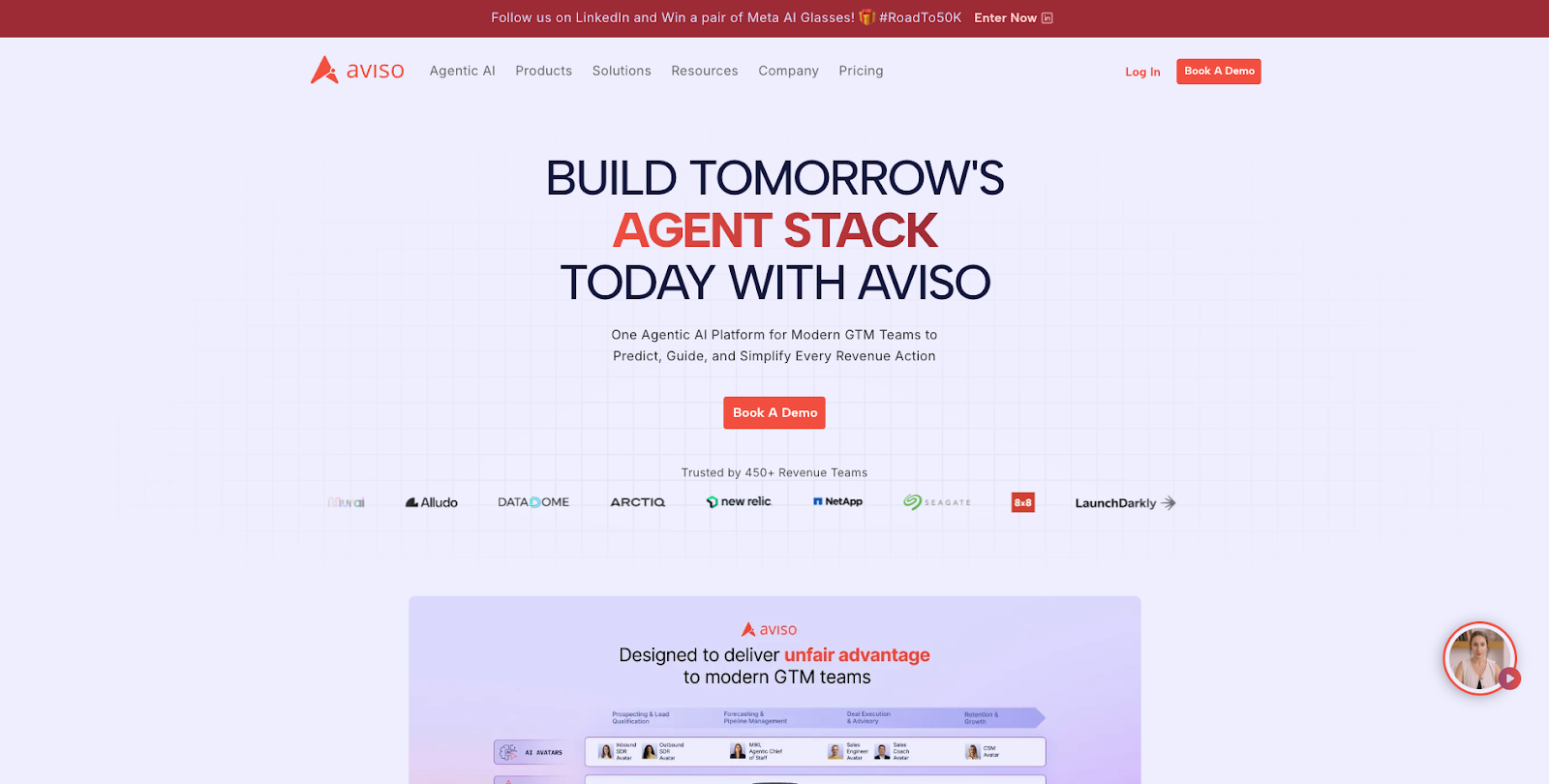
Aviso is an AI-powered revenue intelligence platform that provides sales teams with deal guidance, forecasting, and pipeline management capabilities. It uses advanced algorithms to analyze sales data and provide actionable insights to help sales teams close more deals by understanding the nuances of deal progression and rep performance.
Key features:
- AI-Powered Forecasting: Aviso's AI provides accurate forecasts and helps you understand the factors that are driving your revenue.
- Deal Guidance: Provides guidance on which deals to prioritize and what actions to take to move them forward.
- Pipeline Management: Helps you manage your pipeline and identify at-risk deals with predictive insights.
- Activity & Engagement Tracking: Captures and analyzes sales activities to provide a complete picture of deal engagement.
Pros and cons of Aviso
5. Gong
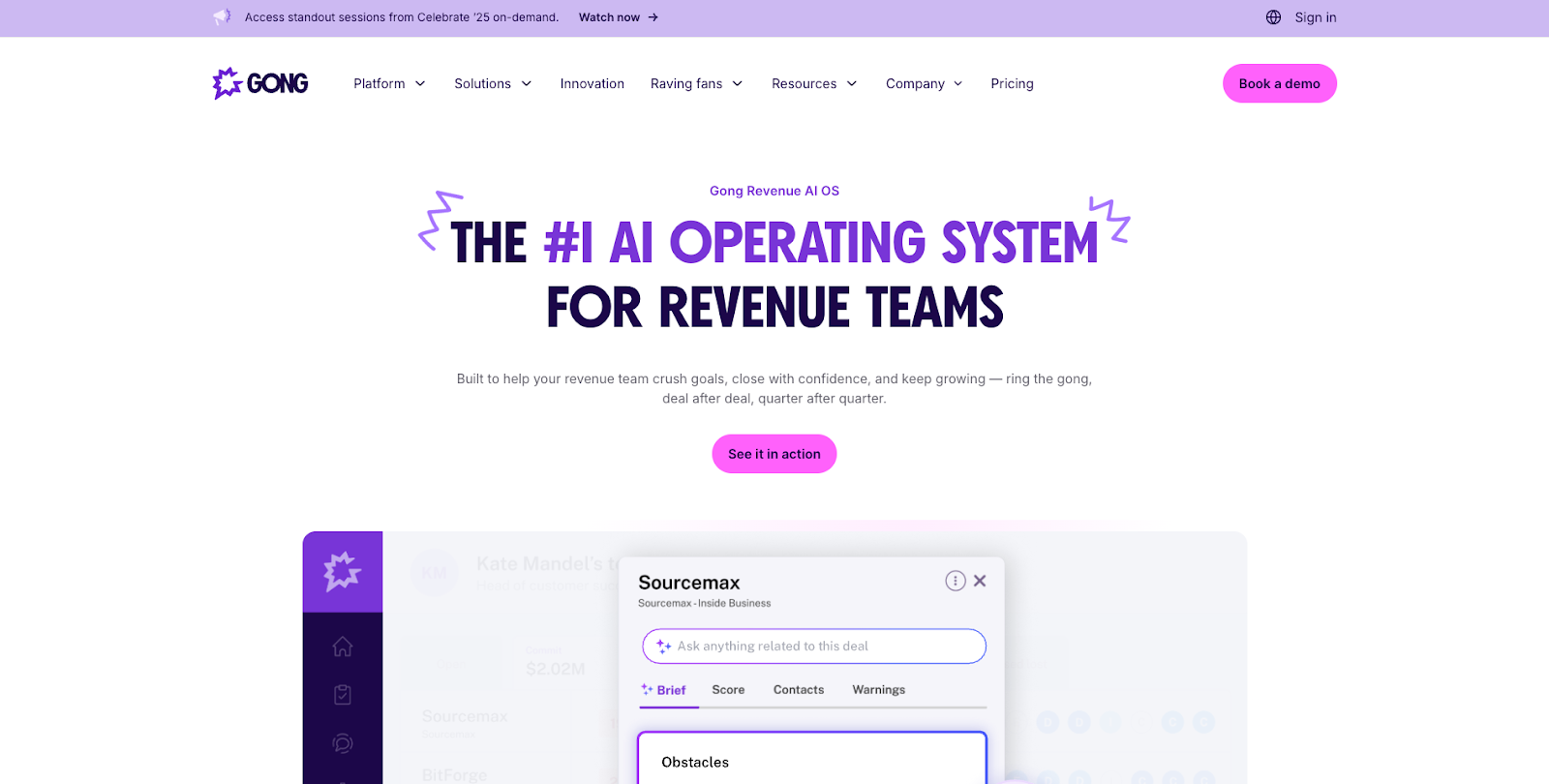
Gong is a leading conversation intelligence platform that records, transcribes, and analyzes sales calls, meetings, and emails. It provides deep insights into customer interactions, helping sales teams to improve their performance and providing valuable qualitative data for more accurate forecasting.
Key features:
- Conversation Analysis: Gong's AI analyzes conversations to identify topics, action items, and key moments that influence deal outcomes.
- Deal Intelligence: Provides a clear view of deal health based on the content and sentiment of customer interactions.
- People Intelligence: Helps you understand the roles and influence of different people in the buying process.
- Market Intelligence: Tracks competitors, products, and market trends mentioned in sales conversations.
Pros and cons of Gong
How to Choose the Right AI Sales Forecasting Tool
Choosing the right AI sales forecasting tool is a critical decision that can significantly impact your sales performance. With so many options available, it's essential to carefully evaluate your needs and choose a platform that aligns with your business goals. Here are some factors to consider when making your decision:
- Assess your current forecasting challenges: Start by identifying where your existing workflows break down. Are teams struggling with incomplete data, inconsistent updates, or limited visibility into pipeline risks? Understanding these bottlenecks will help you determine whether you need deeper analytics, better automation, or forecasting powered by more advanced data-driven insights.
- Consider your team size and sales process complexity: The right solution depends heavily on your team's scale and the level of forecasting rigor required. Smaller teams may benefit from lighter, more intuitive platforms, while enterprise organizations often require robust modeling engines that continuously analyze new data.
- Evaluate integration requirements: Your forecasting tool should seamlessly integrate with your CRM and other sales tools. Make sure the platform you choose supports the integrations you need.
- Determine your budget and ROI expectations: AI sales forecasting tools range from free to thousands of dollars per month. Determine your budget and look for a tool that will provide a positive return on your investment.
- Review the AI sophistication needs: Do you need a simple, out-of-the-box solution or a highly customizable platform with advanced AI capabilities? Choose a tool that matches your team's technical expertise and your business needs.
Best Practices for Implementing AI Sales Forecasting
Implementing an AI sales forecasting tool is not just about adopting new technology; it's about transforming your sales process. To get the most out of your investment, follow these best practices for implementation and adoption.
- Ensure data quality and consistency: The accuracy of your AI forecasts depends on the quality of your data. Ensure your CRM data is clean, complete, and consistent before implementing a new forecasting tool. Clean, standardized data helps AI models generate stronger data-driven insights and reduces the manual cleanup that slows forecasting cycles.
- Start with clean historical data: To train the AI model, you'll need at least 12 months of clean historical sales data. This will help the system learn the patterns and trends specific to your business.
- Train your team on the platform: Your sales team needs to understand how to use the new tool and how it will benefit them. Provide comprehensive training and support to ensure a smooth transition.
- Set clear forecasting categories: Establish consistent categories such as "commit," "best case," and "pipeline" to ensure everyone is on the same page.
- Establish regular review cadences: Review your forecasts with your sales team regularly to track progress, identify at-risk deals, and adjust your strategy as needed. These cadences also help highlight bottlenecks or slow-moving deals that may distort predictions if left unaddressed.
Improve your sales pipeline with 11x AI Forecasting
AI sales forecasting is no longer a futuristic concept.It’s a practical, powerful tool reshaping how sales teams operate. By leveraging machine learning and predictive analytics, businesses can move beyond the limits of traditional forecasting to achieve greater accuracy, efficiency, and insight.
Solutions like 11x make it easier for companies of any size to predict revenue with confidence, make data-driven decisions, and drive growth. To see 11x in action, book a demo.
.png)
.png)
.png)

.png)