Best Sales Qualifying Tools to Ask Better Questions [2026]
Compare tools that automate sales qualifying questions and close more deals faster. Book a demo with 11x.

Your sales reps already know the best sales qualifying questions to ask. The problem is they're spending 50% of their time on prospects who never convert, according to Salesforce research. When your sales process depends on manual outreach, inconsistent follow-up, and each salesperson remembering to ask the right questions during every discovery call, opportunities slip through while unqualified leads consume your pipeline capacity.
The gap between knowing good qualifying questions and asking them consistently at scale is where your revenue dies.
Modern sales qualifying tools don't just provide contact data or email sequences. They autonomously research prospects, ask discovery questions across multiple channels, analyze responses in real time, and surface only qualified opportunities to your team. This guide compares seven platforms that transform your qualification process from manual bottleneck into automated execution. For teams seeking end-to-end autonomy, 11x deploys AI agents that qualify every prospect through intelligent conversations without human oversight.
What Are Sales Qualifying Tools?
Sales qualifying tools help your teams determine whether prospects fit your ideal customer profile (ICP) and have the budget, authority, need, and timeline to buy. They automate sales lead qualification by gathering data on potential customers, asking qualifying questions through automated outreach, and scoring leads based on conversion likelihood.
Modern sales qualifying software goes beyond static lead scoring.
The best platforms research prospects across LinkedIn, company websites, and intent data sources to surface business problems and understand the prospect's needs before your first sales call. They identify stakeholders, map the decision-making process, and flag red flags that would otherwise waste your rep time. This helps you qualify sales leads efficiently and build trust early in the sales process.
You use qualifying tools to prioritize qualified prospects, automate follow-up sequences, and ensure discovery questions reach the right people at the right time. For B2B sales teams running high-volume sales prospecting, these platforms determine whether your sales cycle accelerates or stalls.
Why Look for Sales Qualifying Tools?
Your reps spend too much time on manual research and cold calls that lead nowhere. Traditional sales qualification questions work when every salesperson asks them consistently, but inconsistency kills your conversion rates. You search for better tools when your current process creates bottlenecks.
Common reasons include:
- Feature gaps in sales lifecycle coverage: Many tools handle outbound only or provide data without execution. You need platforms that cover the complete qualification process from research to booking.
- Learning curve and workflow friction: Complex interfaces slow adoption. Your sales teams want tools that integrate with your CRM and existing sales strategy without extensive training.
- Pricing and enterprise readiness concerns: Starter tiers often lack the automation depth needed for scale. Your growing teams require solutions that handle volume without proportional cost increases while delivering insights that influence the final decision to buy.
- Integration depth with CRM and sales stack: Partial syncs and manual data entry defeat the purpose. Bi-directional CRM integration keeps your pipeline data accurate.
- Deliverability and data quality: Outdated contacts and poor email placement waste your outreach. Qualifying tools must maintain accurate prospect data and protect your sender reputation.
- Multichannel vs single-channel capabilities: Email-only tools miss decision-makers active on LinkedIn, responsive to phone, or registered for your webinar. The best platforms engage prospects across multiple channels to build trust throughout the sales process.
Our Evaluation Methodology
Our methodology prioritizes neutral, criteria-driven analysis: 90% objective feature comparisons, 10% strategic insights from GTM experience. Each evaluation considers enterprise readiness, integration depth, and measurable ROI potential. Selection criteria include coverage across the complete sales lifecycle, AI sophistication, multichannel capabilities, CRM integration quality, governance features, and proven customer outcomes.
Sales Qualifying Tools Compared: Features and Pricing
The table below compares automation depth, qualification capabilities, and integration support across leading platforms. Each tool takes a different approach to asking qualifying questions at scale, from assisted workflows requiring human oversight to fully autonomous agents that qualify prospects independently.
Top 7 Sales Qualifying Tools
The platforms below vary in focus. Some specialize in outbound automation, others in inbound qualification, multichannel engagement, or full GTM coverage. Each suits different team needs, your pipeline goals, and your automation requirements.
1. 11x
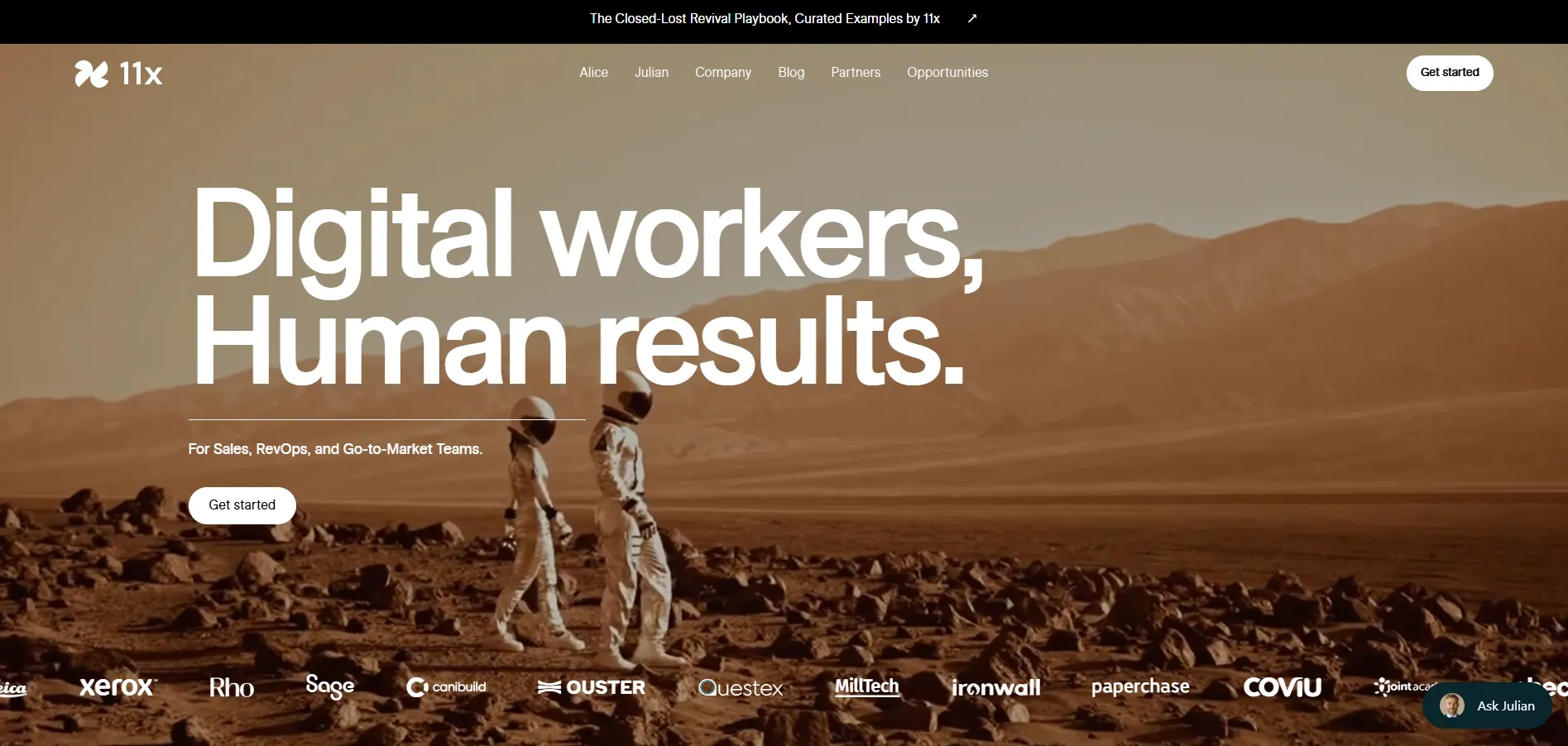
11x provides a unified AI GTM platform where two autonomous digital workers handle the entire sales qualification process. Alice manages outbound prospecting across email and LinkedIn, while Julian qualifies inbound leads through phone conversations within seconds of form submission. Together, they replace fragmented tools with continuous execution.
Key Features:
- Alice (AI SDR): Conducts outbound prospecting across email and LinkedIn to secure qualified meetings. Researches prospects using 21+ data providers, identifies pain points, and personalizes qualifying questions based on real-time signals.
- Julian (AI Phone Agent): Calls inbound leads within seconds and qualifies them through natural conversations. Asks discovery questions, determines good fit against your ICP, and routes qualified prospects to sales reps.
- Autonomous Operation: Completes research, outreach, follow-ups, and lead qualification independently. No manual intervention required for routine sales conversations.
- Advanced Data Sources: Connects to 21+ elite data providers with real-time signals including job changes, funding events, and intent data.
- CRM Integration: Syncs with Salesforce, HubSpot, Pipedrive with bi-directional data flow. Every activity logs automatically.
- Enterprise-Ready: SOC 2 Type II, GDPR, CASA Tier 3, CCPA compliant with dedicated CSM support.
Best Fit: 11x is ideal for GTM teams replacing SDR and contact-center tasks with continuous AI execution. Compared to single-channel tools, 11x autonomously identifies, engages, and qualifies leads across both outbound and inbound workflows to close deals faster.
Results: Customers report 50% decrease in cost per lead, 80% increase in meeting-to-qualified opportunity conversion, and 30% increase in meetings booked per AE. Gupshup saw a 50% increase in SQLs per SDR after adopting Alice, enabling a 1.5× boost in output per rep without increasing headcount. This shortened the time frame from first contact to purchasing decision significantly.
Pricing: Custom enterprise plan with usage-based tiers tied to lead volume and integration scope.
Book a demo to see how autonomous AI workers transform your GTM motion.
2. Artisan
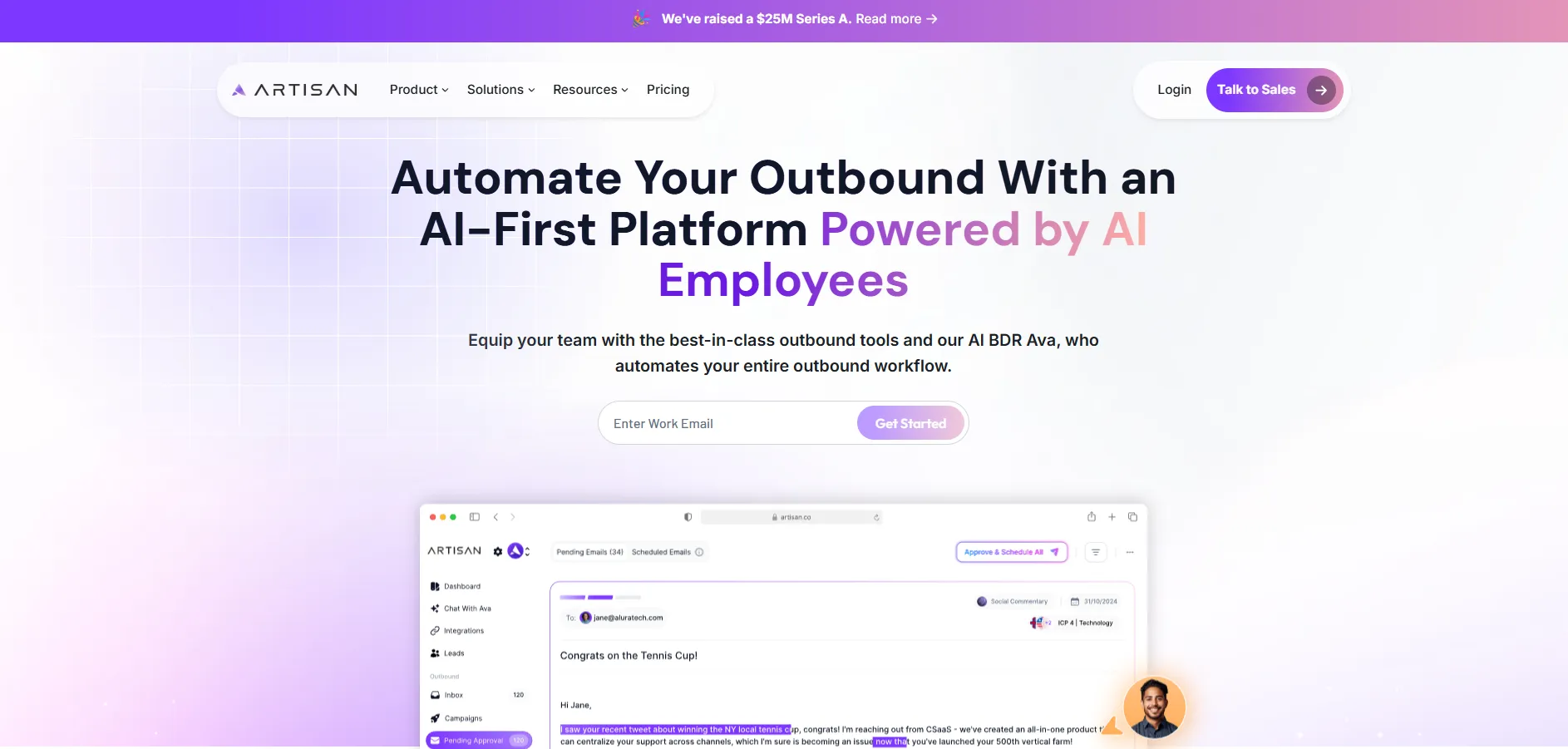
Artisan positions itself as an AI-first outbound platform built around Ava, an AI BDR that automates manual outbound tasks. The platform consolidates lead research, email generation, intent data, and B2B database access into one interface.
Key Features:
- AI BDR named Ava handles prospect research, email personalization, and follow-up sequences
- Access to 300M+ verified B2B contacts across 200+ countries
- Website visitor tracking and intent signal monitoring
- Email warmup and deliverability management tools
- Personalization waterfall that tailors messages based on LinkedIn activity and website visits
Best Fit: Artisan suits mid-market teams seeking to consolidate outbound tools around an AI BDR. Unlike 11x, which provides both outbound and inbound qualification through Alice and Julian, Artisan focuses primarily on email-based outbound automation without native phone qualification capabilities.
Pricing: Custom enterprise plans. Annual contracts typical.
3. AiSDR
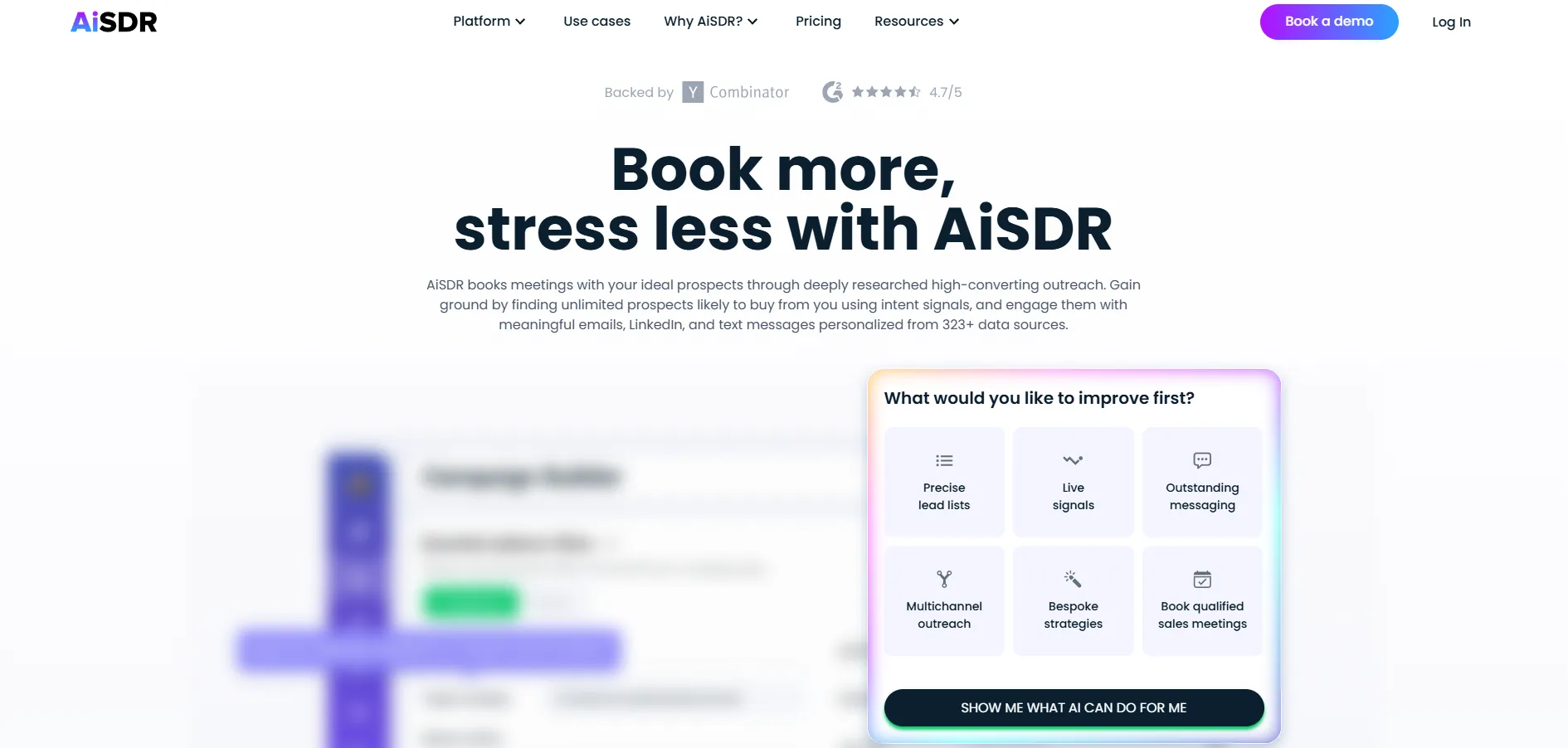
AiSDR combines AI-powered outreach with HubSpot integration to automate email and LinkedIn prospecting. The platform focuses on personalized messaging using data from 323+ sources and offers configurable sequence builders.
Key Features:
- AI-generated personalized emails and LinkedIn messages using deep prospect research
- Live social signal tracking for LinkedIn engagement timing
- HubSpot native integration with automatic contact syncing
- AI Strategist feature generates campaign ideas, and GTM plays
- Intent-based prospecting from 700M+ contact database
Best Fit: AiSDR works well for HubSpot-centric teams scaling outbound without phone components. The platform requires manual oversight for complex sales conversations. 11x extends beyond AiSDR's scope by adding Julian for inbound phone qualification and operating fully autonomously.
Pricing: Starting at $900/month billed quarterly. All features included.
4. Relevance AI
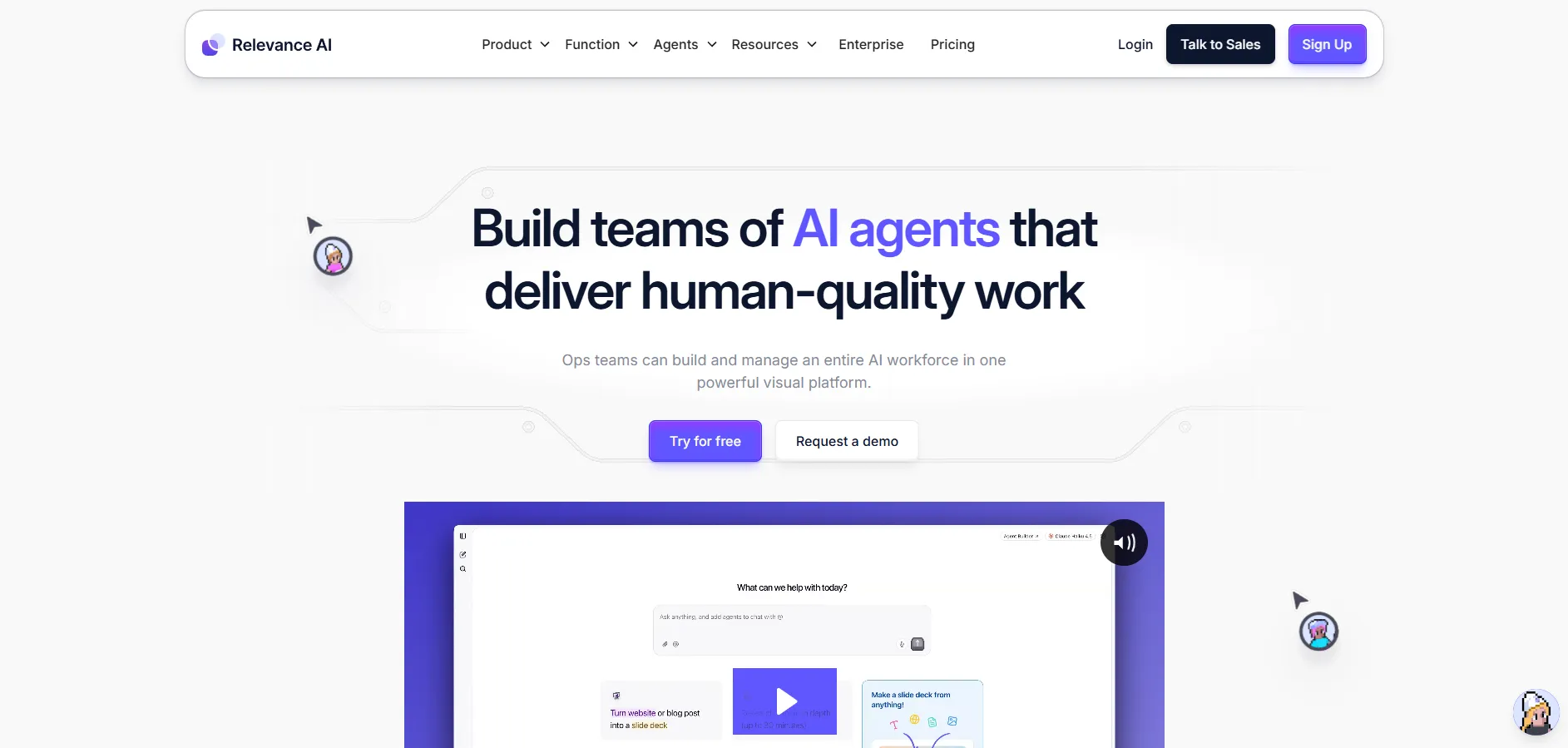
Relevance AI provides a platform for building custom AI agents rather than offering pre-built SDR functionality. Sales teams can configure agents for prospecting, follow-up, call preparation, and content delivery based on their specific workflows.
Key Features:
- Build custom AI agents for specific sales functions
- Prospecting and follow-up agents with configurable workflows
- Deal intelligence and call preparation capabilities
- Integration with major CRMs and sales tools
- Content intelligence that surfaces relevant materials during conversations
Best Fit: Relevance AI suits technical teams wanting to build custom sales automation rather than deploying pre-configured agents. For teams preferring production-ready AI workers, 11x provides Alice and Julian as fully trained digital workers that operate without configuration overhead.
Pricing: Tiered plans based on usage and features. Free tier available.
5. Regie.ai
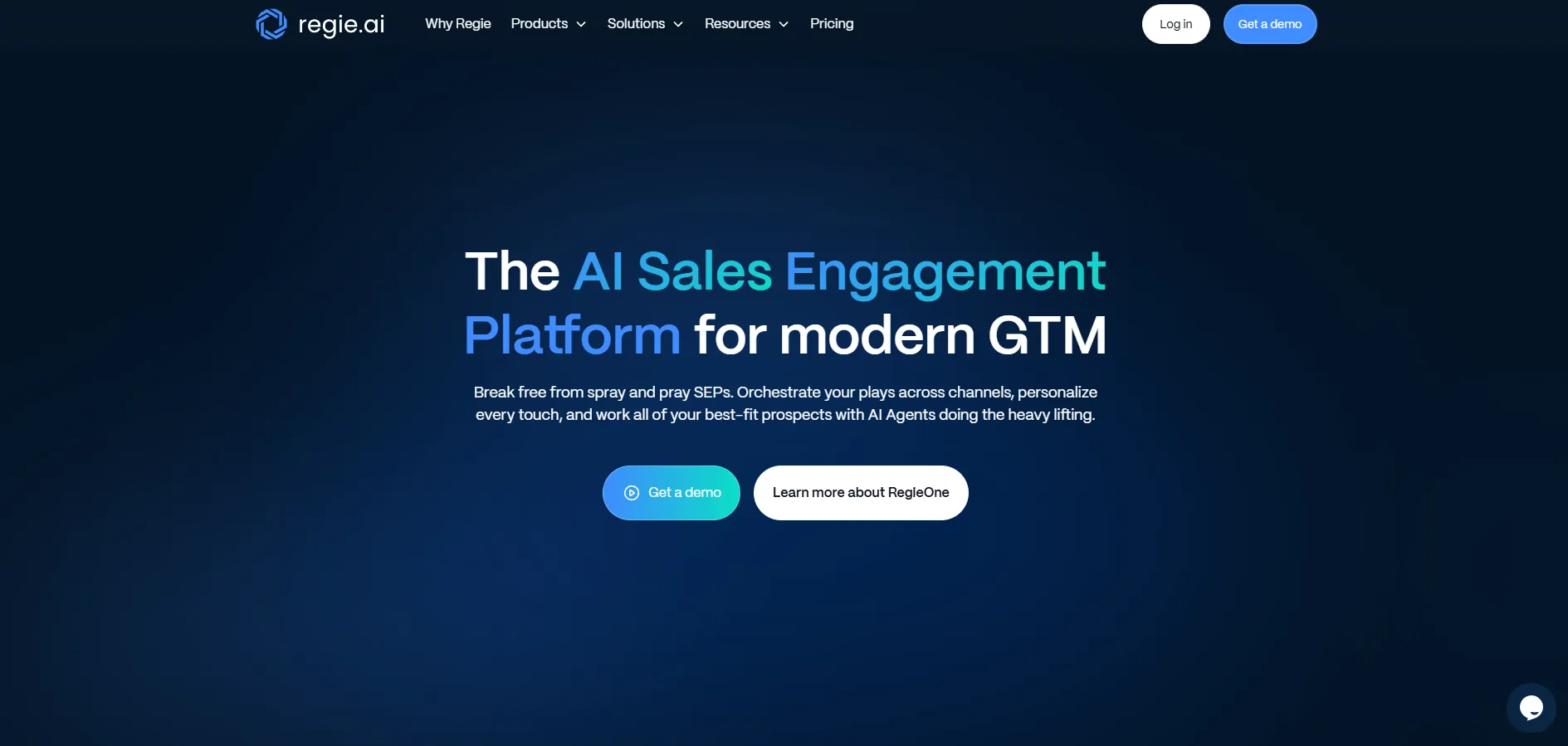
Regie.ai operates as an AI sales engagement platform with prospecting agents, automated sequences, and a built-in parallel dialer. The platform emphasizes AI-assisted content creation and campaign optimization.
Key Features:
- Auto-Pilot mode for autonomous prospecting campaigns
- AI-powered content generation for emails and sequences
- Parallel dialer integrated within the sales engagement platform
- Audience building and intent signal tracking
- Conversation intelligence for call analysis
Best Fit: Regie.ai fits enterprise teams already invested in sales engagement platforms seeking AI augmentation. The platform assists rather than replaces SDR functions. 11x operates differently by fully automating qualification through autonomous agents that don't require human oversight.
Pricing: Custom enterprise pricing. Outcome-based options available.
6. Apollo.io
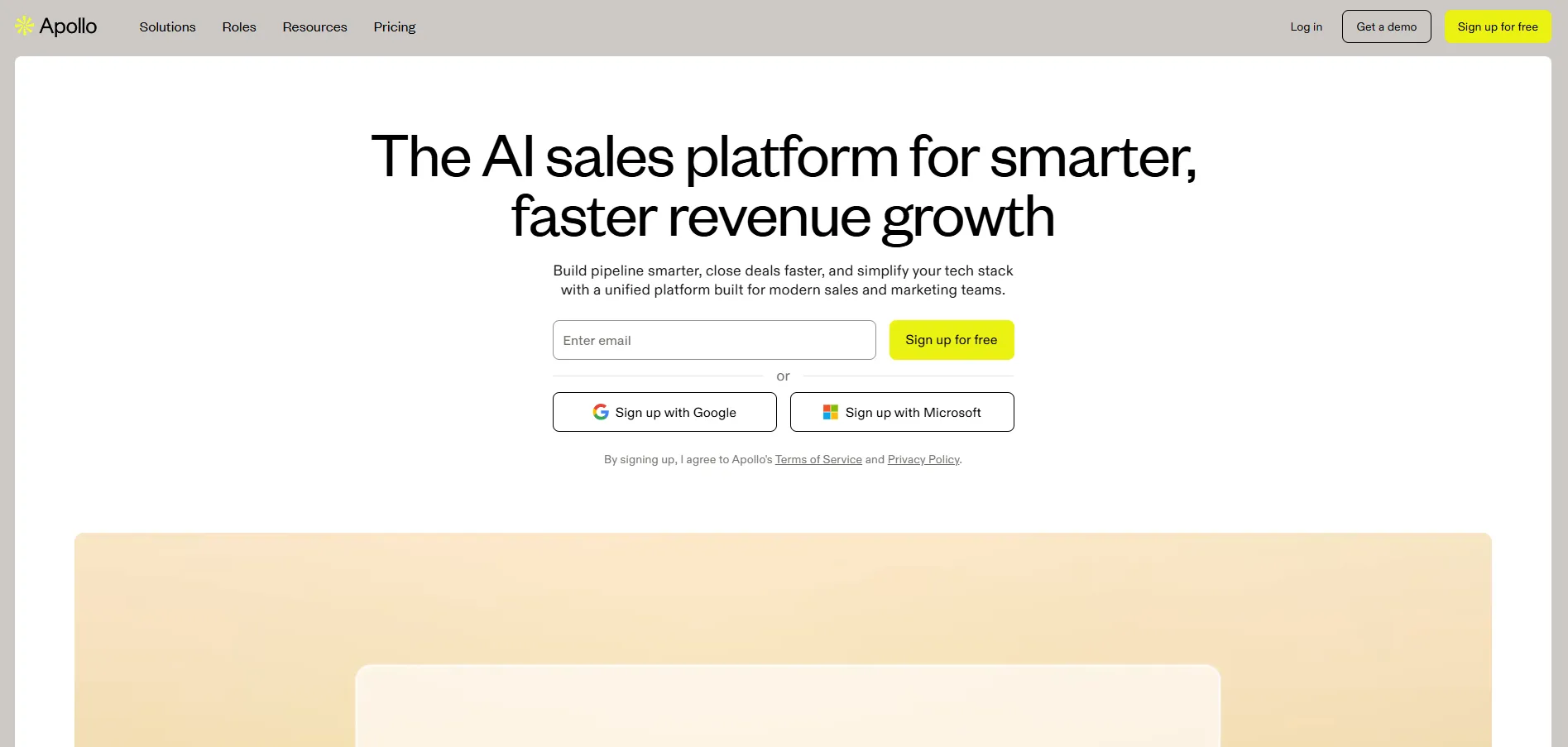
Apollo.io combines a large B2B contact database with built-in sequencing and AI features. The platform serves as an all-in-one prospecting tool with lead scoring, email automation, and CRM integration.
Key Features:
- 265M+ contact database with firmographic and technographic data
- AI lead scoring that prioritizes prospects by purchase likelihood
- Email sequencing with A/B testing and analytics
- Chrome extension for LinkedIn prospecting
- Intent data through partnership integrations
Best Fit: Apollo.io suits startups and SMBs building initial outbound motions on a budget. The platform requires human oversight for qualification and follow-up. Teams scaling beyond manual processes benefit from 11x's autonomous execution that handles qualification without rep involvement.
Pricing: Free tier available. Paid plans from $49/user/month.
Apollo.io offers an accessible entry into sales automation but lacks the autonomous qualification capabilities that distinguish platforms like 11x. While Apollo provides data and sequences, 11x's agents execute the entire qualification workflow independently.
7. Reply.io
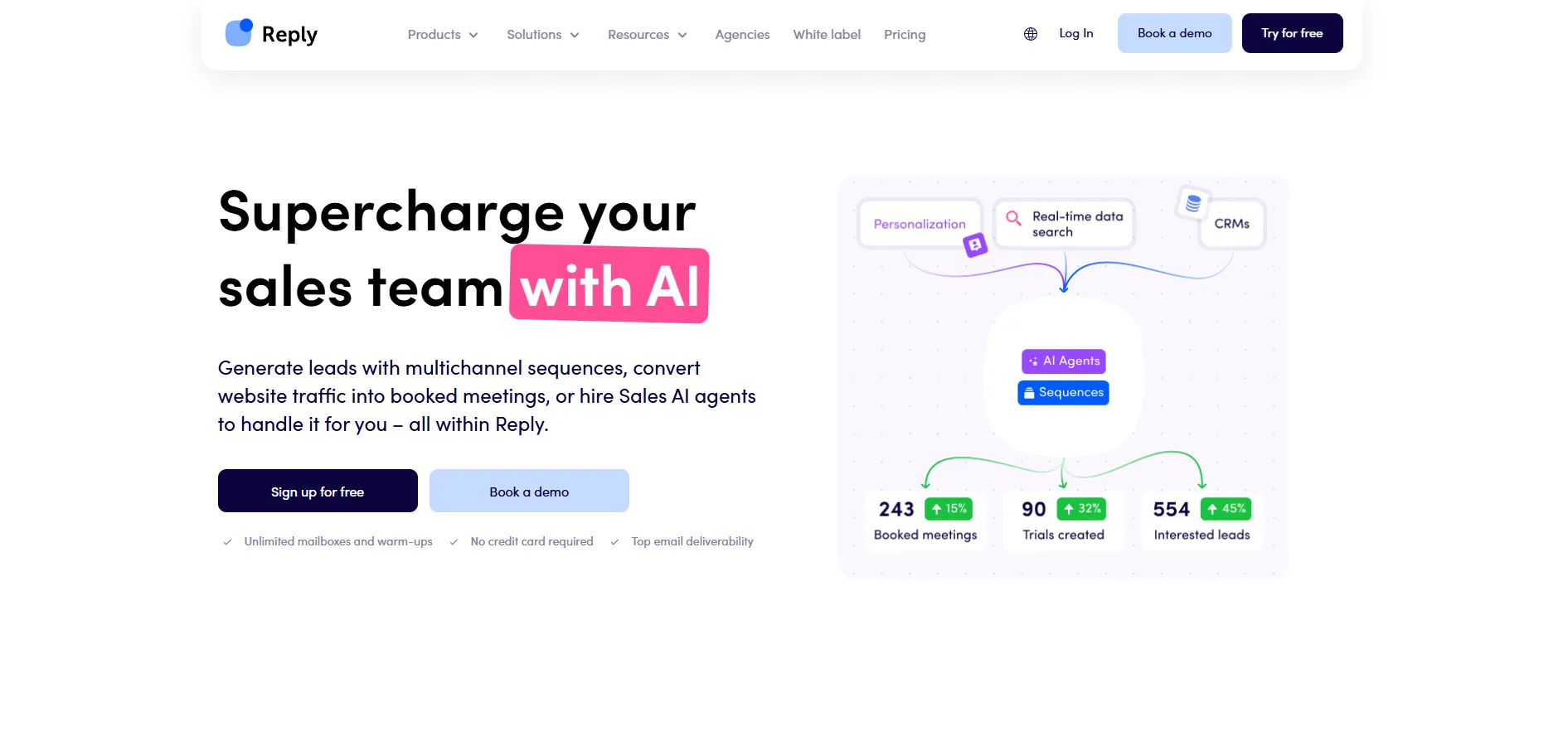
Reply.io provides multichannel outreach automation across email, LinkedIn, SMS, and WhatsApp. The platform emphasizes deliverability with 30+ optimization features and AI-powered personalization.
Key Features:
- Multichannel sequences spanning email, LinkedIn, SMS, and WhatsApp
- AI-powered email personalization and response suggestions
- 30+ deliverability optimization features
- CRM integration with Salesforce, HubSpot, and Pipedrive
- Conditional sequence logic based on prospect engagement
Best Fit: Reply.io works for teams with existing data sources seeking multichannel execution. The platform automates sending but requires human qualification of responses. 11x advances beyond Reply's automation by providing agents that handle both outreach and qualification autonomously.
Pricing: Plans from $59/user/month. Free trial available.
How to Choose the Right Sales Qualifying Tools
Sales teams waste time chasing leads that were never a fit. Without a structured qualification, pipeline inflation hides real revenue risk and slows down close cycles.
The right sales qualifying tools help you prioritize high-intent prospects, standardize criteria, and improve forecast accuracy. They should strengthen decision-making, not add another disconnected workflow. Here are the key factors to evaluate before selecting a solution:
- Define your qualification framework first: Clarify whether you use BANT, MEDDICC, CHAMP, or a custom model. The tool should reinforce your methodology, not replace it with vague scoring.
- Assess data inputs and signal depth: Strong tools combine firmographic, behavioral, intent, and engagement signals. Surface-level lead scoring based only on form fills creates false positives.
- Evaluate real-time scoring capabilities: Qualification should update dynamically as prospects engage. Static scoring models quickly become outdated and distort pipeline visibility.
- Check CRM integration and data flow: The tool must sync bi-directionally with your CRM. Qualification updates, call notes, and engagement data should automatically reflect in opportunity records.
- Review automation and workflow triggers: Look for the ability to route leads, assign reps, or trigger follow-ups based on qualification thresholds. Automation should reduce manual triage work.
- Measure explainability and transparency: Reps and managers must understand why a lead is marked as qualified. Black-box scoring reduces trust and adoption.
- Consider scalability and governance: As your team grows, the tool should support user permissions, reporting controls, and consistent qualification standards across regions.
Bringing It All Together
The best sales qualifying tool depends on your team size, pipeline goals, and automation maturity.
You'll benefit from any automation if you're running manual qualification processes. You need autonomous execution if you're seeking to replace SDR headcount.
For early-stage companies, Apollo.io and Reply.io provide accessible entry points with affordable pricing. For teams prioritizing LinkedIn automation, AiSDR offers strong social signal capabilities. For enterprises building custom workflows, Relevance AI enables configurable agent development.
For GTM teams seeking autonomous execution across the full qualification lifecycle, 11x delivers what others cannot: AI agents that research prospects, ask qualifying questions, handle responses, and qualify leads through phone conversations, all without human oversight. Alice and Julian operate as always-on digital workers that build trust with prospects and transform your sales qualification process from bottleneck to competitive advantage.
Book a demo with 11x to see how autonomous AI workers accelerate your pipeline and help your sales teams close more deals.
Frequently Asked Questions
Qualifying questions are strategic questions sales professionals ask to determine whether a prospect is a good fit for your ICP and has genuine purchase intent. They assess budget, authority, need, and time frame to separate serious buyers from tire-kickers and surface valuable insights about buying decisions. At 11x, both Alice and Julian ask qualifying questions autonomously during every interaction. Alice qualifies through email and LinkedIn sales prospecting, while Julian handles real-time phone qualification, ensuring consistent assessment regardless of volume.
BANT stands for Budget, Authority, Need, and Timeline—a proven framework for structuring discovery questions and assessing purchase readiness. Sales teams use it to evaluate whether prospects have allocated funds, decision-making power, urgent problems, and defined timelines for making purchasing decisions. 11x AI agents apply BANT principles automatically when engaging prospects. Alice researches budget signals and stakeholder roles before outreach, while Julian assesses all four components during calls, routing only qualified opportunities to human reps.
AI automates sales qualification by researching prospects, generating personalized discovery questions, analyzing responses, and scoring leads against qualification criteria without human intervention. Modern platforms improve consistency and speed-to-lead while reducing manual work for every salesperson. 11x takes this further with fully autonomous agents that qualify sales leads end-to-end and deliver valuable insights. Alice qualifies during outbound campaigns by analyzing engagement patterns, while Julian conducts real-time phone qualification within seconds of inbound inquiries, determining fit before human reps get involved.
The 70/30 rule states that sales reps should listen 70% of the time and speak only 30% during discovery calls. This ratio ensures prospects reveal their true pain points and buying decisions while reps gather insights for effective qualification. Julian from 11x applies the 70/30 rule during every qualification call, asking targeted open-ended questions and listening to responses. The AI analyzes verbal cues, identifies qualification signals, and determines fit based on what prospects share about their purchasing decision process.
A qualified prospect matches your ideal customer profile and demonstrates allocated budget, decision-making authority, urgent business need, and defined timeline for making the final decision. Unqualified prospects lack one or more criteria—no funds, wrong stakeholder, no pressing problems, or indefinite timelines. 11x qualification agents identify good fit automatically. Alice filters poor-fit accounts during sales prospecting, while Julian disqualifies inbound leads that don't meet criteria, ensuring your team focuses exclusively on high-probability opportunities.