8 Best Guided Selling Tools in 2026
Compare the 8 best guided selling tools for 2026. AI recommendations help reps close faster. Schedule a demo with 11x.

Sales reps lose deals when they pitch the wrong products at the wrong time. A guided selling tool eliminates guesswork by using artificial intelligence to recommend the right products, pricing, and next best actions based on customer data. For B2B sales teams managing complex products, guided selling software transforms how reps engage buyers and close deals.
The market validates this shift. According to Gartner, sales enablement technologies continue growing as enterprises replace activity-based selling with AI-driven revenue processes. McKinsey research confirms that companies adopting AI in sales see measurable improvements in lead conversion and customer engagement.
Our methodology prioritizes neutral, criteria-driven analysis: 90% objective feature comparisons, 10% strategic insights from industry experience. You'll discover which platforms excel at recommendations, configuration capabilities, and autonomous sales execution.
Schedule a product demo with our expert team.
The Best Guided Selling Tools
Our analysis covers eight platforms across AI-guided selling, Configure Price Quote (CPQ) systems, ecommerce discovery, and autonomous execution. Each evaluation considers enterprise readiness, integration depth, and measurable ROI potential. Selection criteria include AI sophistication, multichannel capabilities, customer relationship management integration quality, configuration depth, governance features, and proven customer outcomes.
1. 11x Alice and Julian
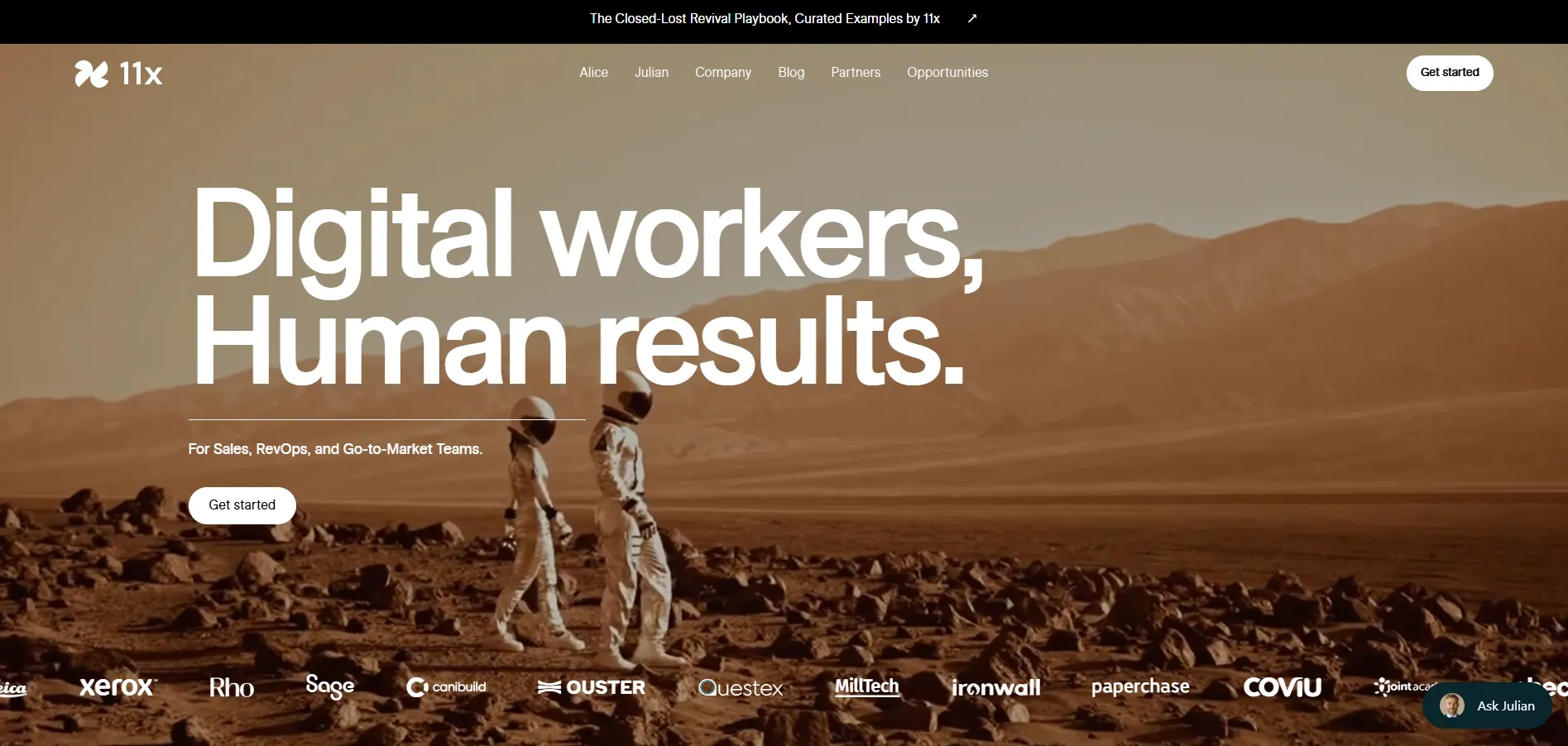
11x deploys autonomous digital workers that execute complete sales processes without manual oversight. Alice handles outbound prospecting across email and LinkedIn, while Julian qualifies inbound leads through phone conversations. Together, they function as programmable SDRs that operate continuously.
The platform delivers goal-driven agents executing complete prospecting and qualification operations autonomously. Multi-channel orchestration spans email, LinkedIn, and phone. Deep integration provides bi-directional sync to Salesforce and HubSpot. Key features include 24/7 operation with Alice supporting 105+ languages, instant speed-to-lead response through Julian's phone qualification, and enterprise-ready security with SOC 2 Type II, GDPR, and CCPA compliance.
Ideal Fit: Sales teams seeking to book more qualified meetings without adding headcount.
ROI Impact: Gupshup saw a 50% increase in SQLs per SDR after adopting Alice, achieving a 1.5x boost in output per rep without increasing headcount.
Pricing: Custom enterprise plans with usage-based tiers starting at approximately $25,000 annually.
Schedule a product demo with our expert team.
2. HubSpot Sales Hub
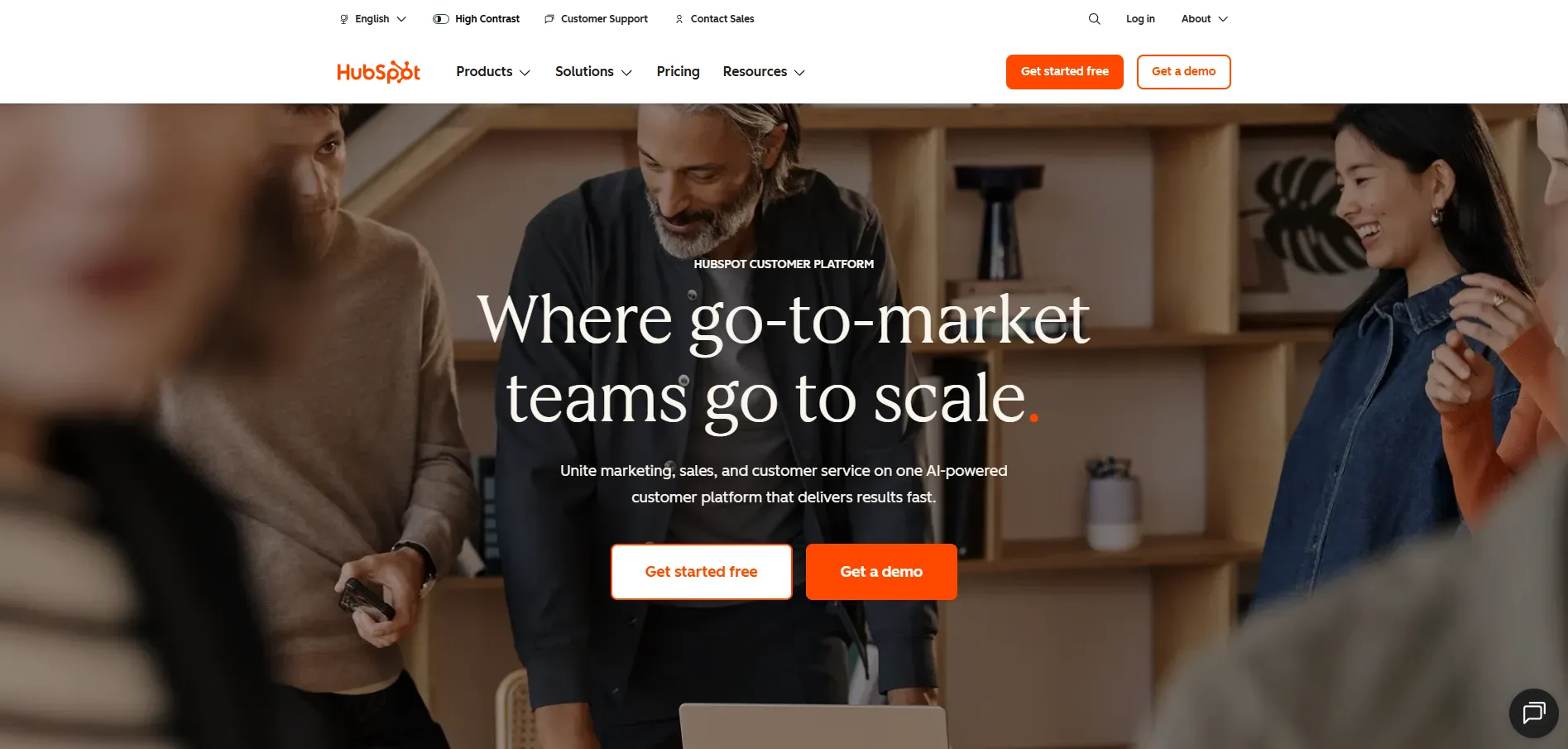
HubSpot Sales Hub embeds AI capabilities directly within its customer relationship management ecosystem, helping sales representatives prioritize high-value opportunities and identify recommendations based on purchase intent data. The platform uses AI tools and Sales Workspace to streamline the entire buying process from lead to close, making it a strong choice for teams seeking alignment without adding point solutions.
The platform delivers task prioritization based on engagement data. Native quoting generates AI-assisted proposals with product recommendations. Pipeline management uses predictive deal scoring to surface at-risk opportunities. Standout features include extensive HubSpot Marketplace integrations, conversation intelligence for sales calls, and forecasting tools using machine learning to predict revenue outcomes.
Strengths:
- AI prioritization surfaces high-intent leads based on engagement patterns
- Native quote generation embedded within customer relationship management processes
- Extensive marketplace integrations connect to marketing tools
- Graduated tiers scale from startup to enterprise
Limitations:
- Advanced AI features require Professional or Enterprise tiers
- Prospecting capabilities focus on recommendations rather than autonomous execution
- Full platform value depends on adopting the broader HubSpot ecosystem
Unlike 11x, HubSpot provides recommendations that reps must execute manually.
Ideal Fit: B2B teams already using HubSpot who want embedded AI guidance for lead prioritization, deal management, and quoting without adding separate point solutions to their stack.
Pricing: Professional tier starts at $1,600/month for 5 users; Enterprise tier starts at $5,000/month with advanced AI features.
3. Zoovu
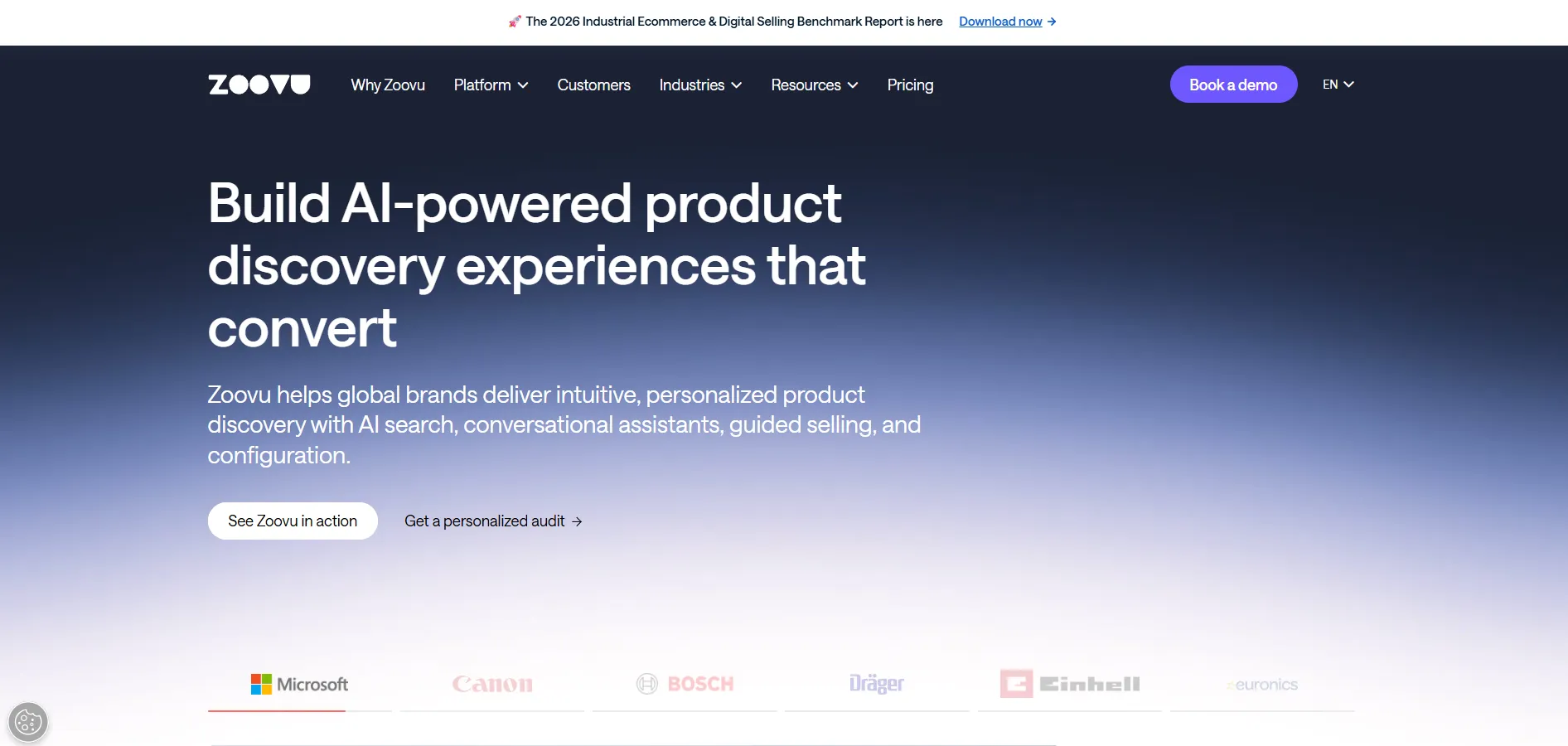
Zoovu specializes in AI-driven product discovery for B2B and B2C ecommerce, helping customers find suitable products through conversational assistants and visual configurators. The platform transforms complex product catalogs into guided buying experiences that increase conversion rates and reduce decision fatigue.
The platform delivers conversational product finders built on buyer logic and product rules. Visual 2D and 3D configuration helps buyers see solutions before purchase. Analytics track which recommendations drive conversions.
Strengths:
- Conversational interfaces guide customers through complex buying decisions
- Visual configurators help buyers understand customizable products
- Self-service model scales engagement without headcount
- Product data enrichment creates structured attributes from catalogs
Limitations:
- Primarily focused on self-service ecommerce rather than rep-assisted sales
- Requires product data enrichment during implementation
- Custom enterprise structure without transparent tiers
Unlike 11x's autonomous approach that actively engages prospects across email, LinkedIn, and phone, Zoovu waits for customers to initiate interactions. Teams needing proactive outreach should consider combining platforms.
Ideal Fit: B2B manufacturers and retailers with complex product catalogs needing guided selling for digital commerce channels.
Pricing: Custom enterprise structure starting at approximately $50,000 annually, scaling with catalog complexity and traffic volume.
4. Tacton CPQ
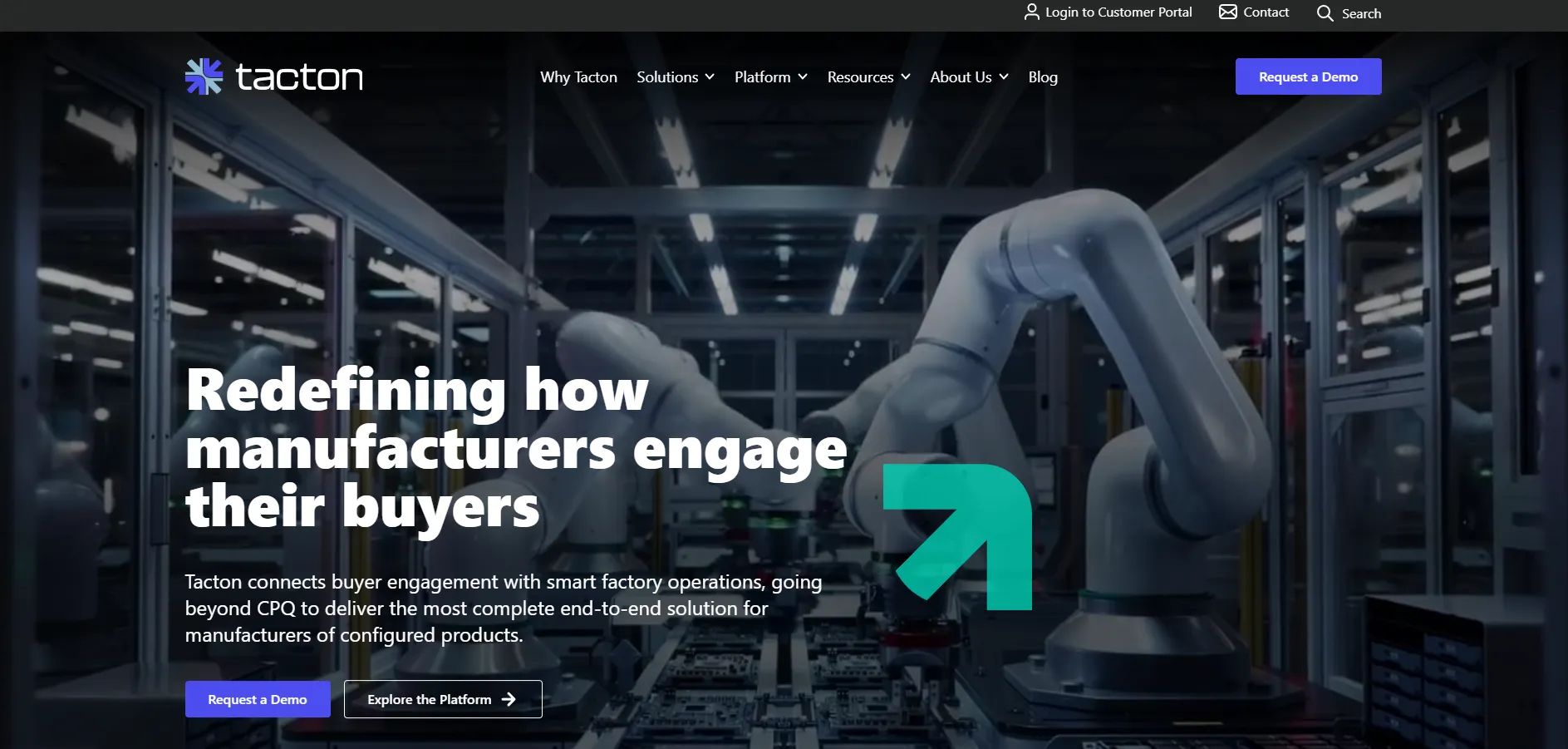
Tacton delivers Configure Price Quote software purpose-built for manufacturers selling configurable products. The platform helps sales representatives and distributors configure complex products correctly while ensuring accuracy and technical feasibility across diverse product lines.
The platform features visual capabilities with 3D configuration tools that let reps see product variations instantly. Constraint-based rules prevent invalid combinations, so every quote reflects technically feasible configurations. Tacton integrates with CAD and ERP systems to validate inventory and lead times during quoting.
Strengths:
- Constraint-based configuration prevents invalid product combinations
- Visual 3D rendering helps buyers visualize products
- CAD and ERP integration validates technical feasibility during quoting
Limitations:
- Substantial implementation effort for complex manufacturing environments
- Focused on configuration and quoting rather than full sales cycle
- Enterprise structure suited to larger organizations
Unlike 11x, Tacton handles configuration and quoting only and requires separate prospecting tools for top-of-funnel activities.
Ideal Fit: Manufacturing companies selling engineer-to-order or configure-to-order products who need guided selling to simplify complex configuration.
Pricing: Custom enterprise structure starting at approximately $100,000 annually, scaling with product catalog complexity and user count.
5. Vendavo
Vendavo combines intelligence with guided selling to help B2B sales representatives identify optimal strategies and cross-selling opportunities during deal execution. The platform uses machine learning to recommend profitable deals based on customer segments, competitive positioning, and margin targets.
The platform delivers recommendations that analyze customer segments and historical win rates. Deal guidance surfaces upselling and cross-selling opportunities based on purchase patterns. Native Salesforce and SAP integration embeds guidance within existing processes. Analytics dashboards provide visibility into performance across the sales organization.
Strengths:
- ML recommendations enhance margin while maintaining win rates
- Deal guidance surfaces cross-sell and upsell opportunities
- Native Salesforce and SAP integration embeds recommendations in processes
Limitations:
- Strongest in optimization, not full sales cycle
- Implementation complexity with multiple data sources
- Enterprise structure may exceed mid-market budgets
11x complements Vendavo's optimization by handling prospecting and qualification.
Ideal Fit: B2B companies with complex structures needing guided selling for discounting decisions, bundle recommendations, and margin optimization across their organization.
Pricing: Custom enterprise structure starting at approximately $75,000 annually, scaling with user count and data integration complexity.
6. NetSuite CPQ
NetSuite provides guided selling within Oracle's cloud ERP ecosystem, enabling sales representatives to configure products, generate accurate quotes, and convert deals to orders without leaving the platform.
Guided selling flows walk reps through product selection based on customer requirements, automatically filtering valid options. Quote-to-order capabilities eliminate handoffs between sales and operations. Product rules adapt to your specific offerings so every rep quotes consistently.
Strengths:
- Native ERP integration provides inventory and cost data
- Guided selling flows reduce configuration errors
- Unified quote-to-cash eliminates manual handoffs
Limitations:
- Requires NetSuite ERP as foundation for full functionality
- Limited multi-ERP flexibility for organizations with diverse systems
- Less AI sophistication than purpose-built platforms
NetSuite streamlines quoting but lacks proactive prospecting capabilities. Teams often add 11x for top-of-funnel activities.
Ideal Fit: Companies running NetSuite ERP who want unified guided selling and quoting without separate software.
Pricing: NetSuite licenses start at $999/month base plus $99/user/month; modules add $10,000+ annually depending on complexity.
7. DealHub
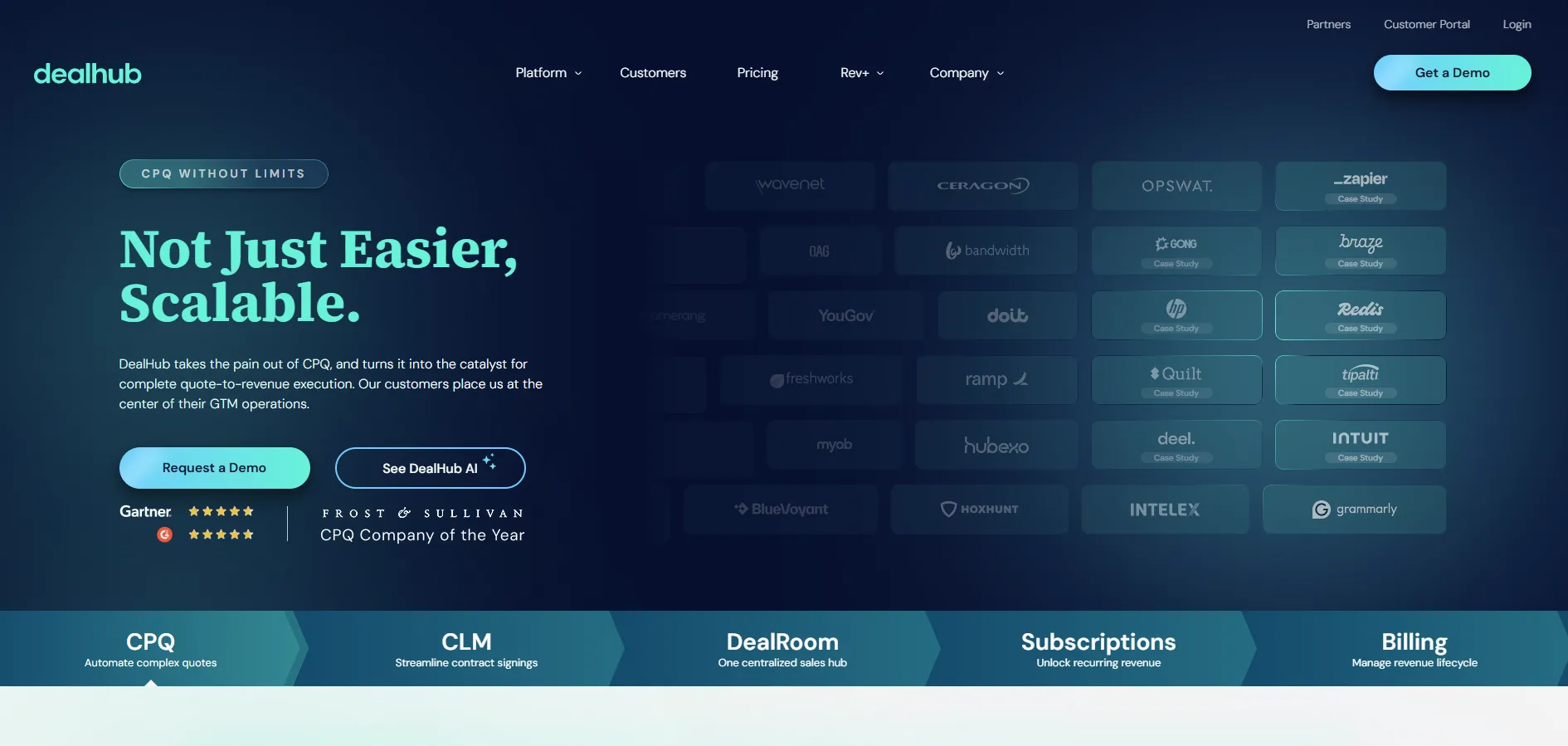
DealHub combines Configure Price Quote, contract management, and subscription billing into a unified revenue platform with guided selling capabilities for SaaS and subscription businesses.
The platform provides an interactive buyer engagement environment where reps and customers collaborate on deal configuration and contract terms. Guided playbooks surface step-by-step recommendations for complex deal scenarios. Subscription billing handles recurring revenue automatically.
Strengths:
- Interactive proposal rooms accelerate buyer collaboration
- Guided playbooks help reps handle complex deal scenarios
- Subscription management handles SaaS billing natively
Limitations:
- Focus on quote-to-close rather than prospecting and lead generation
- May need additional outbound capabilities for top-of-funnel activities
- Enterprise features are available at higher tiers
While 11x handles both prospecting and qualification, DealHub focuses on the quote-to-close portion of the sales cycle. Teams often combine DealHub's strengths with dedicated prospecting platforms to cover the full pipeline.
Ideal Fit: SaaS and subscription businesses needing guided selling combined with configuration, quoting, and contract lifecycle management.
Pricing: Professional tier starts at $50/user/month; Enterprise tier starts at $125/user/month with advanced features and customization options.
8. Salesforce Sales Cloud with CPQ
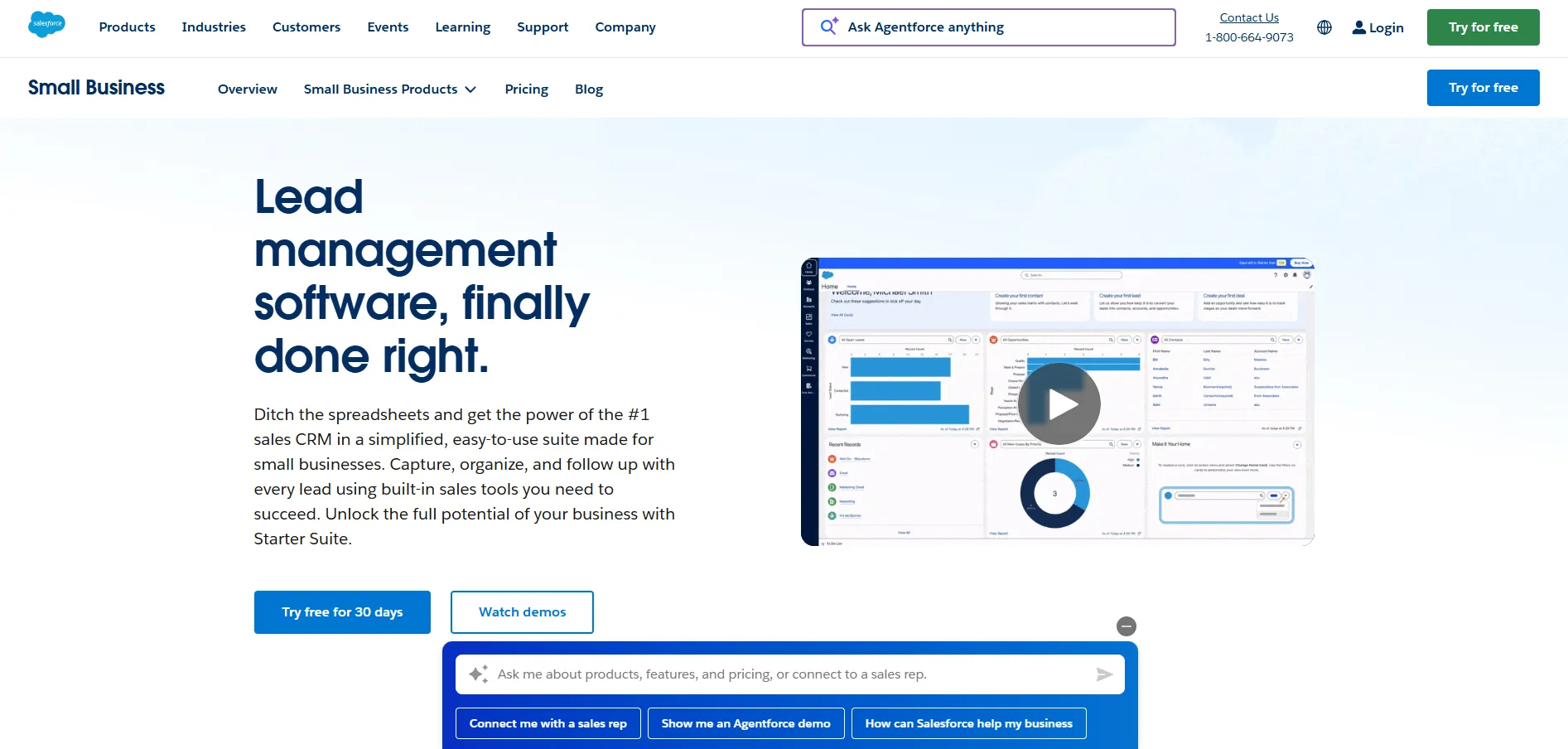
Salesforce Sales Cloud offers guided selling through Einstein AI capabilities and native configuration options, surfacing insights and recommendations for teams managing complex enterprise deals. As the world's most widely adopted customer relationship management platform, it provides extensive customization and a massive integration ecosystem.
The platform delivers Einstein AI for lead scoring, opportunity insights, and recommendations. Native capabilities handle product configuration, rules, and approval processes. The AppExchange marketplace with 5,000+ integrations extends functionality, and Flow Builder enables custom guided selling processes without code.
Strengths:
- Einstein AI provides lead scoring and recommendations
- 5,000+ AppExchange integrations extend capabilities
- Native configuration handles complex approval processes
Limitations:
- Full functionality requires multiple add-ons beyond core Sales Cloud
- Implementation often requires consulting partners for complex deployments
- AI features distributed across multiple products rather than unified
11x offers autonomous execution out of the box; Salesforce requires extensive configuration and continued maintenance.
Ideal Fit: Enterprise organizations heavily invested in the Salesforce ecosystem who want native guided selling with deep customization and broad integration options.
Pricing: Sales Cloud Professional starts at $80/user/month; Enterprise at $165/user/month; CPQ adds $75-150/user/month; Einstein AI features add $50+/user/month.
Platform Comparison: Features, Integration, and Security
The table below compares how each platform approaches AI sophistication, channel coverage, and enterprise governance. Use this side-by-side view to quickly identify which solutions match your technical requirements and integration needs before diving into detailed evaluations.
What Is a Guided Selling Tool?
A guided selling tool uses artificial intelligence, machine learning, and rule-based logic to help sales representatives make complex buying decisions. These platforms deliver recommendations for products, strategies, and actions based on customer data.
Unlike static playbooks or templates, guided selling software adapts dynamically. When prospects answer questions about requirements or budget, the system filters options and surfaces relevant products, eliminating guesswork and enabling informed decisions.
According to Gartner, 75% of B2B sales organizations plan to augment traditional methods with AI-guided selling solutions by 2025. The shift reflects growing buyer expectations for personalized experiences throughout the buying journey.
Key Terms:
- CPQ (Configure, Price, Quote) is software that guides reps through product configuration, applies rules, and generates accurate quotes.
- Next Best Action refers to AI-generated recommendations that suggest the optimal next step based on deal context and buyer signals.
- Product configuration is the process of selecting and combining product options into technically valid solutions.
- Conversational AI includes chatbots and assistants that guide buyers through product discovery using natural language.
How AI-Guided Selling Transforms Traditional Sales Processes
Traditional sales relies on rep expertise and static playbooks. AI-guided selling automates recommendations, adapting to each buyer's context and customer behavior.
According to HubSpot, sales professionals using AI save hours weekly on manual tasks. McKinsey research confirms that companies adopting AI in sales see measurable improvements in productivity and revenue outcomes, with top performers achieving significantly higher conversion rates than peers. These benefits of guided selling translate directly to improved sales performance.
Core Use Cases Across the Sales Cycle
AI-guided selling delivers value across four critical areas of the sales process, helping teams increase sales and drive revenue.
Prospecting and Lead Qualification:
- AI scoring identifies high-intent accounts based on firmographic and behavioral signals
- Lead routing ensures prospects reach the right sales representative
- Intent data triggers timely outreach when buyers enter the market
Product Discovery and Configuration:
- Interactive questionnaires guide buyers through complex product selection
- Visual configurators help customers understand customizable products
- Rule-based validation prevents invalid product combinations
Pricing and Quoting:
- AI recommendations enhance margin while maintaining win rates
- Automated quote generation with approved discount structures
- Deal guidance surfaces upselling opportunities based on customer segment
- Approval processes streamline complex decisions
Deal Execution and Follow-Up:
- Recommendations keep deals moving forward
- Automated follow-up sequences prevent leads from going cold
- Conversation intelligence analyzes calls to improve customer satisfaction
- Pipeline inspection identifies at-risk deals before they stall
According to Salesforce research, buyers increasingly expect personalized experiences throughout their purchase process. Guided selling operationalizes this personalization at scale, ensuring every interaction reflects the buyer's specific context, requirements, and stage in the buying process while providing valuable insights for decision-making.
Autonomous Digital Workers vs. Traditional Guided Selling
Traditional platforms surface recommendations that reps must execute manually. Autonomous digital workers like 11x execute complete processes independently, operating 24/7 with self-learning capabilities across multiple channels.
How to Choose the Right Guided Selling Tool
Selecting the right platform requires a systematic approach focused on fit, feasibility, and future-proofing. Start with an outcome-first methodology: identify 3-5 prioritized use cases with measurable targets like meeting bookings, quote accuracy, or cycle time reduction.
Map your current sales process gaps first. Where do reps struggle most? Product complexity points toward configuration systems. Pipeline generation challenges call for autonomous execution platforms. Self-service buying needs suggest conversational AI solutions.
Consider tech stack integration requirements. A platform that doesn't connect with your CRM systems creates data silos and adoption friction. Finally, assess your team's readiness for change and match the tool's complexity to your capacity for adoption.
Evaluation Criteria for Enterprise Buyers
Enterprise buyers face unique requirements around security, governance, scalability, and integration depth. A thorough evaluation process prevents costly mistakes and ensures the selected platform supports long-term growth.
Security and Compliance:
- SOC 2 Type II certification validates security controls and data handling
- GDPR and CCPA compliance ensures lawful processing across regions
- SSO/SAML integration and data residency options meet enterprise requirements
- End-to-end encryption protects sensitive information
Governance and Risk Management:
- Role-based access controls limit data visibility appropriately
- Audit trails track changes for compliance reporting
- Approval processes ensure decisions follow policies
Scalability and Performance:
- API rate limits and multi-tenant architecture support growth
- Global deployment reduces latency for distributed teams
- Uptime SLAs with financial guarantees protect operations
Integration Depth:
- Native CRM connectors for Salesforce, HubSpot, and Microsoft Dynamics
- ERP integration provides inventory and cost data
- Bi-directional sync maintains data consistency across systems
AI Sophistication:
- Self-learning algorithms improve recommendations based on outcomes
- Explainable AI provides transparency into recommendation logic
- Instant inference delivers recommendations without latency, providing data-driven insights
According to Gartner, 75% of B2B sales organizations will augment traditional sales playbooks with AI solutions by 2025, making enterprise-ready governance essential for successful deployments.
What's the Best Guided Selling Tool for Small Business?
Small businesses need platforms that deliver value quickly without requiring dedicated implementation teams or extensive configuration. The essential criteria for SMB selection focus on speed-to-value, affordability, and simplicity.
Essential Criteria:
- Fast implementation allows you to deploy in days, not months, with minimal IT involvement.
- A transparent structure delivers predictable costs that scale with usage, without hidden fees.
- Native integrations provide out-of-the-box connections to popular customer relationship management platforms.
- Self-service onboarding includes clear documentation and guided setup, without mandatory consulting.
- Measurable ROI is supported by dashboards that show impact on meetings booked and deals closed.
Recommended Approaches:
11x provides autonomous execution that replaces the need to hire SDRs. Alice handles outbound prospecting across email and LinkedIn while Julian qualifies inbound leads through phone conversations. For small teams, this means scaling pipeline without adding headcount or managing complex tech stacks. The platform's enterprise-grade security comes standard, eliminating concerns about data protection as you grow.
HubSpot Sales Hub suits businesses already using HubSpot who want embedded AI guidance without adding point solutions. The graduated structure allows teams to start with free capabilities and upgrade as needs expand.
Zoovu works for ecommerce businesses needing self-service product discovery. Conversational interfaces guide customers through complex product selection without requiring sales representative involvement, making it ideal for B2B retailers with extensive catalogs.
Traditional platforms require significant configuration before delivering value. Agentic systems like 11x execute autonomously from day one, reducing time-to-value for resource-constrained teams.
What's the Best Guided Selling Tool for Mid-Market Teams?
Mid-market teams face the challenge of scaling sales operations without enterprise resources. The ideal platform supports growth, enables team coordination, and integrates with expanding tech stacks.
Essential Criteria:
- Scalability handles growing contact volumes and team sizes without performance degradation
- Team collaboration supports multiple users with role-based permissions and shared processes
- Process consistency ensures all reps follow established playbooks and guidelines
- Analytics depth provides visibility into team performance and pipeline health
- Integration flexibility connects with the diverse capabilities mid-market teams accumulate
Recommended Approaches:
11x scales prospecting and qualification without proportional headcount growth. As mid-market companies expand into new territories or segments, Alice and Julian handle increased volume autonomously. The platform's integration maintains clean data as operations scale, preventing the data quality issues that often plague growing organizations and supporting customer success.
DealHub serves SaaS businesses needing unified configuration, quoting, contract management, and guided selling. Interactive proposal rooms accelerate deal cycles by enabling buyer collaboration, while subscription billing handles recurring revenue complexity.
Salesforce Sales Cloud fits mid-market teams planning enterprise growth who want a platform they won't outgrow. The extensive AppExchange ecosystem provides flexibility, though implementation requires more resources than lighter alternatives.
What's the Best Guided Selling Tool for Enterprise Organizations?
Enterprise organizations require platforms that meet stringent security requirements, support global operations, and integrate with complex existing infrastructure.
Essential Criteria:
- Enterprise security includes SOC 2 Type II, GDPR, CCPA, and industry-specific compliance certifications.
- Global capabilities include multi-language support, regional data residency, and 24/7 operations.
- Custom integration is supported through APIs and webhooks for complex process orchestration.
- Dedicated support includes named account managers, SLAs, and priority issue resolution.
- Change management is supported with training resources and adoption programs for large teams.
Recommended Approaches:
11x delivers enterprise-grade security with SOC 2 Type II certification, GDPR compliance, and CCPA adherence. Alice supports 105+ languages for global prospecting, while Julian provides phone qualification across time zones. Deep integration with Salesforce and HubSpot ensures activity logging and forecasting accuracy. For enterprises seeking autonomous execution without building internal AI capabilities, 11x provides a production-ready solution.
Salesforce Sales Cloud offers the deepest ecosystem for organizations requiring extensive customization. The combination of Einstein AI and 5,000+ AppExchange integrations supports complex enterprise requirements, though implementation typically requires consulting partners for optimal configuration.
Tacton serves manufacturers with engineer-to-order products requiring visual configuration, constraint-based rules, and CAD/ERP integration. The platform's depth in manufacturing scenarios makes it the specialist choice for industrial enterprises.
Implementation Best Practices
Successful implementations follow a proven three-phase approach that balances quick wins with sustainable adoption. Organizations that rush deployment often face resistance and underutilization, while those that over-plan delay time-to-value.
Phase 1: Foundation and Quick Wins (Weeks 1-4)
Establish technical infrastructure and identify high-impact use cases.
Key activities:
- Complete integration with bi-directional sync validation
- Define 2-3 initial playbooks for the highest-volume scenarios
- Configure user roles and establish baseline metrics
- Identify a pilot team of 5-10 early adopter reps
Phase 2: Pilot and Refinement (Weeks 5-8)
Test with a controlled group and refine before broader rollout.
Key activities:
- Deploy to the pilot team with dedicated support
- Conduct weekly reviews to identify friction points
- Refine recommendation logic based on usage patterns
- Measure results against baseline metrics
Phase 3: Scale and Optimize (Weeks 9-12)
Extend to the full team while establishing optimization practices.
Key activities:
- Roll out to fthe ull organization in managed cohorts
- Deliver structured training with hands-on exercises
- Establish a regular performance review cadence
- Create feedback mechanisms for continuous improvement
Success Benchmarks:
Organizations following this phased approach typically see measurable improvements within 90 days. According to McKinsey research, companies that implement AI solutions with proper change management achieve 10-20% higher ROI than those with ad-hoc deployments.
Common Pitfalls and How to Avoid Them
Even well-planned implementations can stumble on predictable obstacles. Understanding these pitfalls before they occur helps teams avoid costly delays and adoption failures.
Over-Engineering Rules Before Validation
Teams often spend months building complex rule sets and decision trees before testing basic scenarios with real users. This creates brittle systems that break when encountering edge cases.
How to avoid: Start with rules covering 80% of common scenarios, then iterate based on actual customer needs and rep feedback. Ship quickly, measure results, and refine continuously.
Neglecting Data Quality
Guided selling depends on accurate customer data, product information, and cost structures. Poor hygiene produces irrelevant recommendations that erode rep trust in the system.
How to avoid: Audit data quality before implementation. Establish ongoing data governance practices and cleansing operations. Make data accuracy a shared responsibility, not just a RevOps problem.
Ignoring Rep Feedback Loops
Without mechanisms for reps to flag bad recommendations, problematic patterns persist. Reps learn to ignore the platform rather than report issues, leading to declining adoption.
How to avoid: Build simple feedback mechanisms directly into operations. Review flagged recommendations weekly during pilot, monthly at scale. Celebrate when rep feedback improves the system.
Expecting Instant Transformation
Platforms improve over time as they learn from outcomes. Teams that judge performance after two weeks miss the compounding value of accumulated learning.
How to avoid: Set expectations for 60-90 days of optimization before evaluating ROI. Track leading indicators like recommendation acceptance rates alongside lagging outcomes like conversion rates.
Siloing from Core Systems
Tools disconnected from your customer relationship management create data gaps and double-entry burdens. Reps abandon systems that add work instead of reducing it.
How to avoid: Prioritize native integrations that maintain bi-directional sync. Verify that activities, outcomes, and customer interactions flow automatically between systems.
Underinvesting in Change Management
Technology alone doesn't drive adoption. Teams that focus exclusively on features while neglecting training, communication, and incentive alignment see low utilization rates.
How to avoid: Allocate 20-30% of implementation budget to change management activities. Identify champions, create peer learning opportunities, and align compensation structures to encourage usage.
Final Recommendations
The guided selling landscape spans configuration systems for manufacturing, ecommerce discovery capabilities for self-service buying, native solutions for process integration, and autonomous digital workers for complete sales execution. Each category solves distinct problems, and the best choice depends on your specific sales motion.
Your decision framework should start with your primary pain point. If reps struggle with product complexity, configuration platforms like Tacton or NetSuite address that directly. If buyers need self-service discovery, Zoovu's conversational interfaces guide them through complex catalogs. If your challenge is pipeline generation and lead qualification, autonomous platforms deliver the most impact and help close deals faster.
Consider your team's capacity for adoption. Traditional guided selling requires ongoing rule maintenance and rep training. Autonomous systems like 11x execute independently, reducing the change management burden while delivering personalized recommendations at scale.
For teams seeking pipeline impact through autonomous execution, 11x delivers digital workers operating 24/7. Alice handles outbound prospecting while Julian qualifies inbound leads through conversations. The result: more qualified meetings without adding headcount, improved customer experience through faster response times, and consistent follow-up that prevents lead decay.
Frequently Asked Questions
The best AI tool depends on your specific sales motion and primary challenges. For autonomous prospecting and lead qualification that operates continuously without manual intervention, 11x delivers digital workers executing complete operations 24/7. Alice handles outbound prospecting while Julian qualifies inbound leads through real-time phone conversations. For teams seeking CRM-embedded guidance where reps execute recommendations manually, HubSpot and Salesforce Einstein provide intelligent suggestions. For product configuration in manufacturing environments, specialized systems like Tacton guide reps through complex deals with constraint-based rules.
NetSuite guided selling is configuration and quoting functionality that walks sales reps through product selection with rules and logic, integrated directly with NetSuite ERP. The system automatically filters valid product options based on customer requirements and maintains real-time inventory data. Unlike autonomous platforms like 11x that handle prospecting and qualification independently, NetSuite focuses on the quoting phase after opportunities already exist, requiring separate tools for top-of-funnel activities.
Yes, AI significantly improves sales outcomes when applied to the right activities. Modern AI excels at account research, lead qualification, personalized outreach, and predictive scoring. 11x customers like Gupshup achieved 50% more SQLs per SDR after adopting autonomous digital workers, demonstrating measurable pipeline impact. AI performs particularly well at high-volume, repetitive tasks like prospecting and initial qualification, freeing human reps to focus on relationship-building and strategic conversations where human judgment adds the most value.
CPQ guided selling combines product configuration, pricing rules, and quoting capabilities with AI recommendations to help sales reps create technically valid proposals while optimizing margin. The system guides reps through complex product selection by preventing invalid combinations and suggesting complementary items based on customer segment. While traditional CPQ platforms like Tacton and NetSuite focus on quote accuracy, 11x addresses the upstream challenge of generating qualified opportunities that CPQ systems then help convert.
The 30% rule in AI suggests that sales teams should automate up to 30% of their repetitive tasks while preserving human judgment for complex decisions requiring nuance and relationship-building. This balance allows teams to benefit from AI efficiency without losing the personal touch that closes deals. 11x applies this principle by handling high-volume prospecting and qualification autonomously—the repetitive 30%—while routing qualified opportunities to human reps for strategic conversations, negotiation, and relationship development where human skills remain irreplaceable.