9 Best Sales Leakage Tools to Fix Revenue Leaks in 2026
Stop sales leakage draining your pipeline. Learn causes, fixes, and top tools. Schedule a demo with 11x.

Sales leakage quietly erodes revenue across your funnel, from missed follow-up to stalled renewals and inaccurate forecasting. Research from Gartner shows revenue teams lose up to 10 percent of potential revenue each year due to poor process visibility, human error, and disconnected systems. That loss compounds as pipelines grow, turning small gaps into material hits to the bottom line. This guide breaks down the tools that help revenue leaders identify, control, and eliminate sales leakage before it shows up as lost revenue.
The market response signals urgency, not hype. According to McKinsey, B2B organizations that digitize their sales process and forecasting workflows outperform peers by up to 15 percent in revenue growth. At the same time, Salesforce research reports that only 45 percent of sales teams trust their forecasts, a clear indicator of revenue leakage driven by fragmented data, manual processes, and missed opportunities across the sales funnel.
Our methodology prioritizes neutral, criteria-driven analysis: 90 percent objective feature comparisons and 10 percent strategic insight from hands-on GTM experience. You will see how leading platforms address the causes of revenue leakage across prospecting, follow-up, forecasting, renewals, and customer success, and which providers deliver measurable impact across the full sales pipeline.
The Best Sales Leakage Tools
Sales leakage shows up across many systems, from CRM gaps to weak outreach and unreliable dashboards. Our analysis covers nine leading platforms that help RevOps teams identify revenue leaks, tighten workflows, and protect potential revenue. Each tool is evaluated on enterprise readiness, integration depth, AI sophistication, lifecycle coverage, CRM integration quality, governance features, and proven customer outcomes across forecasting, churn reduction, and conversion rate improvement.
The tools below span autonomous execution, revenue intelligence, CRM platforms, and engagement systems. Some help you see leakage. Fewer actually stop it.
Comparison Table
The tools above vary dramatically in approach and capability. Some provide visibility into where leakage occurs. Others assist reps with structured workflows. A few execute autonomously to prevent leakage before it happens. The table below summarizes key differences across AI sophistication, channel coverage, integration quality, and governance maturity. Use this side-by-side view to map each platform's strengths against your team's priorities, whether you need forecasting intelligence, engagement discipline, or fully autonomous execution that closes gaps without human intervention.
1. 11x Alice and Julian — Best for Autonomous Revenue Leakage Prevention
11x delivers autonomous digital workers that operate as true members of your sales team. Alice owns outbound demand generation, while Julian captures inbound demand, closing gaps that cause sales leakage across the funnel. Together, they execute outreach, follow up, qualification, and CRM updates without relying on manual processes.
Core Capabilities:
True autonomy through goal-driven agents that execute complete workflows without human intervention. Multichannel execution across email, phone, LinkedIn, and CRM with seamless handoffs. Signal-driven intelligence tracking intent, inactivity, renewals, and upgrades in real-time. Deep CRM integration with bi-directional sync to Salesforce, HubSpot, and Pipedrive.
Standout Features:
Speed-to-lead under 60 seconds for inbound qualification with Julian. The platform supports 105+ languages for global pipeline coverage. Automated lead nurture and reactivation reduce churn and sales leakage. Built-in forecasting hygiene keeps pipeline data accurate in real time. Compliance-ready execution with SOC 2 Type II, GDPR, and CASA Tier 3 certifications.
Competitive Advantages:
11x is the first platform built around autonomous digital workers that own outcomes rather than assist with tasks. The platform eliminates human error across outreach and follow-up, operates continuously across time zones and touchpoints, and delivers enterprise-ready governance from day one.
Ideal Fit: Revenue teams that want to eliminate revenue leaks without adding headcount while improving conversion rate, forecasting accuracy, and customer success outcomes.
ROI Impact: Gupshup saw a 50 percent increase in SQLs per SDR after adopting Alice, enabling a 1.5x boost in output per rep and freeing time for higher-value activities without increasing headcount.
Schedule a product demo with our expert team
2. Clari — Best for Forecasting Accuracy and Pipeline Inspection
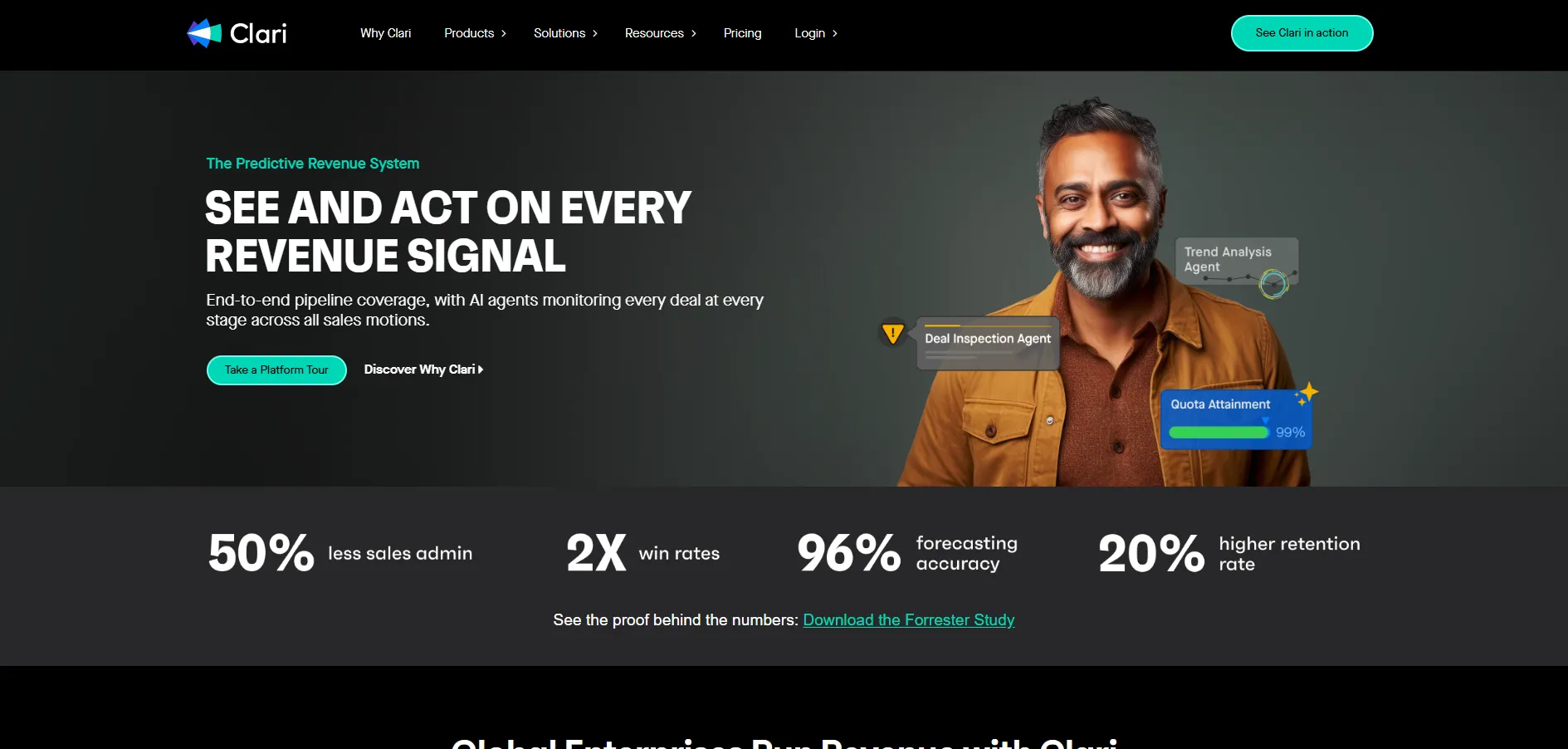
Clari focuses on revenue forecasting and pipeline inspection, helping RevOps teams identify where revenue leakage occurs before deals slip. The platform combines AI-powered analytics with activity capture to create visibility into pipeline health and deal progression. Teams use Clari to understand which opportunities are at risk, where coverage gaps exist, and how accurate their forecasts are across quarters.
Strengths:
Strong forecasting models and dashboards with AI-powered predictions that analyze historical patterns and current engagement. Pipeline coverage and risk tracking surfaces stalled opportunities through automated alerts. Scenario planning capabilities help RevOps teams manage complex sales cycles and model different outcomes. Activity capture from email and calendar operates without manual logging, maintaining data quality. Integration with Salesforce, HubSpot, and Microsoft Dynamics ensures CRM data flows bidirectionally. The platform also provides rep-level visibility into activity patterns and deal velocity metrics.
Limitations:
Focused on visibility and analytics rather than autonomous execution, meaning teams still need to act on insights manually. Requires clean CRM data to deliver accurate forecasting, creating dependencies on sales reps to maintain data hygiene. Does not handle outreach or follow-up automation directly, leaving gaps in execution. Premium pricing targets enterprise buyers, making it less accessible for smaller teams. Implementation requires dedicated resources and change management to drive adoption.
Ideal Fit: RevOps leaders prioritizing forecast accuracy and pipeline visibility over execution. Best for organizations with mature sales processes that need better predictive intelligence and deal risk management.
3. Gong — Best for Revenue Intelligence and Deal Risk Detection
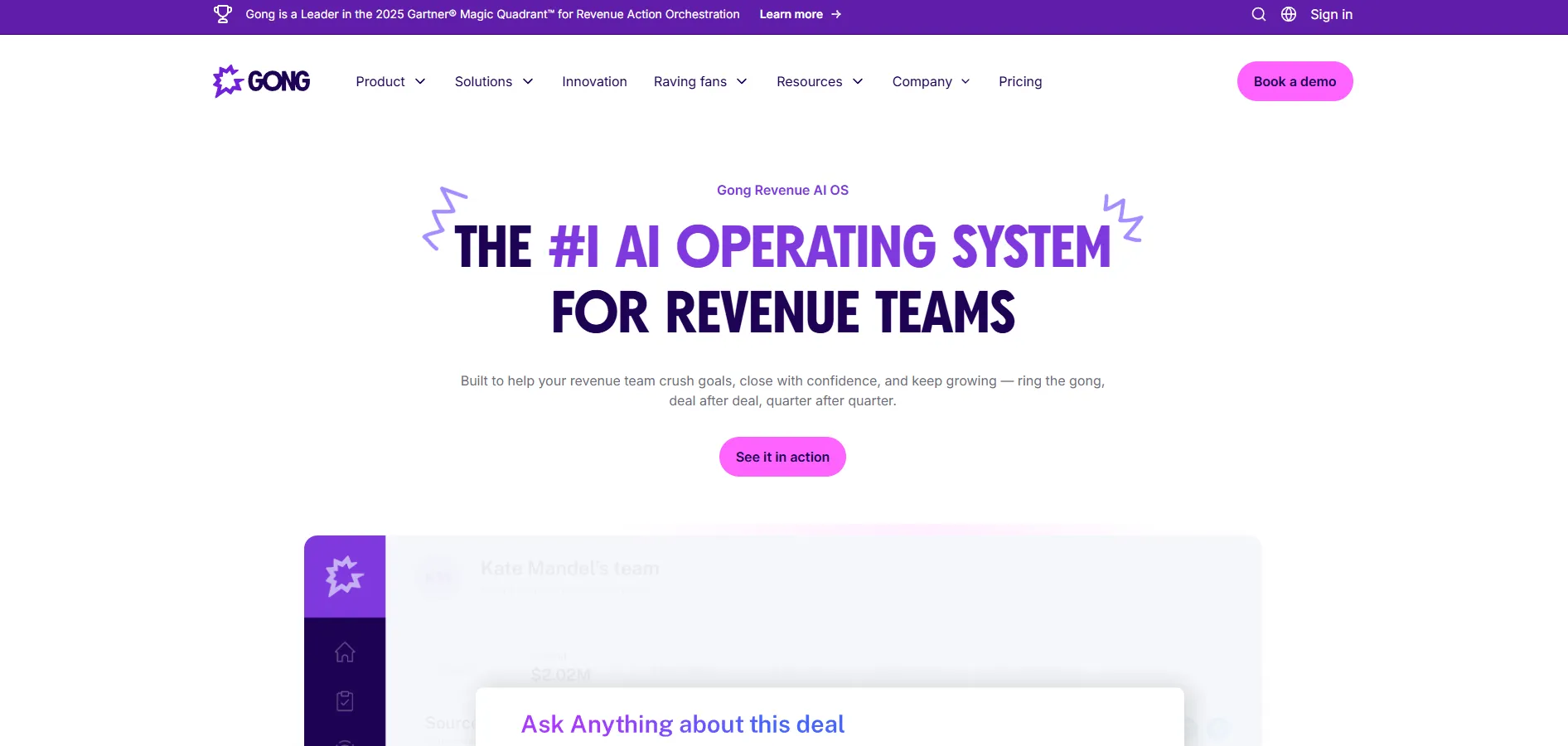
Gong analyzes calls and emails to surface risks across deals and the sales process, helping sales reps identify patterns that lead to won or lost deals. The platform uses conversation intelligence to decode what happens in customer interactions, transforming unstructured communication into actionable insights. Revenue teams leverage Gong to understand buyer sentiment, coach reps effectively, and predict deal outcomes with greater accuracy.
Strengths:
Conversation intelligence tied to deal outcomes with sentiment analysis reveals what messaging resonates with buyers. Risk alerts for stalled opportunities trigger based on buyer engagement patterns like declining email responses or missed meetings. Coaching insights reduce human error across the sales team by highlighting what top performers do differently. Forecasting signals derived from buyer engagement and call patterns provide leading indicators beyond CRM data. Benchmarks against top performers identify improvement areas across teams and individuals. The platform also captures competitive intelligence mentioned in calls, helping teams understand market positioning.
Limitations:
Insight-only platform with no execution or follow-up automation, meaning teams must act on recommendations manually. Requires sufficient call volume to generate meaningful insights, limiting value for low-touch sales models. Higher price point for smaller teams makes ROI challenging without significant deal volume. Does not address outreach gaps or prospecting leakage that occur before conversations happen. Teams need complementary tools for execution, similar to how AI prospecting platforms handle top-of-funnel activities.
Ideal Fit: Teams focused on coaching and insight rather than stopping revenue leaks in real-time. Best for organizations with high call volumes and complex enterprise sales cycles.
4. HubSpot Sales Hub — Best for SMB CRM Visibility and Pipeline Management
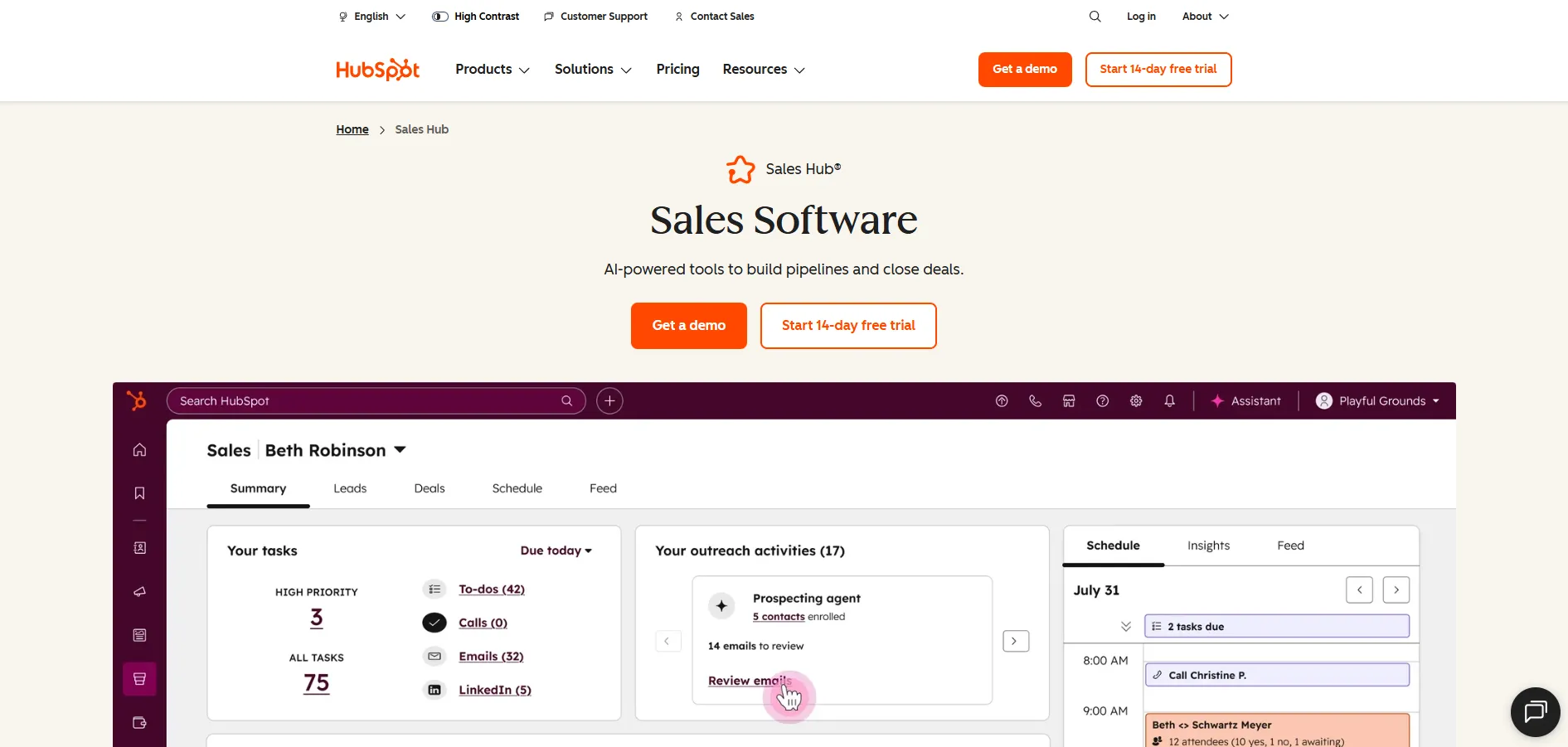
HubSpot combines CRM, marketing, and reporting to give teams visibility into their sales funnel and revenue leaks through an integrated platform. The ecosystem connects sales and marketing activities, providing a unified view of the customer journey. Small and mid-market teams use HubSpot to centralize prospect data, track deal progression, and coordinate cross-functional workflows without managing multiple disconnected systems.
Strengths:
Unified CRM with sales and marketing alignment in one system eliminates data silos common in fragmented stacks. Built-in dashboards for pipeline and forecasting metrics provide visibility into funnel health without custom reporting. Workflow automation handles basic follow-up and task creation, reducing manual administrative work. Sequence automation enables email follow-up across the sales process with templated cadences. Free tier available for teams testing CRM-first workflows before committing to paid plans. The platform also includes meeting scheduling, document tracking, and basic reporting that covers essential sales activities.
Limitations:
Manual processes are still required for outreach execution, as automation capabilities are rule-based rather than autonomous. Forecasting accuracy depends on sales reps maintaining data hygiene, creating the same leakage risks as traditional CRMs. Pricing scales quickly with contacts and advanced features, often surprising teams as they grow. Limited AI sophistication compared to purpose-built automation platforms that execute decisions independently. Advanced features like predictive lead scoring and conversation intelligence require premium tiers. Teams often need supplementary tools for sophisticated automation, unlike platforms that combine AI sales enablement with execution.
Ideal Fit: SMB teams seeking centralized CRM visibility rather than autonomous execution. Best for organizations prioritizing ease of use and integrated marketing alignment over advanced AI capabilities.
5. Salesforce Revenue Cloud — Best for Enterprise Revenue Lifecycle Management
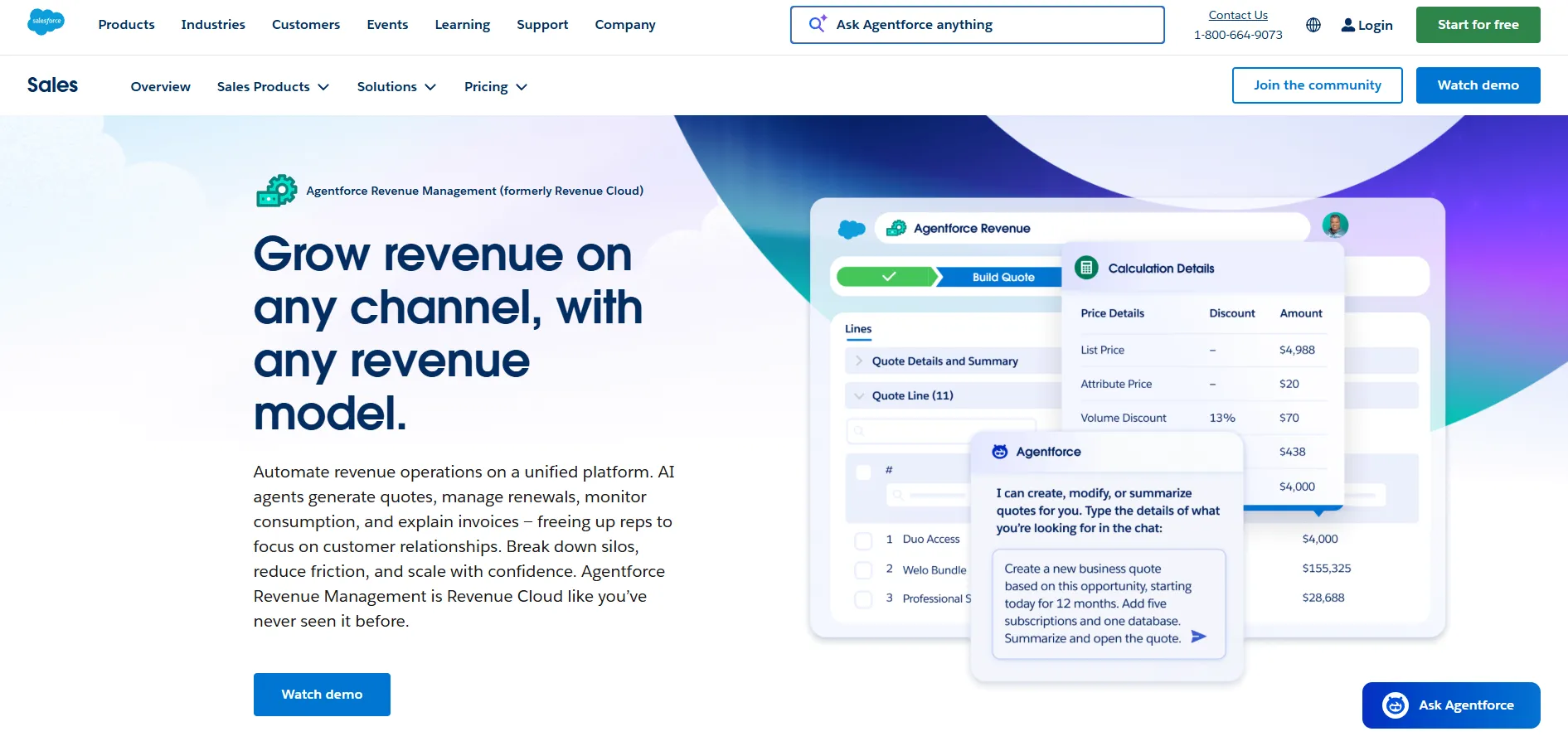
Salesforce Revenue Cloud extends the Salesforce ecosystem with CPQ, billing, and revenue recognition capabilities to prevent revenue leakage from pricing errors and contract mismanagement. The platform handles quote-to-cash processes across complex enterprise sales cycles. Large organizations use Revenue Cloud to standardize pricing, automate approvals, and ensure revenue recognition aligns with accounting standards across global operations.
Strengths:
CPQ (Configure, Price, Quote) automation reduces pricing errors that cause revenue leakage through discounting mistakes or unapproved terms. Contract lifecycle management with approval workflows ensures proper governance and reduces maverick deals. Deep CRM customization and enterprise-grade security meet compliance requirements for regulated industries. Revenue recognition aligned with ASC 606 compliance requirements provides accurate financial reporting. Strong RevOps controls and dashboards across the sales pipeline enable process enforcement. The platform also supports complex pricing models, including usage-based, subscription, and hybrid structures.
Limitations:
Relies heavily on manual updates by sales reps, meaning data quality issues persist if teams don't maintain discipline. High total cost of ownership, including licenses and admin overhead, makes it expensive compared to alternatives. Does not address top-of-funnel prospecting or lead response gaps, focusing only on mid-to-late funnel activities. Complex implementation requiring dedicated Salesforce expertise and lengthy deployment timelines. Many features require additional modules or third-party apps, increasing costs and integration complexity. Organizations often need 1-2 full-time Salesforce admins to maintain the system effectively.
Ideal Fit: Large enterprises needing CRM control and quote-to-cash automation rather than automated leakage prevention. Best for organizations with complex product catalogs, multi-step approval workflows, and strict revenue recognition requirements.
6. Outreach — Best for Structured Sales Engagement and Sequences
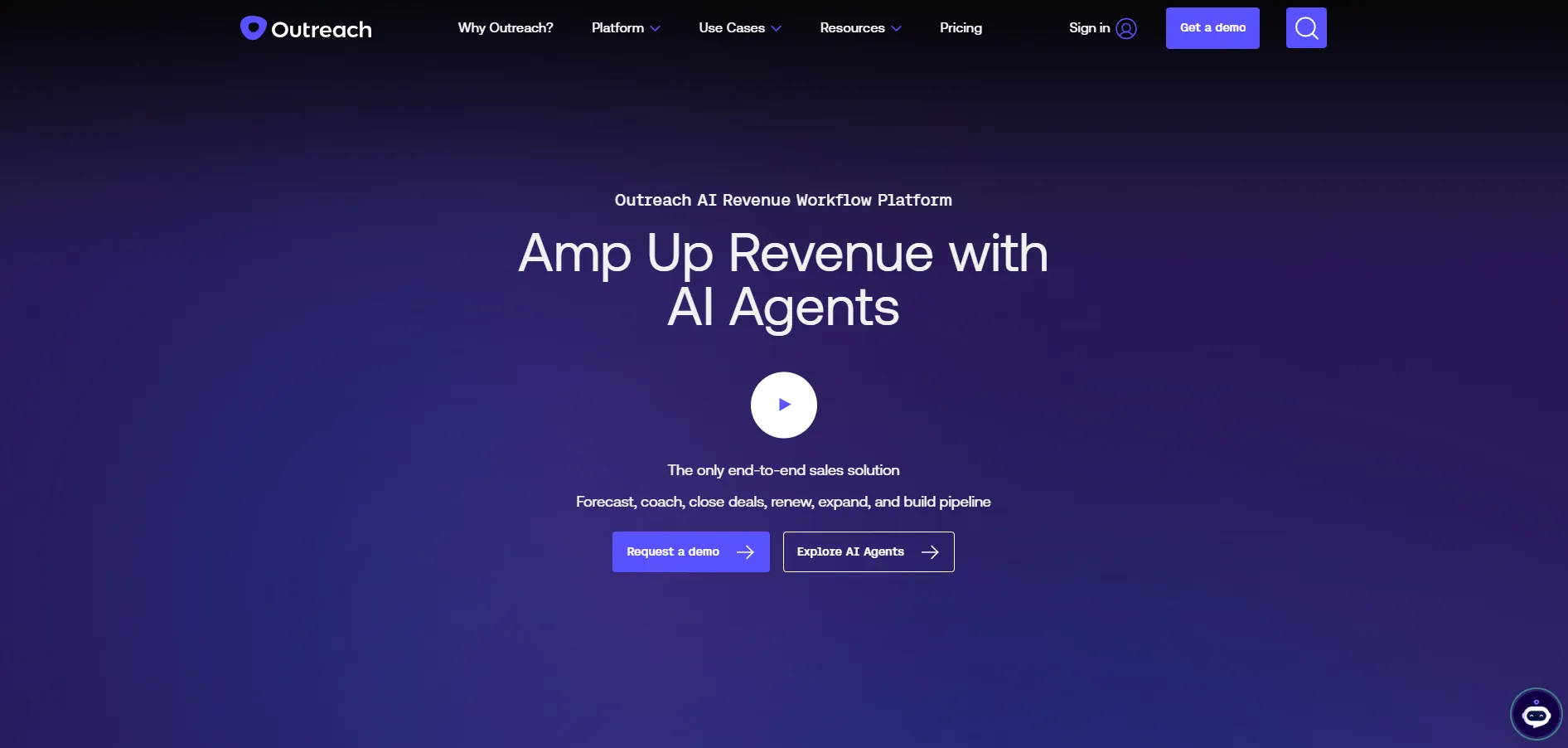
Outreach standardizes outbound workflows for sales reps, providing structured sequences to reduce revenue leakage from inconsistent follow-up. The platform enforces cadence discipline across teams, ensuring prospects receive timely touchpoints. Sales leaders use Outreach to create repeatable playbooks that reduce variability in rep execution and provide visibility into what's working across the organization.
Strengths:
Sequence-based outreach management across email, phone, and LinkedIn creates consistent prospect experiences. A/B testing for subject lines, templates, and timing optimization helps teams identify what drives responses. CRM integrations with activity tracking and manager dashboards provide visibility into rep productivity and engagement metrics. AI-powered recommendations suggest best times and channels based on historical performance patterns. Coaching insights tied to engagement metrics help managers identify skill gaps and top performer behaviors. The platform also supports task automation and intelligent routing that prioritizes high-value activities.
Limitations:
Requires constant manual management and rep execution, as sequences don't adapt autonomously to prospect behavior. No autonomous follow-up or decision-making capabilities mean reps must intervene when prospects go off-script. Leakage persists outside structured sequences, particularly for inbound leads or prospects who don't fit predefined playbooks. Enterprise pricing structure with per-seat costs scales exponentially as teams grow. Configuration and optimization require ongoing RevOps resources to maintain effectiveness. Unlike AI outreach tools that execute autonomously, Outreach requires human action at every step.
Ideal Fit: Sales teams needing structured playbooks rather than autonomous automation. Best for organizations with standardized sales processes where rep adherence to sequences drives results.
7. SalesLoft — Best for Multi-Touch Cadence Execution
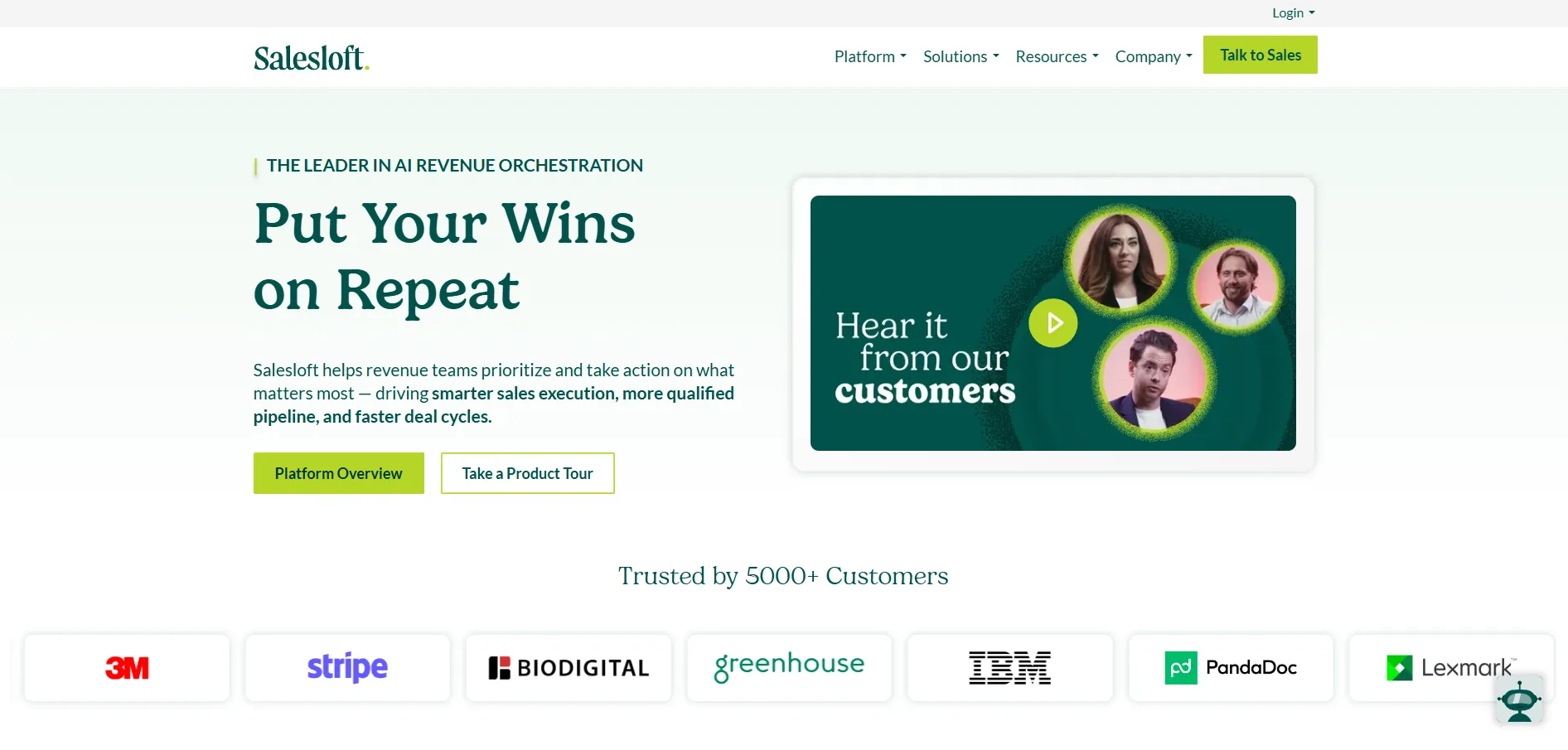
SalesLoft helps teams manage outbound and inbound cadences with structured workflows and coaching dashboards. The platform combines sales engagement with conversation intelligence, giving managers visibility into both activity levels and interaction quality. Organizations use SalesLoft to enforce consistent prospect touchpoints while capturing insights from calls and emails.
Strengths:
Multi-touch cadence management across channels ensures prospects receive coordinated outreach through email, phone, and social touchpoints. Coaching and analytics dashboards for managers surface performance patterns and skill development opportunities. CRM integration with comprehensive activity logging maintains data quality without manual entry. Engagement scoring prioritizes follow-up by identifying which prospects show buying signals. The platform also includes call recording, email tracking, and meeting intelligence that connects activities to outcomes. Workflow automation reduces administrative burden for reps.
Limitations:
Manual execution by sales reps is still required, as the platform doesn't act autonomously on engagement signals. Limited real-time response to prospect signals means opportunities can cool while waiting for rep action. Does not prevent missed opportunities autonomously when reps are busy or out of the office. Pricing targets mid-market and enterprise buyers, making it expensive for smaller teams. Implementation and ongoing optimization require dedicated sales operations resources. Configuration complexity can overwhelm teams without technical expertise.
Ideal Fit: Mid-market teams focused on cadence discipline and rep productivity. Best for organizations that want structured workflows with coaching visibility rather than autonomous execution.
8. Pipedrive — Best for Simple Pipeline Tracking
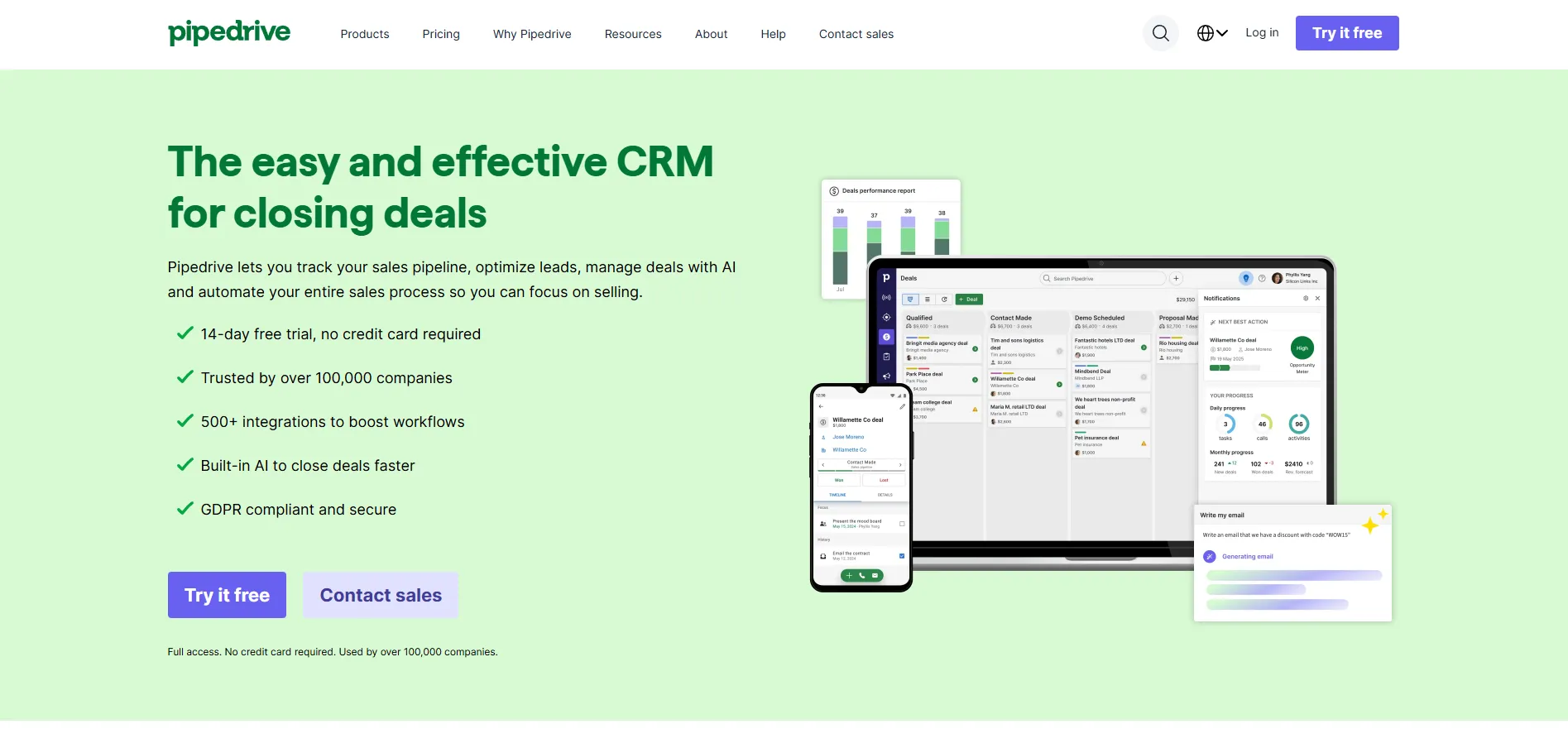
Pipedrive offers lightweight pipeline management with visual deal tracking for smaller teams. The platform emphasizes simplicity over sophistication, helping teams organize deals and track progress without complexity. Small businesses use Pipedrive when they need basic CRM functionality without enterprise features or pricing.
Strengths:
Visual sales pipeline with drag-and-drop interface makes deal tracking intuitive for non-technical users. Simple setup and straightforward pricing allow teams to start quickly without implementation projects. Basic forecasting and reporting features provide essential visibility into pipeline health. Activity reminders reduce missed follow-up by alerting reps when tasks are due. The platform also includes email integration, contact management, and workflow automation for simple sequences. Mobile apps ensure reps can access pipeline data while traveling.
Limitations:
Limited automation capabilities compared to sophisticated platforms, handling only basic triggers and workflows. Weak governance and reporting for enterprise needs, lacking advanced analytics and compliance features. Manual follow-up processes are still required, as automation doesn't extend to autonomous execution. No AI depth for predictive insights or intelligent prioritization of opportunities. The integration ecosystem is smaller than enterprise platforms, limiting connections to specialized tools. Forecasting relies entirely on rep input without predictive modeling.
Ideal Fit: Small teams with simple sales processes seeking affordable visibility. Best for organizations prioritizing ease of use and low cost over advanced automation or AI capabilities.
9. Zoho CRM — Best for Budget-Conscious Teams
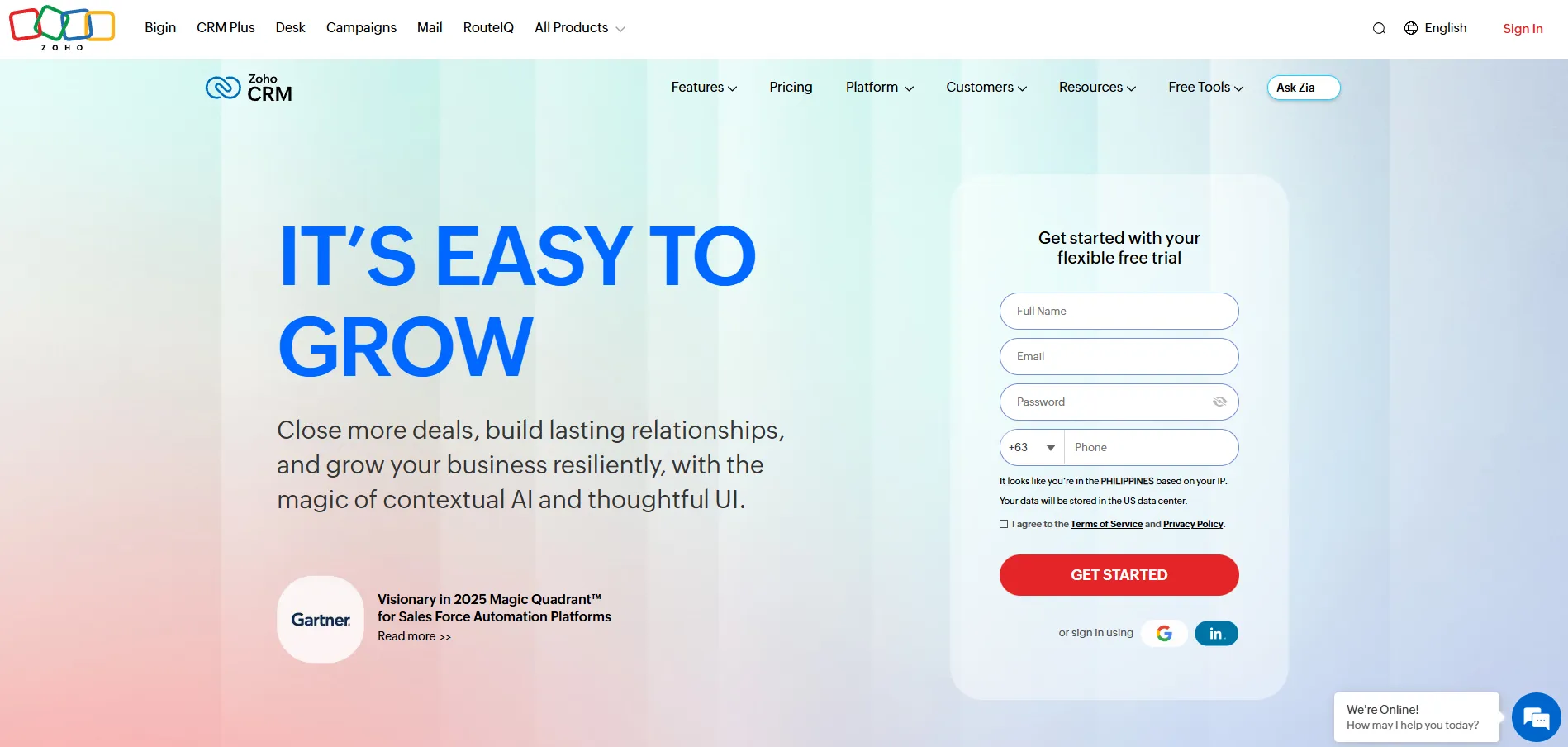
Zoho CRM provides affordable CRM capabilities with workflow rules and basic automation for cost-sensitive organizations. The platform offers broad functionality at lower price points than enterprise alternatives. Small businesses use Zoho when budget constraints limit options, but basic CRM capabilities are still needed.
Strengths:
Low pricing with flexible tiers makes CRM accessible for startups and small businesses with limited budgets. A broad feature set, including email, social, and analytics, covers essential sales activities in one platform. Workflow rules enable basic automation for lead assignment, follow-up reminders, and notifications. Integration with the broader Zoho ecosystem provides access to related business applications. The platform also includes customization options, mobile apps, and multi-currency support for growing businesses. AI assistant (Zia) provides basic insights and predictions at higher tiers.
Limitations:
Limited AI depth for predictive insights compared to purpose-built revenue intelligence platforms. Manual data management is still required, as automation capabilities are rule-based rather than intelligent. Weak enterprise governance features, including audit trails, role-based controls, and compliance certifications. Interface complexity for advanced configurations can frustrate users without technical expertise. Customer support quality varies, particularly at lower pricing tiers. Integration quality with third-party tools is inconsistent compared to market leaders. Ideal Fit:** Cost-sensitive teams accepting trade-offs in automation sophistication. Best for small businesses prioritizing affordability over advanced AI capabilities or enterprise-grade governance.
How to Choose the Right Sales Leakage Platform
Selecting the right platform requires a systematic approach focused on fit, feasibility, and future-proofing. Start with an outcome-first methodology: define where revenue leaks today, whether through missed follow-up, churn, poor forecasting, or stalled outreach. Prioritize platforms that close gaps automatically, not just report on them.
Security and Compliance:
SOC 2 Type II certification for operational security demonstrates a commitment to protecting customer data through audited controls. GDPR alignment for data protection requirements ensures lawful processing of prospect and customer information across regions. Role-based access controls and audit trails provide visibility into who accessed what data and when. Data residency controls for regulated industries allow organizations to meet jurisdictional requirements. SSO/SAML integration for identity management connects platforms to enterprise authentication systems. Encryption at rest and in transit protects data from unauthorized access throughout the lifecycle.
Governance and Risk Management:
Audit trails for all automated actions create accountability and enable compliance verification during regulatory reviews. Workflow controls that enforce approval processes prevent unauthorized outreach or pricing decisions. RevOps ownership over automation rules ensures technical teams can modify behavior without engineering resources. Policy enforcement for outreach compliance prevents violations of CAN-SPAM, GDPR, or industry-specific regulations. Escalation paths for flagged activities route edge cases to humans when AI confidence is low. Version control for templates and sequences maintains consistency while allowing controlled experimentation.
Scalability and Performance:
Global execution across time zones ensures prospects receive outreach during business hours, regardless of location. High-volume outreach without degradation maintains performance as contact databases grow from thousands to millions. Multi-region support for distributed teams allows regional customization while maintaining global visibility. Performance reliability under load prevents system slowdowns during peak usage periods like quarter-end pushes. Capacity for growing contact databases scales without requiring platform migration or architectural changes. API rate limits and throughput guarantees protect integrations as usage increases.
Integration Depth:
Native CRM syncs with Salesforce, HubSpot, and others, maintaining data accuracy through bidirectional updates in real time. Google Analytics compatibility for attribution connects marketing activities to revenue outcomes across the funnel. Bi-directional data flow without manual exports eliminates CSV uploads and ensures a single source of truth. Field mapping for custom objects and properties allows platforms to work with unique data models. Real-time dashboards pulling from multiple sources provide unified visibility without data warehouse complexity. Webhook support enables custom integrations with proprietary systems and specialized tools.
Deliverability and Communication:
Domain reputation management and warming gradually increase sending volume to maintain inbox placement rates. Multichannel execution across email, phone, and LinkedIn coordinates touchpoints without overwhelming prospects. Compliance-aware messaging templates prevent accidental violations through built-in guardrails. Consistent follow-up timing and cadence optimize for response rates based on historical performance. Inbox placement monitoring and optimization detect deliverability issues before they impact campaigns. Spam trap avoidance and list hygiene prevent blacklisting that damages the sender's reputation.
According to IDC, integrated platforms deliver up to 30 percent higher ROI than point solutions by reducing technical debt and eliminating data synchronization overhead.
Next Steps for Your Team
Sales leakage is not inevitable. The right platform turns visibility into action, protecting revenue across the entire sales process. Teams vary by size, pricing tolerance, and maturity, but the pattern is clear. Autonomous execution delivers the strongest impact because it closes gaps without depending on human consistency.
The platforms in this guide range from analytics-focused tools that surface where leakage occurs to fully autonomous systems that prevent it. Your choice depends on whether you need visibility, assistance, or execution. Teams seeking deeper context on autonomous approaches can explore how digital workers transform GTM teams.
Revenue intelligence platforms like Clari and Gong show you the problem. CRM systems like HubSpot and Salesforce give you a place to track it. Sales engagement tools like Outreach and SalesLoft help you manage it manually. Only autonomous platforms actually solve it.
For teams seeking to eliminate revenue leaks, improve forecasting, and protect the bottom line without adding headcount, 11x stands apart. Alice and Julian operate continuously across outbound and inbound channels, acting on signals in real-time and keeping your CRM accurate. The result is fewer missed opportunities, faster follow-up, and more revenue captured. Schedule a product demo with our expert team.
Frequently Asked Questions
Sales leakage is revenue lost due to missed follow-up, poor forecasting, churn, and manual processes that create gaps in the sales funnel. It differs from competitive losses because leakage represents revenue that should have been captured with better execution. The problem compounds as pipelines scale, turning small inefficiencies into material revenue impact. Platforms like 11x prevent leakage by executing actions automatically across every stage of the pipeline, from initial outreach through renewal management.
Common causes of revenue leakage include human error, disconnected systems, slow follow-up, and lack of real-time execution. When sales reps miss touchpoints because they're focused on closing deals, when CRM data decays because updates are manual, or when renewals approach without outreach because tracking is inconsistent, revenue slips away. Addressing these gaps requires automation that acts on signals before opportunities go cold rather than simply reporting on problems after they occur.
Measure leakage through conversion rate drops at each funnel stage, forecasting variance between projected and actual revenue, churn rates, and missed opportunity counts. Dashboards that track time-to-follow-up, deal velocity, and activity completion help quantify where leakage occurs. Benchmarking against historical performance reveals trends and validates whether interventions are working. Calculate leakage impact by multiplying stage conversion gaps by average deal value to understand true revenue cost.
Automation reduces delays and errors by executing follow-up, updating CRM records, and flagging at-risk deals without human intervention. Autonomous execution delivers the strongest results because it acts on signals in real-time rather than waiting for reps to manually process alerts. 11x goes beyond rules-based automation by owning complete workflows from outreach through qualification, adapting to prospect behavior, and eliminating the consistency gaps that cause leakage in manual processes.
CRM shows data. It does not act. Without execution layers that respond to signals automatically, leakage continues even with perfect visibility. A CRM tells you a deal has been stale for 30 days but doesn't automatically re-engage the prospect. It shows renewal dates but doesn't initiate customer success touchpoints. Platforms like 11x close the gap between insight and action by operating continuously across channels, executing the workflows that prevent leakage rather than simply tracking where it occurred.