The Top Intent-Based Marketing Tools: 2026 Comparison
Discover the best intent-based marketing platforms for B2B teams. See how tools compare on automation, pipeline impact, and ROI.


Every B2B buyer leaves a trail. They visit pricing pages at 2 AM, download whitepapers during lunch, and research competitors on LinkedIn between meetings. The question is: are you there when it matters?
Intent-based marketing tools convert these digital breadcrumbs into actionable buying signals, helping GTM teams reach high-intent leads at the exact moment they're evaluating solutions. According to Forrester, companies using intent data see a 70% increase in qualified pipeline compared to those relying solely on traditional lead generation. For revenue leaders balancing tighter budgets and longer sales cycles, these platforms determine whether your team moves from awareness to opportunity—or watches competitors close the deal first.
This guide compares the top intent-based marketing platforms for 2026, ranked by data accuracy, integration breadth, automation depth, and measurable ROI impact.
The Top Intent-Based Marketing Tools: 2026 Comparison
Our methodology prioritizes neutral, criteria-driven analysis. The evaluation is 90 percent objective feature comparisons and 10 percent strategic insights from our go-to-market experience. Each platform was assessed on its ability to accelerate the sales pipeline, not just manage it.
Key evaluation factors include:
- Automation Depth: Task independence—from rule-based workflow to self-learning autonomy.
- Sales Cycle Coverage: Support for each funnel stage—from prospecting to handoff.
- Data Handling and Enrichment: Ability to unify and enhance data in real time.
- Integration Ecosystem: Breadth and strength of API and CRM connections.
- Measurable ROI: Documented impact on conversion, sales-cycle time, and lead cost.
Comparison of Data Types, Accuracy, Integrations, Automation Capabilities, and Pricing
11x
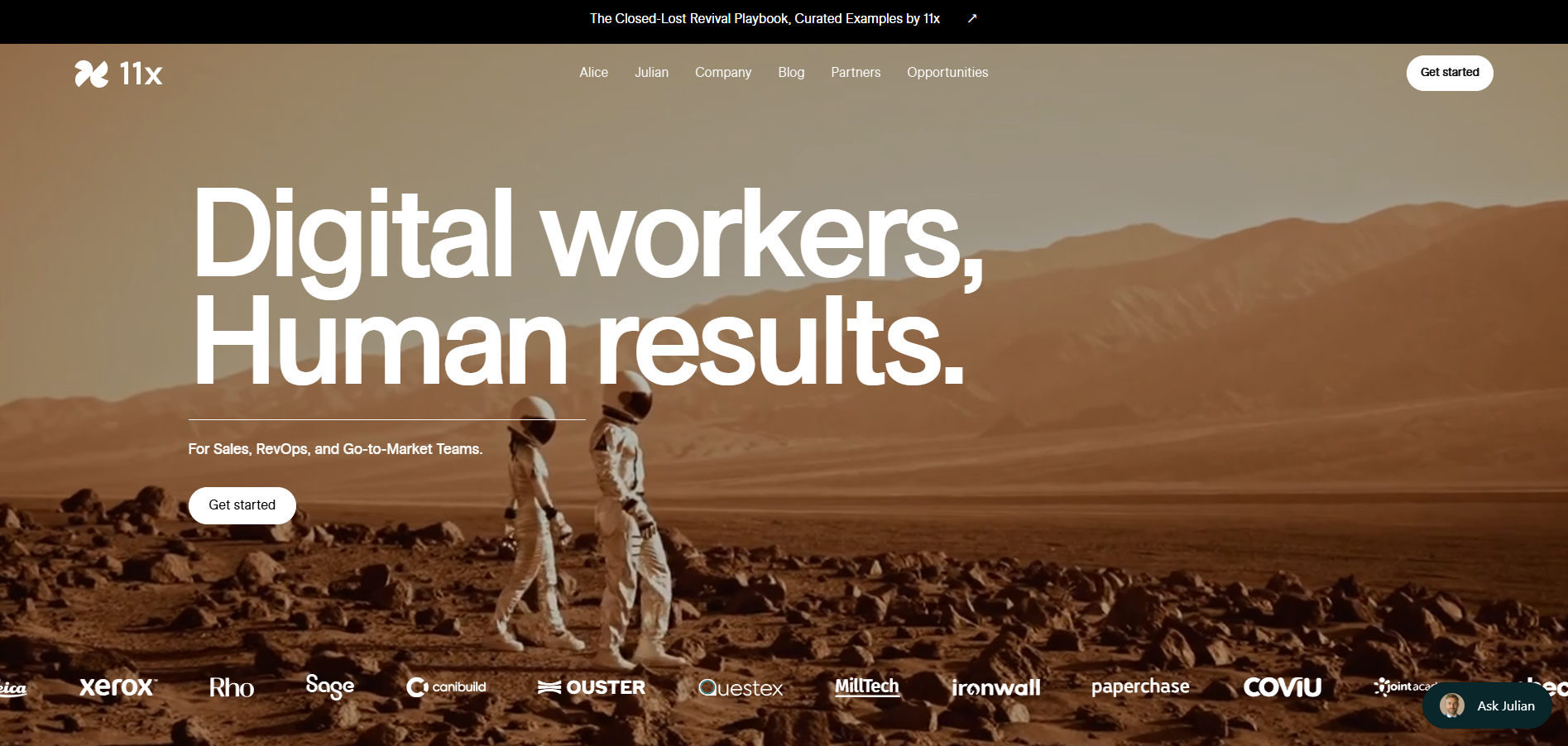
11x provides two autonomous AI sales agents: Alice for outbound prospecting and Julian for inbound qualification. These digital workers manage research, outreach, engagement, and qualification without human intervention. Operating continuously, they function as programmable SDRs that feed verified activity data into your CRM, enabling sales teams to focus on closing deals rather than manual lead generation.
Data and Features
11x combines first-party data, second-party data, and third-party data from CRM systems, email platforms, and social media channels. The platform executes real-time follow-ups based on pricing page visits, job changes, webinar attendance, or case study downloads. Native integrations with LinkedIn, HubSpot, Salesforce, and call systems enable seamless workflows across your entire GTM stack. Support for more than 105 languages and multi-channel sequencing allows global deployment without localization delays.
The AI-powered system tracks buyer intent across the entire buying journey, from initial search engine queries to pricing page interactions. This comprehensive view of online behavior enables precise segmentation and targeted outreach that improves conversion rates significantly.
Pros and Cons of 11x:
11x Best Fit and Comparison:
Ideal for GTM teams and marketing teams replacing SDR or call-center functions with continuous AI execution. Platforms like 6sense and Demandbase surface intent signals, while 11x activates those signals in real time, turning buyer intent into booked meetings. This approach aligns with modern AI sales automation tools that prioritize autonomous execution over manual workflows.
For B2B companies and B2B marketing teams focused on maximizing their marketing budget, 11x delivers measurable ROI through reduced cost per lead and accelerated pipeline velocity. The platform's ability to act on intent data from multiple data sources—including first-party data from your website and third-party data from providers like Bombora—creates a comprehensive intent-based marketing strategy.
11x Pricing:
Custom enterprise plan with usage-based tiers aligned to lead volume and integration scope.
6sense
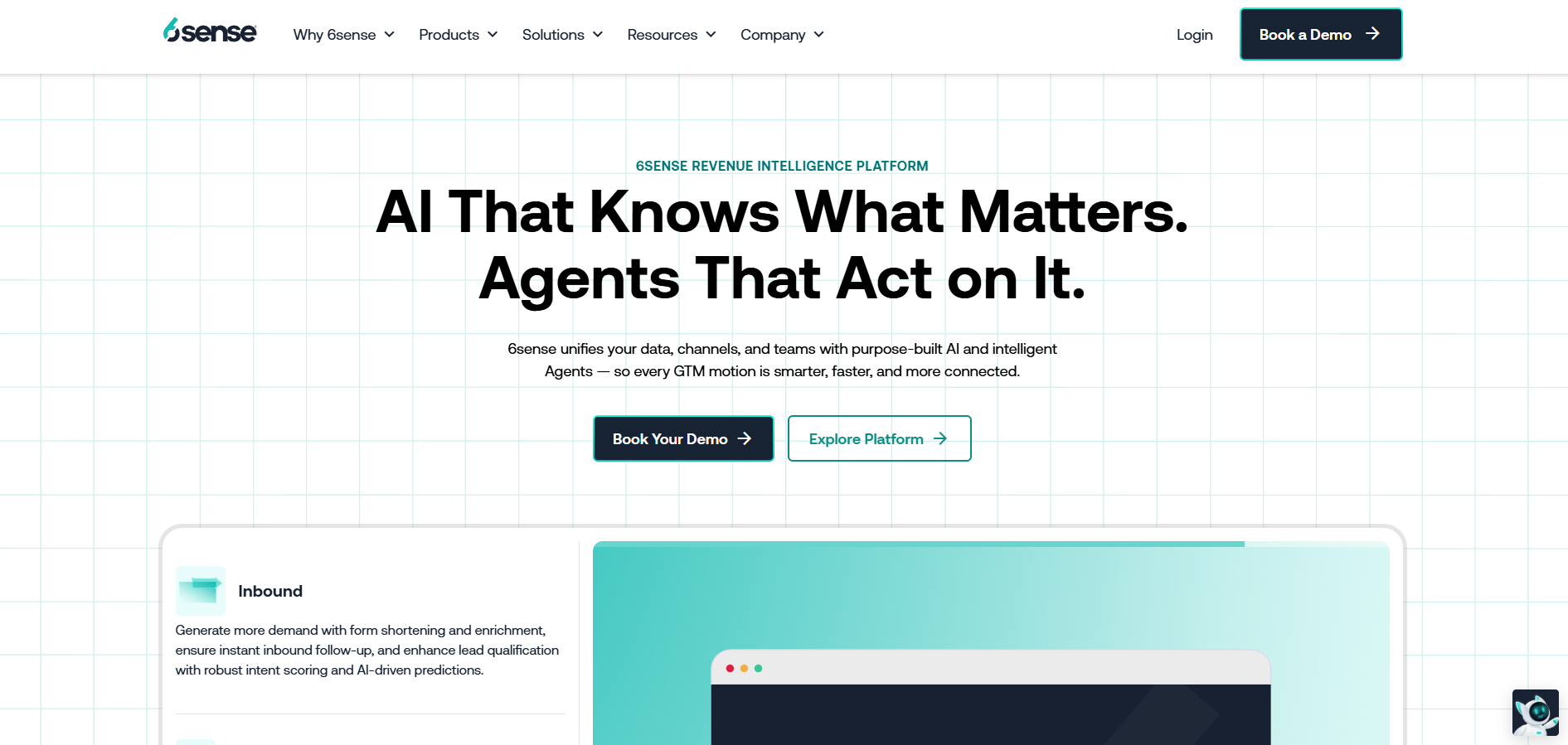
6sense delivers predictive insights to uncover in-market accounts and prioritize outreach. It's a full-stack ABM platform built for enterprise sales motions, helping sales teams and marketing teams identify high-intent accounts through sophisticated lead scoring and predictive analytics.
Data and Features
6sense combines intent data, web analytics, ICP definition, and lead scoring to create a comprehensive view of target accounts. The platform tracks both anonymous and known contact behavior through its "Revenue AI" framework, analyzing online behavior across search engines, social media, and content consumption patterns.
Marketing teams use 6sense to optimize their marketing campaigns by identifying which target accounts are actively researching solutions. The platform's firmographic and technographic data enable precise segmentation, allowing for targeted ads and personalized email campaigns that reach decision-makers at the right time in their buying journey.
Pros and Cons of 6sense:
6sense Best Fit and Comparison:
Best for large B2B organizations running mature ABM programs. 6sense identifies purchase intent and buying signals, while 11x autonomously engages those leads to accelerate conversion and improve pipeline velocity. Marketing teams using 6sense still need to manually create workflows and follow-ups, whereas 11x handles the entire execution layer automatically.
For a detailed comparison of alternatives, see our 6sense alternatives guide.
6sense Pricing:
Estimated $65K–$120K annually depending on data volume and modules.
Bombora
Bombora pioneered third-party intent data aggregation. It tracks B2B research activity across content networks to highlight accounts showing early-stage interest, making it a foundational data provider for many intent-based marketing strategies.
Data and Features
Bombora focuses on firmographic and topic consumption data, integrated via APIs into CRMs and demand platforms. The platform monitors when target accounts increase content consumption around specific topics, providing actionable insights for marketing efforts. This third-party data complements first-party data from your website and CRM to create a complete view of buyer intent.
Marketing teams use Bombora's intent signals to identify which potential customers are actively researching solutions, enabling them to launch targeted marketing campaigns before competitors. The platform's data sources span thousands of B2B websites, whitepapers, and case studies, creating comprehensive coverage of online behavior across industries.
Pros and Cons of Bombora:
Bombora Best Fit and Comparison:
Ideal for top-of-funnel campaigns identifying surging topics before active outreach. Works well as a data source for AI-driven lead generation activators such as 11x. While Bombora excels at surfacing which accounts are researching solutions through search engines and content consumption, it doesn't execute outreach or optimize conversion rates automatically.
B2B companies often combine Bombora's third-party data with 11x's autonomous execution to create a complete intent-to-revenue system that maximizes marketing budget efficiency.
Bombora Pricing:
Estimated $40K–$100K yearly based on data volume.
Demandbase
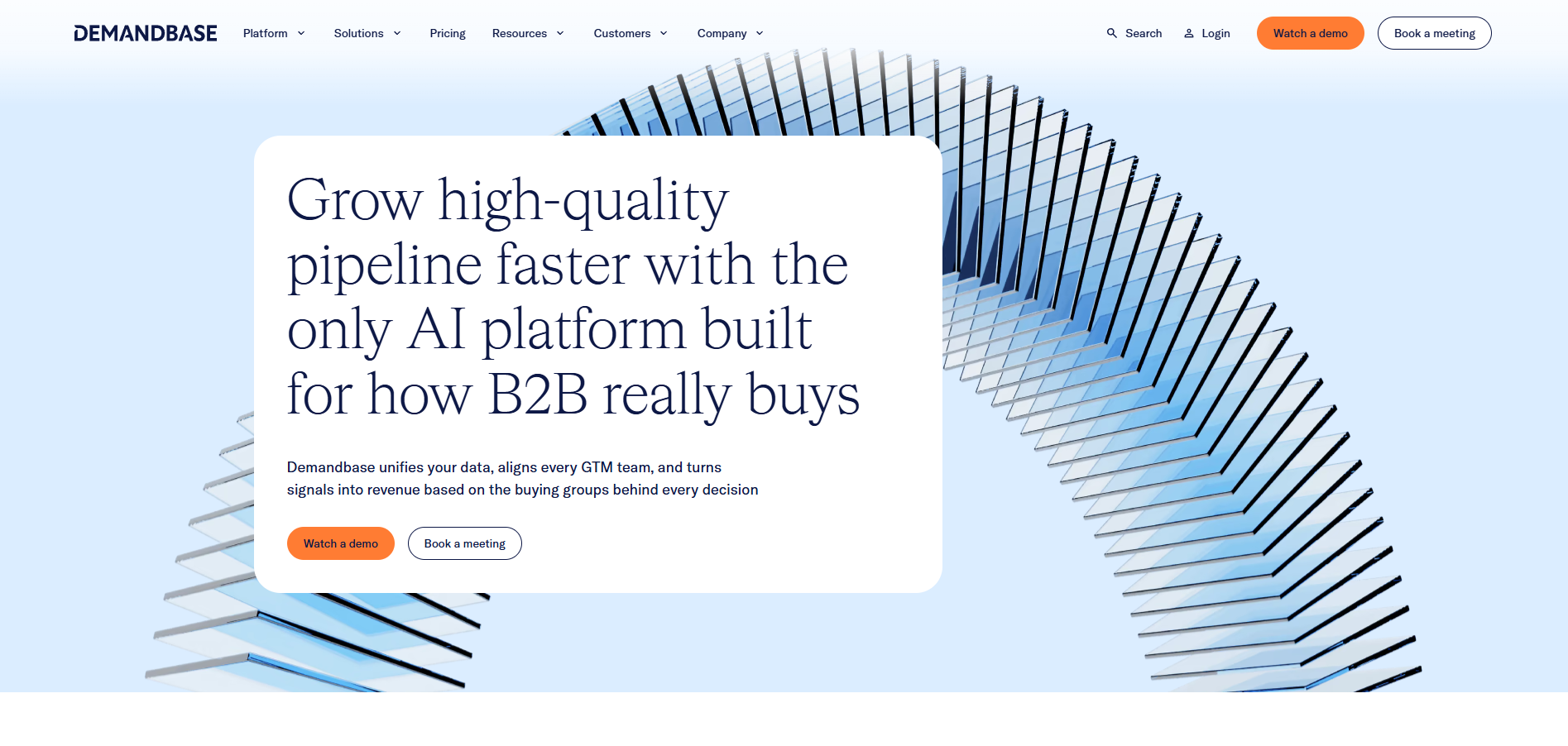
Demandbase unifies ABM orchestration with firmographic and behavioral insights to help enterprises target, engage, and convert high-intent accounts across digital marketing channels.
Data and Features
Demandbase combines first-party data and third-party data through CDP integration, enabling coordinated messaging across ad systems, web personalization, and email campaigns. The platform provides account-level analytics, intent scoring, and personalization capabilities for marketing teams managing complex B2B marketing strategies.
Sales teams and marketing teams use Demandbase to track customer intent across the entire buying journey, from initial research on search engines to pricing page visits. The platform's segmentation capabilities enable sophisticated retargeting strategies and targeted ads that reach decision-makers with personalized messaging based on their online behavior and demographics.
Pros and Cons of Demand base:
Demand base Best Fit and Comparison:
Suited for marketing organizations running mature, multi-channel ABM strategies with dedicated operations teams. Compared to 11x, which automates execution through AI GTM tools, Demandbase centralizes targeting decisions but still relies on manual campaign builds and workflow configuration.
B2B companies using Demandbase often complement it with lead enrichment tools to maximize data quality and improve conversion rates across their marketing campaigns.
Demandbase Pricing:
Estimated $50K–$150K+ annually.
Cognism
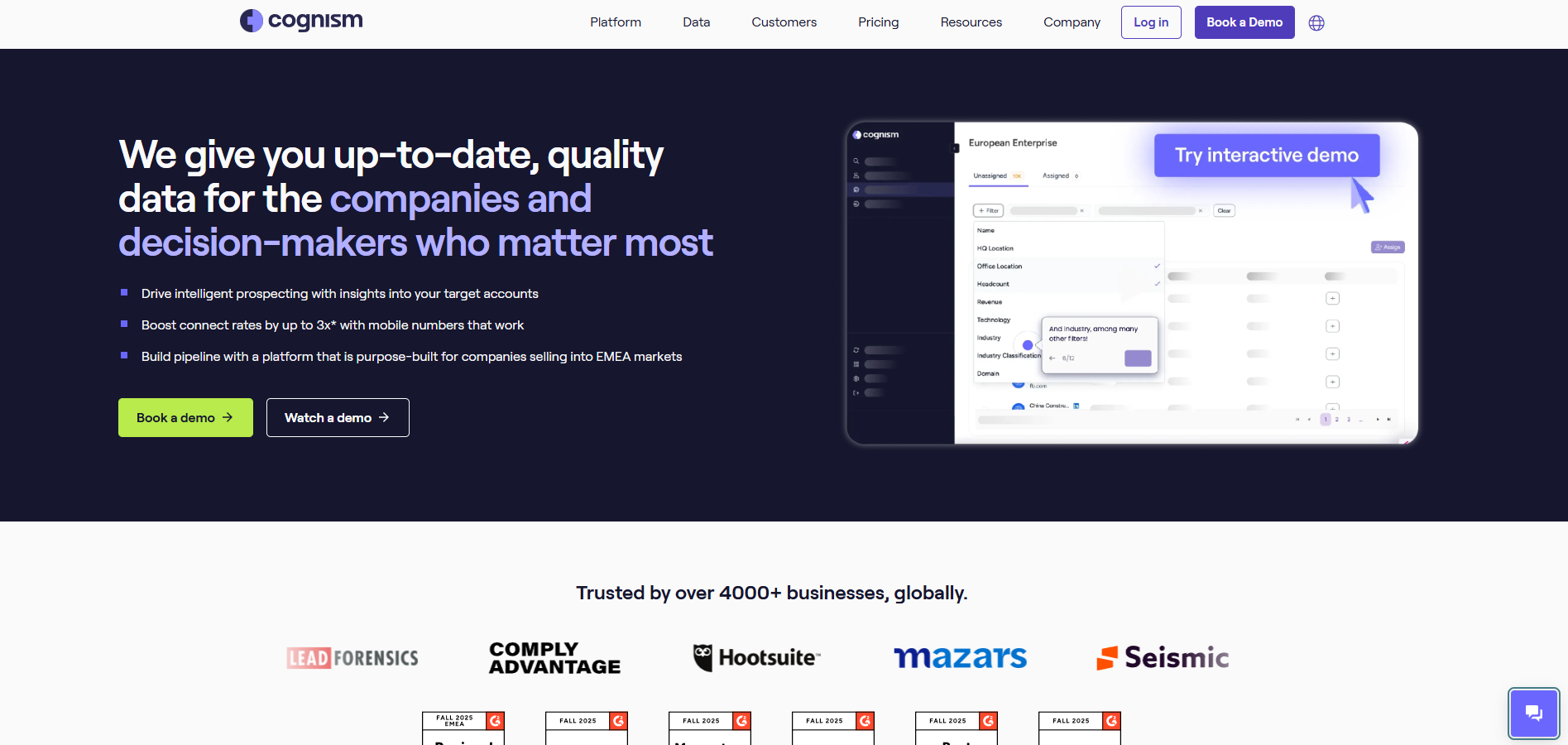
Cognism specializes in B2B lead enrichment, contact data, and intent insights for sales teams seeking accurate outreach data and verified contact information for decision-makers.
Data and Features
Cognism provides firmographic and technographic data, verified contact numbers, and intent scoring integrated into CRM and outbound tools. The platform tracks buying signals across LinkedIn, company websites, and job changes to identify decision-makers showing purchase intent.
Sales teams use Cognism to enhance their target audience data with accurate demographics and contact information, enabling more effective email campaigns and outreach. The platform's GDPR compliance makes it particularly valuable for B2B companies operating in regulated markets.
Pros and Cons of Cognism:
Cognism Best Fit and Comparison:
Best for outbound sales teams enhancing existing intent signals with verified contact data. 11x differs by executing that outreach autonomously post-identification, while Cognism provides the data foundation for manual or semi-automated campaigns.
For teams building comprehensive B2B data provider stacks, Cognism offers strong contact accuracy that complements AI prospecting tools like 11x.
Cognism Pricing:
Estimated $12K–$60K per year.
Factors.ai
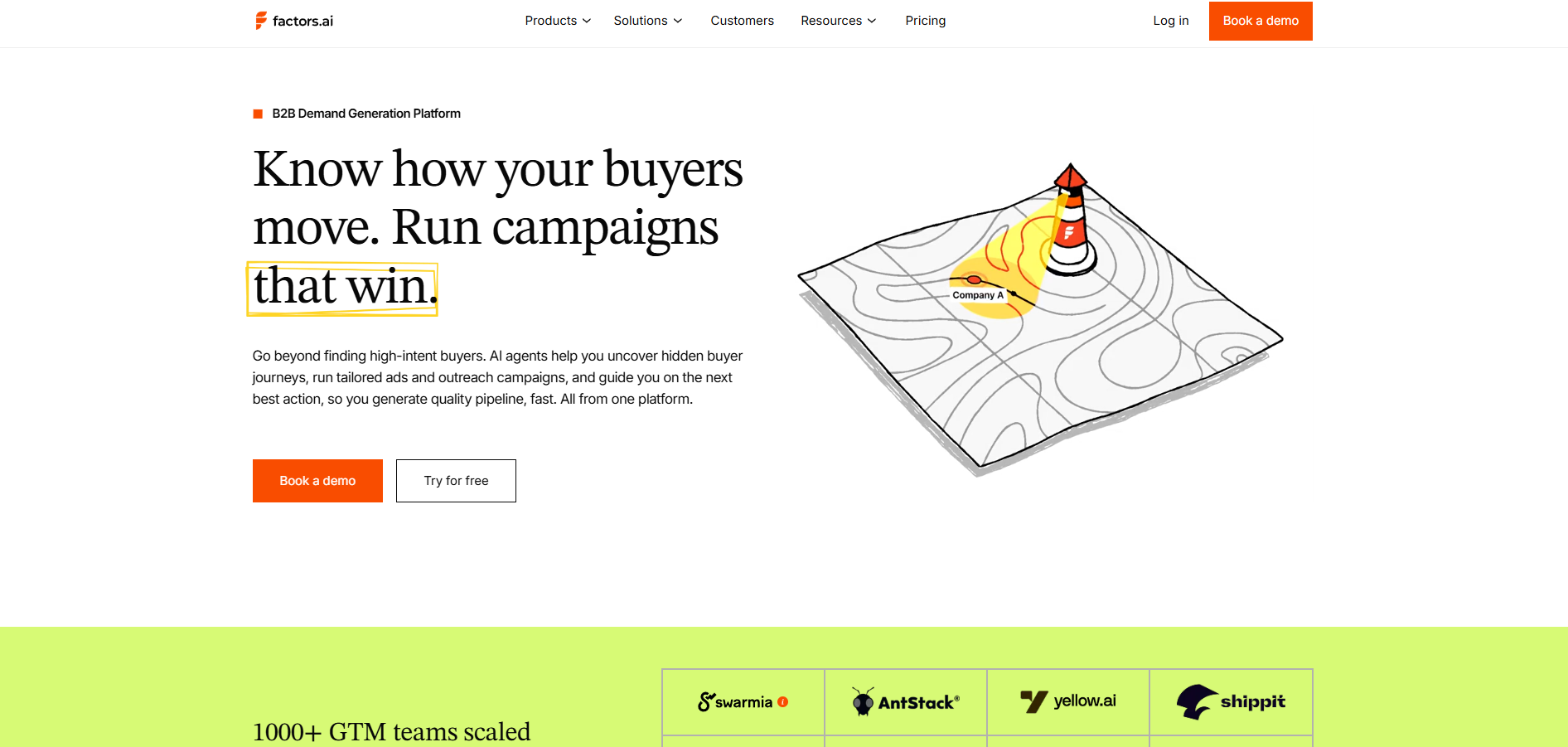
Factors.ai connects web analytics, ad performance, and CRM data to map how target accounts interact with digital assets across the marketing funnel.
Data and Features
Factors.ai emphasizes behavioral tracking and analytics segmentation to surface key buying signals from website visits, content downloads, and campaign engagement. The platform provides real-time metrics on which accounts are showing high-intent behavior, enabling marketing teams to optimize their marketing approach and marketing budget allocation.
Marketing teams use Factors.ai to track customer intent across multiple touchpoints, from initial search engine queries to webinar registrations and pricing page visits. Integration with HubSpot, Salesforce, and Slack allows for automated alerts when potential customers reach critical engagement thresholds, enabling faster follow-ups and improved conversion rates.
Pros and Cons of Factors.ai:
Factors.ai Best Fit and Comparison:
Great for small to mid-sized marketing teams seeking signal visibility and campaign optimization. When paired with 11x, these insights can trigger autonomous outreach workflows that convert high-intent leads immediately, creating a complete revenue orchestration system.
Teams using Factors.ai often pair it with AI outreach tools to close the execution gap between identifying intent signals and engaging potential customers.
Factors.ai Pricing:
Estimated $10K–$40K annually.
Choosing the Right Intent-Based Platform
The right platform depends on your GTM maturity, integration depth, and automation appetite. Consider these factors when evaluating intent-based marketing tools:
- For full AI execution and autonomous engagement: Choose 11x when you need digital workers to convert intent signals into qualified meetings without human intervention.
- For predictive ABM analytics and account prioritization: Select 6sense or Demandbase when running sophisticated account-based programs requiring predictive intelligence and cross-channel orchestration.
- For third-party data supply and topic monitoring: Implement Bombora when building intent signal capabilities across existing demand generation tools and workflows.
- For contact enrichment and verified data: Use Cognism when enhancing outbound prospecting with verified contact data and basic intent insights.
- For campaign attribution and optimization: Deploy Factors.ai when measuring multi-touch campaign performance and optimizing marketing spend allocation.
Many B2B companies combine these tools, using Bombora or 6sense for signal discovery and 11x for real-time activation to create a closed-loop intent-to-revenue system. This layered approach maximizes both lead capture and conversion efficiency while optimizing your marketing budget.
For sales teams focused on speed to lead, combining intent data providers with autonomous execution platforms delivers the fastest time-to-engagement and highest conversion rates.
Transform Every Lead into Opportunity with 11x
Intent signals only matter when acted on. The gap between identifying buyer interest and converting it into revenue separates incremental gains from true GTM transformation.
Platforms like 6sense, Bombora, and Demandbase excel at surfacing intent signals and segmenting target accounts based on firmographic data, technographic data, and online behavior. 11x stands apart by closing the execution gap—autonomously engaging, qualifying, and booking meetings with high-intent leads in real time through AI lead qualification.
For marketing teams managing tight marketing budgets, this automation delivers measurable ROI through reduced cost per lead, improved conversion rates, and accelerated pipeline velocity. Sales teams benefit from higher-quality leads and faster follow-ups, while decision-makers gain visibility into which marketing campaigns and data sources drive the most revenue.
Are you still waiting for intent data to turn into meetings? Or will you activate every signal, every time, with autonomous execution? See how 11x can transform your intent-based marketing strategy into a revenue engine.
Hire your digital worker today
Frequently Asked Questions
FAQ
What is intent-based marketing?
Intent-based marketing targets buyers who show purchase intent through online behavior such as search engine activity, social media engagement, and content downloads. It turns these behaviors into actionable insights so teams focus on leads most likely to convert. Platforms like 11x go further by acting on signals automatically: its ai-powered agents, Alice and Julian, handle outreach, follow-ups, and scheduling, engaging potential customers at the right moment in their buying journey.
How do intent-based marketing tools improve conversion rates?
These platforms let marketing teams and sales teams focus only on accounts already displaying buying intent. By combining first-party and third-party data, they identify high-fit audiences and personalize outreach across channels. Using firmographic and technographic profiling improves segmentation and lead scoring, leading to higher conversion rates and better quality leads. 11x automates every step from insight to engagement, managing follow-ups and measuring real-time metrics that drive ROI.
What type of data do intent-based marketing tools use?
Effective intent platforms blend several layers of data. First-party data tracks CRM activity, website behavior, and email engagement. Third-party data, provided by partners like Bombora, adds external research and topic consumption patterns. Some incorporate shared second-party data from B2B alliances for added depth. Unified, these data sources enable precise segmentation, retargeting, and optimized campaign execution across marketing efforts.
How much do intent-based marketing platforms cost?
Pricing depends on company size, data volume, and automation needs. Mid-market options start around $10K annually; enterprise ABM systems can exceed $150K. Bombora’s intent data runs roughly $40K–$100K, while 6sense and Demandbase range between $65K–$150K. 11x uses flexible, usage-based pricing tied to lead volume and automation scope. Evaluating total costs should include setup and optimization time alongside ROI metrics like lead costs and pipeline speed.
Can AI fully automate intent-based marketing?
Yes. Modern ai-powered systems like 11x can manage the complete intent workflow—detecting buying signals, launching email campaigns, nurturing leads, and booking demos autonomously. They learn continuously from results, refining timing and tone to maintain high engagement. This approach removes manual delays, increases response speed, and guarantees consistent activation of every high-intent opportunity across your marketing campaigns.