8 Best B2B Buyer Journey Tools in 2026
Master the B2B buying journey with top tools for 2026. Compare platforms, features, and ROI. Schedule a demo with 11x.

The B2B buying journey has outpaced manual execution. Gartner finds buyers spend just 17% of their process with suppliers, handling the rest independently via websites, demos, and internal consensus. GTM teams need tools that maintain speed to lead, engaging buyers across digital channels without increasing headcount. The market reflects this shift: B2B marketing automation is projected to grow from $6.5B in 2024 to $14.8B by 2030 (14.8% CAGR). Forrester reports faster conversions and shorter cycles from journey automation, while LinkedIn research highlights the growing role of social media and thought leadership in decision-making.
To help GTM teams navigate this evolving landscape, we’ve compiled eight of the best B2B buyer journey tools for 2026 that streamline engagement, accelerate conversions, and scale impact.
The Best B2B Buyer Journey Tools
We evaluated eight top platforms across prospecting, engagement, pipeline management, and journey automation. Each was scored on enterprise readiness, AI sophistication, multichannel capabilities, integration quality, governance, and proven ROI backed by customer results. This gives a clear picture of which solutions deliver the most impact across the full sales process.
1. 11x Alice and Julian - Best for Autonomous Buyer Journey Execution
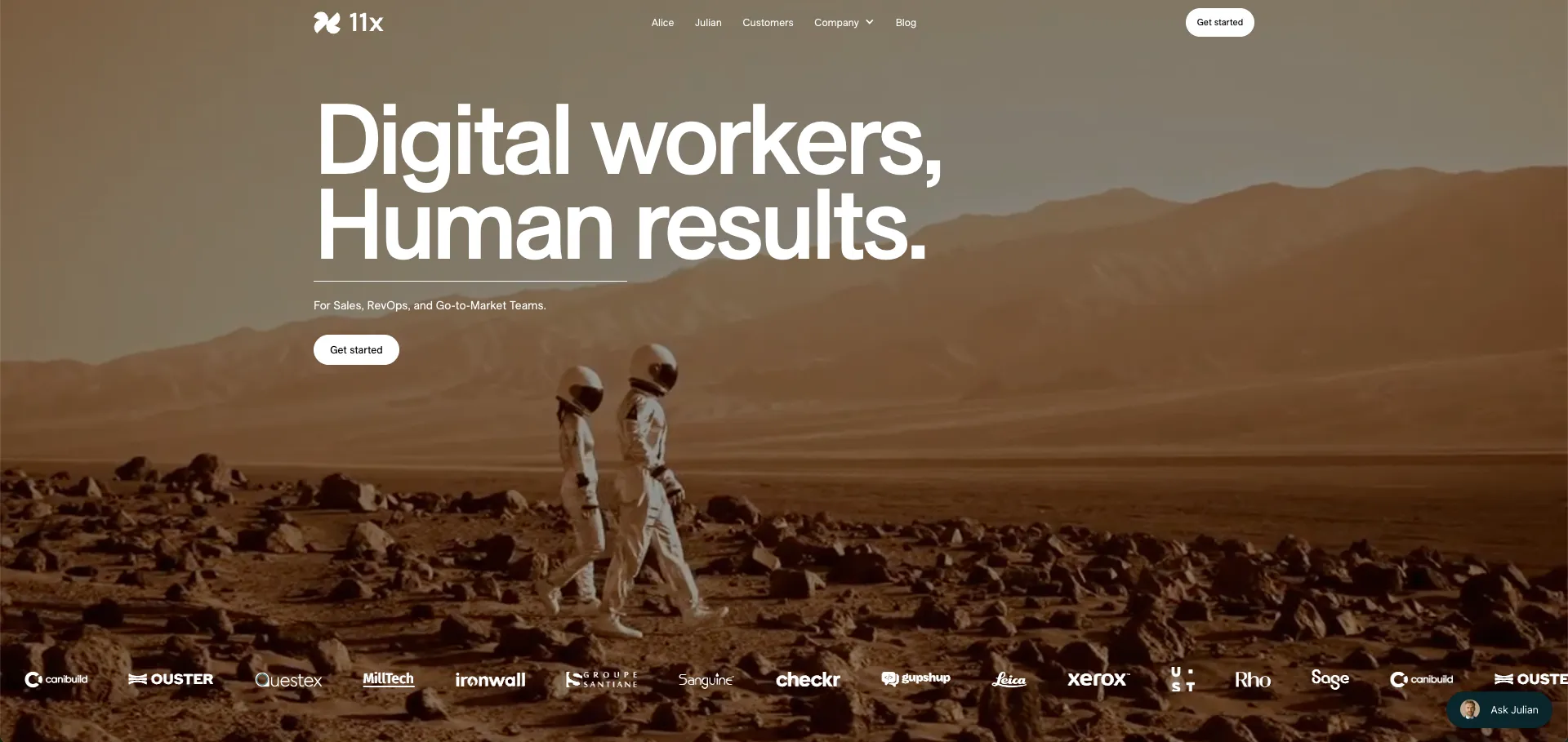
11x provides autonomous digital workers that function as true virtual team members. Alice handles outbound execution across email and LinkedIn, researching accounts, personalizing messaging, and booking qualified meetings. Julian manages inbound qualification through phone conversations, responding to leads within seconds and capturing demand that Alice generates.
Core Capabilities:
- True autonomy: Goal-driven agents executing complete workflows without manual intervention
- Multichannel coordination: Seamless execution across email, social channels, and phone
- Signal-driven intelligence: AI researchers tracking intent data and personalizing engagement accordingly
- Deep system integration: Bi-directional sync with Salesforce and HubSpot for comprehensive activity logging
Standout Features:
- 24/7 operation across 100+ languages for global coverage
- Real-time response to inbound leads, maximizing speed to lead
- Self-learning algorithms that refine approaches based on engagement outcomes
- Enterprise-ready security with SOC 2 Type II, GDPR, and CCPA compliance
Ideal Fit: GTM teams seeking to scale engagement without adding headcount. Organizations want consistent execution across every journey stage, from initial awareness through qualification and buying decisions.
ROI Impact: Gupshup saw a 50% increase in SQLs per SDR after adopting 11x, enabling a 1.5x boost in output per rep while freeing time for strategic conversations and relationship building.
Schedule a product demo with our expert team.
2. HubSpot - Best for Unified Marketing and Sales Automation
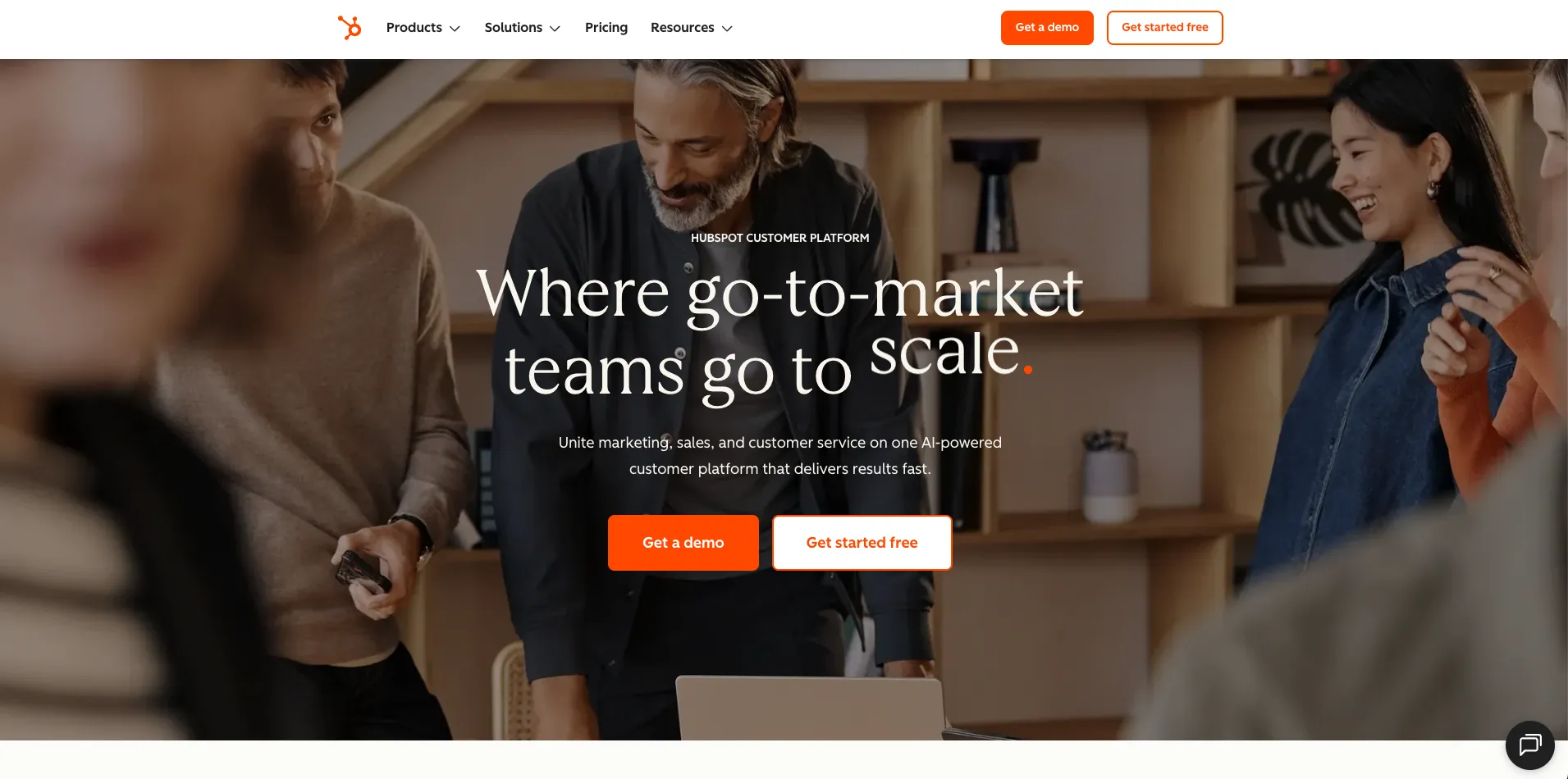
HubSpot combines CRM, marketing automation, and content management in a unified platform for managing the complete customer journey.
Strengths:
- Integrated platform eliminates data silos between marketing and sales
- Visual workflow builder enables automation without technical expertise
- Strong content marketing and SEO tools support awareness-stage engagement
- Extensive ecosystem with 1,500+ integrations
Limitations:
- Requires manual configuration and ongoing workflow optimization
- Personalization depth is limited compared to AI-driven approaches
- Pricing scales quickly as the contact database grows
Ideal Fit: Mid-market B2B organizations seeking an all-in-one platform for managing buyer touchpoints with moderate complexity.
3. Demandbase - Best for Account-Based Marketing Programs
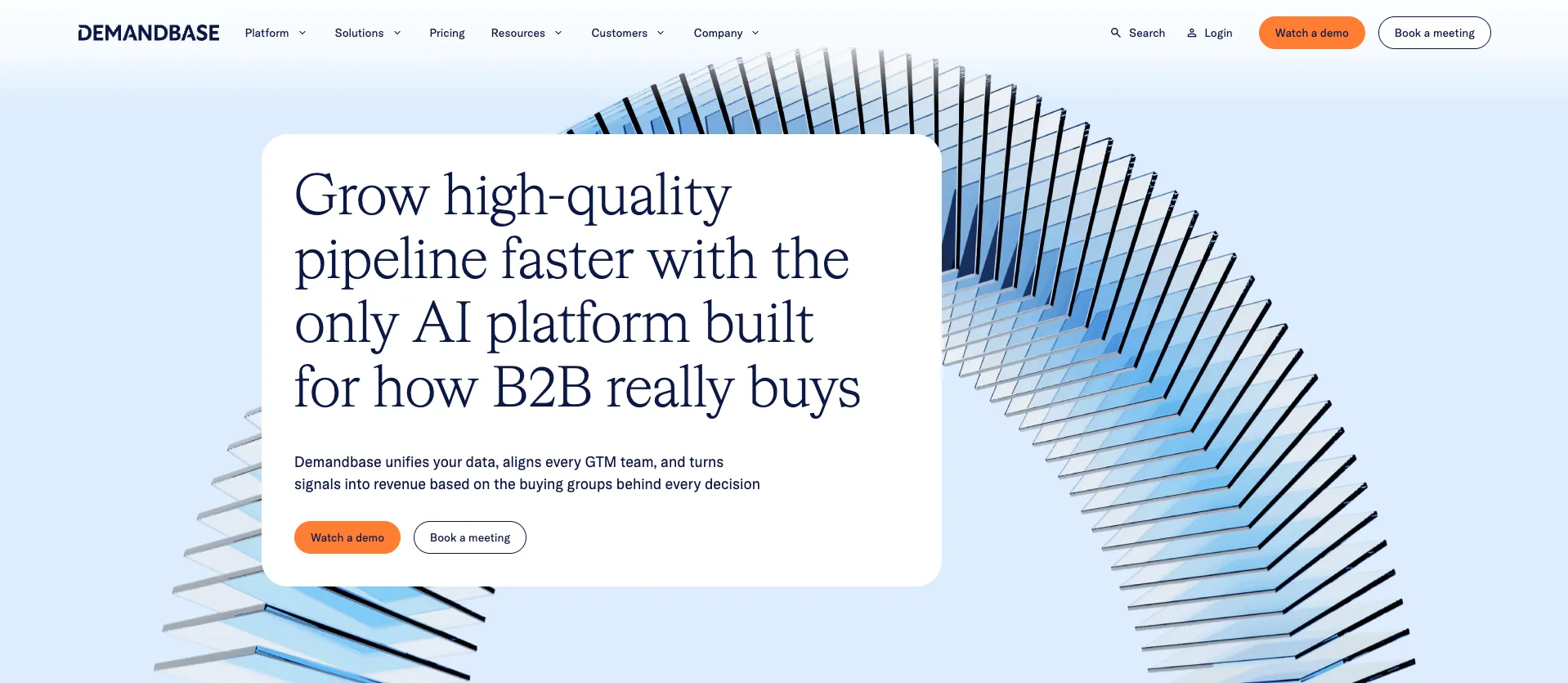
Demandbase focuses on account-based marketing, helping teams identify target accounts and deliver personalized experiences across advertising, web personalization, and sales intelligence.
Strengths:
- Strong intent data for identifying accounts in active research
- Account-based advertising reaches committees across the web
- Sales intelligence surfaces contact data and engagement insights
- Analytics track account progression through pipeline stages
Limitations:
- Execution still requires human sales reps to act on intelligence
- Premium pricing suits enterprise budgets only
- Complex implementation requires dedicated ABM resources
Ideal Fit: Enterprise organizations running sophisticated account-based programs with dedicated ABM teams.
4. 6sense - Best for Predictive Buyer Intelligence
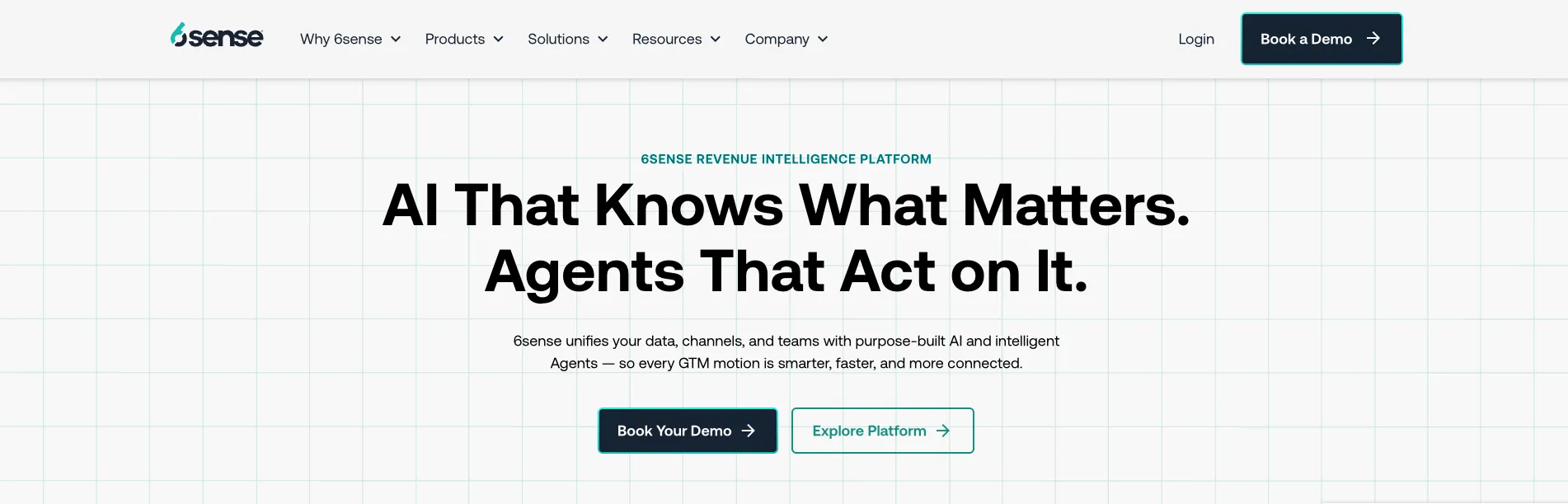
6sense uses AI to identify anonymous buying signals and predict which accounts are ready to purchase before they engage directly with vendors.
Strengths:
- Predictive intelligence identifies accounts early in their research
- Intent data aggregation from multiple sources improves accuracy
- Campaign coordination aligns marketing and sales activities
- Integration with major platforms and marketing automation systems
Limitations:
- Intelligence without execution requires additional tools for follow-up
- Accuracy depends on the industry and the account segment
- Enterprise pricing excludes smaller teams
Ideal Fit: B2B marketing teams seeking predictive insights to prioritize accounts and timing.
5. Salesloft - Best for Sales Engagement Sequences
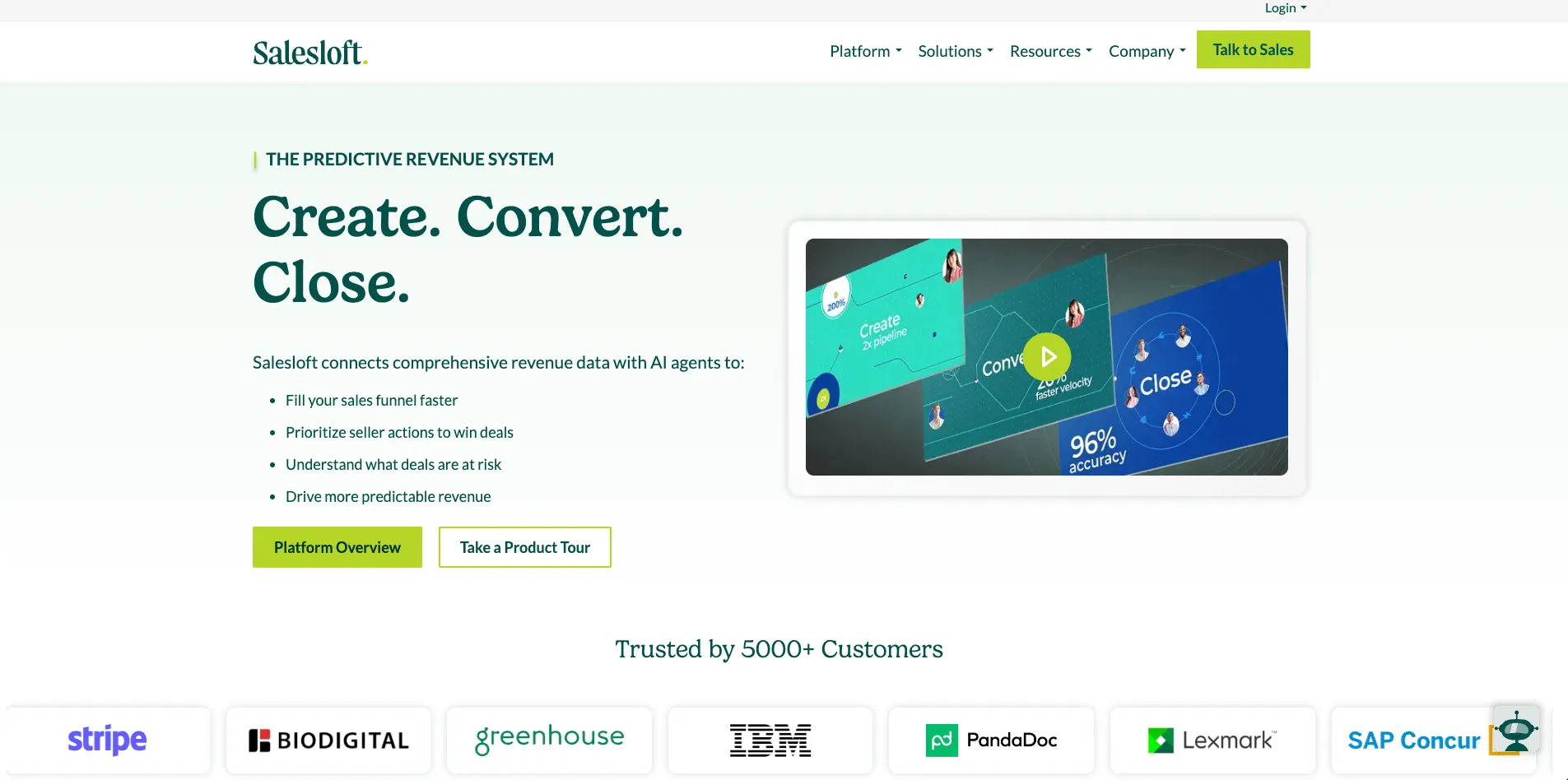
Salesloft provides a sales engagement platform that helps teams execute structured sequences across the journey with cadence management and conversation intelligence.
Strengths:
- Cadence builder creates multi-touch sequences across email and phone
- Conversation intelligence analyzes calls for coaching opportunities
- Deal intelligence provides pipeline visibility and forecasting
- Strong Salesforce integration with bi-directional sync
Limitations:
- Requires manual execution of sequences by sales reps
- Limited autonomous capabilities compared to AI agents
- Pricing favors mid-market and enterprise teams
Ideal Fit: Sales teams needing structured engagement workflows with coaching and analytics.
6. Outreach - Best for Enterprise Sales Execution
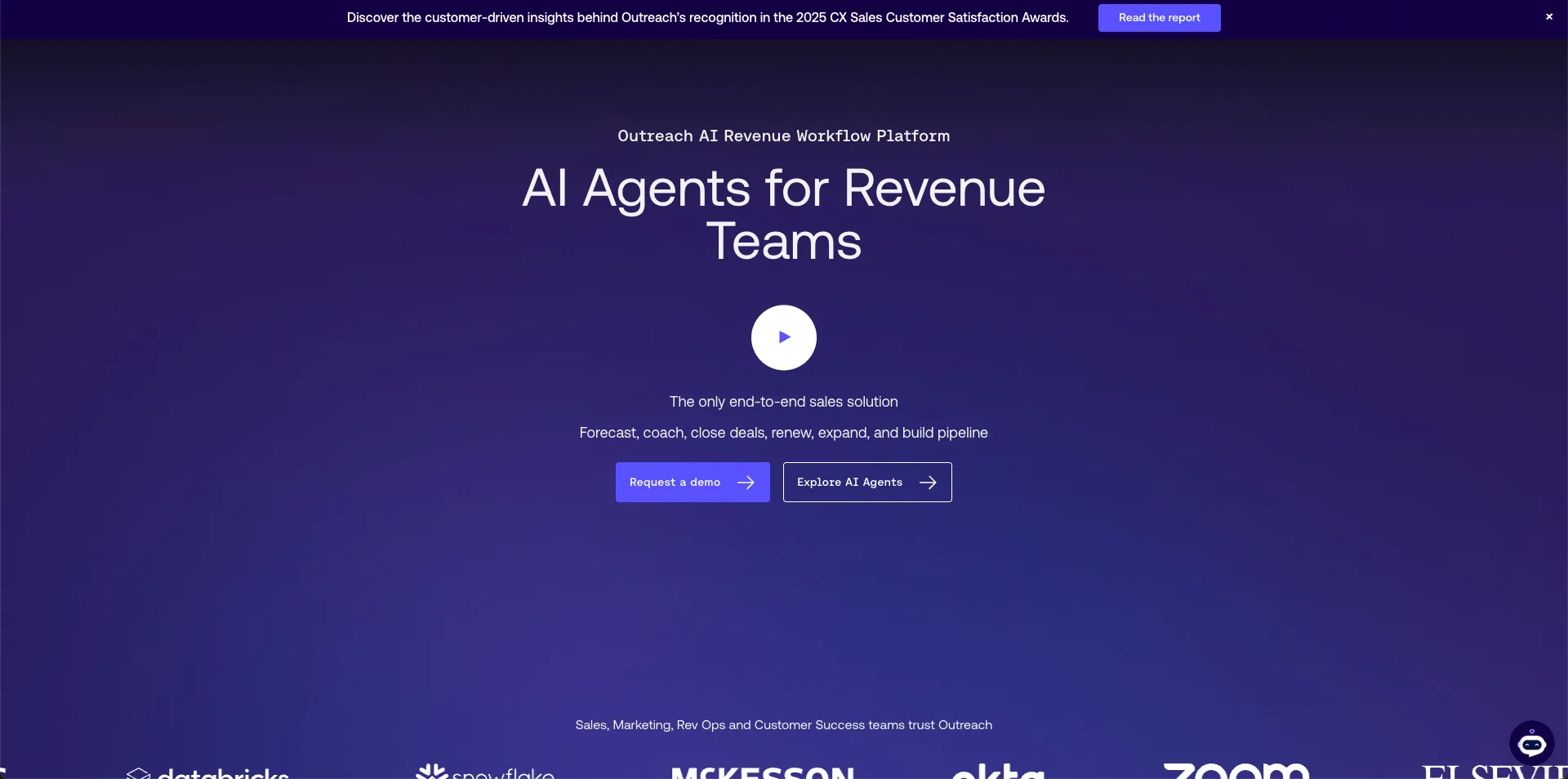
Outreach delivers a sales execution platform combining engagement, conversation intelligence, and revenue intelligence for enterprise sales organizations.
Strengths:
- Comprehensive sequence management across email, phone, and social
- AI-powered insights recommend next-best actions for salespeople
- Revenue intelligence provides deal health and forecasting
- Enterprise-grade security and compliance certifications
Limitations:
- Complexity requires dedicated administration
- Manual execution is still required for most activities
- Premium pricing targets enterprise budgets
Ideal Fit: Large sales organizations with complex engagement requirements and dedicated RevOps support.
7. Apollo.io - Best for SMB Prospecting and Outreach
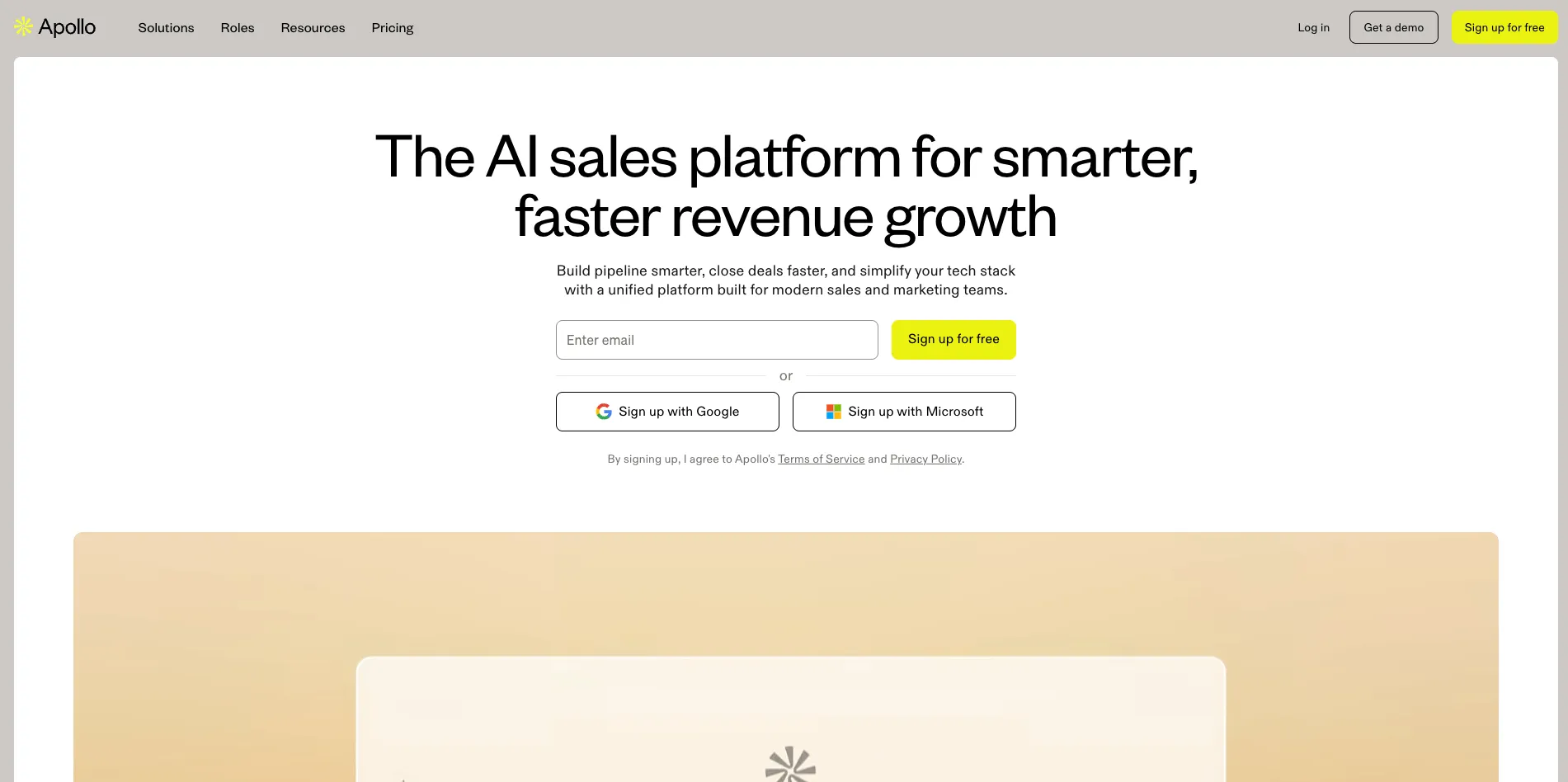
Apollo.io combines a B2B contact database with built-in engagement tools, making it accessible for teams building initial prospecting infrastructure and targeting potential customers.
Strengths:
- Database of 275M+ contacts with intent overlays
- Built-in email sequencing bridges data and execution
- Chrome extension enables quick prospecting
- Affordable pricing with a free tier available
Limitations:
- Data accuracy varies by region outside North America
- Manual activation is required after enrichment
- Limited autonomous capabilities
Ideal Fit: SMB and mid-market sales teams constructing initial prospecting workflows on constrained budgets.
8. Drift - Best for Conversational Buyer Engagement
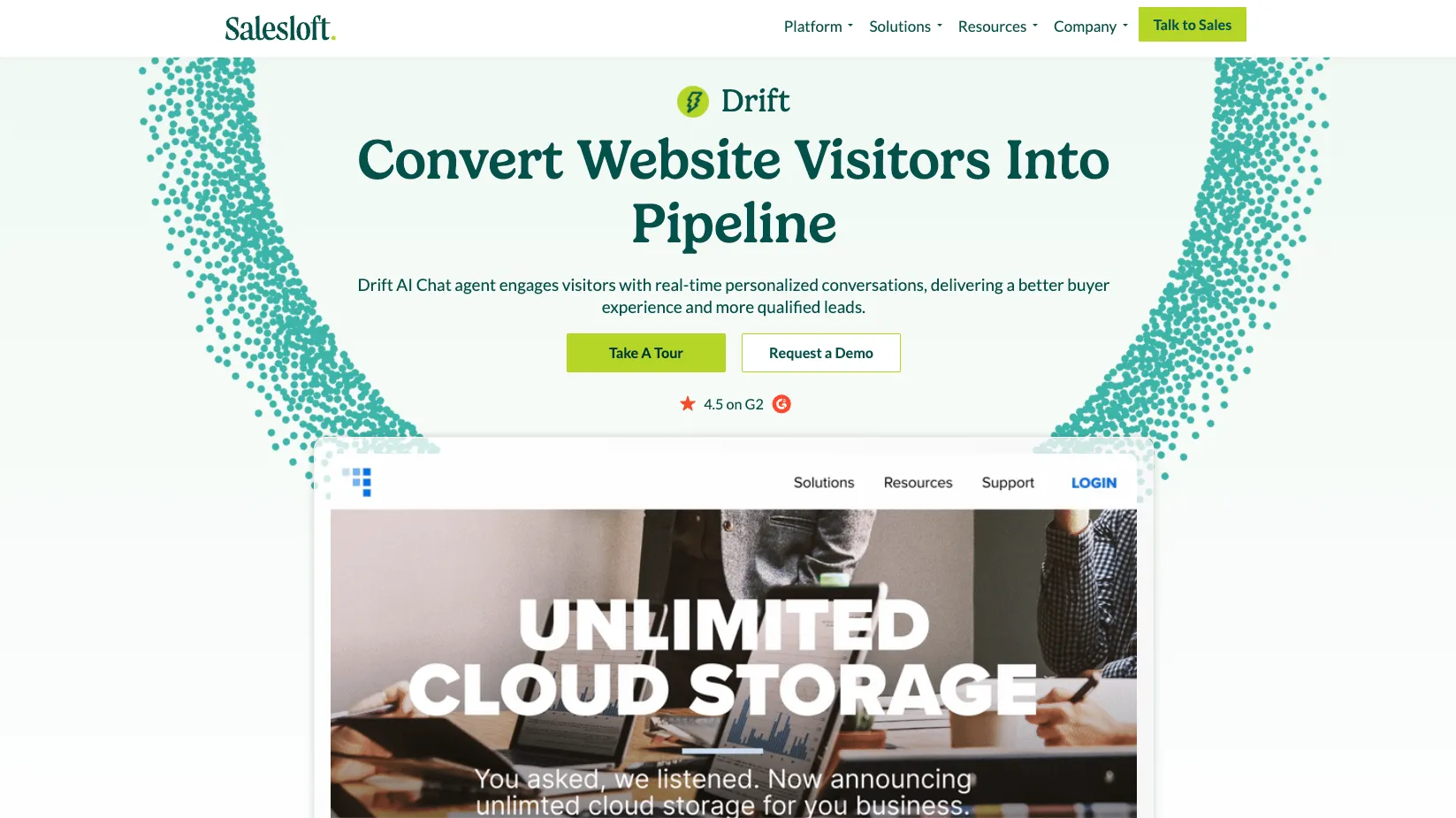
Drift provides conversational marketing and sales tools that engage website visitors through chat, video, and AI-powered interactions.
Strengths:
- Real-time chat engages potential buyers during website visits
- AI chatbots qualify leads and book meetings automatically
- Video creates personalization at scale
- Integration with major platforms
Limitations:
- Primary focus on inbound website visitors
- Limited outbound prospecting capabilities
- Pricing increases with feature requirements
Ideal Fit: Organizations with strong website traffic seeking to convert visitors into qualified leads.
Comparison: B2B Buyer Journey Platforms
Before diving into detailed tool descriptions, this side-by-side comparison highlights how each platform approaches AI sophistication, channel coverage, and integration depth.
This table helps you spot which platforms fit your team’s AI capabilities, channel needs, and CRM setup, making it easier to focus on the most relevant options.
What Is the B2B Buying Journey?
The B2B buying journey describes the complete path a business takes from recognizing a problem to implementing a solution. Unlike consumer purchases driven by individual preferences, B2B purchases involve multiple decision-makers across different demographics, extended cycles, and organizational impact spanning months.
Key Terms:
- Buying group: The collection of decision-makers involved in a B2B purchase, typically spanning multiple departments and authority levels.
- Journey stages: The sequential phases buyers progress through—awareness, consideration, decision, and post-purchase.
- Intent data: Behavioral information indicating a buyer is actively researching solutions, used for AI lead scoring.
- Sales cycle: The total time from initial engagement to closed deal.
- Pain points: The specific challenges and problems buyers seek to solve through their purchase.
- Buyer personas: Detailed profiles representing your ideal customers based on role, goals, and buyer behavior.
Understanding these terms helps teams map strategies to each stage and align messaging with the right decision-makers throughout the buying process.
How AI-Powered Tools Differ from Traditional Approaches
Traditional journey tools execute predetermined sequences based on triggers. You set rules, and the system follows them. AI-powered platforms analyze patterns across thousands of interactions to refine timing, content, and channel selection dynamically based on buyer behavior.
The impact is measurable. HubSpot research shows that companies using AI-powered personalization see higher engagement rates than those using static automation. Organizations implementing AI-driven processes report 10-20% ROI improvements compared to manual approaches.
This evolution enables GTM teams to focus on high-value activities through sales enablement, like relationship building and deal strategy, while AI handles repetitive prospecting and nurturing tasks. The right marketing strategy now blends human expertise with autonomous execution to deliver the right message at the right time across the complete journey.
Core Use Cases Across the Journey
Journey tools deliver value across four critical areas:
Prospecting:
- Intent signal detection and lead scoring
- Contact discovery and data enrichment
- Account prioritization based on fit and timing
- Journey map development for personas within target companies
Engagement:
- Multichannel sequences across email, phone, and social media
- Dynamic personalization based on behavior
- Automated follow-up sequences triggered by engagement signals
- Role-specific content for buying groups
Qualification:
- Real-time inbound lead response and routing
- Automated discovery conversations via phone and chat
- Scoring and prioritization based on readiness
- Platform enrichment with engagement data
Analytics:
- Pipeline visibility and forecasting accuracy
- Conversion tracking across interactions
- Attribution modeling for marketing and sales activities
- Performance refinement based on outcome data
The results validate the investment. Teams using 11x report 30% increases in meetings booked per AE and 80% improvements in meeting-to-qualified-opportunity conversion, driving measurable impact on pipeline velocity.
Autonomous Digital Workers vs. Task-Based Automation
Selecting the right platform requires distinguishing between two fundamentally different approaches to journey execution.
Autonomous digital workers operate as goal-driven agents that execute complete workflows independently. They research prospects, craft personalized content, manage multichannel sequences, and book meetings without human intervention for each task.
Task-based automation requires human setup and oversight for each workflow. Users configure sequences, triggers, and templates. The system executes what humans design, but doesn't adapt or optimize independently.
11x exemplifies the autonomous approach. Alice and Julian don't just send messages; they research, personalize, adapt, and optimize continuously based on engagement patterns.
How to Choose the Right Platform
Selecting the right platform requires a systematic approach focused on fit, feasibility, and future-proofing. Start with an outcome-first methodology: identify 3-5 prioritized use cases with measurable targets like reply rates, meeting bookings, or cycle reduction. Build a journey map that documents needs at each stage.
Evaluation Criteria for Enterprise Buyers
When evaluating enterprise platforms, buyers need a clear framework to compare functionality, security, and scalability.
Security and Compliance:
- SOC 2 Type II certification for data protection
- GDPR and CCPA compliance for privacy requirements
- Data residency options for regulated industries
- SSO/SAML integration for access management
Integration Depth:
- Bi-directional sync with comprehensive field mapping
- Activity logging that preserves full engagement history
- Workflow triggers that connect to existing automation
- API access for custom integrations
Scalability:
- Volume capacity that matches growth projections
- Multi-language support for international expansion
- Team management features for growing organizations
- Consistent performance under increased load
Using these criteria ensures you select a platform that not only meets current needs but can scale reliably as your organization grows.
Best Platforms for Small Business
Small businesses need tools that deliver value quickly without extensive setup or dedicated administration.
11x provides enterprise-grade autonomous execution accessible to smaller teams. Alice handles outbound prospecting while Julian qualifies inbound leads, both operating continuously without requiring manual oversight. The result: consistent engagement at scale typically reserved for larger organizations.
For teams preferring traditional point solutions, Apollo.io offers affordable prospecting with a generous free tier, suitable for teams building initial outreach capabilities. HubSpot provides an all-in-one platform with strong marketing automation for teams seeking unified tooling.
Best Platforms for Enterprise Organizations
Enterprise buyers require governance, security, and scale that match organizational complexity.
11x delivers enterprise-ready features from day one: SOC 2 Type II, GDPR, CCPA compliance, plus dedicated customer success and white-glove onboarding.
For organizations prioritizing account-based strategies, Demandbase and 6sense provide sophisticated ABM and predictive intelligence for organizations with dedicated marketing operations teams.
Implementation Best Practices
Successful buyer journey tool deployment follows proven patterns. Teams that rush implementation without a proper foundation frequently underperform expectations.
Phase 1: Foundation (Weeks 1-2)
Establish baseline metrics and technical readiness before activating new tools.
- Audit current CRM data quality and fill critical gaps
- Document existing buyer touchpoints and conversion rates
- Define success metrics tied to pipeline and revenue outcomes
- Configure integrations and test data flow between systems
Phase 2: Activation (Weeks 3-6)
Launch initial use cases with a focused scope before expanding.
- Deploy tools against the highest-priority buyer segments first
- Train teams on new workflows and handoff procedures
- Monitor engagement metrics and adjust messaging based on response
- Establish feedback loops between sales and marketing
Phase 3: Optimization (Ongoing)
Continuous improvement ensures sustained results over time.
- Review performance data weekly and adjust targeting criteria
- Expand automation coverage to additional segments and use cases
- Test variations in messaging, timing, and channel mix
- Scale successful patterns across the organization
Teams using 11x typically reach full productivity within 30 days, with measurable improvements in meeting volume and qualification rates appearing within the first two weeks.
Common Pitfalls and How to Avoid Them
Pitfall 1: Choosing Intelligence Without Execution
Many platforms provide insights but leave execution to human teams. When sales reps must manually act on every recommendation, bottlenecks form.
How to avoid: Prioritize platforms that combine intelligence with autonomous execution capabilities.
Pitfall 2: Ignoring Multichannel Requirements
Buyers engage across email, phone, LinkedIn, and web. Single-channel tools miss opportunities.
How to avoid: Select platforms with native multichannel coordination rather than point solutions requiring integration.
Pitfall 3: Underestimating Integration Complexity
Poor system integration creates data silos and manual work that erode efficiency gains.
How to avoid: Verify bi-directional sync depth, field mapping flexibility, and activity logging comprehensiveness before committing.
Pitfall 4: Manual Execution That Cannot Scale
Early success with manual outreach leads some teams to resist automation. But pipeline targets grow faster than headcount.
How to avoid: Build automation into your buyer journey strategy from the start with tools like 11x digital workers.
Build a Smarter Marketing Operation
The B2B buying journey demands tools that engage committees across extended cycles and complex purchasing decisions. The right platform depends on your team's maturity, motion, and specific execution needs.
For teams seeking autonomous execution that scales without headcount increases, 11x delivers digital workers that operate continuously across every interaction. Alice engages prospects with personalized sequences based on their position in the journey, while Julian qualifies inbound interest immediately.
Frequently Asked Questions
The B2B buying journey typically includes four main stages: awareness, consideration, decision, and post-purchase. During awareness, buyers recognize a problem and begin initial research. In consideration, they evaluate potential solutions, compare vendors, and build a shortlist. The decision stage involves detailed evaluation, alignment, and purchasing decisions among the committee. Post-purchase covers onboarding, adoption, and ongoing success.
B2B cycles vary by deal size and complexity. Simple software purchases may close in 30-60 days, while enterprise deals often extend six to twelve months or longer. Gartner research shows buyers spend the majority of this time in independent research, with limited direct engagement.
AI transforms journey execution by enabling personalization at scale, detecting intent signals that indicate buying progression, and automating multichannel engagement. AI systems can research prospects, personalize content, and execute coordinated campaigns across email, phone, and social channels without requiring proportional increases in headcount, allowing teams to engage more buyers with consistent quality.
A buying group refers to all participants involved in a B2B purchasing decision. Unlike consumer purchases made by individuals, B2B purchases typically involve multiple roles: economic buyers controlling the budget, technical evaluators assessing fit, end users who will operate the solution, and executives approving strategic alignment. Gartner research shows buying groups now average 6-10 people for complex purchases.
Track KPIs like stage-to-stage conversion, time in stage, engagement by content, and pipeline velocity. Align B2B sales and marketing with shared stage definitions, clear handoff criteria, and unified metrics. Segment by persona and stage, and use platforms that log all activity to give both teams visibility into engagement and behavior across the full B2B buyer journey.