Targeted Lead Generation: Tools and Strategies for 2026
Learn proven strategies for targeted lead generation, compare top tools, and see how AI SDR Alice optimizes your sales funnel for high-quality leads.

Precision wins attention. Targeted lead generation turns guesswork into strategy, ensuring your marketing efforts reach the right audience, at the right moment, with messaging that converts.
Teams that understand their ideal customer profile (ICP)—down to demographics, company size, and real buying intent—are outpacing competitors still chasing broad lead lists. When your lead gen motion aligns with buyer pain points and decision-makers across social media platforms, and email marketing, you shorten the sales cycle, improve lead quality, and drive predictable growth.
According to HubSpot’s State of Marketing Report, personalized marketing campaigns achieve up to 760% higher conversion rates. And Gartner’s research on B2B buying groups confirms targeted accounts move through the sales funnel twice as fast as untargeted ones.
This guide unpacks the full system, from building your ICP to using sales automation tools like 11x Alice. You’ll see which lead generation tools actually deliver, how to optimize your workflows, and what separates modern lead generation strategies from outdated spray-and-pray outreach.
What is Targeted Lead Generation?
Targeted lead generation is the practice of finding and engaging potential customers who perfectly match your ICP based on attributes like job titles, company size, and budget, and demonstrating value that speaks directly to their specific needs.
Unlike traditional B2B lead generation tactics that chase volume, this model focuses on qualified leads: those most likely to become paying customers.
Focusing your sales efforts on a specific, targeted group has many benefits, including:
- Higher conversion rates from precise targeting and relevant messaging
- Reduced acquisition costs and optimized marketing strategy
- Deeper customer relationships through ongoing personalization
- Better alignment between your sales team and marketing teams
- Data-driven understanding of your target market and potential leads
Targeted prospecting builds a foundation of loyal customers and compounding brand equity because you’re no longer chasing everyone, just the right people.
Practical Steps to Build A Targeted Lead Generation Strategy
High-performing GTM teams build their systems on clear processes and measurements, not luck. Here's how to create a targeted lead generation engine that continuously delivers business leads that close.
1. Define Your Ideal Customer Profile (ICP)
Start with data. Audit your CRM to identify patterns among your best clients: those with the highest lifetime value, shortest sales cycles, and lowest churn. Your ICP should specify firmographics (company size, industry, revenue), technographics (current tech stack), and behavioral signals (buying triggers, decision-making process).
For example, a B2B SaaS ICP might be: "Series A-C fintech companies with 50-200 employees, using Salesforce, experiencing rapid growth, and seeking to automate compliance workflows."
2. Segment And Score Your Leads
Not all leads deserve equal attention. Prioritization drives pipeline efficiency. Use predictive lead scoring that combines explicit data (job title, company size, budget authority) with implicit signals (email opens, content downloads, product page visits) to gauge how qualified and interested the lead is.
11x Alice leverages data from 21 premium providers and advanced research agents to uncover the latest buying signals across its database of 400M+ verified B2B contacts.
Using these insights, you can set up lead scoring within your CRM by assigning numerical values to each lead and helping your sales team focus on high-intent prospects who are most likely to convert.
For step-by-step instructions, explore our guides on implementing lead scoring in HubSpot, Pipedrive, Salesforce, and Pardot.
3. Validate And Enrich Lead Data
These combined data layers create adaptive buyer intelligence that updates as prospects change roles, companies evolve, and buying signals shift.
Bad data can kill conversion rates and damage sender reputation. Verify email addresses and phone numbers through validation services and B2B data providers to ensure accuracy before any outreach begins. Then, use lead enrichment tools to enrich your records systematically with missing contact details, professional updates, and company intelligence.
Your enrichment strategy should layer four critical data types: firmographic (company size, revenue, industry), technographic (current software stack, implementation dates), behavioral intent signals (content downloads, website visits), and engagement data (job changes, event participation, industry engagement).
These combined data layers create adaptive buyer intelligence that updates as prospects change roles, companies evolve, and buying signals shift. 11x delivers all of these capabilities in a single platform, eliminating the need to subscribe to multiple point solutions for validation, enrichment, and intent monitoring.
4. Detect Intent And Timing
Reach prospects when they're actively researching solutions, not months later when they've already chosen a competitor. Deploy intent monitoring across first-party signals (website visits, pricing page views, demo requests, email engagement) and third-party data (content consumption on review sites, competitor comparisons, industry research).
Set up automated alerts for high-intent actions like repeat website visits within 48 hours, pricing page engagement, or content downloads on topics aligned with your solution. Layer multiple intent signals to identify prospects in active buying mode rather than casual research. Engaging leads at peak intent moments shortens sales cycles by up to 30% and improves win rates by 20%.
5. Personalize Messaging And Outreach
Personalized messaging is now more important than ever. Map messaging to specific buyer personas (CFO vs. VP Sales) and funnel stages (awareness vs. decision), addressing unique pain points and objections for each. Use dynamic variables to customize subject lines, opening sentences, and CTAs based on industry, role, company news, or previous interactions.
Orchestrate multi-channel sequences combining personalized emails, calls that reference specific triggers, and relevant case studies to increase resonance with your lead. Modern AI sales automation makes this level of personalization scalable, adapting your outreach in real time based on intent signals and prospect behavior.
6. Nurture And Qualify
Most prospects aren't ready to buy on first contact. Systematic nurturing keeps you top-of-mind until they are. Design multi-touch campaigns to deliver value-driven content (ROI calculators, industry benchmarks, competitive comparison guides), educational webinars, customer success stories, and strategic referral requests to build trust and demonstrate expertise over time.
Use progressive profiling to collect key qualifying details such as budget, timeline, decision-making structure, and technical requirements to help you assess lead quality more effectively. At this stage, the objective is to convert marketing-qualified leads (MQLs) into sales-qualified leads (SQLs) that meet the BANT framework: Budget, Authority, Need, and Timeline.
7. Implement Automation And Track Metrics
Measure every stage of your lead generation process to identify what's working and what's wasting resources. Integrate CRM automation to track key metrics: speed to lead, lead-to-opportunity conversion rates, average deal size by source, cost per qualified lead, sales cycle length, and win rates by segment.
Run continuous A/B tests on subject lines, call scripts, follow-up timing, and content offers to optimize performance based on data, not intuition. Review dashboards weekly to identify bottlenecks, double down on high-performing channels, and eliminate underperforming tactics. The core capability of AI sales automation platforms is self-optimization based on performance data to continuously improve results by focusing on what has worked without manual intervention.
5 Leading Platforms for Targeted Lead Generation
Different lead generation tools support various stages of the sales funnel — from contact enrichment and outbound automation to social media targeting. Before building your stack, compare how top platforms perform across their core strengths, key features, data quality, and automation capabilities.
Below, we take a closer look at each tool in detail.
1. 11x
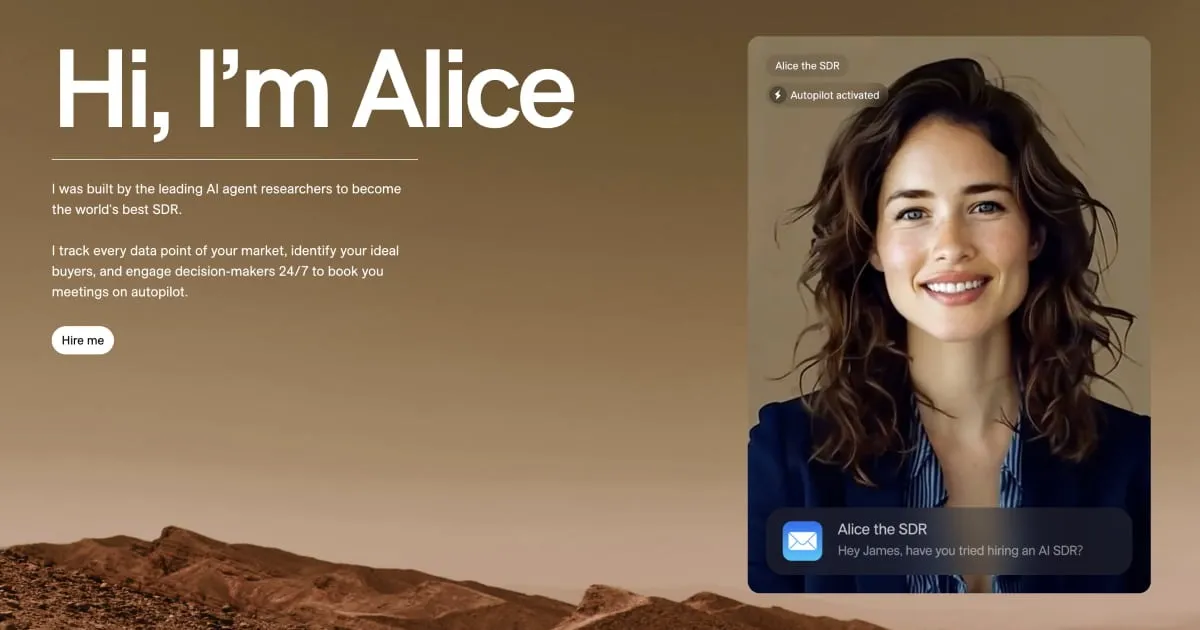
11x Alice is an AI SDR that autonomously manages B2B lead generation, outreach, and qualification. She identifies potential leads from its database of over 400+ million verified B2B contacts that match your ICP, writes personalized messages based on intent signals, and sets up multi-channel outreach campaigns.
Features:
- Unified data intelligence combining 21+ premium data providers, real-time signals, and live search for sharper lead targeting and timing.
- Advanced research agents and personalization waterfalls that adapt messaging by role, product, and market, and scale with your needs.
- Adaptive workflows that optimize conversion rates through real-time ICP scoring and A/B experimentation.
- Predictive insights that refine audience targeting based on demographics, company size, and behavioral intent.
- AI-driven email warming, inbox rotation, and spam protection to ensure deliverability, even at high volumes.
Strengths:
- First platform to deliver truly autonomous execution rather than task-based automation
- Advanced self-learning capabilities that continuously optimize performance
- Enterprise-grade compliance and support, including SOC 2, GDPR, and CASA Tier 3 certifications, plus dedicated CSMs and Slack support to get started from day one.
Best Fit: Teams looking to book more meetings without increasing headcount. Built for organizations that want autonomous execution, personalized outreach, and higher conversion rates across every stage of the funnel.
ROI Impact: Gupshup saw a 50 % increase in SQLs per SDR after adopting Alice, enabling a 1.5× boost in output per rep—and freeing up time for strategic initiatives like calling and rapid campaign testing, all without increasing headcount.
2. Cognism
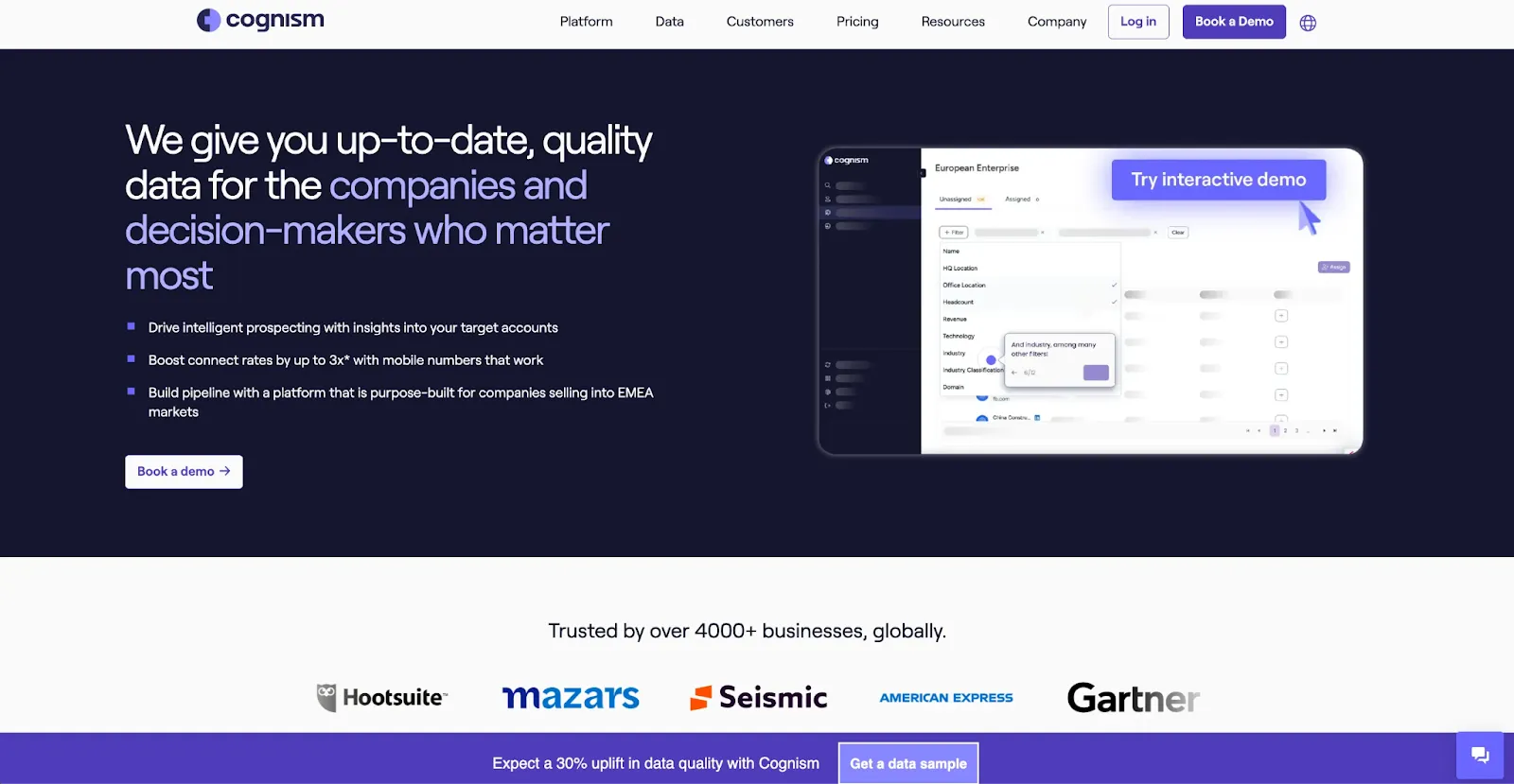
Cognism specializes in global contact intelligence and compliance-first data enrichment. Its platform helps teams reach verified decision-makers, build targeted lists, and fuel compliant outreach and email campaigns.
Features:
- GDPR-compliant global database with firmographic and technographic filters.
- Intent data tracking for buyer readiness and lead quality.
- Chrome extensions for instant contact information capture.
Strengths:
- Industry-leading compliance and accuracy across EMEA and North America.
- Ideal for multi-region targeting and large marketing teams managing complex lead generation efforts.
- Integrates smoothly with leading CRMs and marketing automation platforms.
Weaknesses:
- Higher pricing for smaller teams.
- Less focus on content marketing and creative messaging capabilities.
Best Fit: Midmarket to enterprise B2B companies needing verified data for compliant, large-scale outreach.
3. UpLead
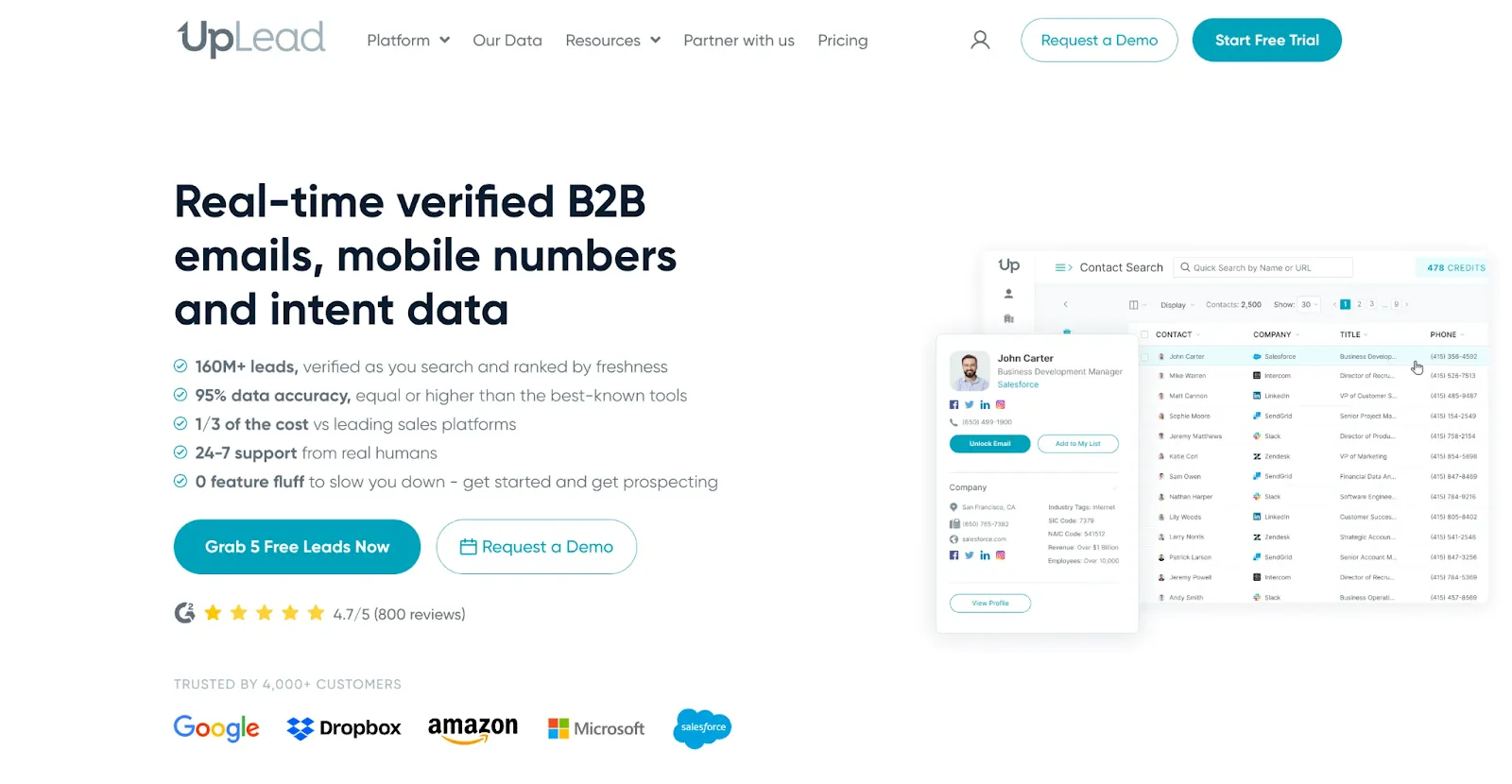
The UpLead platform provides real-time, verified B2B contact data, empowering SDRs and growth teams to identify potential customers who match their ICP. It’s an excellent foundation for lead magnets, paid ads, or inbound landing pages.
Features:
- 95%+ accuracy data with real-time enrichment.
- Smart filters by demographics, industry, company size, and tech stack.
- API integrations for syncing leads directly to your CRM or marketing automation stack.
Strengths:
- High accuracy rates and quick integration with outbound workflows.
- Affordable plans, ideal for small businesses or emerging GTM teams.
- Excellent complement to SEO, content marketing, and lead generation strategies.
Weaknesses:
- Lacks built-in automation or personalized outreach capabilities.
- No advanced sequencing or nurture campaign tools.
Best Fit: SDRs or marketing teams needing verified lead lists to support sales leads generation and referrals.
4. Artisan
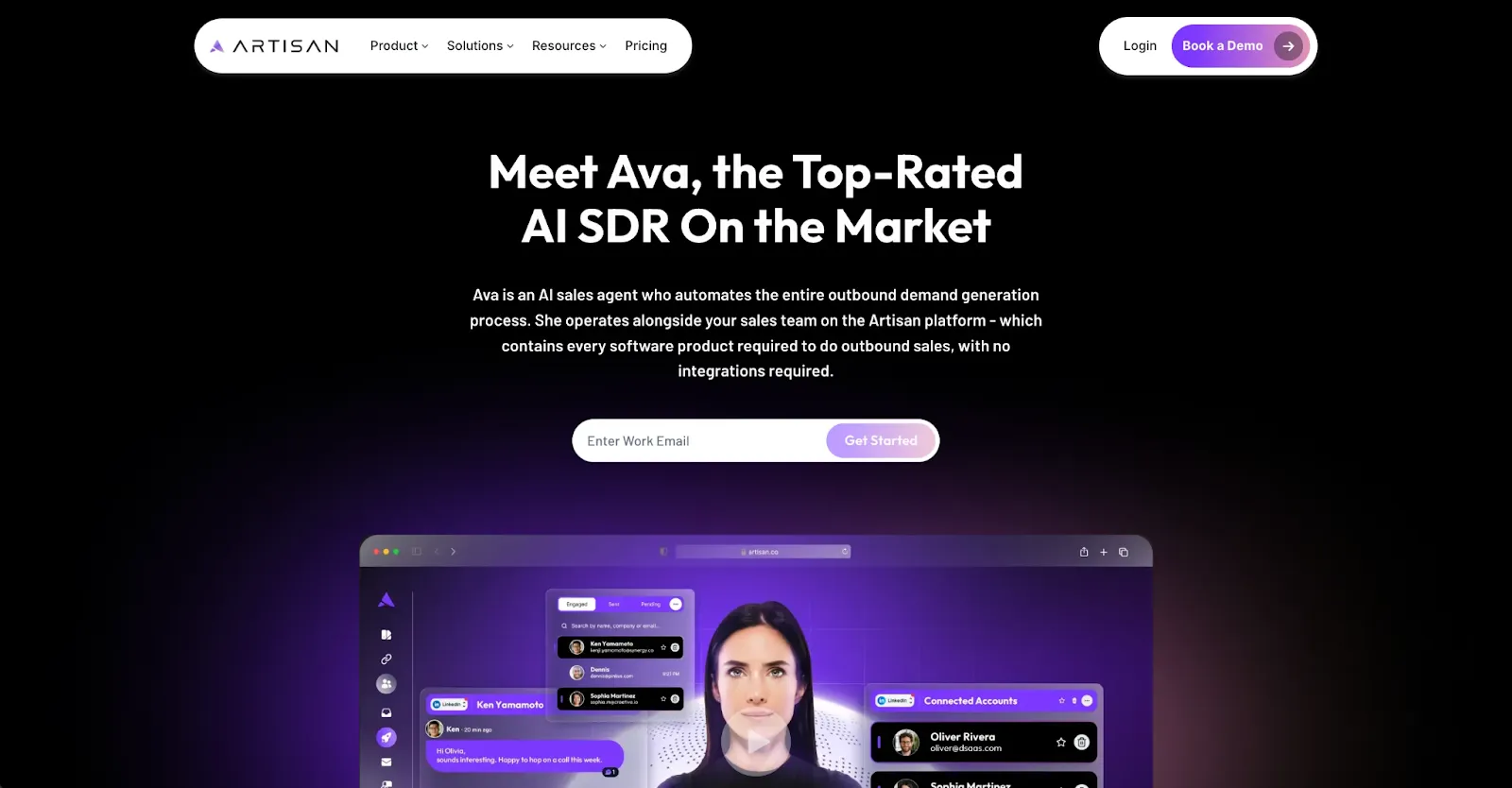
Artisan helps B2B teams design and deploy smart lead generation strategies using AI BDRs that handle email and multichannel outreach autonomously.
Features:
- AI-powered virtual sales assistants with custom playbooks.
- Automatic follow-up and personalization across social media and email marketing.
- Real-time learning engine that refines tone and timing based on response metrics.
Strengths:
- High-quality, human-like messaging tailored to ICPs.
- Easy setup with workflow templates and minimal training required.
- Improves conversion rates for outbound sequences and webinar follow-ups.
Weaknesses:
- Early-stage product with limited ecosystem integrations.
- Relies on imported ICP data for targeting accuracy.
Best Fit:
- Startups and GTM operators looking for semi-automated lead generation tools with flexible campaign customization.
Targeted Lead Generation Examples
Here are examples and strategies for targeted lead generation:
1. Account-Based Marketing (ABM)
Focus your marketing strategy on a curated list of high-value accounts rather than casting a wide net. Combine paid ads and personalized email campaigns to engage decision-makers directly with messaging tailored to their specific needs.
ABM teams use AI SDRs like 11x Alice to personalize outreach at scale across hundreds of target accounts simultaneously, maintaining 1:1 relevance while driving conversion rates 3-5x higher than traditional demand generation. Alice researches each account, pulls relevant news and triggers, and writes personalized messaging that references specific company initiatives or pain points.
2. Event Follow-Ups And Webinars
After trade shows or webinars, automated follow-up sequences are critical to capitalize on warm interest before it cools. Send personalized follow-ups within 24 hours that reference specific sessions attended, questions asked, or topics discussed to demonstrate attentiveness. The key is speed and relevance: prospects who receive immediate, contextual follow-up are 7x more likely to convert than those contacted a week later.
3. Inbound Qualification And Cold Calling Automation
Instantly qualify inbound website visitors based on firmographic fit and behavioral signals, update the CRM with enriched data, and alert the sales team when a prospect meets ICP criteria and demonstrates buying intent. This eliminates manual lead routing delays that cause hot leads to go cold. For outbound, AI analyzes optimal contact timing based on industry patterns, time zones, and historical response data to time cold calls and cold emails for maximum engagement.
11x handles both inbound triage and outbound sequencing in a unified workflow, ensuring no lead falls through the cracks between marketing and sales.
4. Referrals And Nurture Workflows
Strong referrals convert at 4x the rate of other sources because they come pre-validated with trust. Systematize your referral process by automating requests after successful implementations, positive support interactions, or quarterly business reviews to capture recommendations at peak satisfaction moments.
5. Lead Magnets
Optimize landing pages and downloadable lead magnets (whitepapers, ROI calculators, industry reports) to capture qualified leads actively researching solutions. Use A/B testing on headlines and form length, combined with SEO optimization to attract high-intent website visitors searching for problem-related keywords.
6. Retargeting
Use retargeting to re-engage potential customers who interacted with your content but didn't convert initially. Build audience segments based on specific behaviors: pricing page visitors get ROI-focused ads, while blog readers see educational content. Automate these multichannel workflows to ensure no warm lead is lost between marketing and sales.
Get Started With Targeted Lead Generation and 11x
The difference between good and great lead generation efforts is automation that actually converts. 11x Alice delivers real-time engagement, analyzing prospect behavior, refining targeting strategies, and booking meetings with qualified leads automatically.
Book your 11x demo to see how AI and automation transform prospecting.
Frequently Asked Questions
Spend 3 minutes researching a prospect, find 3 facts about their company size or role, and personalize 3 parts of your messaging (subject line, opening sentence, and CTA). This simple structure produces faster replies and higher conversion rates by demonstrating genuine interest rather than spray-and-pray outreach.
The process varies by business, so customize it to your use case. Start by defining your ICP, then find matching prospects using B2B lead databases, and intent data providers. Enrich their contact records with firmographic details and behavioral signals to improve targeting accuracy and enable personalization at scale. Finally, use automation to execute multichannel outreach sequences that reach decision-makers when they're most receptive. Modern GTM platforms like 11x handle every stage of this process—from prospecting to enrichment to outreach—automatically.
They're numerical goals for qualified leads or sales leads your team must deliver to fill the pipeline and achieve revenue objectives, typically measured monthly or quarterly. Effective targets account for conversion rates at each funnel stage, so if you need 10 closed deals and convert at 20%, you need 50 qualified opportunities. Align marketing teams with the sales funnel for predictable growth and adjust targets based on historical performance data.
Track metrics such as lead-to-opportunity conversion rate, pipeline velocity (time from lead to close), average deal size, and customer retention after 12 months. Compare cost per qualified lead across channels to identify your most efficient sources. Evaluate your lead generation efforts quarterly, analyze which sources produce the highest lifetime value customers, and refresh your approach based on what the data shows about true quality versus volume.
Yes. AI analyzes thousands of data points to identify high-fit prospects, predict optimal outreach timing, and personalize messaging at scale across email and phone. 11x’s AI SDR Alice identifies and scores prospects based on firmographic fit and intent signals, designs multichannel outreach sequences, and generates demo bookings from qualified leads automatically. See Alice in action.