

This guide ranks the 5 best website visitor identification tools, with use cases, pricing, and honest tradeoffs for each.
Quick summary
- Warmly offers the best website visitor identification software in 2026 for B2B revenue teams running AI SDRs, with person-level de-anonymization, native AI chat, and real-time intent data that wires directly into 11x’s outbound platform.
- Teams that want a wide B2B contact database alongside their visitor ID layer can look into ZoomInfo, while smaller US-focused teams can look for low-cost person-level identification, such as RB2B.
- Marketing-led orgs that need attribution back to specific campaigns should check out Lead Forensics, while European B2B teams where GDPR compliance is the primary filter should take into consideration Albacross.
What are the best website visitor identification tools in 2026?
The best website visitor identification tool on the market is Warmly, with its person-level visitor de-anonymization that uses a waterfall approach with 20+ data providers to maximize accuracy.
Here’s a breakdown of our shortlist of the 5 best visitor identification vendors on the market:
#1: Warmly
Use case: B2B revenue teams that want person- and company-level visitor identification combined with AI chat, intent scoring, and the kind of real-time data feed that AI SDRs need to actually convert visitors into booked meetings.

Warmly's product is built around two AI agents that share a single context layer:
- The Inbound Agent works on-site, identifying anonymous visitors and converting them through AI chat.
- The TAM Agent works off-site, handling ICP scoring, buying committee identification, and outbound triggers.
Both agents pull from the same Context Graph, which is the unified intent and account layer that ties signals back to specific people and companies.
For teams running AI SDRs, that shared layer is what makes Warmly behave like a data engine instead of a standalone visitor ID tool.
Features
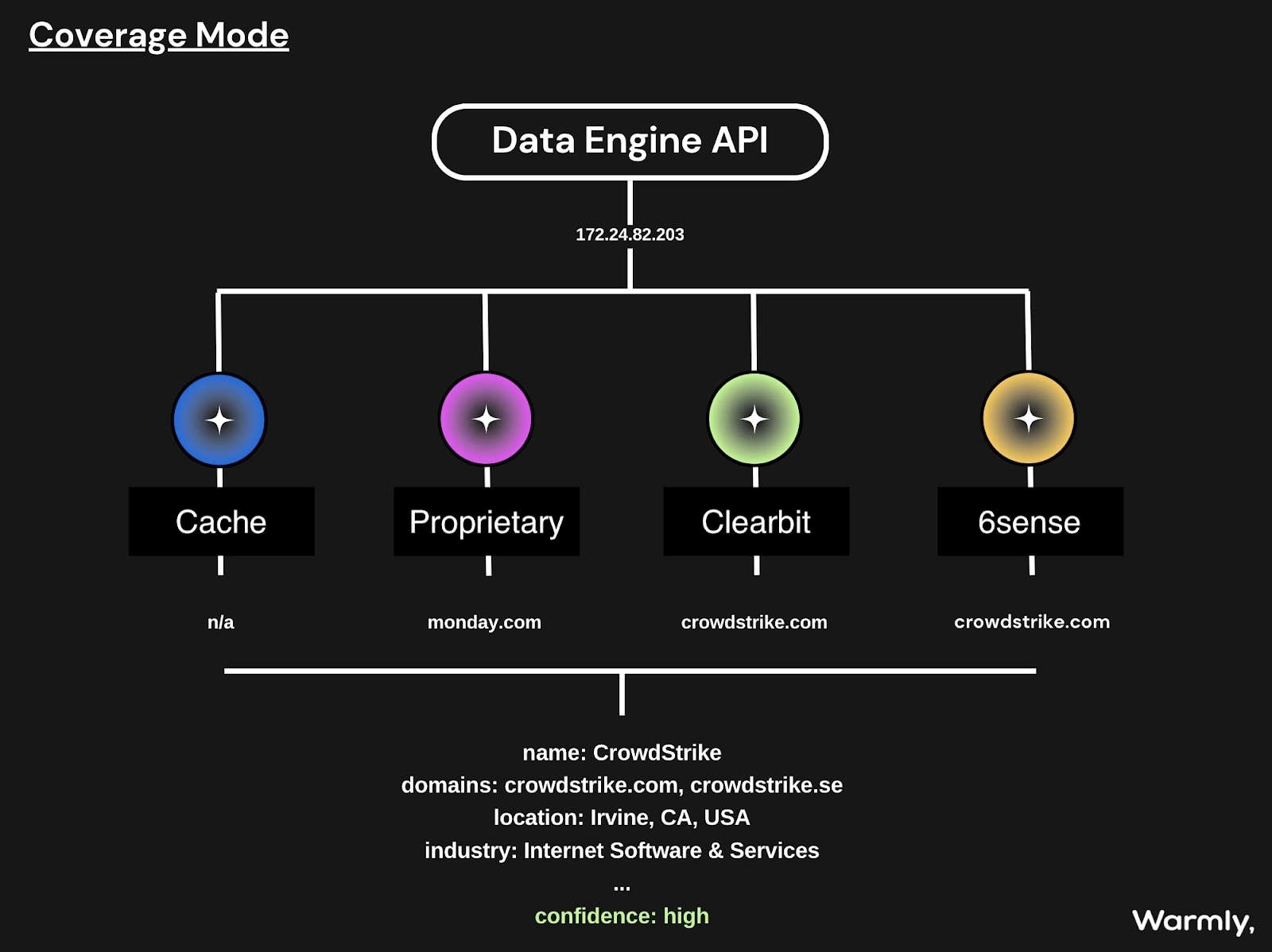
- Person-level visitor identification: Warmly identifies anonymous website visitors at both the company and individual level with a data waterfall approach. They claim that they can identify 30-60% of companies and ~15-30% of typical B2B traffic.
- AI Chatbot and Warm Calls: The chatbot pulls full CRM and intent history before the first message, and reps can take over via live video chat (called Warm Calls) when a high-intent visitor lands on a key page.
- Personalized landing pages that dynamically customize your website’s content based on who’s visiting, including their company, role, industry, and behavior.
- Context Graph and intent scoring: Every visitor gets an ICP tier (1, 2, 3, or Not ICP) and a transparent intent score from 1-100 that’s based on first-party signals (visits, chat, email) with third-party data (Bombora, G2, job postings, technographic changes).
Pricing
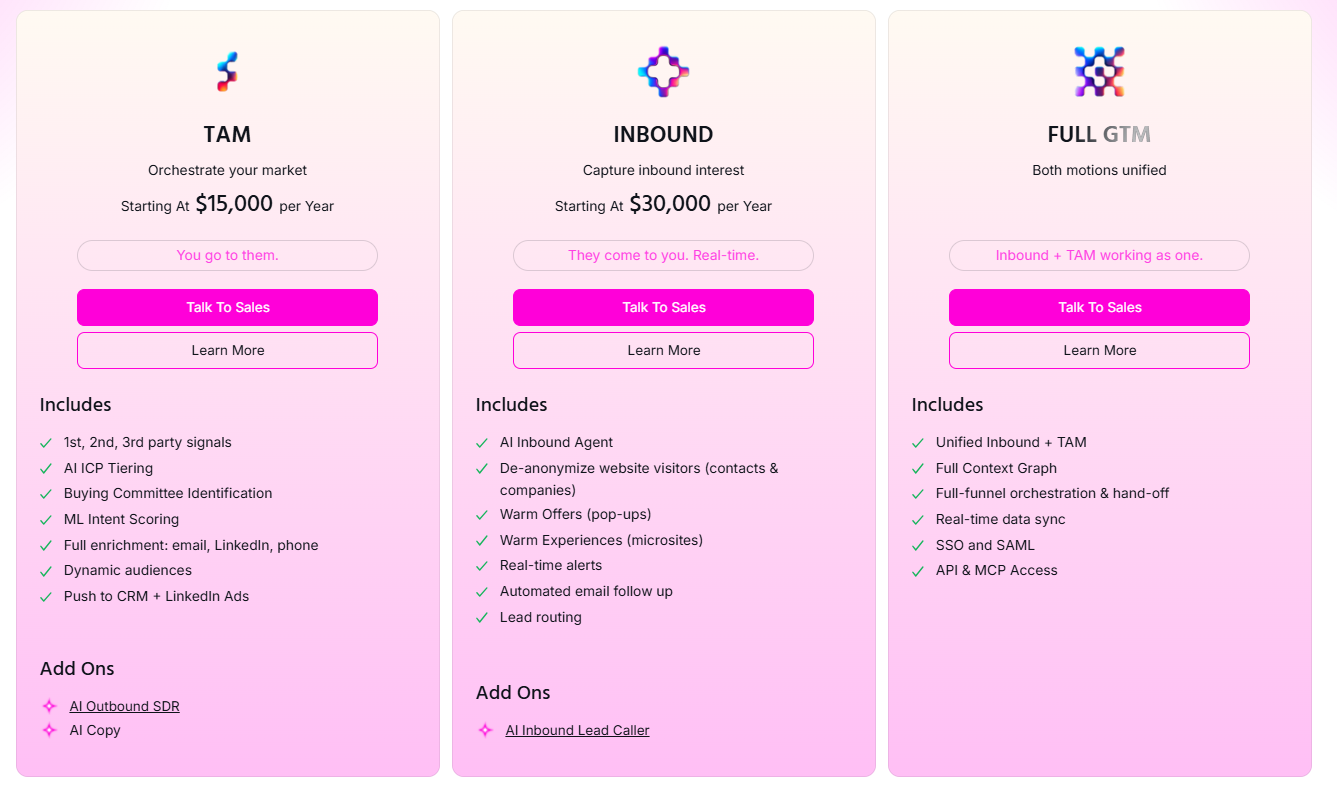
Warmly has four paid plans, with annual or quarterly billing. There’s also a free plan that covers 500 de-anonymized visitors per month and lets you send warm lead alerts to Slack in real-time or export to CSV.
The first three plans cover the inbound side and stack on top of each other. AI TAM Agent is the standalone outbound plan.
- AI Web-Deanonymization ($10,000/year, 10K credits per month): entry-level visitor ID with contact and company-level identification, ICP filtering, real-time Slack alerts, lead routing, CRM sync, and retargeting via email, LinkedIn, and ads.
- Inbound Chat ($20,000/year): adds the conversational layer on top of visitor ID, with the AI Chatbot (one AI Studio Agent), Warm Calling for live chat handoff, Warm Offers, chat metrics, and automated email follow-up.
- AI Inbound Autopilot ($30,000/year): builds on Inbound Chat with unlimited AI Studio Agents and the Autopilot Agent, AI goal-setting and qualification, AI-generated mini-demo slides, AI-written chat follow-up, and auto-learning that improves the chat over time.
- AI TAM Agent ($15,000/year, 60K annual credits): the outbound plan, covering the TAM database with intent scoring, the buying committee agent, AI enrichment, the Signals Bundle (Bombora, G2, Reddit, Glassdoor, news, SEC filings, job changes, social signals, YouTube, podcasts), and HubSpot two-way sync.
Annual billing saves 20%, and quarterly billing is for teams that want to test the platform before committing to a year.
The negatives
❌ Visitor ID lives in the Inbound plan at $30,000/year, which can be too expensive for smaller teams with simpler needs.
❌ The paid tiers are all billed annually, so there’s no flexible monthly plan.
❌ A user on G2 mentions that it’d be good if Warmly could track HubSpot pages and HubSpot forms.
How to book meetings on autopilot with Warmly and 11x
The classic problem with website visitor identification is that you can see the warm leads, but actually reaching out to all of them at scale is a different job entirely.
That's why we decided to partner up with Warmly to convert the prospects you identified with 11x’s AI SDRs.
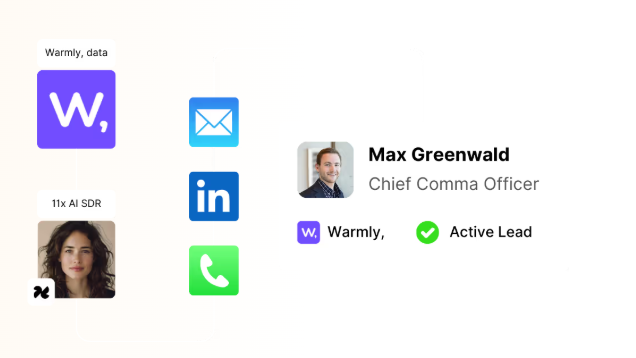
Here’s how that works:
- Warmly identifies the visitor, runs them through ICP and intent scoring, and decides which prospects are cold, lukewarm, warm, and hot.
- Warm leads are pushed to 11x via webhook, and then the AI SDR starts running background research on them to improve personalization. Our AI SDRs then draft personalized email and LinkedIn messages and start the outreach.
- As for the hot leads (the highest-intent accounts), they get routed to human reps with all the context already attached.
11x uses your website to learn critical points about your brand and product. Our AI agents can identify your ICP’s pain points, your product’s unique selling propositions, and information on your offers.
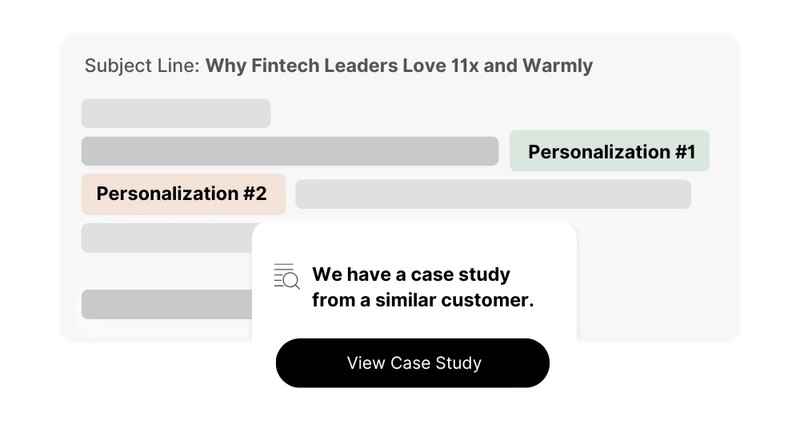
There are also built-in quality checks to make sure that every message is effective, compliant, and aligned with your brand voice. If you want more control, you can review and edit the drafted copy before launch.
You can set up the webhook integration in Warmly’s Settings under the 11x integration tab, paste in your 11x webhook URL, save it, and contacts will start flowing the moment they hit your defined intent thresholds.
And if you're already on 11x, adding Warmly upgrades the data feeding the AI SDRs, which is one of the biggest factors in reply rates.
#2: Albacross
Use case: European B2B teams where GDPR-compliant company-level visitor ID is non-negotiable.
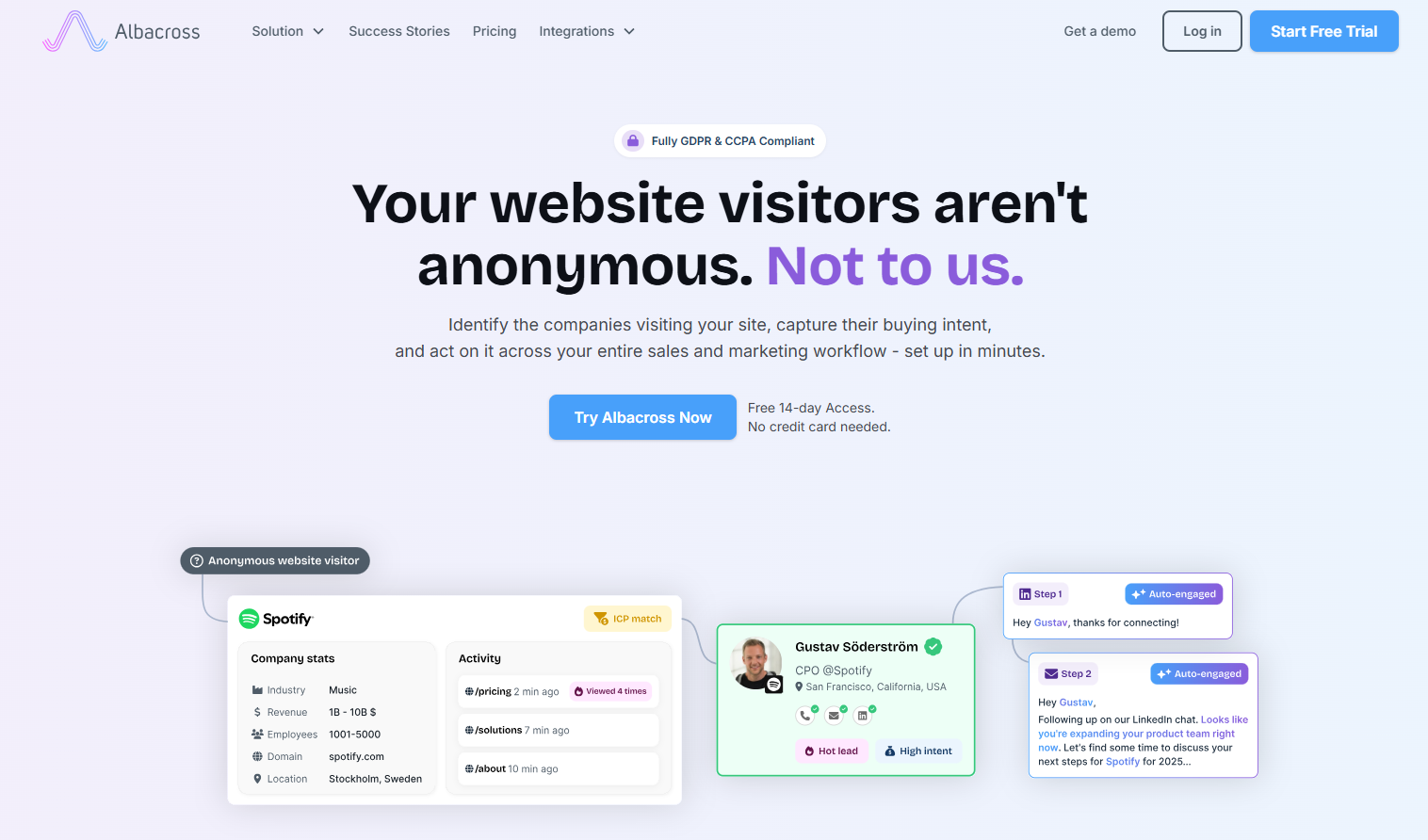
For European B2B teams, GDPR concerns usually rule out a lot of the visitor ID tools that dominate US-focused lists.
Albacross is the option built explicitly around EU privacy law, which makes it the default pick when compliance is the primary filter.
Features

- Company identification with intent enrichment: Identifies B2B companies on your site and adds first-party intent data, with limited third-party intent layered on.
- You can automatically group website visitors based on their intent to spot high-intent prospects in real-time.
- Comes with a comprehensive integration marketplace with 30+ integrations, including HubSpot, Pipedrive, and Slack.
Pricing
Albacross offers three pricing plans that you can choose from:
- Starter: Starts from €59/month when billed annually for 50 identified companies per month. Up to 100 identified companies for €99/month.
- Professional: Starts from €149/month when billed annually for 250 identified companies per month. Goes up to 1,000 identified companies for €279/month.
- Organization: Starts from €375/month when billed annually for 2,000 identified companies per month. Goes up to 5,000 identified companies for €708/month, and from there on, you’ll have to speak with their team.

The negatives
❌ Identification is at the company-level only due to the EU focus.
❌ The interface design could use an upgrade, according to one G2 review.
❌ The match rate for smaller companies and solo visitors is limited, according to another G2 review.
#3: ZoomInfo
Use case: Sales orgs already running outbound at scale, where a wide contact database matters as much as the visitor ID layer.

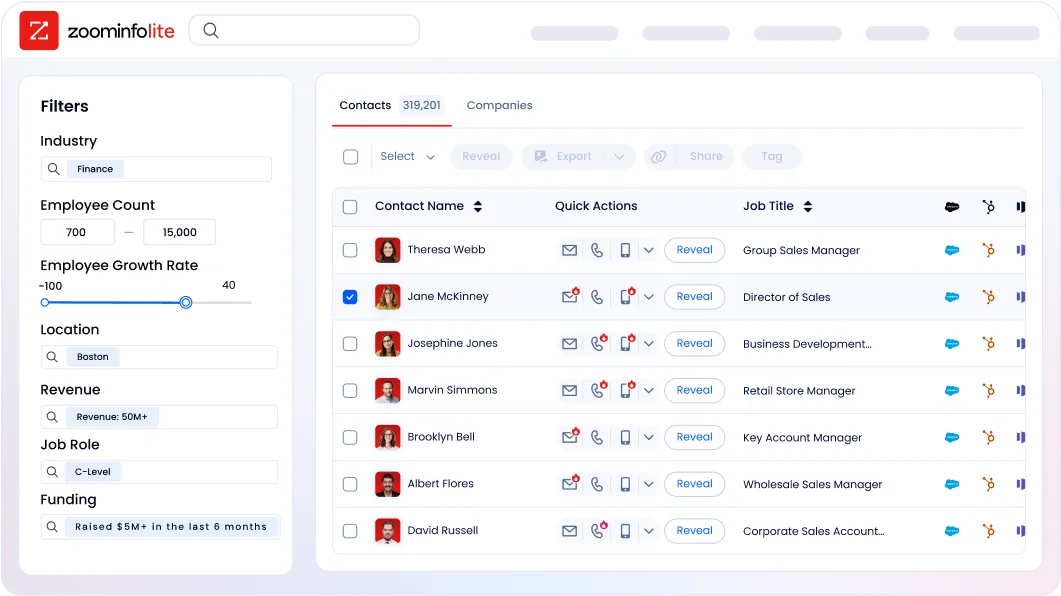
ZoomInfo offers a visitor identification solution alongside its massive B2B database of verified professional and company profiles.
Its WebSights functionality distinguishes between verified company traffic and automated system traffic so your team can focus on real buying signals.
Features

- A massive contact and firmographic database: Its GTM intelligence layer consists of 500+ million professional profiles, 100+ million company profiles, and 300+ million verified emails.
- Enhanced automatic traffic filtering (WebSights), which lets you distinguish between verified visitors and automated activity.
- A full-stack GTM solution, which includes an AI sales agent, a GTM studio to build workflows triggered by buying signals, and an MCP to connect your AI to their verified B2B data.
Pricing
ZoomInfo has separate plans for Sales, Marketing, and Talent teams, none of which disclose prices publicly. You’d have to reach out to them to get a demo and a quote.
However, there's also a free version (ZoomInfo Lite) and a free trial that you can experiment with.
The negatives
❌ One of the more expensive options on the market. According to Vendr, the median contract for the platform is $33,394, and it has reportedly gone up to $156,105 based on 1,421 purchases.
❌ A G2 review mentions that maintaining data accuracy can sometimes be a challenge, as contact details or company information can change quickly.
❌ Some of the more advanced functionalities are limited to higher-tier plans, according to another G2 review.
#4: RB2B
Use case: US-focused B2B teams that want person-level visitor identification delivered to Slack at the lowest entry price in the category.
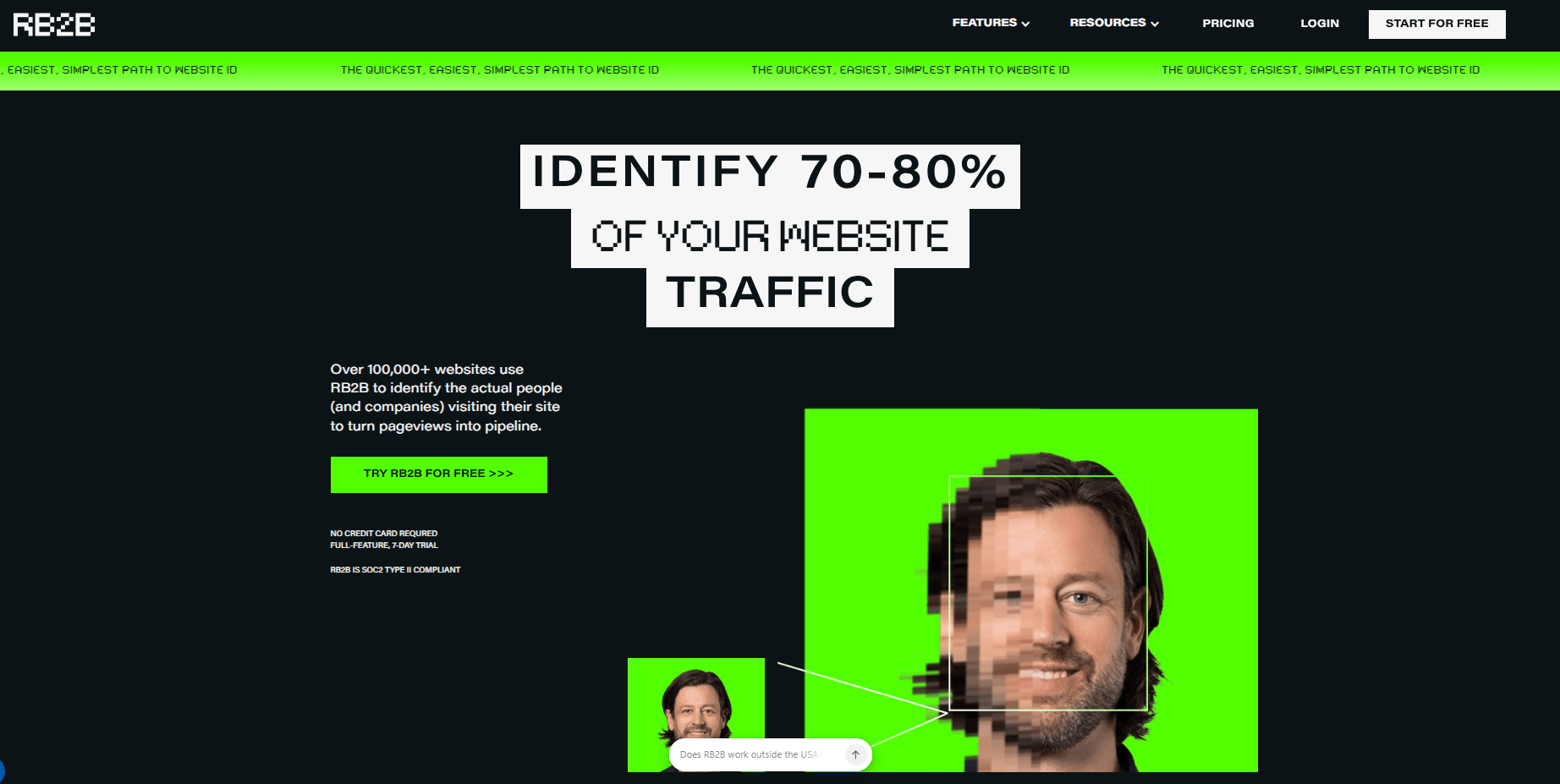
RB2B is tailored to smaller businesses with its affordable pricing structure, while also letting you identify up to 70-80% of your web traffic.
Their big pitch is that you can get started with them for as little as 5 minutes after installing their pixel and connecting your Slack.
Features

- Person-level reveal: Identifies individual US visitors with name, title, company, and LinkedIn URL.
- Slack-native delivery: Visitor profiles arrive in a configured Slack channel in real-time, so reps see the data inside the workflow they already use.
- Demandbase data partnership: Stacks the Demandbase company-level data layer on top to extend coverage outside the US for company identification.
Pricing
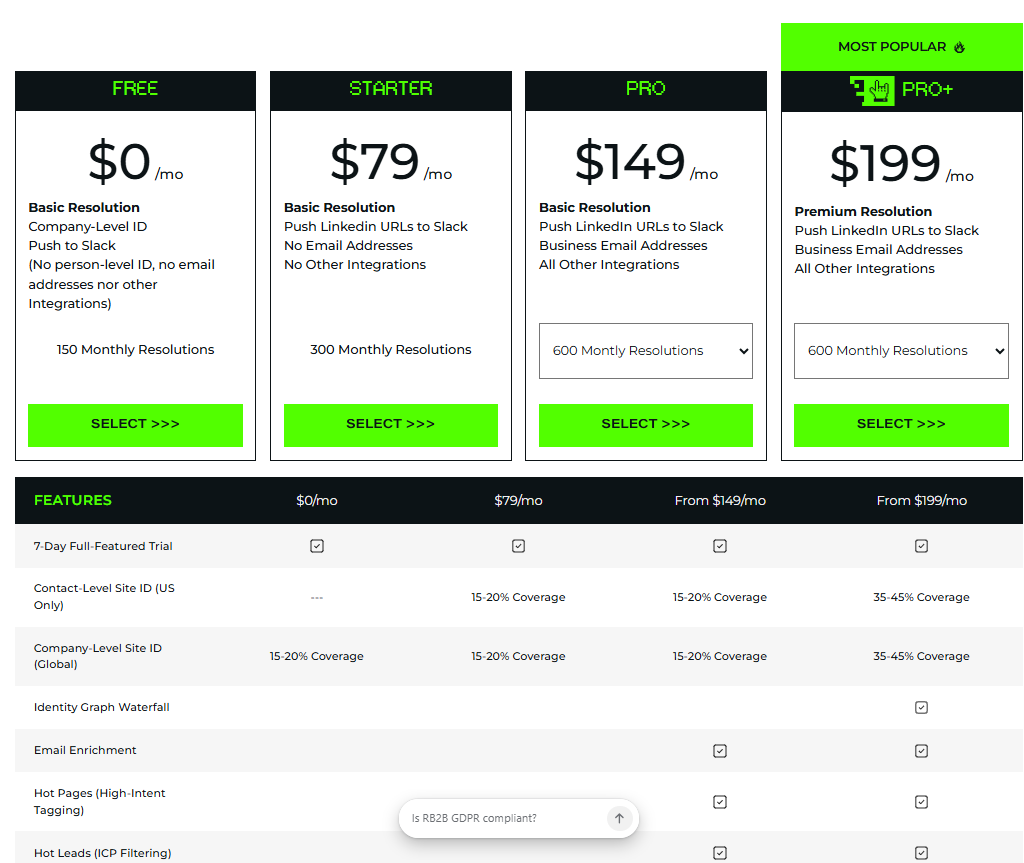
RB2B has a free plan with 150 monthly resolution credits (Slack-only on the free tier; person-level reveal sits behind paid plans).
Paid plans are:
- Starter: $79/month for 300 monthly resolutions.
- Pro: From $149/month for 600 resolutions.
- Pro+: From $199/month for 600 resolutions plus expanded coverage on company and contact-level data.
The negatives
❌ The premium coverage sits at the Pro+ plan, which starts at $199/month for 600 monthly resolutions.
❌ The only downside (of the platform) is sifting through bot or spam traffic that may come through with invalid LinkedIn profiles or email addresses, according to a G2 review.
#5: Lead Forensics
Use case: Salesforce-native teams that want to tie visitor identification back to which marketing campaigns drove the visit.
Lead Forensics combines website visitor identification with lead scoring and its native Salesforce sync.
Your sales team will also get instant alerts when a specific B2B customer visits your website, or when there’s an up-sell or cross-sell opportunity.
Features

- Identification across anonymous traffic: Resolves unidentified sessions into named companies and pulls associated contact, LinkedIn, and engagement data.
- Triggered alerts on ICP visits: When a target-fit company hits a configured page, your reps will get a real-time notification with full visitor context.
- Salesforce-native sync: Direct integration that pushes identified visitors and engagement data into SFDC records, including custom fields.
Pricing
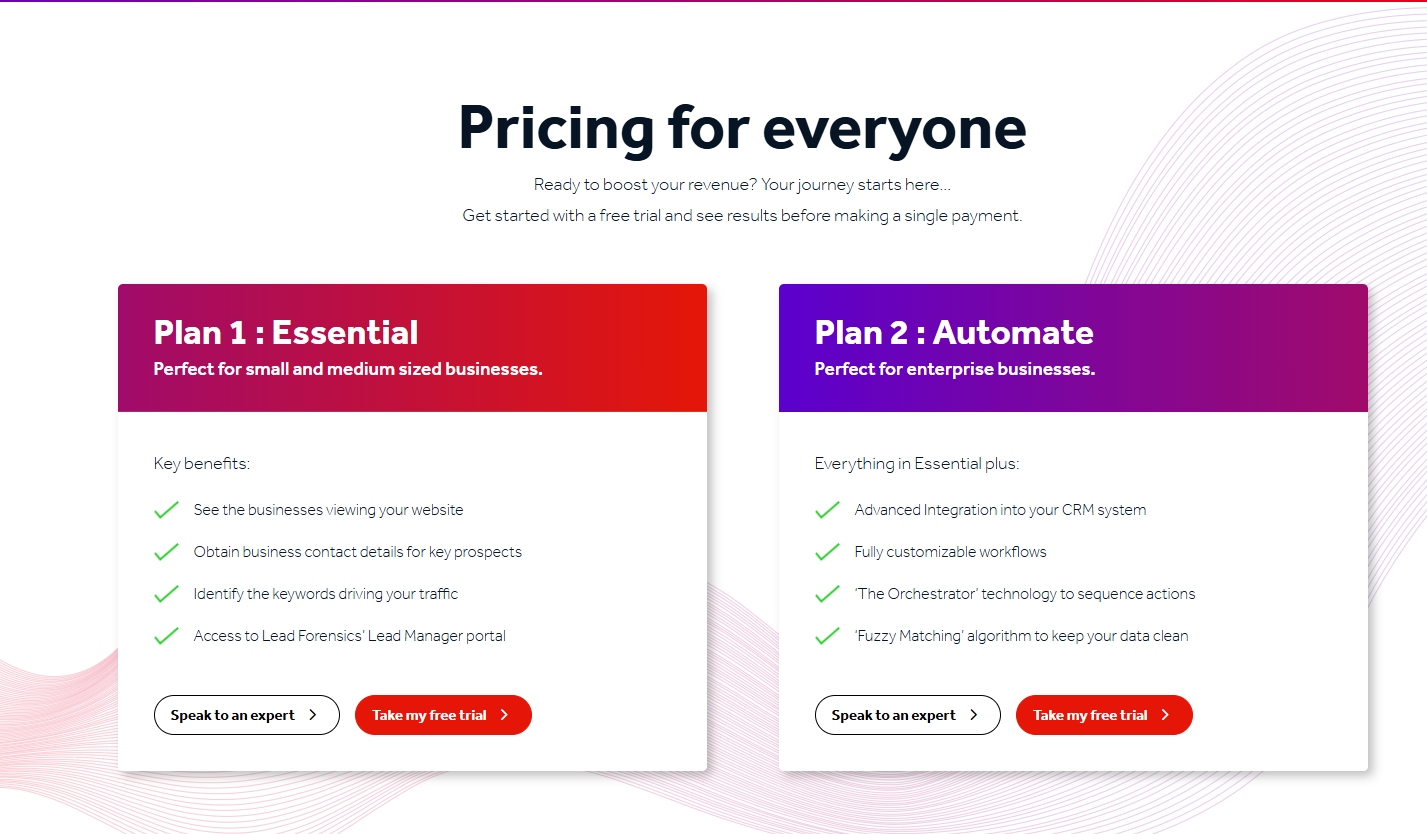
Lead Forensics does not disclose its pricing, so you’d have to contact them to get a quote.
The negatives
❌ Some of the data can occasionally feel a little vague, particularly for smaller businesses or less well-known domains, according to a G2 review.
❌ Doesn’t integrate with more niche CRMs like Score, according to another G2 review.
Book meetings on autopilot with Warmly and 11x
For B2B teams running AI SDRs in 2026, the bottleneck rarely sits with the AI SDR itself.
The bottleneck is the data feeding it: how warm and how recent the intent signals are when the agent starts the conversation.
Warmly addresses that gap directly.
Person-level identification, real-time intent scoring, and a webhook into 11x mean the AI SDR is reaching out to in-market prospects who actually visited your site recently.
The other four tools on this list each have their place, whether you need a wide contact database alongside identification, a low-cost Slack-first setup for a US-focused team, or GDPR-compliant coverage for European motions.
But for revenue teams looking to scale their AI SDRs, Warmly is the visitor ID layer designed to feed exactly that sales motion.
Book a demo with us to see how the Warmly + 11x integration runs in practice.